• Fri frakt över 249 kr
  • •
  • Snabba leveranser
  • •
  • Billiga böcker
Kundservice

Du är på sajten för privatpersoner.

Företag, bibliotek eller offentlig verksamhet?

Du handlar på classic.bokus.com, där alla dina funktioner finns intakta.
Till classic.bokus.com
Bokus logotyp. Gå till startsidan.
  • Erbjudanden
  • Nyheter
  • Student
  • Topplistor
  • Barn & ungdom
  • Bokus Play
  • E-böcker
  • Pocketböcker
  • Spel & pussel

10% rabatt på allt med kod: NYSTART10 →

Sidfot

Mina sidor

    Hjälp

    • Kundservice
    • Vanliga frågor och svar
    • Frakt och leverans
    • Retur vid ångerrätt
    • Reklamera vara
    • Betalning
    • Köpvillkor
    • Allmänna villkor
    • Information om webbplatsens tillgänglighet

    Om Bokus

    • Om oss
    • Pressrum
    • För studenter
    • För företag
    • För bibliotek och offentlig verksamhet
    • För leverantörer
    • Hållbarhet

    Populärt

    • Aktuella erbjudanden
    • Presentkort
    • Studentlitteratur
    • Nya böcker
    • Topplistor
    • Signerade böcker
    • Engelska böcker

    Inspiration

    • Boktips
    • BookTok
    • Populära bokserier
    • Barnbokskaraktärer
    • Populära författare
    Logotyp för Bokus
    Följ oss på Facebook (extern länk)Följ oss på Instagram (extern länk)Följ oss på YouTube (extern länk)Följ oss på TikTok (extern länk)
    bokus @ CookiesAnpassa cookiesIntegritetspolicyKöpvillkor
    Till Citymail hemsida (extern länk)Till Budbee hemsida (extern länk)Till Postnord hemsida (extern länk)Till Schenker hemsida (extern länk)Till Early Bird hemsida (extern länk)Till Walleys hemsida (extern länk)
    1. Ekonomi och Ledarskap
    2. Nationalekonomi
    3. Mikroekonomi

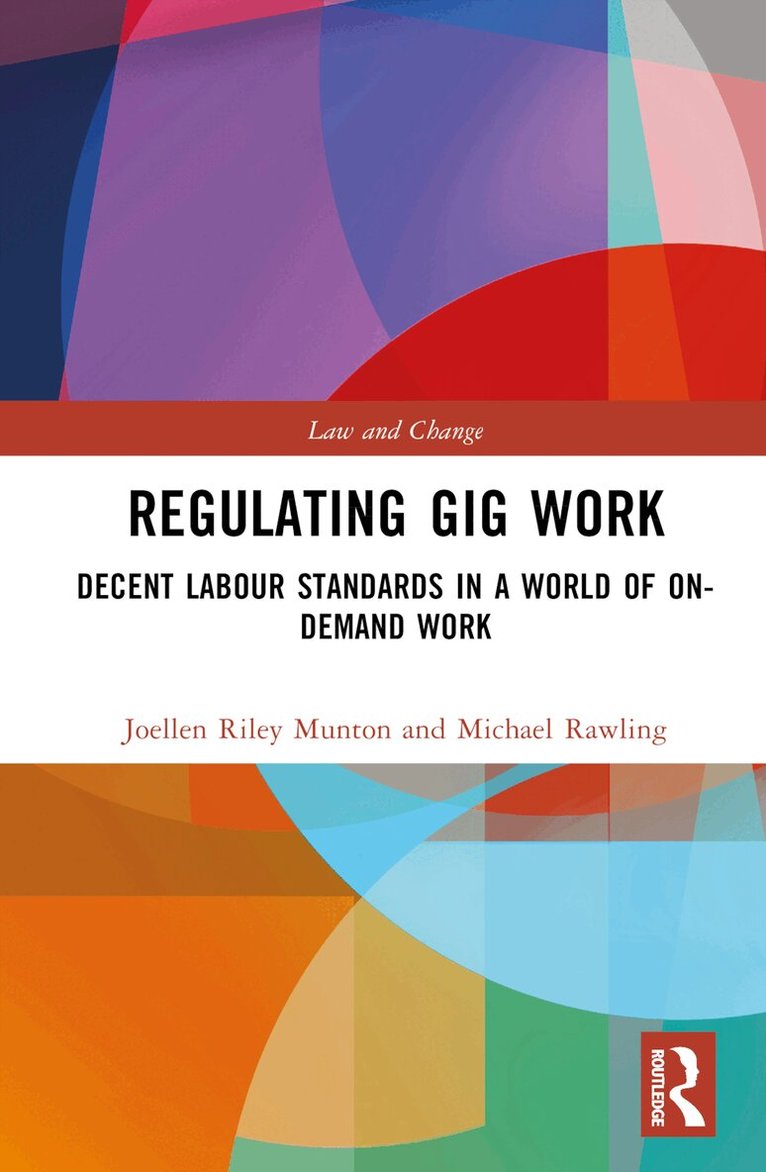
    Regulating Gig Work

    Decent Labour Standards in a World of On-demand Work

    AvJoellen Riley Munton,Michael Rawling

    Inbunden, Engelska, 2023

    Del i serien Law and Change

    2 227 kr

    Beställningsvara. Skickas inom 10-15 vardagar. Fri frakt över 249 kr.

    Fler format och utgåvor

    Häftad

    626 kr

    Beskrivning

    Digital revolution demands new approaches to regulating work. The ‘Uberisation’ of work is not, in reality, a new phenomenon. It reintroduces the practices of ‘on-demand’ engagement of labour, common prior to the development of continuing employment. What is new, however, is the capacity of digital technology to engage labour in ways that avoid characterisation as employment according to the legal tests developed in the 20th century.This book tackles the challenge of ensuring that the emerging tribes of ‘gig’ workers in labour markets across the globe are afforded decent standards of work. This book discusses how to provide decent conditions and safe working standards for on-demand workers engaged through digital platforms. It interrogates the rise of gig work, and the legal strategies that might be engaged to deal with the risk that on-demand work will fall and remain outside of employment protections. It draws on observations of practices across the globe but focusses particularly on regulatory solutions developed in Australia.The book will be a useful reference to policy making and legal reforms to address vulnerabilities of gig workers.

    Produktinformation

    • Utgivningsdatum:2023-12-12
    • Mått:156 x 234 x 12 mm
    • Vikt:840 g
    • Format:Inbunden
    • Språk:Engelska
    • Serie:Law and Change
    • Antal sidor:124
    • Förlag:Taylor & Francis Ltd
    • ISBN:9781032251448

    Utforska kategorier

    • Mikroekonomi inom Ekonomi och Ledarskap
    • Arbetsmarknaden inom Ekonomi och Ledarskap
    • Arbetsrätt inom Juridik

    Mer om författaren

    Michael Rawling, University of Technology Sydney, Faculty of Law.Joellen Riley Munton, University of Technology Sydney, Faculty of Law, and Professor Emerita, The University of Sydney.

    Innehållsförteckning

    • Preface viii1 Context and history 1Introduction 1Common features of platform-mediated work 3Labour law avoidance 4‘Employment’ 5Algorithmic control 8‘Multi-apping’ 10Regulating for safe, fair, and dignified work 122 A global perspective 16Introduction 16Could development of further ILO standards promote gig worker rights? 17OECD 20The centrality of domestic regulation 20Europe 21European Union 21Employment status under the proposed EU Directive 21Regulation of algorithmic management 23Dispute resolution and enforcement 23Individual European countries 24United Kingdom 25United States 26New Zealand 27Conclusion 283 Overview of workers’ essential needs and forms of legal protection 29Introduction 29‘Deeming’ provisions 32‘Third way’ statutory definitions 35Special regulatory schemes for contractors 38New South Wales industrial laws 39Operation of the Chapter 6 regime 40Victorian owner driver scheme 41Western Australian owner driver scheme 42Queensland 43Road Safety Remuneration Tribunal 45Franchising code of conduct 46Unfair contracts review 49Conclusion 504 Pay and safety 51Introduction 51Why substantive labour standards should apply to gig workers 52Gig workers’ experience of low pay and poor safety 53Pay and safety link evident in gig work 56The current regulation and its shortcomings 57WHS laws 57Workers’ compensation 58The appropriate methods of producing a socially beneficial remuneration standard 60Proposed Reforms 62Conclusion 645 Procedural rights: Freedom of association and job security standards 65Introduction 65The function and benefits of collective bargaining 66Why gig workers deserve collective bargaining rights 67Establishing collective bargaining for gig workers – possibilities and obstacles 67Realising substantive collective bargaining rights for gig workers 70Protection of job security 70Dispute resolution 73Conclusion 766 Exclusion from jurisdiction as a regulatory strategy 78Introduction 78Rideshare as a ‘disruptor’ 78Bans across the globe 79United States 80Europe 80United Kingdom 81Scandinavia 82India 82Other countries 82Bans in historical context: Previous restrictions on the free flow of capital 82Digital labour platform responses to bans 84The cloud of words 84Enter markets and keep operating: Business as usual despite bans 85Using violence against rideshare drivers to gain support 86The emergency ‘kill’ switch 86Big spending on lobbying 87Overall effectiveness of the bans 87‘Regulatory entrepreneurship’ business model and bans 90Beyond law – compliance measures to combat disruption and improve bans policy 91Conclusion 927 Organisational forms to enhance worker control and ownership 94Democracy at work for platform workers 94Worker participation in corporations 96Cooperative enterprises 97RideAustin – the not-for-profit 97ATX – taxi driver cooperative 99Governance of cooperatives 99Worker ownership trusts 101Conclusion 1028 Concluding thoughts 104Regulating on-demand work, everywhere 104Beyond ‘employment’ 105Future-proofing labour regulation 106Supervision 107Bibliography 109Index 121