Law and Current Events Masters - Böcker
Visar alla böcker i serien Law and Current Events Masters. Handla med fri frakt och snabb leverans.
7 produkter
7 produkter
390 kr
Skickas inom 5-8 vardagar
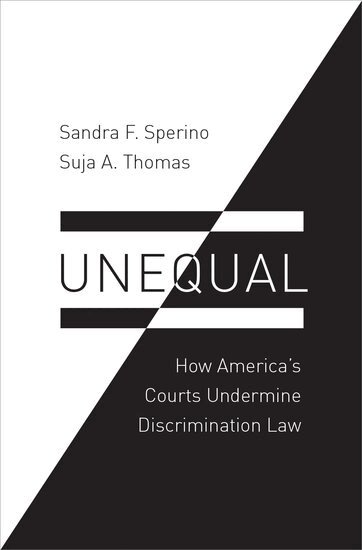
It is no secret that since the 1980s, American workers have lost power vis-a-vis employers through the well-chronicled steep decline in private sector unionization. American workers have also lost power in other ways. Those alleging employment discrimination have fared increasingly poorly in the courts. In recent years, judges have dismissed scores of cases in which workers presented evidence that supervisors referred to them using racial or gender slurs. In one federal district court, judges dismissed more than 80 percent of the race discrimination cases filed over a year. And when juries return verdicts in favor of employees, judges often second guess those verdicts, finding ways to nullify the jury's verdict and rule in favor of the employer.Most Americans assume that that an employee alleging workplace discrimination faces the same legal system as other litigants. After all, we do not usually think that legal rules vary depending upon the type of claim brought. The employment law scholars Sandra A. Sperino and Suja A. Thomas show in Unequal that our assumptions are wrong. Over the course of the last half century, employment discrimination claims have come to operate in a fundamentally different legal system than other claims. It is in many respects a parallel universe, one in which the legal system systematically favors employers over employees. A host of procedural, evidentiary, and substantive mechanisms serve as barriers for employees, making it extremely difficult for them to access the courts. Moreover, these mechanisms make it fairly easy for judges to dismiss a case prior to trial. Americans are unaware of how the system operates partly because they think that race and gender discrimination are in the process of fading away. But such discrimination still happens in the workplace, and workers now have little recourse to fight it legally. By tracing the modern history of employment discrimination, Sperino and Thomas provide an authoritative account of how our legal system evolved into an institution that is inherently biased against workers making rights claims.
470 kr
Skickas inom 5-8 vardagar
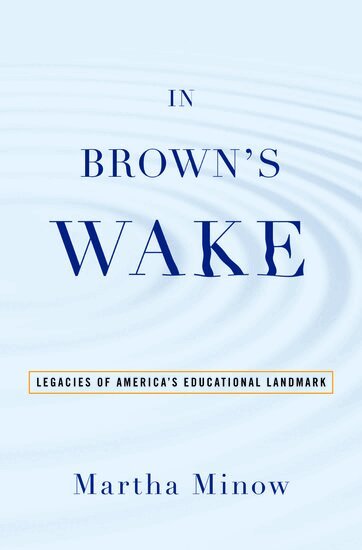
What is the legacy of Brown vs. Board of Education? Well known for establishing racial equality as a central commitment of American schools, the case also inspired social movements pursuing equality in education for students across all lines of difference, including language, gender, disability, immigration status, socio-economic status, religion, and sexual orientation. Yet, more than a half-century following Brown, schools, parents and policy makers still debate whether the ruling requires all-inclusive classrooms, and today American schools appear to be more segregated than ever. School choice, once a strategy for avoiding racial integration, has emerged as a method for racial mixing in some school systems, even as magnet and pilot schools, charter schools, and vouchers for private schools enable new forms of self-separation by language, gender, disability, and ethnicity. In In Brown's Wake, Martha Minow examines the way that Brown continues to reverberate over a wide-spectrum of equality issues in public and school choice programs. She argues that the terms placed on such initiatives carry serious consequences for both the character of American education and civil society itself. Though the original promise of Brown remains more symbolic than effective, Minow demonstrates the power of its vision in the struggles for equal education regardless of students' social identity, in the United States and internationally. Further, she urges renewed commitment to the project of social integration even while identifying the complex routes necessary to achieve it. A concise introduction to Brown and its aftermath, In Brown's Wake explores surprising and widespread effects of one of the most important Supreme Court decisions of the century with elegance and economy.
Icarus in the Boardroom
The Fundamental Flaws in Corporate America and Where They Came From
Häftad, Engelska, 2006
284 kr
Skickas inom 5-8 vardagar
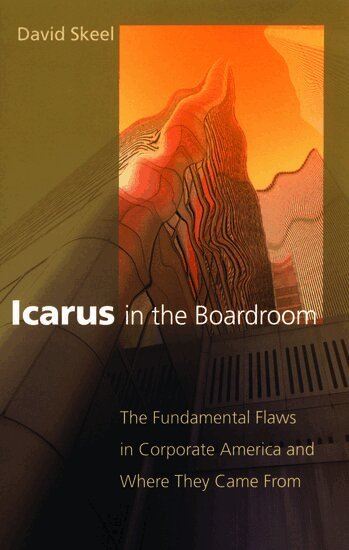
Americans have always loved risktakers. Like the Icarus of ancient Greek lore, however, even the most talented entrepreneurs can overstep their bounds. All too often, the very qualities that make Icaran executives special-- self-confidence, visionary insight, and extreme competitiveness--spur them to take misguided and even illegal chances. The Icaran failure of an ordinary entrepreneur isn't headline news. But put Icarus in the corporate boardroom and, as David Skeel vividly demonstrates, the ripple effects can be profound. Ever since the first large-scale corporations emerged in the nineteenth century, their ability to tap huge amounts of capital and the sheer number of lives they affect has meant that their executives play for far greater stakes. Excessive and sometimes fraudulent risks, competition, and the increasing size and complexity of organizations: these three factors have been at the heart of every corporate breakdown from 1873, when financial genius Jay Cooke collapsed, to the corporate scandals of the early 21st century. Compounding the scandals is an ongoing cat-and-mouse game between regulators' efforts to police the three factors that lead to Icarus Effect failures and efforts by corporate America to evade this regulation in the name of efficiency and flexibility. These efforts to side-step oversight can rapidly spiral out of control, setting the stage for the devastating corporate failures that punctuate American business history. But there is also a silver lining to the stunning failures: the outrage they provoke galvanizes public opinion in favor of corporate reform. The most important American business regulation has always been enacted in response to a major breakdown in corporate America. Today's business environment poses unprecedented perils for the average American as for the first time ever, more than half of Americans now own stock. Identifying the problems of the past, Skeel offers a strikingly new diagnosis of the fundamental flaws in corporate America today, and of what can be done to fix them.
334 kr
Skickas inom 5-8 vardagar
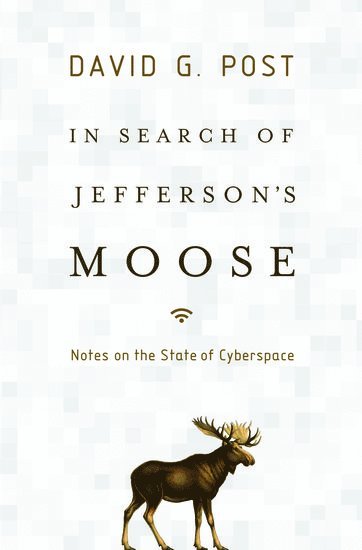
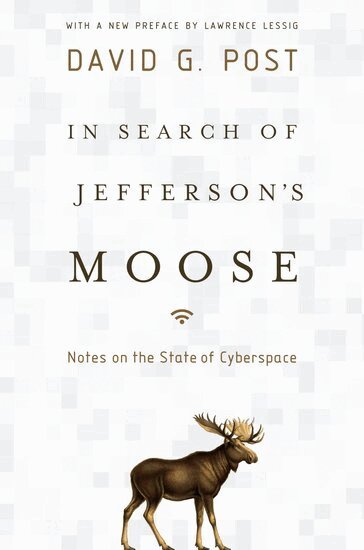
In 1787, Thomas Jefferson, then the American Minister to France, had the "complete skeleton, skin & horns" of an American moose shipped to him in Paris and mounted in the lobby of his residence as a symbol of the vast possibilities contained in the strange and largely unexplored New World. Taking a cue from Jefferson's efforts, David Post, one of the nation's leading Internet scholars, here presents a pithy, colorful exploration of the still mostly undiscovered territory of cyberspace--what it is, how it works, and how it should be governed. What law should the Internet have, and who should make it? What are we to do, and how are we to think, about online filesharing and copyright law, about Internet pornography and free speech, about controlling spam, and online gambling, and cyberterrorism, and the use of anonymous remailers, or the practice of telemedicine, or the online collection and dissemination of personal information? How can they be controlled? Should they be controlled? And by whom? Post presents the Jeffersonian ideal--small self-governing units, loosely linked together as peers in groups of larger and larger size--as a model for the Internet and for cyberspace community self-governance. Deftly drawing on Jefferson's writings on the New World in Notes on the State of Virginia, Post draws out the many similarities (and differences) between the two terrains, vividly describing how the Internet actually functions from a technological, legal, and social perspective as he uniquely applies Jefferson's views on natural history, law, and governance in the New World to illuminate the complexities of cyberspace. In Search of Jefferson's Moose is a lively, accessible, and remarkably original overview of the Internet and what it holds for the future.
430 kr
Skickas inom 5-8 vardagar
In 1787, Thomas Jefferson, then the American Minister to France, had the "complete skeleton, skin & horns" of an American moose shipped to him in Paris and mounted in the lobby of his residence as a symbol of the vast possibilities contained in the strange and largely unexplored New World. Taking a cue from Jefferson's efforts, David Post, one of the nation's leading Internet scholars, here presents a pithy, colorful exploration of the still mostly undiscovered territory of cyberspace--what it is, how it works, and how it should be governed. What law should the Internet have, and who should make it? What are we to do, and how are we to think, about online filesharing and copyright law, about Internet pornography and free speech, about controlling spam, and online gambling, and cyberterrorism, and the use of anonymous remailers, or the practice of telemedicine, or the online collection and dissemination of personal information? How can they be controlled? Should they be controlled? And by whom? Post presents the Jeffersonian ideal--small self-governing units, loosely linked together as peers in groups of larger and larger size--as a model for the Internet and for cyberspace community self-governance. Deftly drawing on Jefferson's writings on the New World in Notes on the State of Virginia, Post draws out the many similarities (and differences) between the two terrains, vividly describing how the Internet actually functions from a technological, legal, and social perspective as he uniquely applies Jefferson's views on natural history, law, and governance in the New World to illuminate the complexities of cyberspace. In Search of Jefferson's Moose is a lively, accessible, and remarkably original overview of the Internet and what it holds for the future.
Advancing the Ball
Race, Reformation, and the Quest for Equal Coaching Opportunity in the NFL
Häftad, Engelska, 2012
611 kr
Skickas inom 3-6 vardagar
Two days before Super Bowl XLI in 2007, the game's two opposing head coaches posed with the trophy one of them would hoist after the contest. It was a fairly unremarkable event, except that both coaches were African American--a fact that was as much of a story as the game itself. As Jeremi Duru reveals in Advancing the Ball, this unique milestone resulted from the work of a determined group of people whose struggles to expand head coaching opportunities for African Americans ultimately changed the National Football League. Since the league's desegregation in 1946, opportunities had grown plentiful for African Americans as players but not as head coaches--the byproduct of the NFL's old-boy network and lingering stereotypes of blacks' intellectual inferiority. Although Major League Baseball and the NBA had, over the years, made progress in this regard, the NFL's head coaches were almost exclusively white up until the mid-1990s. Advancing the Ball chronicles the campaign of former Cleveland Browns offensive lineman John Wooten to right this wrong and undo decades of discriminatory head coach hiring practices--an initiative that finally bore fruit when he joined forces with attorneys Cyrus Mehri and Johnnie Cochran. Together with a few allies, the triumvirate galvanized the NFL's African American assistant coaches to stand together for equal opportunity and convinced the league to enact the "Rooney Rule," which stipulates that every team must interview at least one minority candidate when searching for a new head coach. In doing so, they spurred a movement that would substantially impact the NFL and, potentially, the nation. Featuring an impassioned foreword by Coach Tony Dungy, Advancing the Ball offers an eye-opening, first-hand look at how a few committed individuals initiated a sea change in America's most popular sport and added an extraordinary new chapter to the civil rights story.
327 kr
Skickas inom 5-8 vardagar
What is the legacy of Brown vs. Board of Education? While it is well known for establishing racial equality as a central commitment of American schools, the case also inspired social movements for equality in education across all lines of difference, including language, gender, disability, immigration status, socio-economic status, religion, and sexual orientation. Yet more than a half century after Brown, American schools are more racially separated than before, and educators, parents and policy makers still debate whether the ruling requires all-inclusive classrooms in terms of race, gender, disability, and other differences. In Brown's Wake examines the reverberations of Brown in American schools, including efforts to promote equal opportunities for all kinds of students. School choice, once a strategy for avoiding Brown, has emerged as a tool to promote integration and opportunities, even as charter schools and private school voucher programs enable new forms of self-separation by language, gender, disability, and ethnicity. Martha Minow, Dean of Harvard Law School, argues that the criteria placed on such initiatives carry serious consequences for both the character of American education and civil society itself. Although the original promise of Brown remains more symbolic than effective, Minow demonstrates the power of its vision in the struggles for equal education regardless of students' social identity, not only in the United States but also in many countries around the world. Further, she urges renewed commitment to the project of social integration even while acknowledging the complex obstacles that must be overcome. An elegant and concise overview of Brown and its aftermath, In Brown's Wake explores the broad-ranging and often surprising impact of one of the century's most important Supreme Court decisions.