Lessons & Legacies – serie
Visar alla böcker i serien Lessons & Legacies. Handla med fri frakt och snabb leverans.
25 produkter
Lessons and Legacies V. 4; Holocaust and Justice
Häftad, 2002
395 kr
Lägg i varukorg
Distinguished scholars explore historical context, perpetrators, the courts, and historical perspective as these relate to the complex topic of the Holocaust and justice. The Holocaust and justice: How can one link these terms, given the enormity of Nazi mass murder? Is justice possible for crimes …
Lessons and Legacies V. 5; Reflections on Religion, Justice, Sexuality and Genocide
Inbunden, 2003
1042 kr
Lägg i varukorg
In authoritative, nonpolemical essays on some of the latest and most contentious issues surrounding the Holocaust, the contributors to this volume revisit some topics central to Holocaust studies, such as the stance of the papacy and the concern about the uses to which the meaning of the Holocaust …
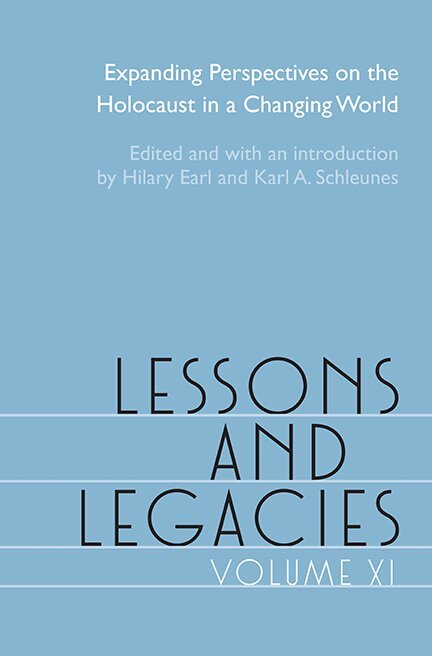
Lessons and Legacies XI
Expanding Perspectives on the Holocaust in a Changing World
Av Hilary Earl, Karl A. Schleunes
Inbunden, 2014
1052 kr
Lägg i varukorg
“Expanding Perspectives on the Holocaust in a Changing World” was the theme of the eleventh Lessons and Legacies Conference on the Holocaust. The eighteen essayspublished here, which sprung from the conference, reflect questions that Holocaust scholars are asking in the face of shifting political, …
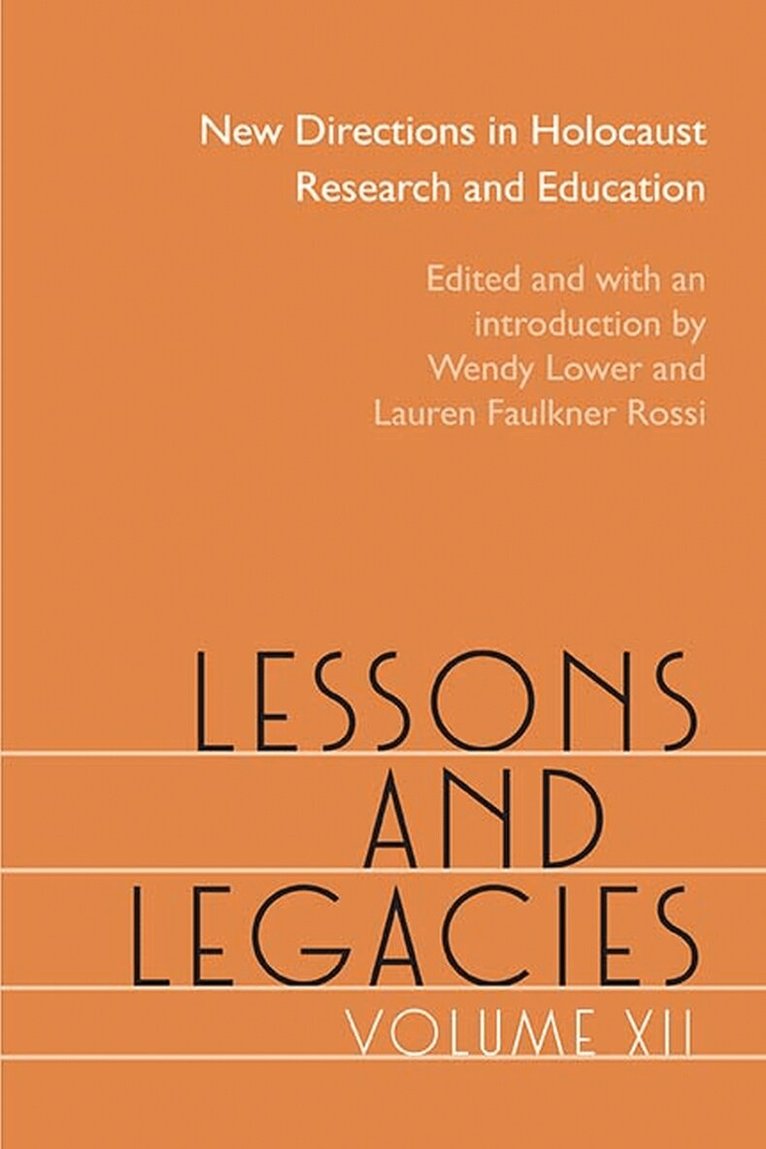
Lessons and Legacies XII
New Directions in Holocaust Research and Education
Av Wendy Lower, Lauren Faulkner Rossi
Häftad, 2017
453 kr
Lägg i varukorg
Lessons and Legacies XII explores new directions in research and teaching in the field of Holocaust studies. The essays in this volume present the most cutting-edge methods and topics shaping Holocaust studies today, from a variety of disciplines: forensics, environmental history, cultural studies, …
Lessons and Legacies XII
New Directions in Holocaust Research and Education
Av Wendy Lower, Lauren Faulkner Rossi
Inbunden, 2017
1168 kr
Lägg i varukorg
Lessons and Legacies XII explores new directions in research and teaching in the field of Holocaust studies. The essays in this volume present the most cutting-edge methods and topics shaping Holocaust studies today, from a variety of disciplines: forensics, environmental history, cultural studies, …
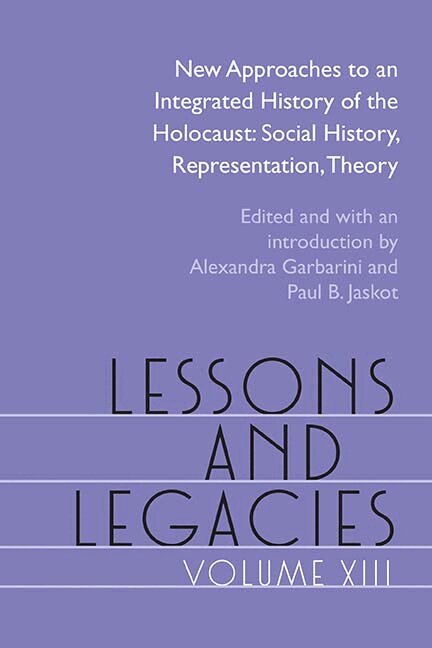
Lessons and Legacies XIII
New Approaches to an Integrated History of the Holocaust: Social History, Representation, Theory
Av Alexandra Garbarini, Paul Jaskot m. fl.
Inbunden, 2018
1168 kr
Lägg i varukorg
The social history of the genocide, its representation in postwar culture, and new theoretical approaches stand at the forefront of current research in a range of disciplines. Analyses at the most intimate scale—of the individual or of a particular locale— are juxtaposed with those that turn to …
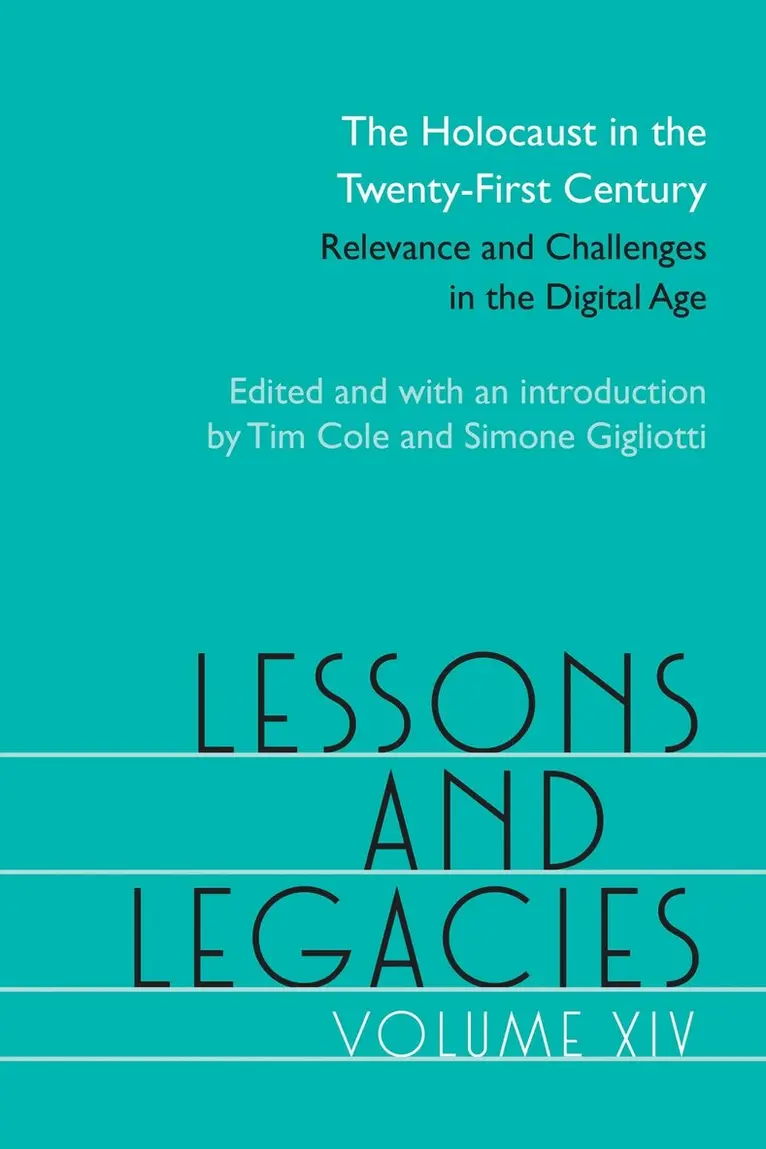
Holocaust in the Twenty-First Century
Relevance and Challenges in the Digital Age
Häftad, 2020
384 kr
Lägg i varukorg
The Holocaust in the Twenty-First Century: Relevance and Challenges in the Digital Age challenges a number of key themes in Holocaust studies with new research. Essays in the section “Tropes Reconsidered” reevaluate foundational concepts such as Primo Levi’s gray zone and idea of the muselmann. The …
Holocaust in the Twenty-First Century
Relevance and Challenges in the Digital Age
Inbunden, 2020
1134 kr
Lägg i varukorg
The Holocaust in the Twenty-First Century: Relevance and Challenges in the Digital Age challenges a number of key themes in Holocaust studies with new research. Essays in the section “Tropes Reconsidered” reevaluate foundational concepts such as Primo Levi’s gray zone and idea of the muselmann. The …
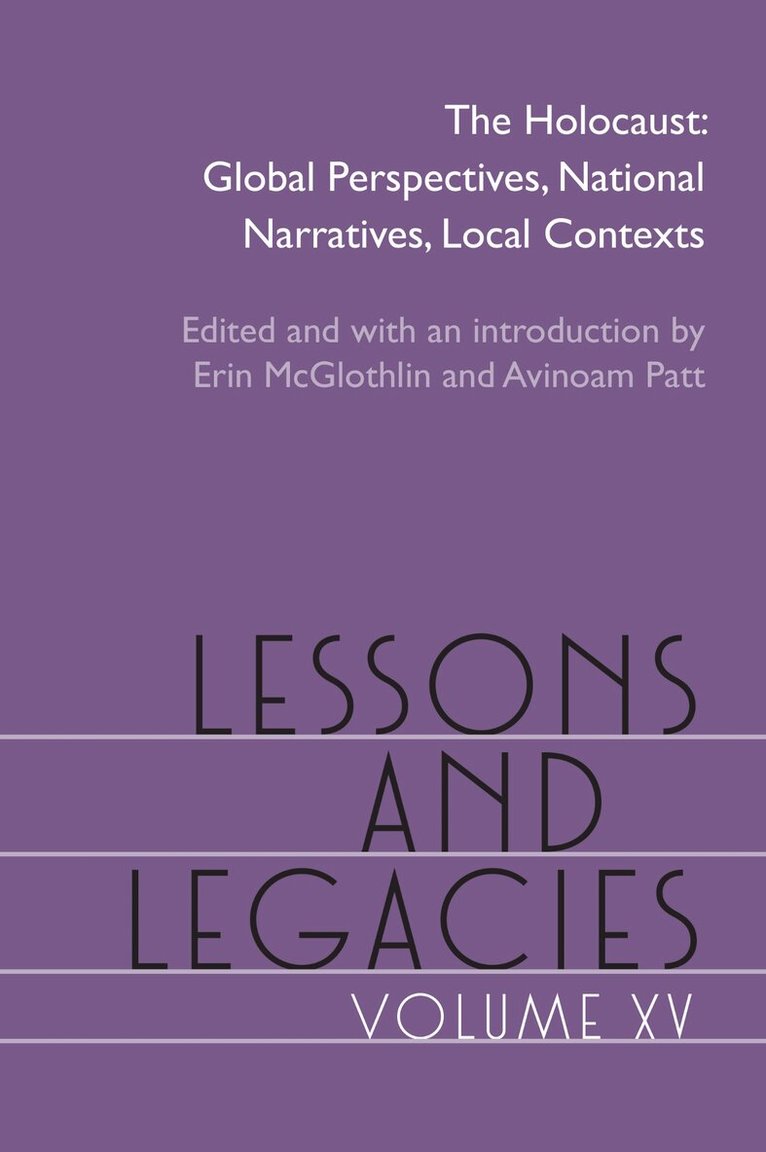
Lessons and Legacies, Volume XV
The Holocaust: Global Perspectives, National Narratives, Local Contexts
Av Erin McGlothlin, Avinoam Patt
Häftad, 2026
450 kr
Kommande
A collection of cutting-edge research from the fields of history, literature, and memory, representing the latest advances in Holocaust studiesThe contributions to this volume—the fifteenth in the historic Lessons and Legacies series—represent an array of multidisciplinary research topics and …
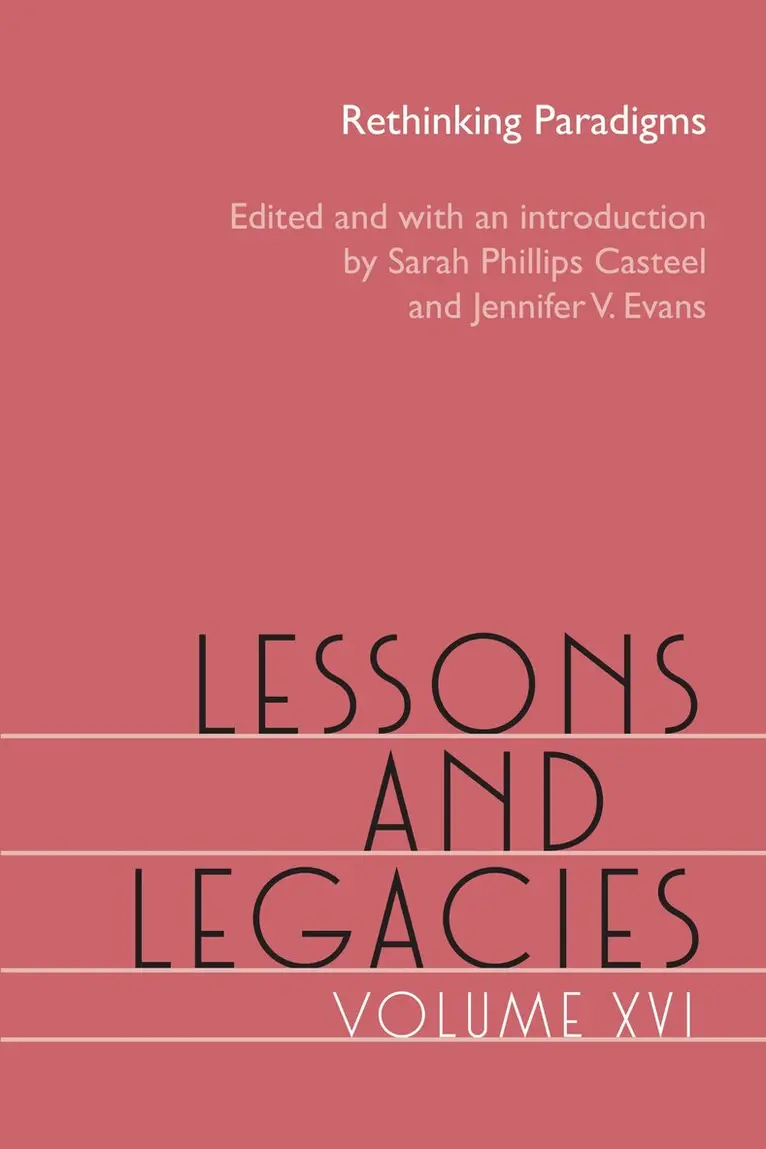
Lessons and Legacies, Volume XVI
Rethinking Paradigms
Av Sarah Phillips Casteel, Jennifer V. Evans
Häftad, 2026
430 kr
Kommande
Bringing forth new perspectives previously unrepresented in Holocaust studiesLessons and Legacies, Volume XVI: Rethinking Paradigms does the difficult but crucial work of thinking through new methods and modes of representation that speak to where we find ourselves in Holocaust studies today, …
Lessons and Legacies, Volume XVI
Rethinking Paradigms
Av Sarah Phillips Casteel, Jennifer V. Evans
Inbunden, 2026
1386 kr
Kommande
Bringing forth new perspectives previously unrepresented in Holocaust studiesLessons and Legacies, Volume XVI: Rethinking Paradigms does the difficult but crucial work of thinking through new methods and modes of representation that speak to where we find ourselves in Holocaust studies today, …
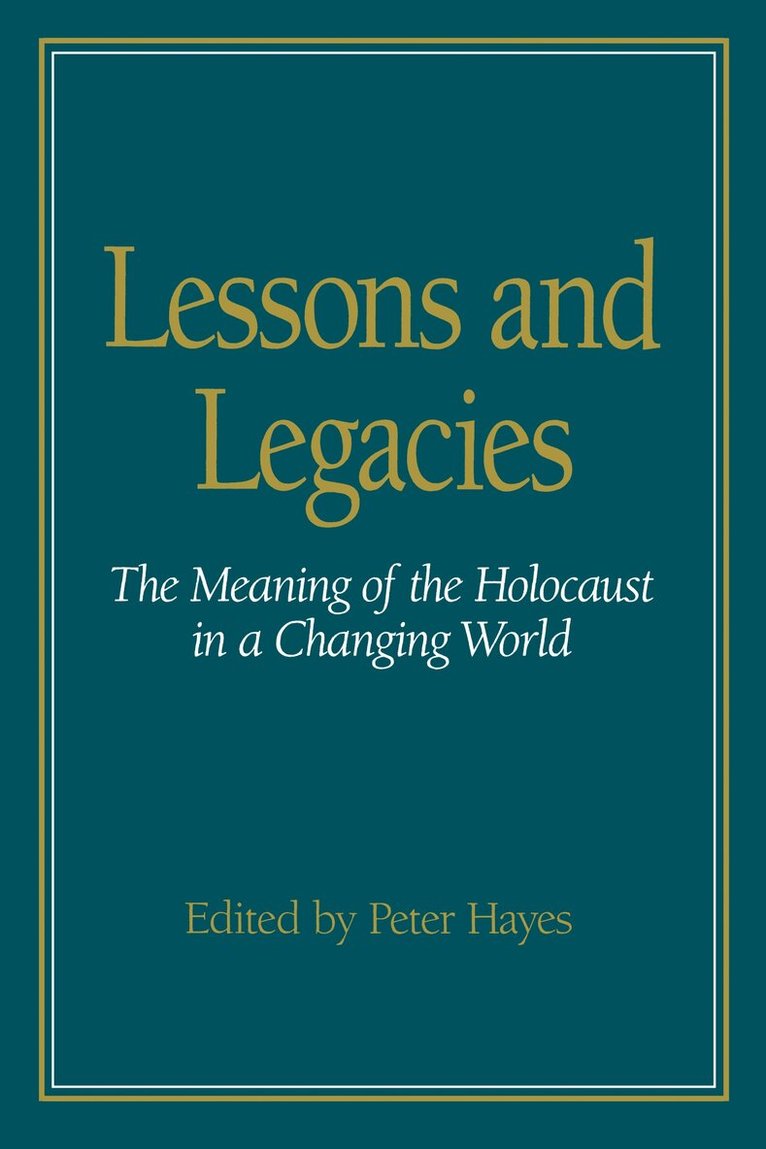
Lessons and Legacies V. 1; Meaning of the Holocaust in a Changing World
Av Donald G. Schilling, Peter Hayes
Häftad, 1991
395 kr
Tillfälligt slut
Lessons and Legacies V. 2; Teaching the Holocaust in a Changing World
Inbunden, 1998
1042 kr
Tillfälligt slut
Focusing on matters unique to Holocaust education, these essays address topics including: the difficult and toubling issue of explaining the perpetrators' behaviour; the scope and content of survivor literature; and the stucture of courses and the implications of being an educator in this field.
Lessons and Legacies V. 2; Teaching the Holocaust in a Changing World
Häftad, 1998
395 kr
Tillfälligt slut
Focusing on matters unique to Holocaust education, these essays address topics including: the difficult and toubling issue of explaining the perpetrators' behaviour; the scope and content of survivor literature; and the stucture of courses and the implications of being an educator in this field.
Lessons and Legacies V. 3; Memory, Memorialization and Denial
Av Peter Hayes
Häftad, 1999
395 kr
Tillfälligt slut
A collection of 19 essays focusing on how various fields of study can open new perspectives on the Holocaust. Culture and politics in Germany after 1933 are examined, and the memorialization of those years, and the shocking denials of the Holocaust are addressed.
Lessons and Legacies V. 4; Holocaust and Justice
Inbunden, 2002
1042 kr
Tillfälligt slut
Distinguished scholars explore historical context, perpetrators, the courts, and historical perspective as these relate to the complex topic of the Holocaust and justice. The Holocaust and justice: How can one link these terms, given the enormity of Nazi mass murder? Is justice possible for crimes …
Lessons and Legacies V. 5; Reflections on Religion, Justice, Sexuality and Genocide
Häftad, 2003
395 kr
Tillfälligt slut
In authoritative, nonpolemical essays on some of the latest and most contentious issues surrounding the Holocaust, the contributors to this volume revisit some topics central to Holocaust studies, such as the stance of the papacy and the concern about the uses to which the meaning of the Holocaust …
Lessons and Legacies V. 6; New Currents in Holocaust Research
Inbunden, 2004
1042 kr
Tillfälligt slut
In the courtroom and the classroom, in popular media, public policy, and scholarly pursuits, the Holocaust - its origins, its nature, and its implications - remains very much a matter of interest, debate, and controversy. Arriving at a time when a new generation must come to terms with the legacy …
Lessons and Legacies V. 6; New Currents in Holocaust Research
Häftad, 2004
395 kr
Tillfälligt slut
In the courtroom and the classroom, in popular media, public policy, and scholarly pursuits, the Holocaust - its origins, its nature, and its implications - remains very much a matter of interest, debate, and controversy. Arriving at a time when a new generation must come to terms with the legacy …
Lessons and Legacies V. 7; Holocaust in International Perspective
Häftad, 2006
395 kr
Tillfälligt slut
As the discipline of Holocaust studies matures, new questions and themes come to the fore. Among these are critical issues that receive serious scholarly attention, often for the first time, in this collection of essays by some of the world's most respected experts in the field. This title covers …
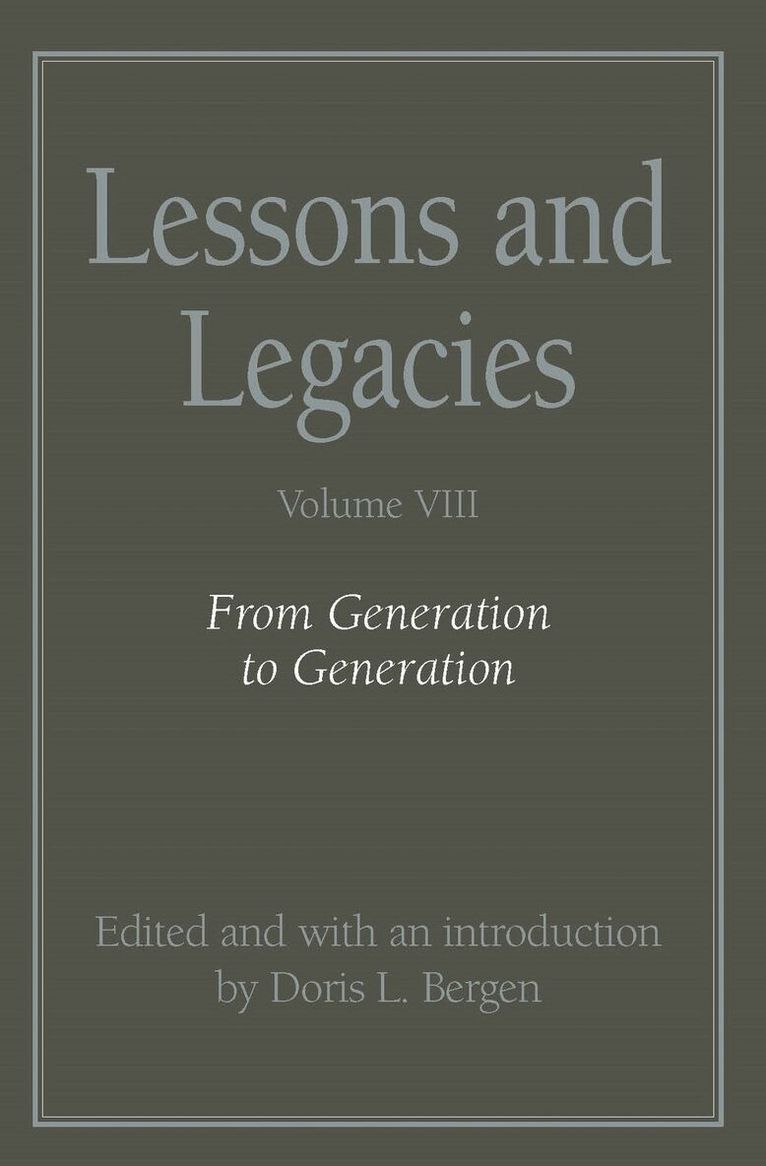
Lessons and Legacies V. 8; from Generation to Generation
Inbunden, 2008
1157 kr
Tillfälligt slut
Primo Levi opened his memoir ""Survival in Auschwitz"" with a call to remember, reflect upon, and teach about the Holocaust - or to face the rejection of subsequent generations. The transmittal of this urgent knowledge between generations was the theme of the Eigth Lessons and Legacies Conference …
Lessons and Legacies V. 8; from Generation to Generation
Häftad, 2008
553 kr
Tillfälligt slut
Primo Levi opened his memoir ""Survival in Auschwitz"" with a call to remember, reflect upon, and teach about the Holocaust - or to face the rejection of subsequent generations. The transmittal of this urgent knowledge between generations was the theme of the Eigth Lessons and Legacies Conference …
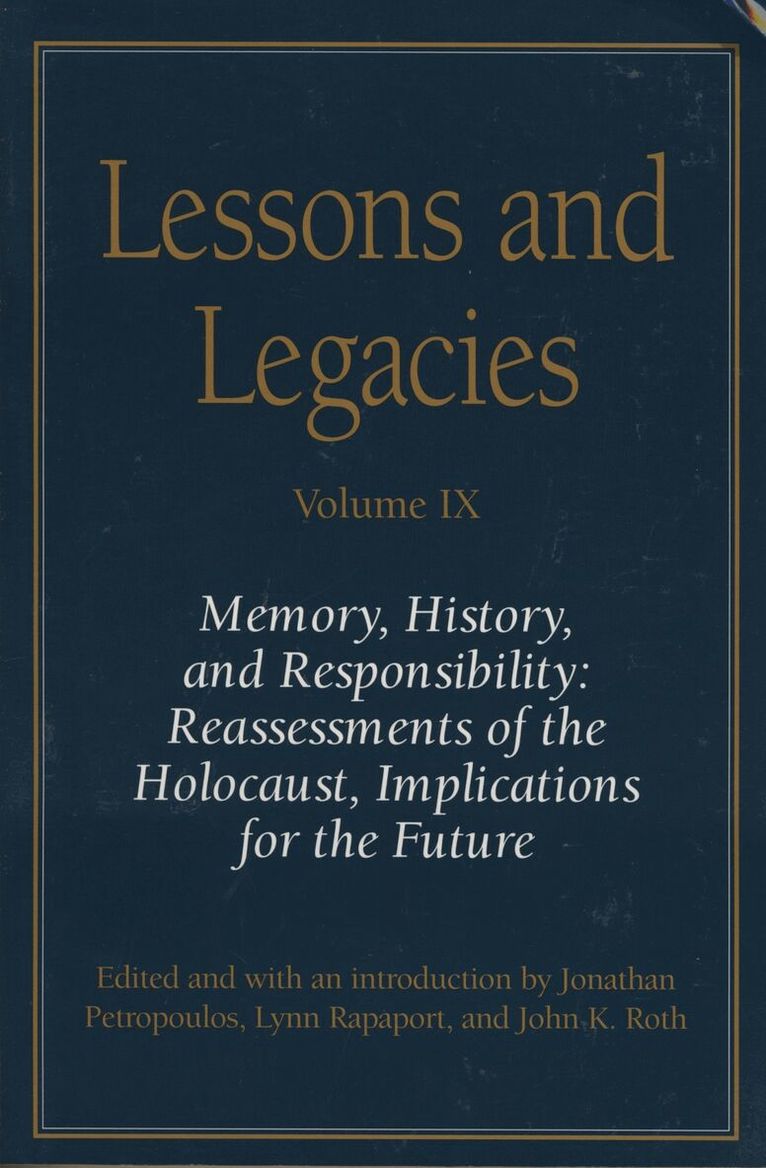
Lessons and Legacies IX
Memory, History, and Responsibility - Reassessments of the Holocaust, Implications for the Future
Av Jonathan Petropoulos, Lynn Rapaport m. fl.
Inbunden, 2009
1157 kr
Tillfälligt slut
Memory, History, and Responsibility: Reassessments of the Holocaust, Implications for the Future contains the highlights from the ninth 'Lessons and Legacies' conference. The conference, held during the height of the genocide in Darfur, sought to reexamine how the darkness of the Holocaust …
Lessons and Legacies IX
Memory, History, and Responsibility - Reassessments of the Holocaust, Implications for the Future
Av John K. Roth, Jonathan Petropoulos m. fl.
Häftad, 2009
668 kr
Tillfälligt slut
Memory, History, and Responsibility: Reassessments of the Holocaust, Implications for the Future contains the highlights from the ninth 'Lessons and Legacies' conference. The conference, held during the height of the genocide in Darfur, sought to reexamine how the darkness of the Holocaust …
Lessons and Legacies XI
Expanding Perspectives on the Holocaust in a Changing World
Av Hilary Earl, Karl A. Schleunes
Häftad, 2014
338 kr
Tillfälligt slut
“Expanding Perspectives on the Holocaust in a Changing World” was the theme of the eleventh Lessons and Legacies Conference on the Holocaust. The eighteen essayspublished here, which sprung from the conference, reflect questions that Holocaust scholars are asking in the face of shifting political, …