Liverpool Studies in Ancient History - Böcker
Visar alla böcker i serien Liverpool Studies in Ancient History. Handla med fri frakt och snabb leverans.
13 produkter
13 produkter
1 929 kr
Skickas inom 7-10 vardagar
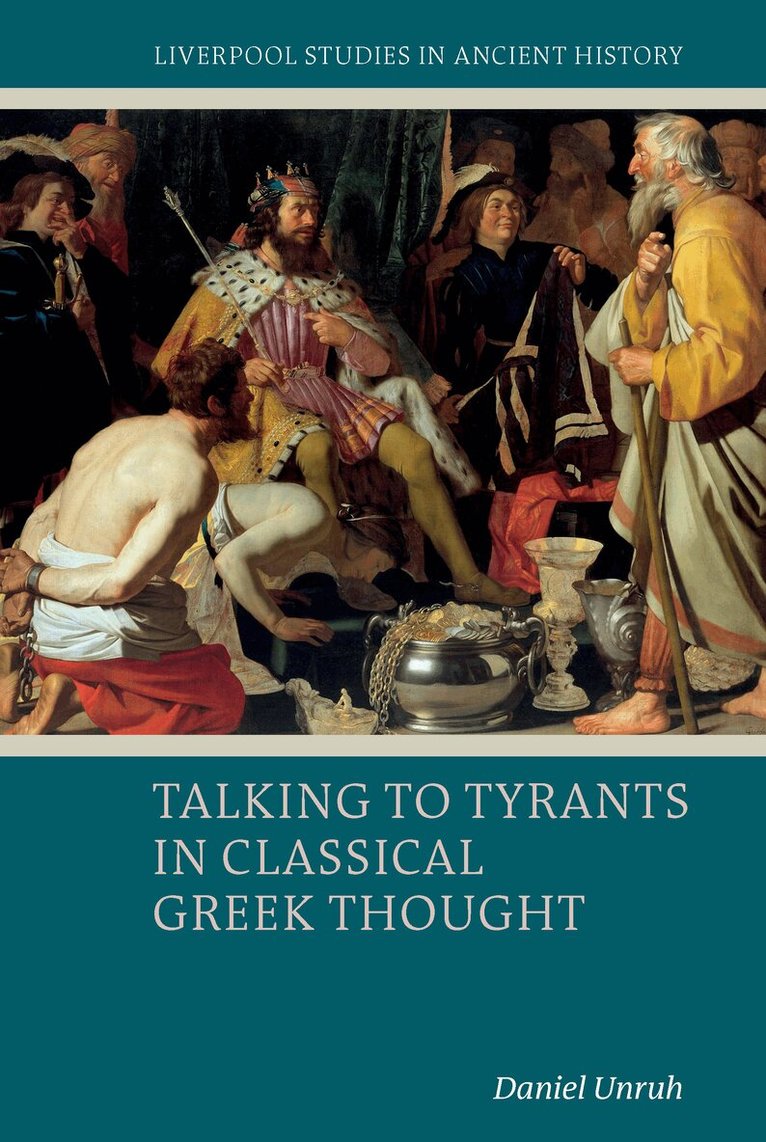
Talking to Tyrants breaks new ground in the study of Classical Greek history and political thought, exploring the previously unexamined question of how citizens of Greek city-states approached interaction with kings, tyrants, and other absolute rulers. Throughout history, states that value collective government and civic liberties have struggled with how to deal with communities that reject these values. Modern, western democracies continually debate how to reconcile their beliefs in human rights and public institutions with the apparent need to maintain contacts with a range of dictatorships and authoritarian regimes. Greek poleis of the fifth and fourth centuries BCE faced similar challenges.Through a close reading of several Greek authors, in particular Herodotus, Xenophon, Isocrates and Plato, Talking to Tyrants details the different strategies that these authors depict, adopt, or recommend for enabling communication between the very different worlds of the Greek city state and the monarch’s court. The study is further informed by contemporary Intercultural Communications Theory, which provides a powerful framework for examining the ways in which individuals from different cultures and political systems interact.
665 kr
Skickas inom 7-10 vardagar
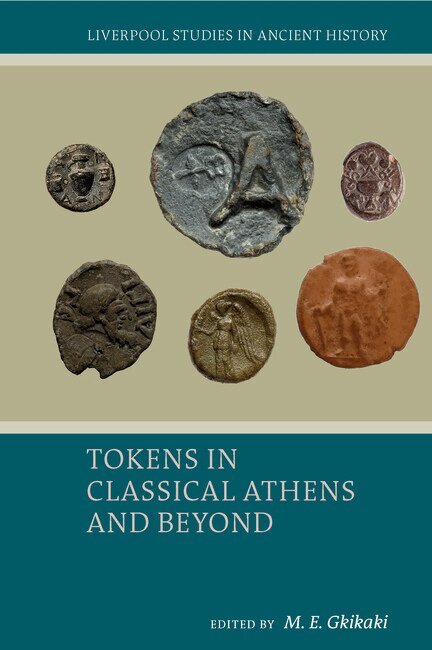
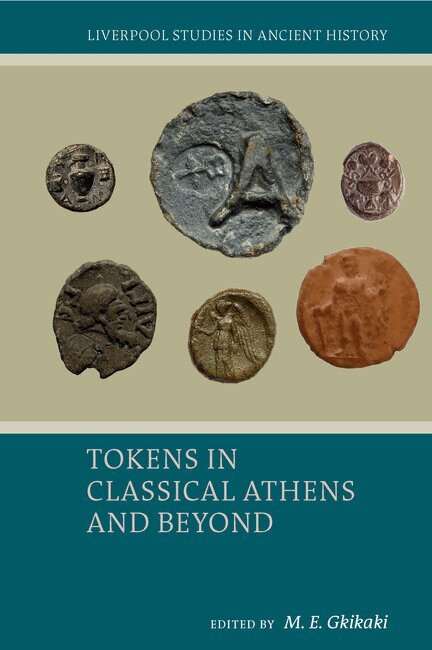
An Open Access edition of this book is available on the Liverpool University Press website and the OAPEN library.A selection of essays on symbola, as the tokens of Classical Athens were called, bringing together scholars of various disciplines and professional categories (numismatists, historians, museum curators) that intends to reshape our knowledge on the roles these objects played in the Athenian Democracy. This is a series of case studies which aspires to test old theories and probe new assumptions. The first section explores the extent to which our knowledge has evolved since symbola were first distinguished from coins. Four essays demonstrate how tokens, as material manifestations of particular institutions, contributed to the formation of civic and political identity in the city-state of Athens and the roles they played in ensuring legal and political equality. The second section of the volume on new finds aims to develop expertise in studying tokens and increase relevant knowledge. Finally, a third section contains comparative studies from Sicily, Jerusalem and Ephesos, aiming to adopt a comparative methodology for a better understanding of the characteristics and roles of tokens from across the ancient Mediterranean. Contributors: Vera Geelmuyden Bulgurlu, Tumay Hazinedar Coscun, Antonino Crisà, Yoav Farhi, P. J. Finglass, Mairi Gkikaki, Irini Karra, James Kierstead, John H. Kroll, Stamatoula Makrypodi, Christian Mondello, Daria Russo, Martin Schäfer.
519 kr
Skickas inom 7-10 vardagar
An Open Access edition is available on the Liverpool University Press website, thanks to funding from St John’s College, Oxford, through a ‘Meeting of Minds’ grant.Death is common and inescapable – everyone will agree. Yet, how one imagines the experience of dying and the beyond is very individual. Ancient cultures were not indifferent to this grim and painful moment and ‘the unknown beyond’. Needless to say, representations of the final moments and transition to the world of the dead filled many pages and paintings of the past. Unsurprisingly perhaps, given that no one comes back to tell the story, the world of the after-death is stained by perception of the process of dying and a negative reflection of the world of the living. The present book explores the ideas regarding death, dying and the world beyond death of those who came long before us, living in Mesopotamia, Egypt, the Levant, ancient Greece, Etruria Rome, and Inca culture (for comparative purposes). Even though separated by centuries, the reader will be surprised that the ancient experience of ‘the unknown’ does not seem unfamiliar, but still has much to offer in terms of reflection on ‘when we are not’.
1 761 kr
Skickas inom 7-10 vardagar
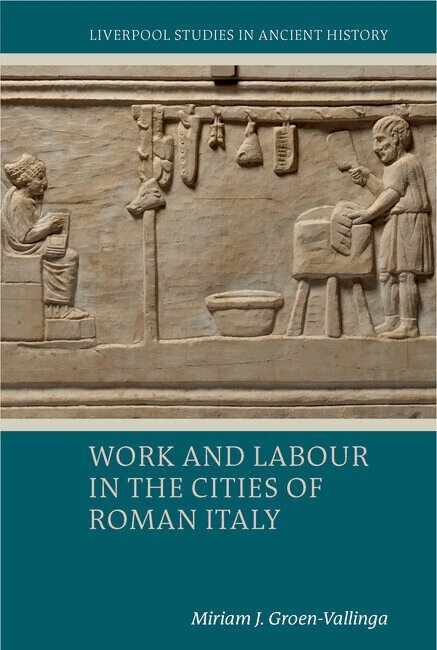
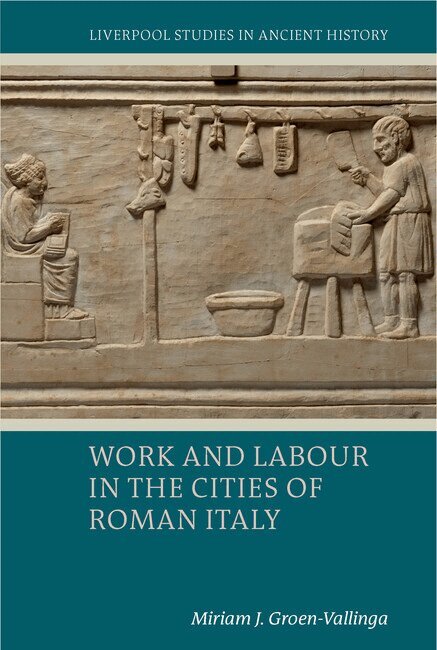
Work and labour are fundamental to an understanding of Roman society. In a world where reliable information was scarce and economic insecurity loomed large, social structures and networks of trust were of paramount importance to the way work was provided and filled in. Taking its cue from New Institutional Economics, this book deals with the wide range of factors shaping work and labour in the cities of Roman Italy under the early empire, from families and familial structures, to labour collectives, slavery, education and apprenticeship.To illuminate the complexity of the market for labour, this monograph offers a new analysis of the occupational inscriptions and reliefs from Roman Italy, placing them in the wider context by means of documentary evidence like apprenticeship contracts, legal sources, and material remains. This synthesis therefore provides a comprehensive analysis of the ancient sources on work and labour in Roman urban society, leading to a novel interpretation of the market for work, and a fuller understanding of the daily lives of nonelite Romans. For some of them, work was indeed a source of pride, whereas for others it was merely a means to an end or a necessity of life.
1 678 kr
Skickas inom 7-10 vardagar
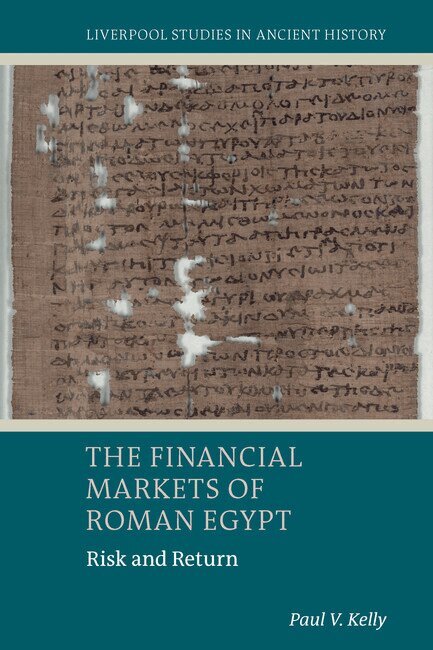
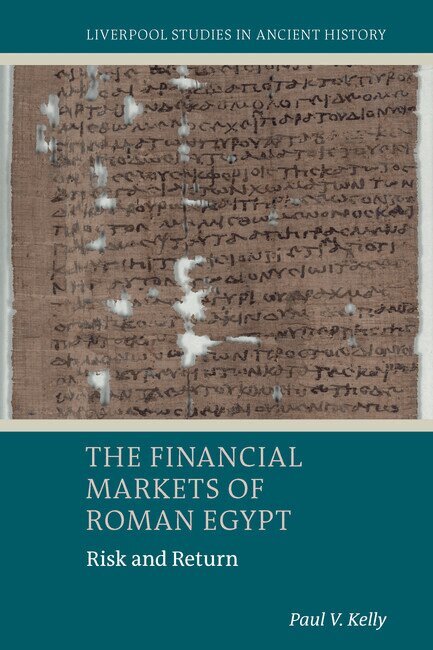
The Financial Markets of Roman Egypt analyses some 4,367 financial transactions, leases, sales and loans, recorded on papyri in Roman Egypt in the period AD 1 to 350. The analysis of this remarkable body of information, the ancient equivalent of modern-day ‘Big Data’, helps us understand how ordinary people thought about some of the most important decisions they would make in their life: buying a house, lending their savings or renting land. Using innovative theories and techniques inspired by classics, mathematics and the financial markets, it brings out the differences and similarities of behaviours with modern and historical comparators.The book looks at risk and return for both asset holders - the landlords and lenders - and thosedependent on the use of those assets - the tenants and borrowers. In particular it quantifies the risks facing families, including climate variability. Issues such as wealth concentration, social mobility and the role of the aged and women in the financial markets are addressed.The analysis presented expands our knowledge of the nature of the financial markets, and from that examination a sharper insight into the nature of the economy of the Roman world is gained,making it clear that there was no single “market” economy, but different sectors, some of which were driven by reciprocity/redistribution and others by financially rational judgements.
2 266 kr
Kommande
Institutions, Ideology, and Power in the Hasmonean State offers a bold reappraisal of one of the most consequential and understudied polities of the ancient Mediterranean. Drawing on a rich and varied corpus of evidence, including the historical testimony of Flavius Josephus, the Dead Sea Scrolls, contemporary religious literature, and archaeological data, it argues that the Hasmonean State was one of the Hellenistic world’s most radical and innovative political experiments.Through in-depth analysis of the State’s political architecture, elite networks, and religious ideology from the mid-second to the first century BCE, this monograph traces how a small vassal state centred on Jerusalem and its hinterland evolved into a multiethnic kingdom extending across much of the southern Levant. It further explores how the Hasmonean State’s ethical, strategic, and cultural priorities were embedded in the daily lives of its subjects through a dramatic transformation of material culture, and inscribed onto the landscape through the development of a network of monumental fortresses and palaces. Finally, the Hasmonean State is situated within broader regional patterns of statecraft and iconography shared by a constellation of priest-states operating amid the turbulence of post-Seleucid Asia.
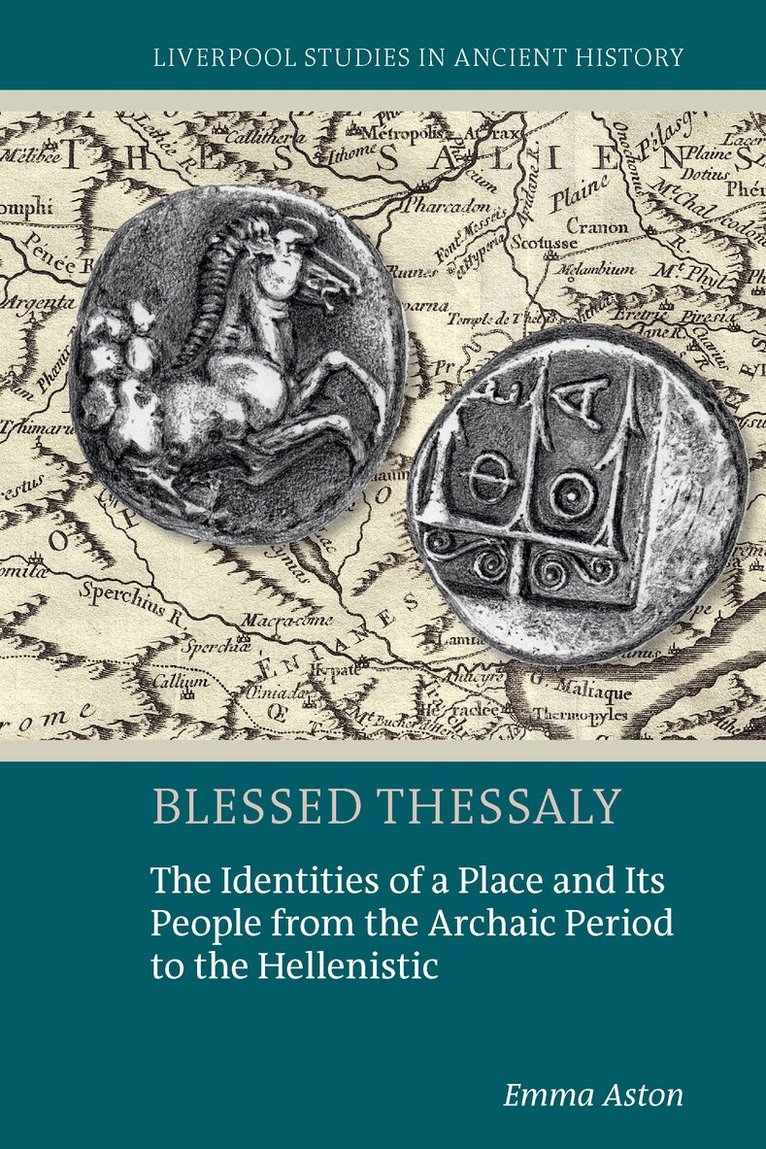
Blessed Thessaly
The Identities of a Place and Its People from the Archaic Period to the Hellenistic
Häftad, Engelska, 2024
636 kr
Skickas inom 7-10 vardagar
An Open Access edition is available.Thessaly was a region of great importance in the ancient Greek world, possessing both agricultural abundance and a strategic position between north and south. It presents historians with the challenge of seeing beyond traditional stereotypes (wealth and witches, horses and hospitality) that have coloured perceptions of its people from antiquity to the present day. It also presents a complex and illuminating interaction between polis and *ethnos* identity. In daily life, most Thessalians primarily operated within, and identified with, their specific polis; at the same time, the regional dimension – being Thessalian – was rarely out of sight for long. It manifested itself in stories told, in deities worshipped, in modes of political co-operation, in language, rituals, sites and objects.Chapter by chapter, this book follows the emergence, development and adaptation of Thessalian regional identity from the Archaic period to the early second century BC. In so doing, rather than rejecting ancient stereotypes as a mere inconvenience for the historian, it considers the constant dialogue between Thessalian self-presentation and depictions of the Thessalian character by other Greeks. It also confronts some of the prejudices and assumptions still influencing modern approaches to studying the region. All in all, the reader is invited to see Thessaly not as a region of marginal significance in Greek history, but as occupying a central role in many aspects of ancient cultural and political discourse.
519 kr
Skickas inom 7-10 vardagar
Work and labour are fundamental to an understanding of Roman society. In a world where reliable information was scarce and economic insecurity loomed large, social structures and networks of trust were of paramount importance to the way work was provided and filled in. Taking its cue from New Institutional Economics, this book deals with the wide range of factors shaping work and labour in the cities of Roman Italy under the early empire, from families and familial structures, to labour collectives, slavery, education and apprenticeship.To illuminate the complexity of the market for labour, this monograph offers a new analysis of the occupational inscriptions and reliefs from Roman Italy, placing them in the wider context by means of documentary evidence like apprenticeship contracts, legal sources, and material remains. This synthesis therefore provides a comprehensive analysis of the ancient sources on work and labour in Roman urban society, leading to a novel interpretation of the market for work, and a fuller understanding of the daily lives of nonelite Romans. For some of them, work was indeed a source of pride, whereas for others it was merely a means to an end or a necessity of life.
2 012 kr
Skickas inom 7-10 vardagar
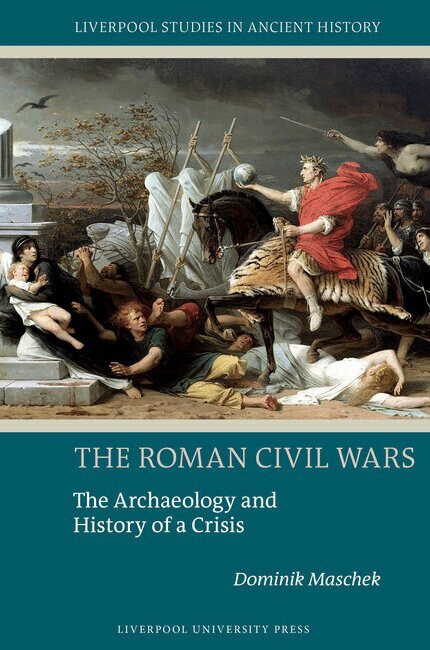
The late Roman Republic was characterized by severe crises, ranging from the time of the Gracchi to the Battle of Actium and finally ending with the Principate of Augustus. Individual military leaders such as Marius, Sulla, and Pompey acquired so much power that the internal cohesion of the Republic was shattered. The Roman state descended into civil war. By drawing upon a range of case studies, from monumental building to public dining, Dominik Maschek demonstrates that the harsh realities and disruptions of civil war were intimately bound up with growing wealth and prosperity: on the one hand, they were fueled by the increasing complexity of urban life and conspicuous consumption which gave rise to greed and violent appropriation; on the other hand, by the forceful and premature promotion of new ‘controlling generations’, they also played a vital role in conditioning the worldviews and socio-cultural norms that regulated the use of material culture. Drawing upon the latest advances in Roman archaeology and history, Dominik Maschek uses buildings and images, as well as rituals and acts of state, to analyze these structural underpinnings and the impact of the late Republican civil wars and for the first time offers an overall interpretation of their cultural history.
446 kr
Skickas inom 7-10 vardagar
The Financial Markets of Roman Egypt analyses some 4,367 financial transactions, leases, sales and loans, recorded on papyri in Roman Egypt in the period AD 1 to 350. The analysis of this remarkable body of information, the ancient equivalent of modern-day ‘Big Data’, helps us understand how ordinary people thought about some of the most important decisions they would make in their life: buying a house, lending their savings or renting land. Using innovative theories and techniques inspired by classics, mathematics and the financial markets, it brings out the differences and similarities of behaviours with modern and historical comparators.The book looks at risk and return for both asset holders - the landlords and lenders - and thosedependent on the use of those assets - the tenants and borrowers. In particular it quantifies the risks facing families, including climate variability. Issues such as wealth concentration, social mobility and the role of the aged and women in the financial markets are addressed.The analysis presented expands our knowledge of the nature of the financial markets, and from that examination a sharper insight into the nature of the economy of the Roman world is gained,making it clear that there was no single “market” economy, but different sectors, some of which were driven by reciprocity/redistribution and others by financially rational judgements.
490 kr
Skickas inom 7-10 vardagar
Talking to Tyrants breaks new ground in the study of Classical Greek history and political thought, exploring the previously unexamined question of how citizens of Greek city-states approached interaction with kings, tyrants, and other absolute rulers. Throughout history, states that value collective government and civic liberties have struggled with how to deal with communities that reject these values. Modern, western democracies continually debate how to reconcile their beliefs in human rights and public institutions with the apparent need to maintain contacts with a range of dictatorships and authoritarian regimes. Greek poleis of the fifth and fourth centuries BCE faced similar challenges.Through a close reading of several Greek authors, in particular Herodotus, Xenophon, Isocrates and Plato, Talking to Tyrants details the different strategies that these authors depict, adopt, or recommend for enabling communication between the very different worlds of the Greek city state and the monarch’s court. The study is further informed by contemporary Intercultural Communications Theory, which provides a powerful framework for examining the ways in which individuals from different cultures and political systems interact.
2 012 kr
Skickas inom 7-10 vardagar
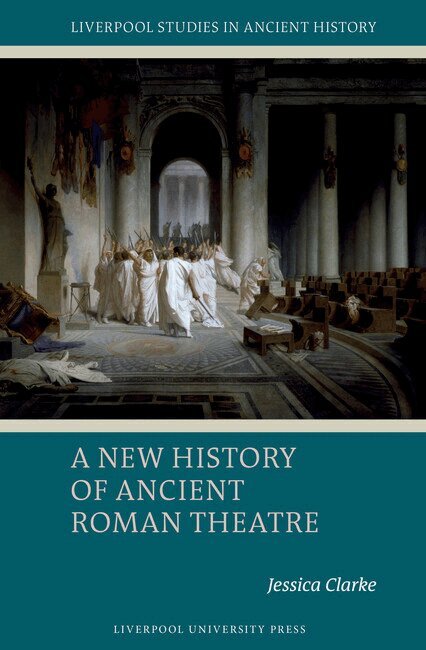
‘Roman theatre’ is a term often used to describe the theatre of ancient Italy during the second and third century BCE. Plautus and Terence are referred to as ‘Roman playwrights,’ and Rome itself is generally regarded as the driving force behind the development of theatrical culture in Italy. But was this early theatre in Italy specifically or characteristically Roman? Using previously marginalised archaeological source material and placing it in constructive dialogue with the surviving ancient literature, this book offers a significant reinterpretation of how theatre developed in the Italian peninsula, as well as a radical reappraisal of the role of Republican Rome as the impetus for cultural change. Challenging a long-held scholarly consensus, it is argued that whilst Rome would eventually rise to political and cultural dominance, the archaeological evidence does not encourage us to view Rome as a significant factor in the development of theatre in Italy until at least the end of the first century BCE and the construction of the Theatre of Pompey. Our attention is directed instead to other cities in the Italian peninsula during the third and second centuries BCE, which have hitherto been greatly overshadowed by imperialistic narratives of Roman cultural development.In addition to the book, Appendix B, a comprehensive catalogue of all the comic visual material produced in or imported to the Italian peninsula between the end of the fourth century BCE and the middle of the first century CE is available to download via the Liverpool University Press Digital Collaboration Hub. Due to the size of the dataset, it has not been produced in print and is available exclusively on the Liverpool University Press website.
1 929 kr
Skickas inom 7-10 vardagar
An Open Access edition of this book is available on the Liverpool University Press website and the OAPEN library.A selection of essays on symbola, as the tokens of Classical Athens were called, bringing together scholars of various disciplines and professional categories (numismatists, historians, museum curators) that intends to reshape our knowledge on the roles these objects played in the Athenian Democracy. This is a series of case studies which aspires to test old theories and probe new assumptions. The first section explores the extent to which our knowledge has evolved since symbola were first distinguished from coins. Four essays demonstrate how tokens, as material manifestations of particular institutions, contributed to the formation of civic and political identity in the city-state of Athens and the roles they played in ensuring legal and political equality. The second section of the volume on new finds aims to develop expertise in studying tokens and increase relevant knowledge. Finally, a third section contains comparative studies from Sicily, Jerusalem and Ephesos, aiming to adopt a comparative methodology for a better understanding of the characteristics and roles of tokens from across the ancient Mediterranean. Contributors: Vera Geelmuyden Bulgurlu, Tumay Hazinedar Coscun, Antonino Crisà, Yoav Farhi, P. J. Finglass, Mairi Gkikaki, Irini Karra, James Kierstead, John H. Kroll, Stamatoula Makrypodi, Christian Mondello, Daria Russo, Martin Schäfer.