Macroeconomic Policy Making - Böcker
Visar alla böcker i serien Macroeconomic Policy Making. Handla med fri frakt och snabb leverans.
13 produkter
13 produkter
1 324 kr
Skickas inom 7-10 vardagar
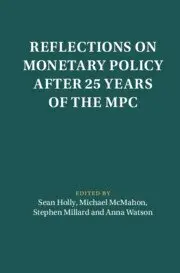
The Bank of England was given operational independence by the UK Parliament in 1997. The key feature of this independence is that the Bank's Monetary Policy Committee has sole responsibility for setting interest rates to achieve the Government's inflation target. Featuring contributions from leading academics and practitioners, Reflections on Monetary Policy after twenty-five years of the MPC assesses and reflects on this independence, particularly in relation to the activities of the Monetary Policy Committee. The book is organised around four main themes: the remit given to the Bank of England in 1997, the decision-making process by which the Bank determines monetary policy, the use of unconventional policy after the financial crisis of 2007–11, and the scale and scope of the communication that the Bank uses to inform the public. It argues that the economy works best when agents understand why the central bank behaves in a particular way.
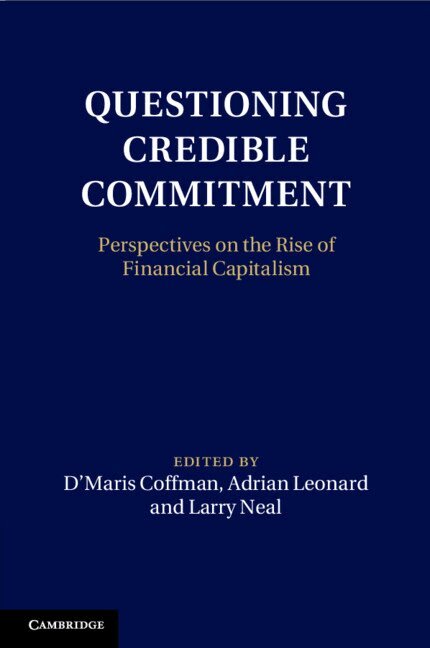
Questioning Credible Commitment
Perspectives on the Rise of Financial Capitalism
Häftad, Engelska, 2026
360 kr
Skickas inom 7-10 vardagar
Financial capitalism emerged in a recognisably modern form in late seventeenth- and eighteenth-century Great Britain. Following the seminal work of Douglass C. North and Barry R. Weingast (1989), many scholars have concluded that the 'credible commitment' that was provided by parliamentary backing of government as a result of the Glorious Revolution of 1688 provided the key institutional underpinning on which modern public finances depend. In this book, a specially commissioned group of historians and economists examine and challenge the North and Weingast thesis to show that multiple commitment mechanisms were necessary to convince public creditors that sovereign debt constituted a relatively accessible, safe and liquid investment vehicle. Questioning Credible Commitment provides academics and practitioners with a broader understanding of the origins of financial capitalism, and, with its focus on theoretical and policy frameworks, shows the significance of the debate to current macroeconomic policy making.
428 kr
Kommande
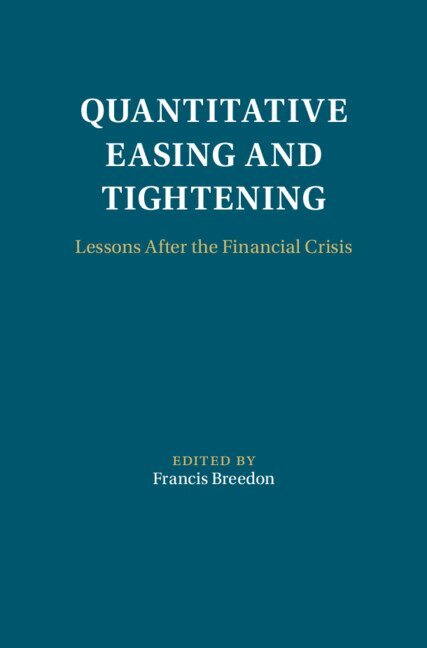
Quantitative easing (QE) is a relatively new form of monetary policy whereby a central bank buys up government bonds and other financial assets to stimulate economic activity. It came to prominence in the aftermath of the Global Financial Crisis of 2007-11 when standard monetary policy tools were unavailable to central banks due to low inflation levels. Quantitative tightening (QT) is the opposite whereby central banks sell off bonds and assets to reduce the size of their balance sheets. Quantitative Easing and Tightening brings together leading academics and practitioners to assess the legacy of quantitative easing and look at where new quantitative tightening measures may take us. It examines three of the most important actors in the QE/QT story: the Bank of England, the European Central Bank and the US Federal Reserve to provide an overview of the effectiveness, governance, and fiscal costs of quantitative easing and tightening.
1 390 kr
Kommande
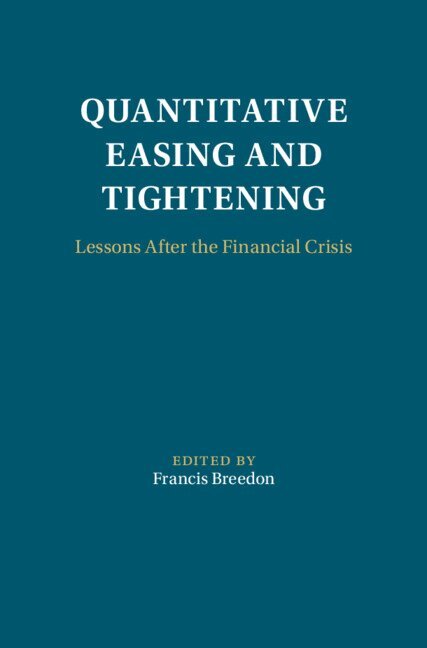
Quantitative easing (QE) is a relatively new form of monetary policy whereby a central bank buys up government bonds and other financial assets to stimulate economic activity. It came to prominence in the aftermath of the Global Financial Crisis of 2007-11 when standard monetary policy tools were unavailable to central banks due to low inflation levels. Quantitative tightening (QT) is the opposite whereby central banks sell off bonds and assets to reduce the size of their balance sheets. Quantitative Easing and Tightening brings together leading academics and practitioners to assess the legacy of quantitative easing and look at where new quantitative tightening measures may take us. It examines three of the most important actors in the QE/QT story: the Bank of England, the European Central Bank and the US Federal Reserve to provide an overview of the effectiveness, governance, and fiscal costs of quantitative easing and tightening.
1 417 kr
Skickas inom 7-10 vardagar
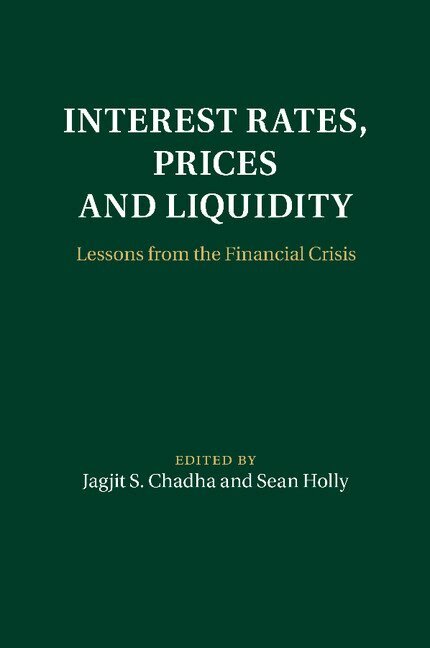
Many of the assumptions that underpin mainstream macroeconomic models have been challenged as a result of the traumatic events of the recent financial crisis. Thus, until recently, it was widely agreed that although the stock of money had a role to play, in practice it could be ignored as long as we used short-term nominal interest rates as the instrument of policy because money and other credit markets would clear at the given policy rate. However, very early on in the financial crisis interest rates effectively hit zero percent and so central banks had to resort to a wholly new set of largely untested instruments to restore order, including quantitative easing and the purchase of toxic financial assets. This book brings together contributions from economists working in academia, financial markets and central banks to assess the effectiveness of these policy instruments and explore what lessons have so far been learned.
Questioning Credible Commitment
Perspectives on the Rise of Financial Capitalism
Inbunden, Engelska, 2013
1 417 kr
Skickas inom 7-10 vardagar
Financial capitalism emerged in a recognisably modern form in late seventeenth- and eighteenth-century Great Britain. Following the seminal work of Douglass C. North and Barry R. Weingast (1989), many scholars have concluded that the 'credible commitment' that was provided by parliamentary backing of government as a result of the Glorious Revolution of 1688 provided the key institutional underpinning on which modern public finances depend. In this book, a specially commissioned group of historians and economists examine and challenge the North and Weingast thesis to show that multiple commitment mechanisms were necessary to convince public creditors that sovereign debt constituted a relatively accessible, safe and liquid investment vehicle. Questioning Credible Commitment provides academics and practitioners with a broader understanding of the origins of financial capitalism, and, with its focus on theoretical and policy frameworks, shows the significance of the debate to current macroeconomic policy making.
1 282 kr
Skickas inom 7-10 vardagar
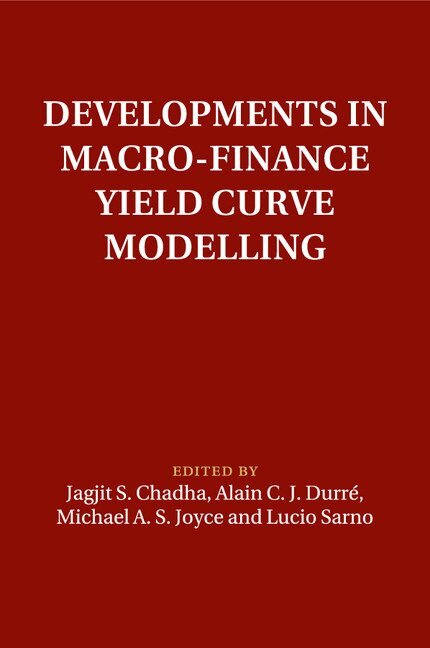
Changes in the shape of the yield curve have traditionally been one of the key macroeconomic indicators of a likely change in economic outlook. However, the recent financial crises have created a challenge to the management of monetary policy, demanding a revision in the way that policymakers model expected changes in the economy. This volume brings together central bank economists and leading academic monetary economists to propose new methods for modelling the behaviour of interest rates. Topics covered include: the analysis and extraction of expectations of future monetary policy and inflation; the analysis of the short-term dynamics of money market interest rates; the reliability of existing models in periods of extreme market volatility and how to adjust them accordingly; and the role of government debt and deficits in affecting sovereign bond yields and spreads. This book will interest financial researchers and practitioners as well as academic and central bank economists.
1 770 kr
Skickas inom 7-10 vardagar
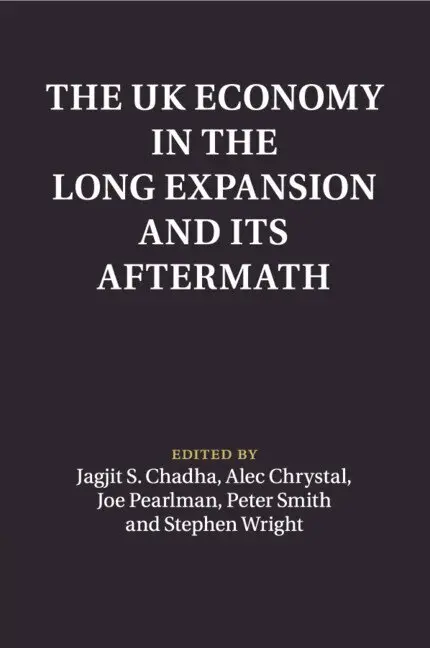
The financial crisis of 2007-11 has now been analysed and explained from almost every conceivable standpoint. Far less attention has been paid to the long business cycle expansion that started in 1992 and provided an exceptional period of macroeconomic stability in the UK. To many it seemed that the main problem of the UK economy had been solved: that of sustained non-inflationary economic growth. This book brings together senior macroeconomists from universities and the Bank of England to look at what policy-making lessons can be learned from looking at the period of expansion that preceded the financial crisis. It does so with the twin aims of encouraging more policy-focused research on the UK and encouraging policy debate in the aftermath of the financial crisis and the prolonged economic recession. Students, researchers and practitioners with an interest in the UK economy will need to absorb the lessons of this book.
550 kr
Skickas inom 7-10 vardagar
Many of the assumptions that underpin mainstream macroeconomic models have been challenged as a result of the traumatic events of the recent financial crisis. Thus, until recently, it was widely agreed that although the stock of money had a role to play, in practice it could be ignored as long as we used short-term nominal interest rates as the instrument of policy because money and other credit markets would clear at the given policy rate. However, very early on in the financial crisis interest rates effectively hit zero percent and so central banks had to resort to a wholly new set of largely untested instruments to restore order, including quantitative easing and the purchase of toxic financial assets. This book brings together contributions from economists working in academia, financial markets and central banks to assess the effectiveness of these policy instruments and explore what lessons have so far been learned.
441 kr
Skickas inom 7-10 vardagar
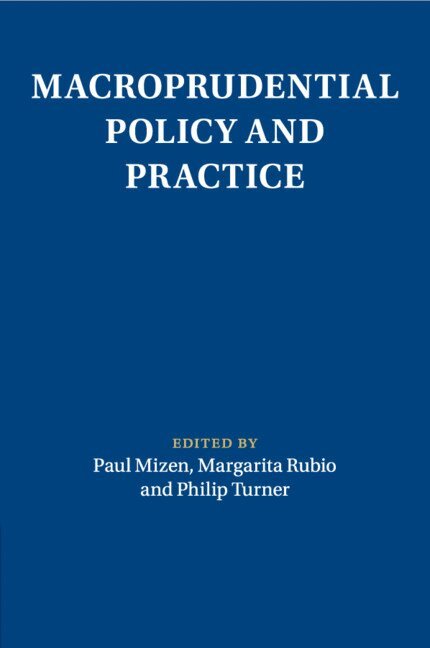
Macroprudential policy is perhaps the most important new development in central bank policymaking circles since the global financial crisis, and reliance on such policies has continued to spread. The crisis, which showed the limits of conventional monetary policy as a tool to deal with financial stability, forced a wide-ranging rethink of economic policies, their interactions and their repercussions. It has led to new forms of intervention, of regulation and of supervisory practice. Macroprudential regulation is now one of the most important topics in modern macroeconomics, because it concerns measures put in place to reduce the risks and costs of the instability caused by financial crises. Written by senior figures from the worlds of academia and banking, this volume combines theoretical approaches with hard evidence of the policy's achievements in many countries. It is the first in-depth analysis of macroprudential instruments for policymakers, banks and economists.
1 417 kr
Skickas inom 7-10 vardagar
Macroprudential policy is perhaps the most important new development in central bank policymaking circles since the global financial crisis, and reliance on such policies has continued to spread. The crisis, which showed the limits of conventional monetary policy as a tool to deal with financial stability, forced a wide-ranging rethink of economic policies, their interactions and their repercussions. It has led to new forms of intervention, of regulation and of supervisory practice. Macroprudential regulation is now one of the most important topics in modern macroeconomics, because it concerns measures put in place to reduce the risks and costs of the instability caused by financial crises. Written by senior figures from the worlds of academia and banking, this volume combines theoretical approaches with hard evidence of the policy's achievements in many countries. It is the first in-depth analysis of macroprudential instruments for policymakers, banks and economists.
604 kr
Skickas inom 7-10 vardagar
The financial crisis of 2007-11 has now been analysed and explained from almost every conceivable standpoint. Far less attention has been paid to the long business cycle expansion that started in 1992 and provided an exceptional period of macroeconomic stability in the UK. To many it seemed that the main problem of the UK economy had been solved: that of sustained non-inflationary economic growth. This book brings together senior macroeconomists from universities and the Bank of England to look at what policy-making lessons can be learned from looking at the period of expansion that preceded the financial crisis. It does so with the twin aims of encouraging more policy-focused research on the UK and encouraging policy debate in the aftermath of the financial crisis and the prolonged economic recession. Students, researchers and practitioners with an interest in the UK economy will need to absorb the lessons of this book.
672 kr
Skickas inom 7-10 vardagar
Changes in the shape of the yield curve have traditionally been one of the key macroeconomic indicators of a likely change in economic outlook. However, the recent financial crises have created a challenge to the management of monetary policy, demanding a revision in the way that policymakers model expected changes in the economy. This volume brings together central bank economists and leading academic monetary economists to propose new methods for modelling the behaviour of interest rates. Topics covered include: the analysis and extraction of expectations of future monetary policy and inflation; the analysis of the short-term dynamics of money market interest rates; the reliability of existing models in periods of extreme market volatility and how to adjust them accordingly; and the role of government debt and deficits in affecting sovereign bond yields and spreads. This book will interest financial researchers and practitioners as well as academic and central bank economists.