• Fri frakt över 249 kr
  • •
  • Snabba leveranser
  • •
  • Billiga böcker
Kundservice

Du är på sajten för privatpersoner.

Företag, bibliotek eller offentlig verksamhet?

Du handlar på classic.bokus.com, där alla dina funktioner finns intakta.
Till classic.bokus.com
Bokus logotyp. Gå till startsidan.
  • Erbjudanden
  • Nyheter
  • Student
  • Topplistor
  • Barn & ungdom
  • Bokus Play
  • E-böcker
  • Pocketböcker
  • Spel & pussel

10% rabatt på allt med kod: NYSTART10 →

Sidfot

Mina sidor

    Hjälp

    • Kundservice
    • Vanliga frågor och svar
    • Frakt och leverans
    • Retur vid ångerrätt
    • Reklamera vara
    • Betalning
    • Köpvillkor
    • Allmänna villkor
    • Information om webbplatsens tillgänglighet

    Om Bokus

    • Om oss
    • Pressrum
    • För studenter
    • För företag
    • För bibliotek och offentlig verksamhet
    • För leverantörer
    • Hållbarhet

    Populärt

    • Aktuella erbjudanden
    • Presentkort
    • Studentlitteratur
    • Nya böcker
    • Topplistor
    • Signerade böcker
    • Engelska böcker

    Inspiration

    • Boktips
    • BookTok
    • Populära bokserier
    • Barnbokskaraktärer
    • Populära författare
    Logotyp för Bokus
    Följ oss på Facebook (extern länk)Följ oss på Instagram (extern länk)Följ oss på YouTube (extern länk)Följ oss på TikTok (extern länk)
    bokus @ CookiesAnpassa cookiesIntegritetspolicyKöpvillkor
    Till Citymail hemsida (extern länk)Till Budbee hemsida (extern länk)Till Postnord hemsida (extern länk)Till Schenker hemsida (extern länk)Till Early Bird hemsida (extern länk)Till Walleys hemsida (extern länk)
    1. Ekonomi och Ledarskap
    2. Nationalekonomi
    3. Makroekonomi

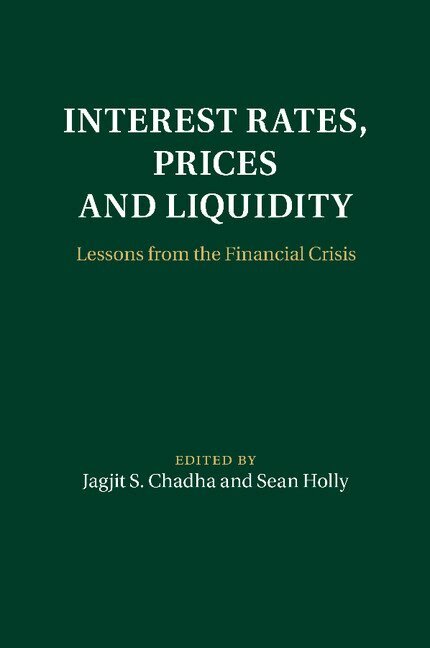
    Interest Rates, Prices and Liquidity

    Lessons from the Financial Crisis

    AvJagjit S. Chadha,Sean Holly

    Häftad, Engelska, 2015

    Del i serien Macroeconomic Policy Making

    589 kr

    Beställningsvara. Skickas inom 10-15 vardagar. Fri frakt över 249 kr.

    Beskrivning

    Many of the assumptions that underpin mainstream macroeconomic models have been challenged as a result of the traumatic events of the recent financial crisis. Thus, until recently, it was widely agreed that although the stock of money had a role to play, in practice it could be ignored as long as we used short-term nominal interest rates as the instrument of policy because money and other credit markets would clear at the given policy rate. However, very early on in the financial crisis interest rates effectively hit zero percent and so central banks had to resort to a wholly new set of largely untested instruments to restore order, including quantitative easing and the purchase of toxic financial assets. This book brings together contributions from economists working in academia, financial markets and central banks to assess the effectiveness of these policy instruments and explore what lessons have so far been learned.

    Produktinformation

    • Utgivningsdatum:2015-01-29
    • Mått:151 x 228 x 15 mm
    • Vikt:430 g
    • Format:Häftad
    • Språk:Engelska
    • Serie:Macroeconomic Policy Making
    • Antal sidor:294
    • Förlag:Cambridge University Press
    • ISBN:9781107480032

    Utforska kategorier

    • Makroekonomi inom Ekonomi och Ledarskap

    Mer om författaren

    Jagjit S. Chadha is Professor of Economics, University of Kent. Sean Holly is Professional Fellow at Fitzwilliam College and Director of Research at the Faculty of Economics, University of Cambridge.

    Recensioner i media

    'Many failings were revealed by the on-going financial crisis. The reputations of bankers and regulators have been shredded. But the reputation of academic macro-economists also joined them in the dust-bin. In this important new book Chadha and Holly take stock of the lessons of the financial crisis and the unconventional measures that have had to be adopted, in order to bring academic analysis to bear on the extraordinary events of recent years, and to restore dignity to our profession.' Charles Goodhart , Emeritus Professor of Banking and Finance, London School of Economics and Political Science

    Innehållsförteckning

    • 1. New instruments of monetary policy Jagjit S. Chadha and Sean Holly; 2. Liquidity and monetary policy Douglas Gale; 3. Interest rate policies and the stability of banking systems Hans Gersbach and Jan Wenzelberger; 4. Handling liquidity shocks: QE and Tobin's q Marcus Miller and John Driffill; 5. Asset purchase policies and portfolio effects: a DSGE analysis Richard Harrison; 6. Financial intermediaries in an estimated DSGE model for the UK Stefania Villa and Jing Yang; 7. Unconventional monetary policy, central bank balance sheets and long term forward rates Sharon Kozicki, Eric Santor and Lena Suchanek; 8. Non-standard monetary policy measures and monetary developments Domenico Giannone, Michele Lenza, Huw Pill and Lucrezia Reichlin; 9. Quantitative easing: one year on Spencer Dale; 10. What saved the banks: unconventional monetary or fiscal policy? Mike Wickens; 11. Non-conventional monetary policies: three views from the DSGE literature Evren Caglar, Jack Meaning, Alex Waters, James Warren and Jagjit Chadha.