Mark Twain and His Circle - Böcker
Visar alla böcker i serien Mark Twain and His Circle. Handla med fri frakt och snabb leverans.
18 produkter
18 produkter
324 kr
Skickas inom 7-10 vardagar
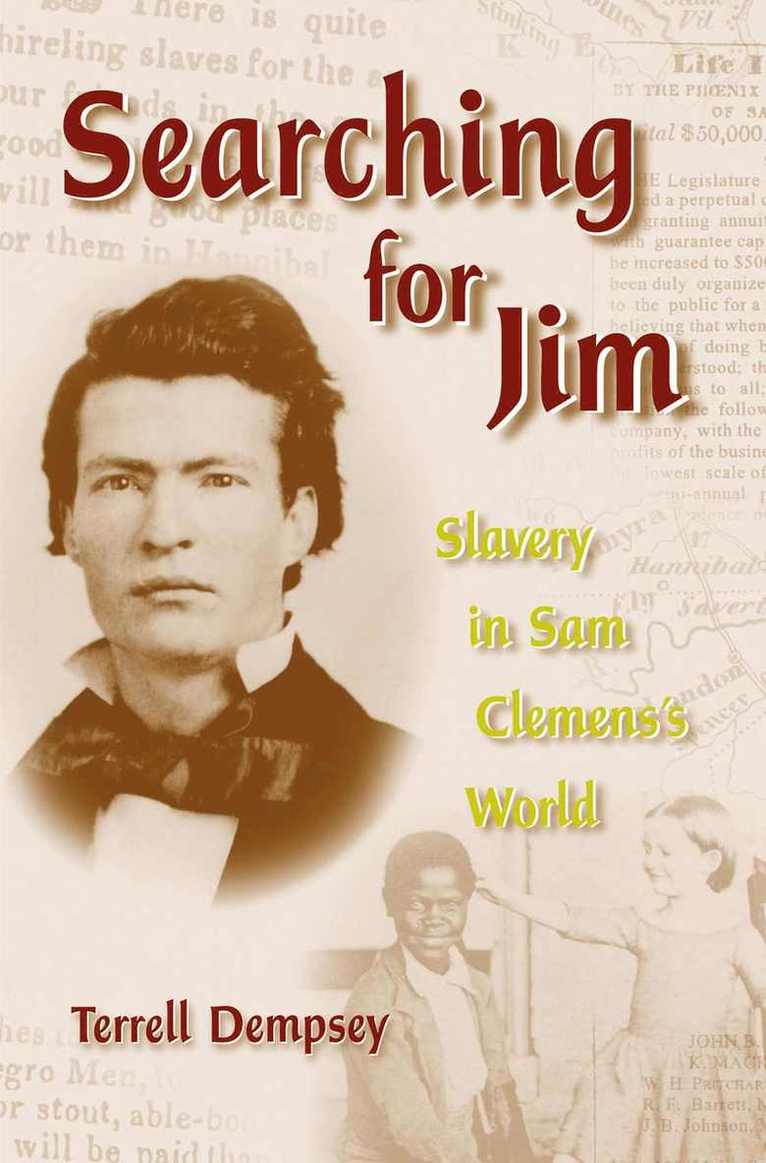
Carefully reconstructed from letters, newspaper articles, sermons, speeches, books, and court records, Searching for Jim offers a new perspective on Sam Clemens's writings, especially regarding his use of race in the portrayal of individual characters, their attitudes, and worldviews. This fascinating volume will be valuable to anyone trying to measure the extent to which Clemens transcended the slave culture he lived in during his formative years and the struggles he later faced in dealing with race and guilt. It will forever alter the way we view Sam Clemens, Hannibal, and Mark Twain.
297 kr
Skickas inom 7-10 vardagar
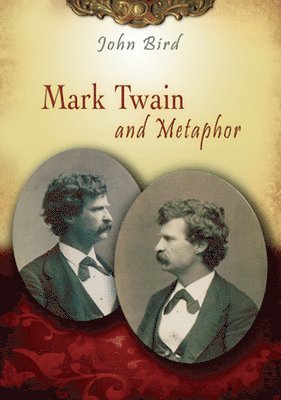
Metaphor theory, observes John Bird, is like Mark Twain: both seem simple upon first introduction. Now, in the most complete study to date of Twain's use of figurative language, a veteran Twain scholar tackles the core of his writing and explores it with theoretical approaches that have rarely been applied to Twain, providing new insights into how he imagined his world - and the singular ways in which he expressed himself. From 'The Jumping Frog' to the late dream narratives, Bird considers Twain's metaphoric construction over his complete career and especially sheds new light on his central texts: Roughing It; The Adventures of Tom Sawyer; Adventures of Huckleberry Finn; A Connecticut Yankee in King Arthur's Court; Pudd'nhead Wilson; and No. 44, The Mysterious Stranger. He reconsiders 'Old Times on the Mississippi' as the most purely metaphorical of Twain's writings, goes on to look at how Twain used metaphor and talked about it in a variety of works and genres, and even argues that Clemens's pseudonym is not so much an alter ego as a metaphorized self. By offering insight into how Twain handled figurative language during the composing process, Bird reveals not only hidden facets of his artistry but also new aspects of works that we think we know well - including some entirely new ideas regarding Huck Finn that draw on the recent discovery of the first half of the manuscript. In addition to dealing with issues currently central to Twain studies, such as race and gender, he also links metaphor to humor and dream theory to further illuminate topics central to his work. More than a study of Twain's language, the book delves into the psychological aspects of metaphor to reveal the writer's attitudes and thoughts, showing how using metaphor as a guide to Twain reveals much about his composition process. Applying the insights of metaphor theorists such as Roman Jakobson and Colin M. Turbayne, Bird offers readers not only new insights into Twain but also an introduction to this interdisciplinary field. In lively prose, Mark Twain and Metaphor provides a vital way to read Twain's entire corpus, allowing readers to better appreciate his style, humor, and obsession with dreams. It opens new ground and makes old ground fresh again, offering ways to see and resee this essential American writer.
233 kr
Skickas inom 7-10 vardagar
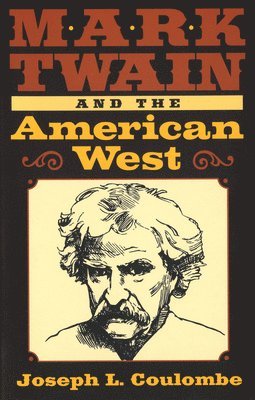
In Mark Twain and the American West, Joseph Coulombe explores how Mark Twain deliberately manipulated contemporary conceptions of the American West to create and then modify a public image that eventually won worldwide fame. He establishes the central role of the western region in the development of a persona that not only helped redefine American manhood and literary celebrity in the late nineteenth century, but also produced some of the most complex and challenging writings in the American canon. Coulombe sheds new light on previously underappreciated components of Twain's distinctly western persona. Gathering evidence from contemporary newspapers, letters, literature, and advice manuals, Coulombe shows how Twain's persona in the early 1860s as a hard-drinking, low-living straight-talker was an implicit response to western conventions of manhood. He then traces the author's movement toward a more sophisticated public image, arguing that Twain characterized language and authorship in the same manner that he described western men: direct, bold, physical, even violent. In this way, Twain capitalized upon common images of the West to create himself as a new sort of western outlaw - one who wrote. Coulombe outlines Twain's struggle to find the proper balance between changing cultural attitudes toward male respectability and rebellion and his own shifting perceptions of the East and the West. Focusing on the tension between these goals, Coulombe explores Twain's emergence as the moneyed and masculine man-of-letters, his treatment of American Indians in its relation to his depiction of Jim in Adventures of Huckleberry Finn, the enigmatic connection of Huck Finn to the natural world, and Twain's profound influence on Willa Cather's western novels. Mark Twain and the American West is sure to generate new interest and discussion about Mark Twain and his influence. By understanding how conventions of the region, conceptions of money and class, and constructions of manhood intersect with the creation of Twain's persona, Coulombe helps us better appreciate the writer's lasting effect on American thought and literature through the twentieth century and into the twenty-first.
297 kr
Skickas inom 7-10 vardagar
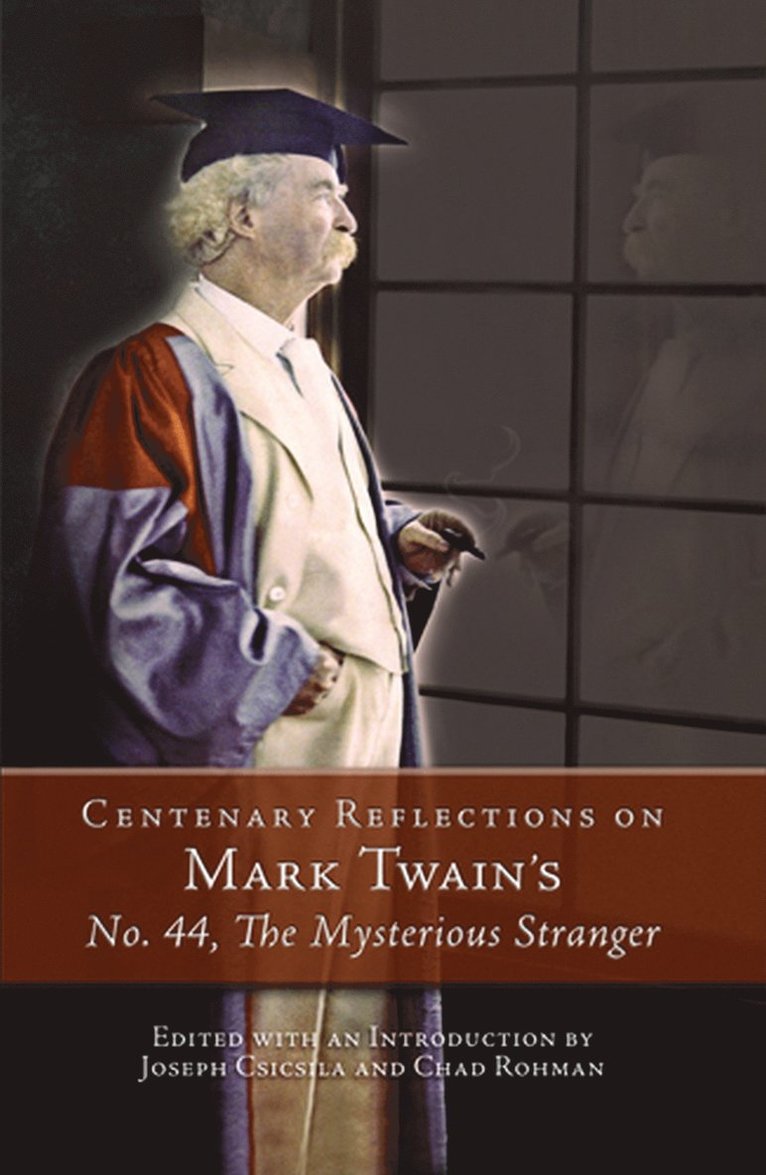
One hundred years after its writing, No. 44, The Mysterious Stranger remains a literary enigma. Mark Twain’s last significant full-length work of fiction and one of his most deeply philosophical works on the nature of truth and the human condition, it was unfinished at his death and has gained a reputation as an experimental text. It is still controversial even half a century after the groundbreaking scholarship of the 1960s, and the larger story of its composition and publication is as unwieldy as it is problematic.In this first book on No. 44 in thirty years, thirteen especially commissioned essays by some of today’s most accomplished Twain scholars cover an array of topics, from domesticity and transnationalism to race and religion, and reflect a variety of scholarly and theoretical approaches to the work. This far-reaching collection considers the status of No. 44 within Twain’s oeuvre as they offer cogent insights into such broad topics as cross-culturalism, pain and redemption, philosophical paradox, and comparative studies of the “Mysterious Stranger” manuscripts.All of these essays attest to the importance of this late work in Twain’s canon, whether considering how Twain’s efforts at truth-telling are premeditated and shaped by his own experiences, tracing the biblical and religious influences that resonate in No. 44, or exploring the text’s psychological dimensions. Several address its importance as a culminating work in which Twain’s seemingly disjointed story lines coalesce in meaningful, albeit not always satisfactory, ways. An afterword by Alan Gribben traces the critical history of the “Mysterious Stranger” manuscripts and the contributions of previous critics. A wide-ranging critical introduction and a comprehensive bibliography on the last century of scholarship bracket the contributions.Close inspection of this multidimensional novel shows how Twain evolved as a self-conscious thinker and humourist—and that he was a more conscious artist throughout his career than has been previously thought. Centenary Reflections deepens our understanding of one of Twain’s most misunderstood texts, confirming that the author of No. 44 was a pursuer of an elusive truth that was often as mysterious a stranger as Twain himself.
252 kr
Skickas inom 7-10 vardagar
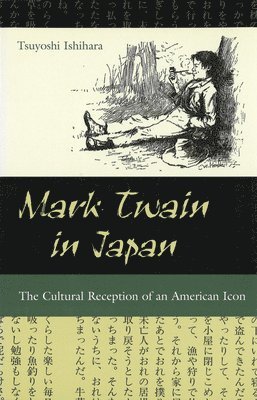
Best known for his sharp wit and his portrayals of life along the banks of the Mississippi River, Mark Twain is indeed an American icon, and many scholars have examined how he and his work are perceived in the United States. In Mark Twain in Japan, however, Tsuyoshi Ishihara explores how Twain’s uniquely American work is viewed in a completely different culture.Mark Twain in Japan addresses three principal areas. First, the author considers Japanese translations of Twain’s books, which have been overlooked by scholars but which have had a significant impact on the formation of the public image of Twain and his works in Japan. Second, he discusses the ways in which traditional and contemporary Japanese culture have transformed Twain’s originals and shaped Japanese adaptations. Finally, he uses the example of Twain in Japan as a vehicle to delve into the complexity of American cultural influences on other countries, challenging the simplistic one-way model of “cultural imperialism.” Ishihara builds on the recent work of other researchers who have examined such models of American cultural imperialism and found them wanting. The reality is that other countries sometimes show their autonomy by transforming, distorting, and rejecting aspects of American culture, and Ishihara explains how this is no less true in the case of Twain.Featuring a wealth of information on how the Japanese have regarded Twain over time, this book offers both a history lesson on Japanese-American relations and a thorough analysis of the “Japanisation” of Mark Twain, as Ishihara adds his voice to the growing international chorus of scholars who emphasise the global localisation of American culture. While the book will naturally be of interest to Twain scholars, it also will appeal to other groups, particularly those interested in popular culture, Japanese culture, juvenile literature, film, animation, and globalisation of American culture.
351 kr
Skickas inom 7-10 vardagar
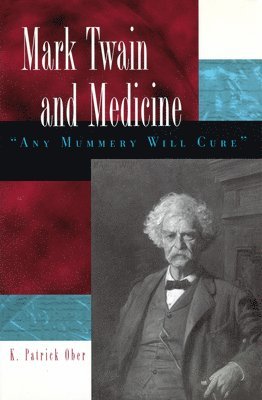
Mark Twain has always been America's spokesman, and his comments on a wide range of topics continue to be accurate, valid, and frequently amusing. His opinions on the medical field are no exception. While Twain's works, including his popular novels about Tom Sawyer and Huckleberry Finn, are rich in medical imagery and medical themes derived from his personal experiences, his interactions with the medical profession and his comments about health, illness, and physicians have largely been overlooked.In Mark Twain and Medicine, K. Patrick Ober remedies this omission. The nineteenth century was a critical time in the development of American medicine, with much competition among the different systems of health care, both traditional and alternative. Not surprisingly, Mark Twain was right in the middle of it all. He experimented with many of the alternative care systems that were available in his day--in part because of his frustration with traditional medicine and in part because he hoped to find the """"perfect"""" system that would bring health to his family.Twain's commentary provides a unique perspective on American medicine and the revolution in medical systems that he experienced firsthand. Ober explores Twain's personal perspective in this area, as he expressed it in fiction, speeches, and letters. As a medical educator, Ober explains in sufficient detail and with clarity all medical and scientific terms, making this volume accessible to the general reader.Ober demonstrates that many of Twain's observations are still relevant to today's health care issues, including the use of alternative or complementary medicine in dealing with illness, the utility of placebo therapies, and the role of hope in the healing process.Twain's evaluation of the medical practices of his era provides a fresh, humanistic, and personalised view of the dramatic changes that occurred in medicine through the nineteenth century and into the first decade of the twentieth. Twain scholars, general readers, and medical professionals will all find this unique look at his work appealing.
297 kr
Skickas inom 7-10 vardagar
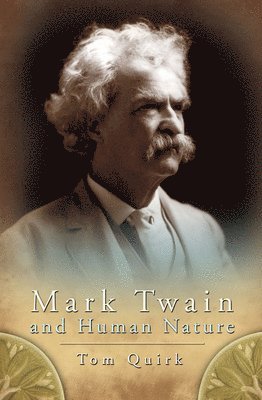
Mark Twain once claimed that he could read human character as well as he could read the Mississippi River, and he studied his fellow humans with the same devoted attention. In both his fiction and his nonfiction, he was disposed to dramatise how the human creature acts in a given environment—and to understand why.Now one of America’s preeminent Twain scholars takes a closer look at this icon’s abiding interest in his fellow creatures. In seeking to account for how Twain might have reasonably believed the things he said he believed, Tom Quirk has interwoven the author’s inner life with his writings to produce a meditation on how Twain’s understanding of human nature evolved and deepened, and to show that this was one of the central preoccupations of his life.Quirk charts the ways in which this humourist and occasional philosopher contemplated the subject of human nature from early adulthood until the end of his life, revealing how his outlook changed over the years. His travels, his readings in history and science, his political and social commitments, and his own pragmatic testing of human nature in his writing contributed to Twain’s mature view of his kind. Quirk establishes the social and scientific contexts that clarify Twain’s thinking, and he considers not only Twain’s stated intentions about his purposes in his published works but also his ad hoc remarks about the human condition.Viewing both major and minor works through the lens of Twain’s shifting attitude, Quirk provides refreshing new perspectives on the master’s oeuvre. He offers a detailed look at the travel writings, including The Innocents Abroad and Following the Equator, and the novels, including The Adventures of Tom Sawyer, Adventures of Huckleberry Finn, and Pudd’nhead Wilson, as well as an important review of works from Twain’s last decade, including fantasies centering on man’s insignificance in Creation, works preoccupied with isolation—notably No. 44, The Mysterious Stranger and “Eve’s Diary”—and polemical writings such as What Is Man?Comprising the well-seasoned reflections of a mature scholar, this persuasive and eminently readable study comes to terms with the life-shaping ideas and attitudes of one of America’s best-loved writers. Mark Twain and Human Nature offers readers a better understanding of Twain’s intellect as it enriches our understanding of his craft and his ineluctable humour.
297 kr
Skickas inom 7-10 vardagar
The thirteen essays in this collection combine to offer a complex and deeply nuanced picture of Samuel Clemens. With the purpose of straying from the usual notions of Clemens (most notably the Clemens/Twain split that has ruled Twain scholarship for over thirty years), the editors have assembled contributions from a wide range of Twain scholars. As a whole, the collection argues that it is time we approach Clemens not as a shadow behind the literary persona but as a complex and intricate creator of stories, a creator who is deeply embedded in the political events of his time and who used a mix of literary, social, and personal experience to fuel the movements of his pen.The essays illuminate Clemens's connections with people and events not usually given the spotlight and introduce us to Clemens as a man deeply embroiled in the process of making literary gold out of everyday experiences. From Clemens's wonderings on race and identity to his looking to family and domesticity as defining experiences, from musings on the language that Clemens used so effectively to consideration of the images and processes of composition, these essays challenge long-held notions of why Clemens was so successful and so influential a writer. While that search itself is not new, the varied approaches within this collection highlight markedly inventive ways of reading the life and work of Samuel Clemens.
397 kr
Skickas inom 7-10 vardagar
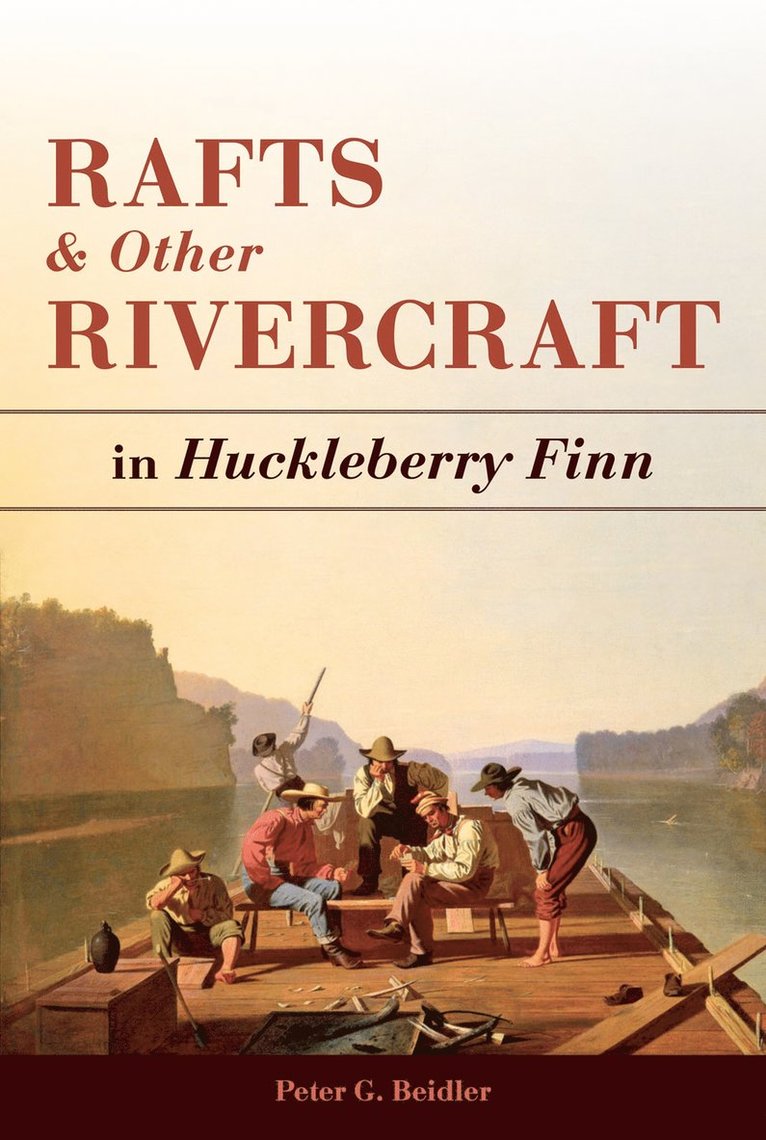
The raft that carries Huck and Jim down the Mississippi River is often seen as a symbol of adventure and freedom, but the physical specifics of the raft itself are rarely considered. Peter Beidler shows that understanding the material world of Huckleberry Finn, its limitations and possibilities, is vital to truly understanding Mark Twain’s novel. He illustrates how experts on Twain’s works have misinterpreted important aspects of the story due to their unfamiliarity with the various rivercraft that figure in the book. Huck and Jim’s little raft is not made of logs, as it is often depicted in illustrations, but of sawn planks, and it was originally part of a much larger raft. Beidler explains why this matters and describes the other rivercraft that appear in the book. He gives what will almost certainly be the last word on the vexed question of whether the lengthy “raft episode,” removed at the publisher’s suggestion from the novel, should be restored to its original place.
399 kr
Skickas inom 7-10 vardagar
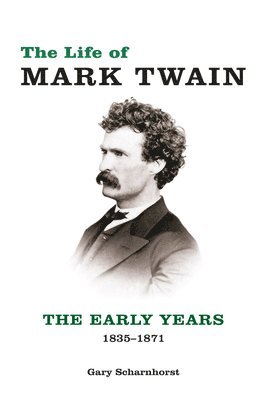
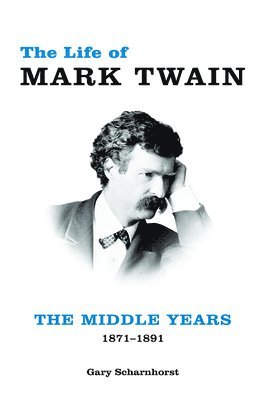
This book begins the first multi-volume biography of Samuel Clemens to appear in over a century. In the succeeding years, Clemens biographers have either tailored their narratives to fit the parameters of a single volume or focused on a particular period or aspect of Clemens’s life, because the whole of that epic life cannot be compressed into a single volume. In The Life of Mark Twain, Gary Scharnhorst has chosen to write a complete biography plotted from beginning to end, from a single point of view, on an expansive canvas. With dozens of Mark Twain biographies available, what is left unsaid? On average, a hundred Clemens letters and a couple of Clemens interviews surface every year. Scharnhorst has located documents relevant to Clemens’s life in Missouri, along the Mississippi River, and in the West, including some which have been presumed lost. Over three volumes, Scharnhorst elucidates the life of arguably the greatest American writer and reveals the alchemy of his gifted imagination.
261 kr
Skickas inom 7-10 vardagar
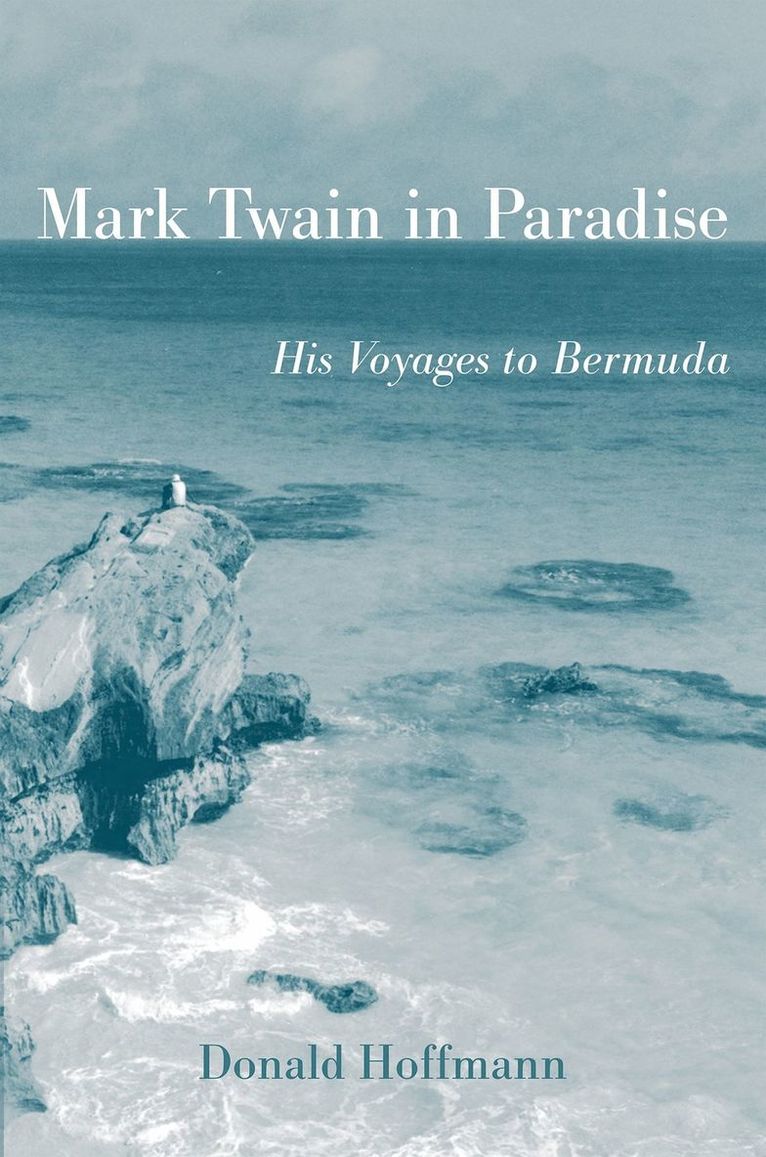
For Mark Twain, it was love at first landfall. Samuel Clemens first encountered the Bermuda Islands in 1867 on a return voyage from the Holy Land and found them much to his liking. One of the most isolated spots in the world, Bermuda offered the writer a refuge from his harried and sometimes sad existence on the mainland, and this island paradise called him back another seven times. Clemens found that Bermuda’s beauty, pace, weather, and company were just the medicine he needed, and its seafaring culture with few connections to the outside world appealed to his love of travel by water.This book is the first comprehensive study of Clemens’s love affair with Bermuda, a vivid depiction of a celebrated author on recurring vacations. Donald Hoffmann has culled and clarified passages from Mark Twain’s travel pieces, letters, and unpublished autobiographical dictation—with cross-references to his fiction and infrequently cited short pieces—to create a little-known view of the author at leisure on his fantasy island.Mark Twain in Paradise sheds light on both Clemens’s complex character and the topography and history of the islands. Hoffmann has plumbed the voluminous Mark Twain scholarship and Bermudian archives to faithfully re-create turn-of-the-century Bermuda, supplying historical and biographical background to give his narrative texture and depth. He offers insight into Bermuda’s natural environment, traditional stone houses, and romantic past, and he presents dozens of illustrations, both vintage and new, showing that much of what Mark Twain described can still be seen today.Hoffmann also provides insight into the social circles Clemens moved in—and sometimes collected around himself. When visiting the islands, he rubbed shoulders with the likes of socialist Upton Sinclair and multimillionaire Henry H. Rogers; with Woodrow Wilson and his lover, socialite Mary Peck; as well as with the young girls to whom he enjoyed playing grandfather.“You go to heaven if you want to,” Mark Twain wrote from Bermuda in 1910 during his long last visit. “I’d druther stay here.” And because much of what Clemens enjoyed in the islands is still available to experience today, visitors to Bermuda can now have America’s favorite author as their guide. Mark Twain in Paradise is an unexpected addition to the vast literature by and about Mark Twain and a work of travel literature unlike any other.
399 kr
Skickas inom 7-10 vardagar
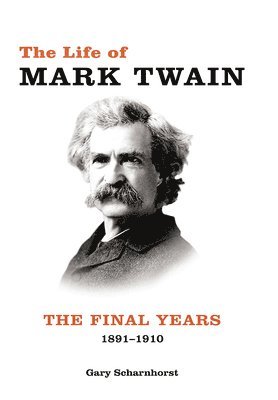
The last installment of Scharnhorst’s three-volume biography chronicles the life of Samuel Clemens between his family’s extended trip to Europe in 1891 and his death in 1910. During this period, Clemens was one of the most famous people in the world. He also grapples with bankruptcy, returns to the lecture circuit, loses two daughters and his wife, and writes some of his darkest, most critical works in the last years of his life.
799 kr
Skickas inom 7-10 vardagar
This three-volume, hardcover set of Gary Scharnhorst's biography of Samuel Clemens includes The Life of Mark Twain: The Early Years, 1835-1871; The Life of Mark Twain: The Middle Years, 1871-1891; and The Life of Mark Twain: The Final Years, 1891-1910.
466 kr
Skickas inom 7-10 vardagar
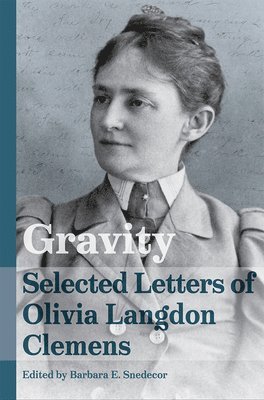
In this new volume of letters, readers are invited to meet Olivia Louise Langdon Clemens on her own terms, in her own voice--as complementary partner to her world-famous spouse, Mark Twain, and as enduring friend, mother to four children, world traveler, and so much more. The frail woman often portrayed by scholars and biographers and by Twain, himself, is largely absent in these letters. Instead, Olivia emerges as a nineteenth-century woman who was resilient, energetic, and was the family’s source and center of stability, of Gravity, and of private and public grace in an ever-changing landscape. Mark Twain’s biography recounted in the letters of his wife offers new insights, and her captivating voice engages and enlighten readers.
505 kr
Skickas inom 7-10 vardagar
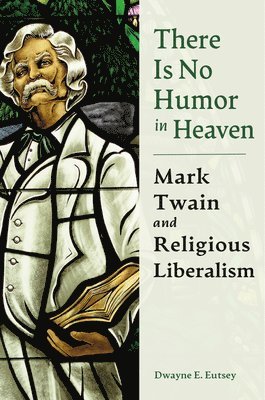
More than a century after his death in 1910, Mark Twain remains a lightning rod for controversy. Especially in matters of race, class, and gender, the volatile views this iconic American author expressed in classics like Adventures of Huckleberry Finn continue to provoke heated debate among antagonistic culture-war factions. However, when citing his withering attacks on religion, believers and atheists alike are often united in concluding that Twain was either a mocking skeptic or a hostile atheist.In There is No Humor in Heaven, Dwayne Eutsey challenges the persistent view of Twain as a hostile critic of religion by placing him within the prevailing liberal religious ethos of his time. From Hannibal to the western frontier and from Hartford to the wider world, Eutsey contends Twain’s vocation as a humorist was rooted in his frustrated youthful ambition to become a preacher of the Gospel. Throughout his life, his friendships with several influential liberal ministers, each of them espousing various forms of the era’s diverse progressive theology, informed not only Twain’s evolving religious worldview but his lecture performances and literary output.There is No Humor in Heaven traces unconventional theological influences on Twain ranging from African-American spirituality, Freemasonry, and frontier Unitarianism to devout Liberal Christianity, radical Free Religion, and esoteric Hinduism. Drawing from Twain’s writings, documents, personal notes, and more, There is No Humor in Heaven offers readers a radical re-examination of the spiritually creative vitality of a controversial literary giant.
241 kr
Skickas inom 7-10 vardagar
A century after Samuel Clemens’s death, Mark Twain thrives. One way fans still celebrate the first true American writer and his work is by visiting any number of Mark Twain destinations. They believe they can learn something unique by visiting the places where he lived. Mark Twain’s Homes and Literary Tourism untangles the complicated ways that Clemens’s houses, now museums, have come to tell the stories that they do about Twain and, in the process, reminds us that the sites themselves are the products of multiple agendas and, in some cases, unpleasant histories. Hilary Iris Lowe leads us through four Twain homes, beginning at the beginning—Florida, Missouri, where Clemens was born. Today the site is simply a concrete pedestal missing its bust, a plaque, and an otherwise-empty field. Though the original cabin where he was born likely no longer exists, Lowe treats us to an overview of the history of the area and the state park challenged with somehow marking this site. Next, we travel with Lowe to Hannibal, Missouri, Clemens’s childhood home, which he saw become a tourist destination in his own lifetime. Today mannequins remind visitors of the man that the boy who lived there became and the literature that grew out of his experiences in the house and little town on the Mississippi. Hartford, Connecticut, boasts one of Clemens’s only surviving adulthood homes, the house where he spent his most productive years. Lowe describes the house’s construction, its sale when the high cost of living led the family to seek residence abroad, and its transformation into the museum. Lastly, we travel to Elmira, New York, where Clemens spent many summers with his family at Quarry Farm. His study is the only room at this destination open to the public, and yet, tourists follow in the footsteps of literary pilgrim Rudyard Kipling to see this small space. Literary historic sites pin their authority on the promise of exclusive insight into authors and texts through firsthand experience. As tempting as it is to accept the authenticity of Clemens’s homes, Mark Twain’s Homes and Literary Tourism argues that house museums are not reliable critical texts but are instead carefully constructed spaces designed to satisfy visitors. This volume shows us how these houses’ portrayals of Clemens change frequently to accommodate and shape our own expectations of the author and his work.
1 017 kr
Skickas inom 3-6 vardagar
In his autobiography, Mark Twain confesses that “from the cradle up I have been like the rest of the race—never quite sane in the night.” Of all the memories and fears that disturbed Twain’s peace of mind, none are more intractable than those associated with White fathers, Black men, the histories they reflect, and the future they promise. The Ghosts of Mark Twain: A Study of Manhood, Race, and the Gothic Imagination investigates these tense intersections in Twain’s life and work. Ann M. Ryan maps Twain’s resistance to ideals of white masculinity and his occasional capitulation to them. While Twain reflects upon the history of White men—including the intimate memory of his father’s failures and abuses—he also imagines a future in which Black men will gain an authentic voice and agency. Preferring the messy humanity of Mark Twain, Ryan calls into question the “St. Mark” school of criticism, which glosses—among other themes—Twain’s uneasy relation to Black culture. In unpublished works and excised material, Twain conjures memories and specters of Black men that are far from comforting. No longer “friends and allies” like fictive Ol’ Uncle Dan’l; these Black ghosts will settle for revenge if they can’t get justice.Some of the works considered in The Ghosts of Mark Twain are not widely known: “Which Was It?,” “The United States of Lyncherdom,” No. 44: The Mysterious Stranger, and the Morgan manuscript of Pudd’nhead Wilson. Written into the record of these fragments is Twain’s desire to be a different kind of White man, just as their incomplete nature demonstrates how often he stumbled in that effort. When Jim describes the White and Black spirits hovering over Pap Finn, Twain reveals his own conflicted position in America’s racial history. And as Jim declares to Huck, “A body can’t tell yit which one gwyne to fetch him at de las.’”
686 kr
Kommande
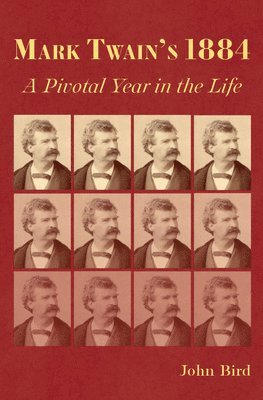
Many biographies of Mark Twain cover his entire life, while others focus on specific periods, especially his later years. In this innovative new work, John Bird takes an entirely different approach. Mark Twain’s 1884: A Pivotal Year in the Life is a “micro-biography” that homes in on a single—and pivotal—year. In 1884, Twain stood at the height of his powers as a writer and enjoyed one of the happiest years in his domestic family life. During the course of the year he was readying his greatest work, Adventures of Huckleberry Finn, for publication, which occurred in England near the end of the year; he was launching his own publishing house, Charles L. Webster and Company, after becoming disillusioned with his previous publishers; and he publicly embroiled himself in presidential politics in a way that presaged his later involvement with American and international politics. Finally, Twain’s 1884 ended with a great deal more public exposure thanks to an extensive multi-city lecture tour he undertook with Geroge Washington Cable, as well as the beginnings of his ultimately successful attempt to secure publishing rights for Ulysses S. Grant’s memoirs.The level of detail provided by a day-to-day narrative gives the reader a chance to imaginatively live that year in Twain’s life: his work, his family life, his correspondence, his business dealings, his travels, his recreational pursuits, and his political involvement. Bird enlarges upon a great many moments in and aspects of Twain’s life that other biographies barely touch on or ignore completely. In this new approach to biography, Bird gives readers a broader appreciation not only of Mark Twain the author but of Mark Twain the husband, father, uncle, and friend, and national celebrity and persona.