Medieval Documentary Cultures – serie
Visar alla böcker i serien Medieval Documentary Cultures. Handla med fri frakt och snabb leverans.
4 produkter
4 produkter
Del 1 - Medieval Documentary Cultures
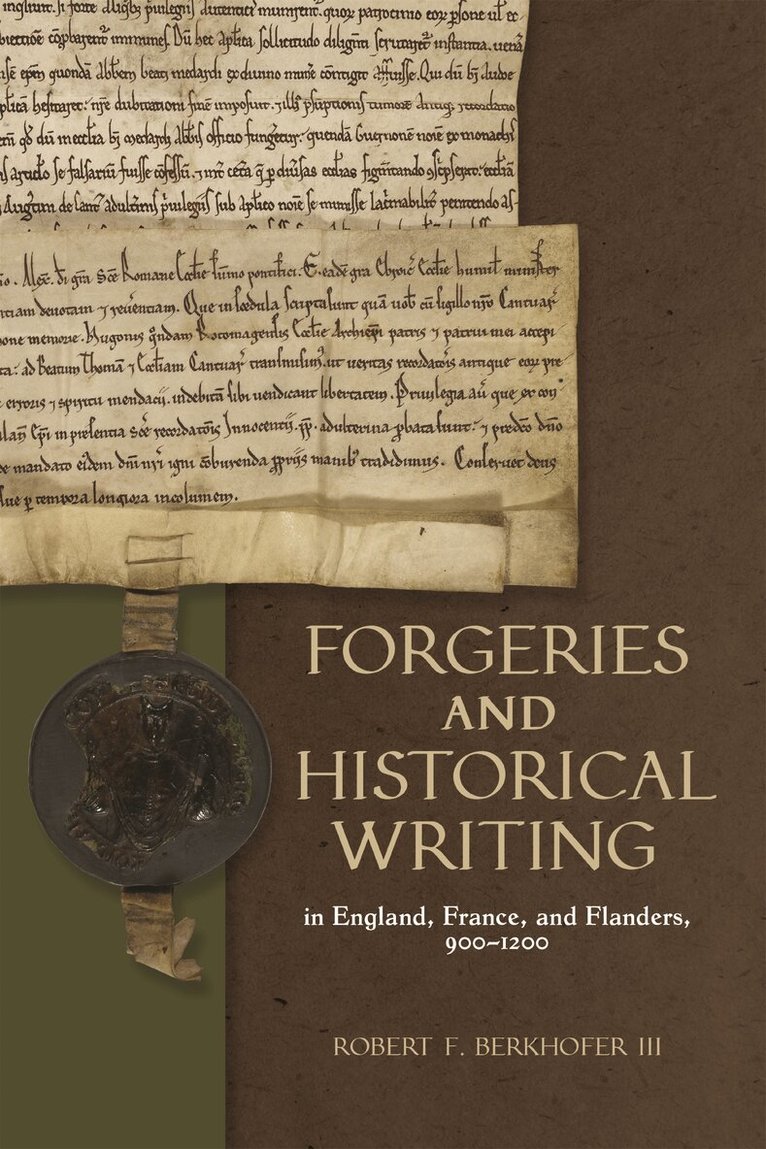
Forgeries and Historical Writing in England, France, and Flanders, 900-1200
Inbunden, Engelska, 2022
1 198 kr
Skickas inom 7-10 vardagar
A close analysis of forgeries and historical writings at Saint Peter's, Ghent; Saint-Denis near Paris; and Christ Church, Canterbury, offering valuable access to why medieval people often rewrote their pasts.What modern scholars call "forgeries" (be they texts, seals, coins, or relics) flourished in the central Middle Ages. Although lying was considered wrong throughout the period, such condemnation apparently did not extend to forgeries. Rewriting documents was especially common among monks, who exploited their mastery of writing to reshape their records. Monastic scribes frequently rewrote their archives, using charters, letters, and narratives, to create new usable pasts for claiming lands and privileges in their present or future. Such imagined histories could also be deployed to "reform" their community or reshape its relationship with lay and ecclesiastical authorities. Although these creative rewritings were forgeries, they still can be valuable evidence of medieval mentalities. While forgeries cannot easily be used to reconstruct what did happen, forgeries embedded in historical narratives show what their composers believed should have happened and thus they offer valuable access to why medieval people rewrote their pasts.This book offers close analysis of three monastic archives over the long eleventh century: Saint Peter's, Ghent; Saint-Denis near Paris; and Christ Church, Canterbury. These foci provide the basis for contextualizing key shifts in documentary culture in the twelfth century across Europe. Overall, the book argues that connections between monastic forgeries and historical writing in the tenth through twelfth centuries reveal attempts to reshape reality. Both sought to rewrite the past and thereby promote monks' interests in their present or future.
Del 3 - Medieval Documentary Cultures
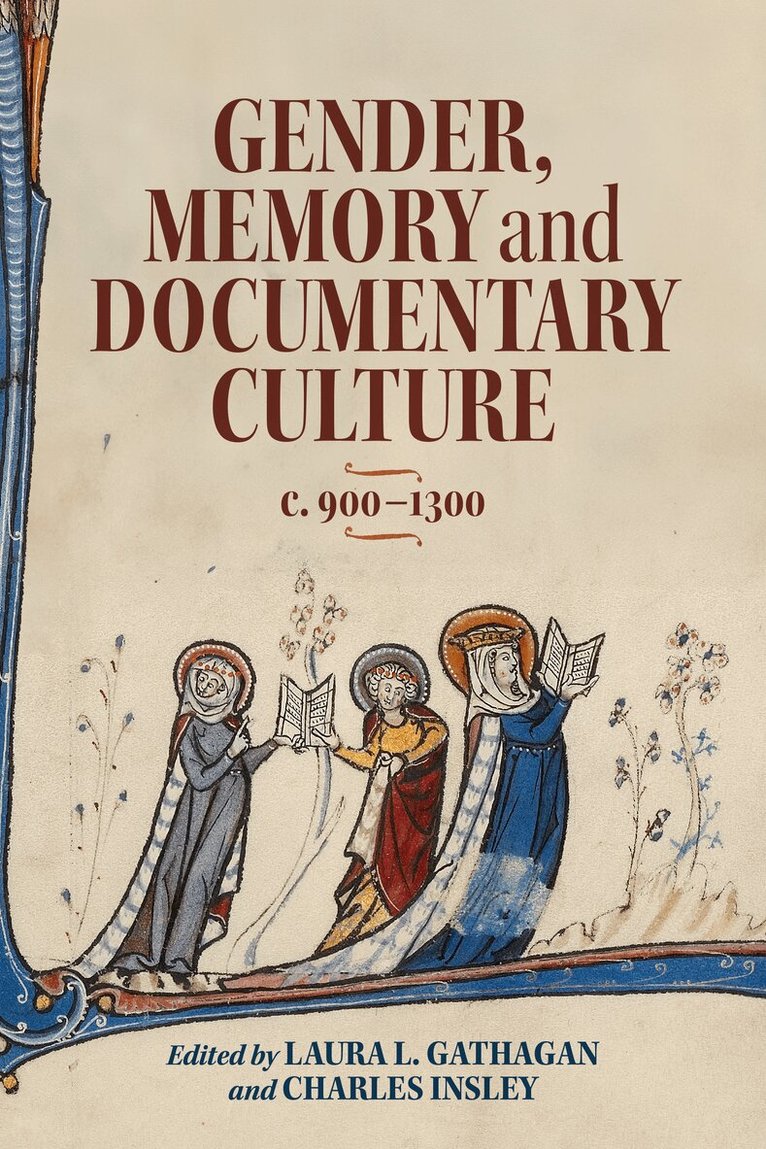
Gender, Memory and Documentary Culture, c.900-1300
Inbunden, Engelska, 2025
1 198 kr
Skickas inom 7-10 vardagar
Considers the role gender played in the production, use and preservation of documents.How was the world of medieval documentation and memory creation affected by gender? This question is central to the essays collected here, which bring together aspects of gender and documentary culture that are usually studied only in isolation. Covering the tenth to the thirteenth centuries, the volume offers a broad geographical reach - England, France, Flanders, Germany, Spain - and an array of sources, from charters, letters and court proceedings to seals, iconography, and illumination. There is a particular focus on lay female communities, including women's collective legal action in pre-Conquest England, documentary initiatives of Castilian peasant widows, and urban Flemish women's sealing practices. Re-examinations of noblewomen's centrality - and erasure - in charters focus on Ermengarde of Brittany, Mathilda of Boulogne and Berengaria of Navarre. Contributions on gender and historical writing explore their development in Ottonian courts, tenth-century English coronation portraits, Orderic Vitalis' Historia Ecclesiastica, and French chroniclers' rhetorical strategies for writing noblewomen's rage. Further chapters consider monastic spaces, including women's houses at Auxerre and Marcigny and at Holy Trinity, Caen, and explore women's memory preservation efforts, at Spanish houses - San Salvador de Oña and Santa María de Piasca - and a community at Bouxières. This volume demonstrates the new insights that can be gleaned by viewing various processes, such as legal disputes and monastic narratives and foundation, through a gendered lens.
Del 2 - Medieval Documentary Cultures
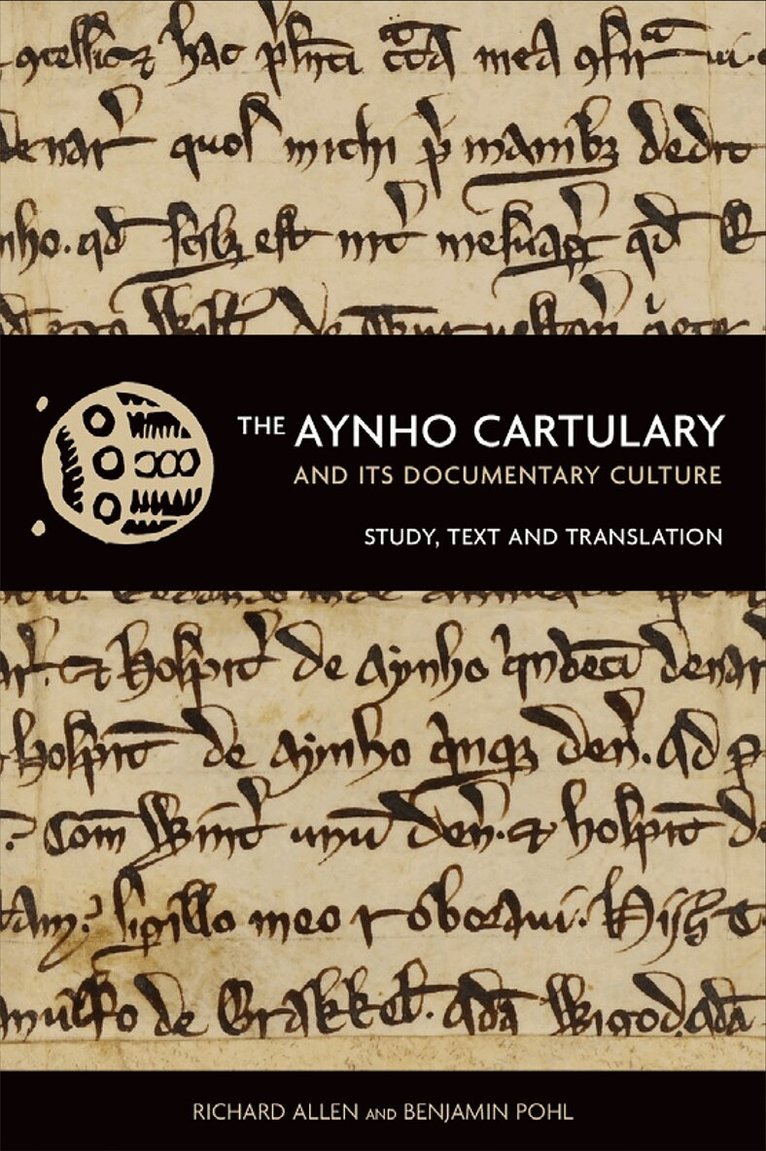
Aynho Cartulary and its Documentary Culture
Study, Text, and Translation
Inbunden, Engelska, 2025
1 163 kr
Skickas inom 7-10 vardagar
A major contribution to scholarship on medieval roll cartularies, shedding light both on the Aynho Cartulary itself and on the wider social, political, and economic culture that produced it.Despite being one of the earliest and best preserved of its type in Britain and Ireland, the thirteenth-century roll cartulary of the wayfarer hospital of SS James and John in Aynho, Northamptonshire, has received almost no scholarly attention to date. This book offers the first full study of this fascinating document, which is now conserved in the archives of Magdalen College, Oxford, together with a critical edition and translation. Combining extensive historical and prosopographical research with a focussed examination of the cartulary's contents and a forensic scribal and material analysis, it takes an holistic approach to - and aims to provide a model for - the study of these types of artefacts and the documentary cultures and societies that produced them. Uniting three areas of scholarship which are rarely brought into dialogue (the study of medieval cartularies, rolls, and hospitals), the volume's innovative approach demonstrates how such an examination of the Aynho Cartulary can shed light on the social, political, economic, spiritual, and scribal networks within which this relatively obscure but well-connected hospital was situated. Written with experienced researchers and students in mind, this book is designed to be a go-to resource for both.RICHARD ALLEN is a researcher and archivist at Magdalen College, Oxford, UK.BENJAMIN POHL is Professor of Medieval History at the University of Bristol, UK.
Del 1 - Medieval Documentary Cultures
Forgeries and Historical Writing in England, France, and Flanders, 900-1200
Häftad, Engelska, 2026
603 kr
Skickas inom 10-15 vardagar
A close analysis of forgeries and historical writings at Saint Peter's, Ghent; Saint-Denis near Paris; and Christ Church, Canterbury, offering valuable access to why medieval people often rewrote their pasts.What modern scholars call "forgeries" (be they texts, seals, coins, or relics) flourished in the central Middle Ages. Although lying was considered wrong throughout the period, such condemnation apparently did not extend to forgeries. Rewriting documents was especially common among monks, who exploited their mastery of writing to reshape their records. Monastic scribes frequently rewrote their archives, using charters, letters, and narratives, to create new usable pasts for claiming lands and privileges in their present or future. Such imagined histories could also be deployed to "reform" their community or reshape its relationship with lay and ecclesiastical authorities. Although these creative rewritings were forgeries, they still can be valuable evidence of medieval mentalities. While forgeries cannot easily be used to reconstruct what did happen, forgeries embedded in historical narratives show what their composers believed should have happened and thus they offer valuable access to why medieval people rewrote their pasts.This book offers close analysis of three monastic archives over the long eleventh century: Saint Peter's, Ghent; Saint-Denis near Paris; and Christ Church, Canterbury. These foci provide the basis for contextualizing key shifts in documentary culture in the twelfth century across Europe. Overall, the book argues that connections between monastic forgeries and historical writing in the tenth through twelfth centuries reveal attempts to reshape reality. Both sought to rewrite the past and thereby promote monks' interests in their present or future.