Michigan Classical Commentaries - Böcker
Visar alla böcker i serien Michigan Classical Commentaries. Handla med fri frakt och snabb leverans.
19 produkter
19 produkter
332 kr
Skickas inom 7-10 vardagar
A Commentary on Cicero, De Divinatione I, is the first English-language commentary on the Latin text of Marcus Tullius Cicero’s dialogue in almost one hundred years. The defense of divination (the science of predicting the future) offered in Book 1 is illustrated with many entertaining anecdotes that make the argument more accessible to a wider range of readers than many of Cicero’s other philosophical works. De Divinatione also preserves many fragments of otherwise lost masterpieces of Roman Republican literature. It is a text important for the study of Roman religion, as well as Roman political and intellectual history.This commentary aims to assist the reader in seeing De Divinatione as a cohesive whole, and to make it accessible—not only to classicists, but also to scholars of religion and to philosophers who may not be familiar with the historical and Roman intellectual background that are the focus here. The cases made for and against divination in De Divinatione closely follow arguments made by Greek philosophers, but many of the examples illustrating them reflect Cicero’s preferences in literature, his own poetic efforts and political experience, and his expertise as an augur. The result is a very personal work closely tied to Cicero’s own experience. Celia Schultz’s volume contains the full Latin text of De Divinatione, Book 1, and accompanies it with commentary on points of grammar, history, prosopography, and ancient religious practice, among other topics. She includes a helpful bibliography for those interested in further study of points raised in the text or commentary.
382 kr
Skickas inom 7-10 vardagar
Erin K. Moodie presents a rigorous yet accessible guide to Plautus’ satirical play Poenulus for use in the contemporary classroom. Likely written and staged in the years following the Second Punic War between Rome and Carthage, Poenulus tells the tale of a young Carthaginian, the adopted son and heir of the man who purchased him as a slave when he was a child, who is in love with a female Carthaginian slave and prostitute. The comedy, especially Plautus’ portrayal of his main character, compels the reader to consider Rome’s relationship with Carthage, its former enemy; Plautus’ role in choosing and adapting plays for the Roman stage; and the constraints of the palliata genre. A detailed introduction, map, and comprehensive notes approach the text from several angles, enabling the advanced undergraduate or graduate student to grapple directly with the issues the Poenulus raises. The Latin text is based primarily on that of Friedrich Leo, while Moodie’s introduction and commentary provide assistance with early Latin grammar and syntax, Plautine meter, Roman history, and the influences on and performance contexts of Roman comedy. The commentary also introduces students to modern scholarship on the genre, including metatheatrical interpretations and performance criticism.
382 kr
Skickas inom 7-10 vardagar
In Reading Medieval Latin with the Legend of Barlaam and Josaphat, Donka D. Markus offers comprehensive commentary on the 13th-century Dominican theologian Jacobus de Voragine’s retelling of the ancient story of the life of the Buddha that will resonate with contemporary students of Latin.Jacobus’s version of the legend serves as a compelling, original Latin text. Vividly conveyed through parables, fables, and anecdotes, it naturally lends itself to a critical consideration of ethical principles and philosophical truths commonly shared across many cultures. With its rich stylistic devices and authentic classical Latin word order, it provides superb training for reading rhetorical prose before advancing to the works of more complex classical prose authors. At the same time, the text offers a unique opportunity for systematically learning the special features of Late and Medieval Latin. Included in this volume are two presentations of Jacobus’s text: one maintaining the original orthography reflecting Latin as it appears in medieval manuscripts, and one in which the orthography follows Classical Latin norms.This textbook is designed for intermediate-level learners of Classical or Medieval Latin, whether in college, high school, or by self-directed study. The 5,000-word narrative text lends itself to a semester-long experience of reading one continuous work of prose. Each of the legend’s embedded stories can also be read as an independent selection with the help of the ample commentary, vocabulary, and grammar guidance. The extensive introduction provides the necessary background to contextualize the legend in its Latin iteration and sufficient historical information to make the reading meaningful for those without prior knowledge of Buddhism or medieval history. Additionally, this work makes Latin attractive to students of diverse backgrounds, as it highlights the language’s important role in disseminating the universally shared cultural legacy of humanity.
414 kr
Skickas inom 7-10 vardagar
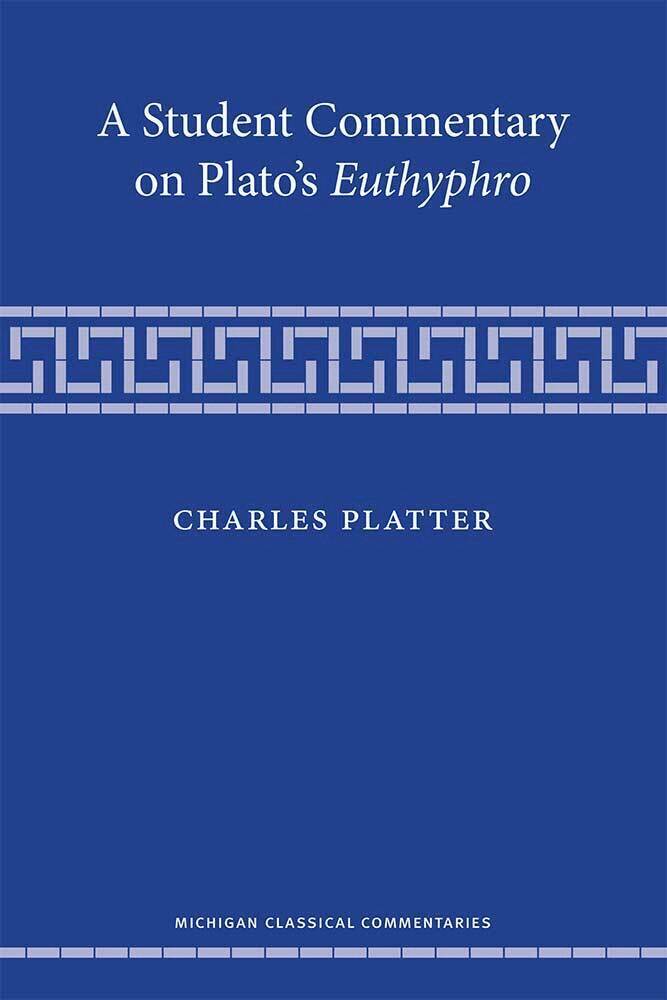
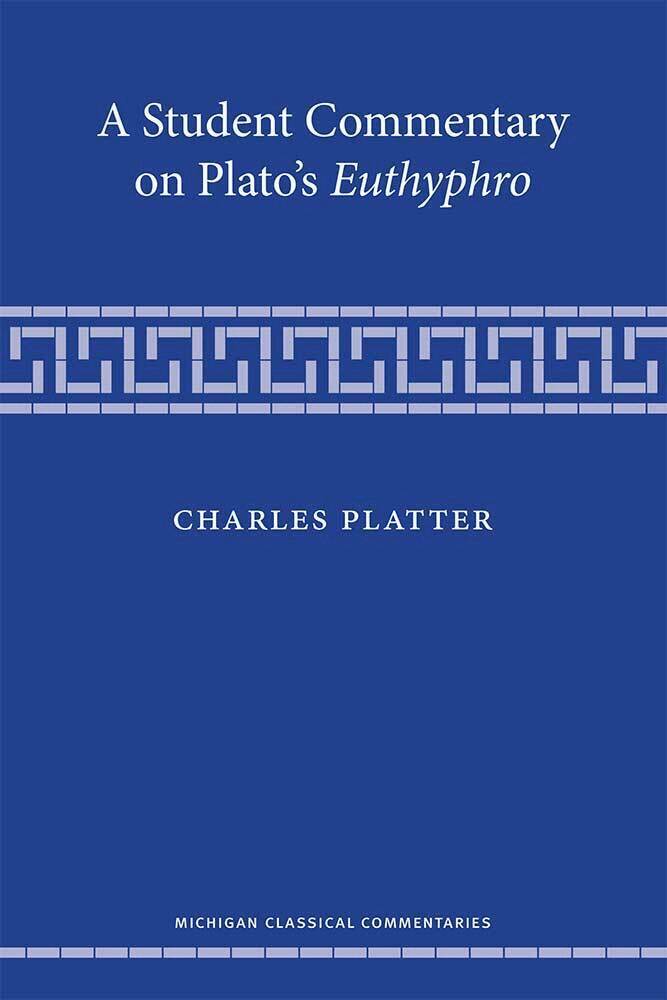
The Euthyphro is crucially important for understanding Plato’s presentation of the last days of Socrates, dramatized in four brief dialogues: Euthyphro, Apology, Crito, and Phaedo. In addition to narrating this evocative series of events in the life of Plato’s philosophical hero, the texts also can be read as reflecting how a wise man faces death. This particular dialogue contains Socrates’ vivid examination of the intentions of Euthyphro to prosecute his own father for murder and culminates in an attempt to understand holiness—a topic central both to Euthyphro’s justification of his actions and to the charge of impiety that Socrates faces before the Athenian court.This accessible student commentary by Charles Platter presents an introduction to the Euthyphro, the full Greek text, and a commentary designed for undergraduates and selected graduate students. As part of the series Michigan Classical Commentaries, now edited by Josiah Osgood and Alexander Sens at Georgetown University, and K. Sara Myers at the University of Virginia, the volume is sized and priced for student use.
371 kr
Skickas inom 7-10 vardagar
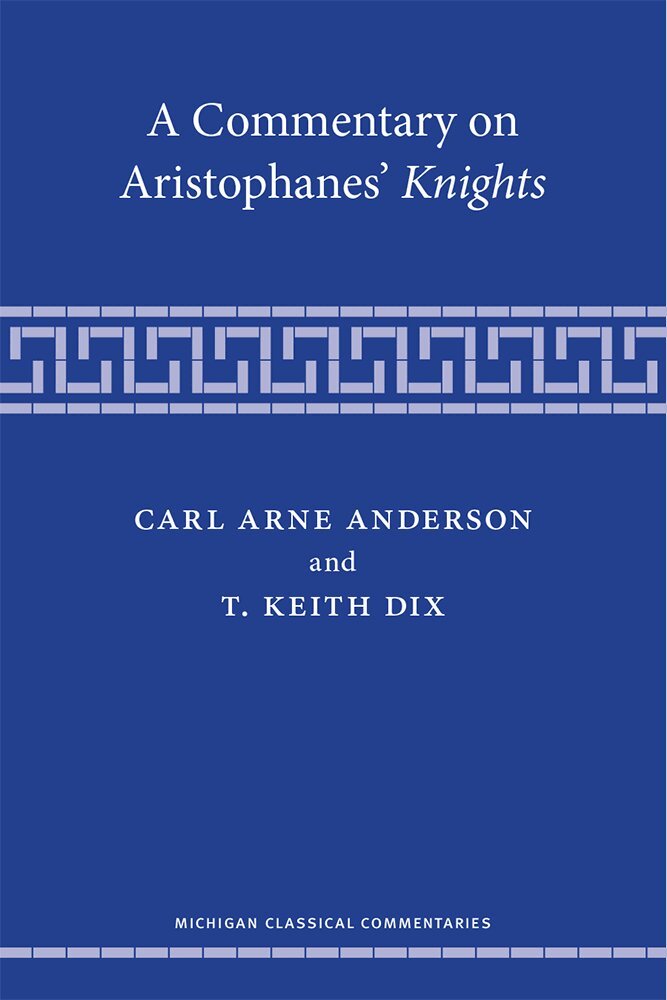
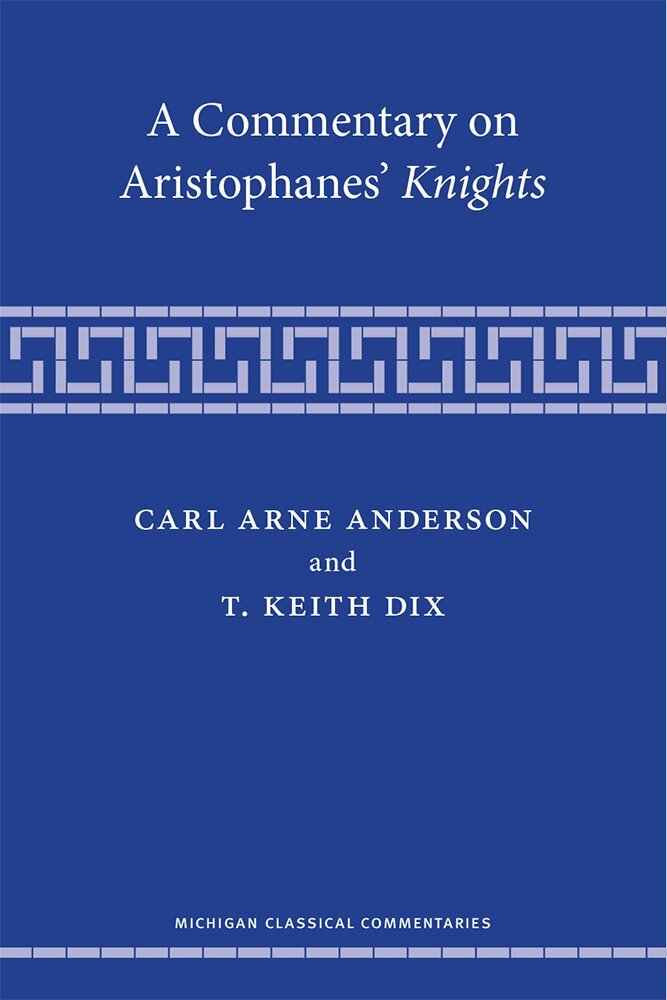
A Commentary on Aristophanes’ Knights presents a fresh look at the play that cemented Aristophanes’ reputation as a rising star in comic theater. Knights offers an examination of social and political life in ancient Athens during the empire-destroying Peloponnesian War, as well as giving us Aristophanes’ comic send-up of the dangerous populist demagogue Cleon. This is a thoroughly modern commentary on a key play in the theatrical genre of Old Comedy, which satirized virtually every aspect of Athenian life in a period when Athens was at the height of its power and international prestige.In addition to the complete Greek text and commentary, this volume includes a substantial introduction to the playwright’s career and to the historical and political background of the play. It includes advice for students on grammar and syntax, meter, festivals and staging, as well as topical and literary references and allusions that will help guide students to a mature appreciation of the comedy’s humor, seriousness, and artistic quality. Priced and sized for classroom use, this is the first full commentary on Knights since 1901 and will be widely welcomed.
360 kr
Skickas inom 7-10 vardagar
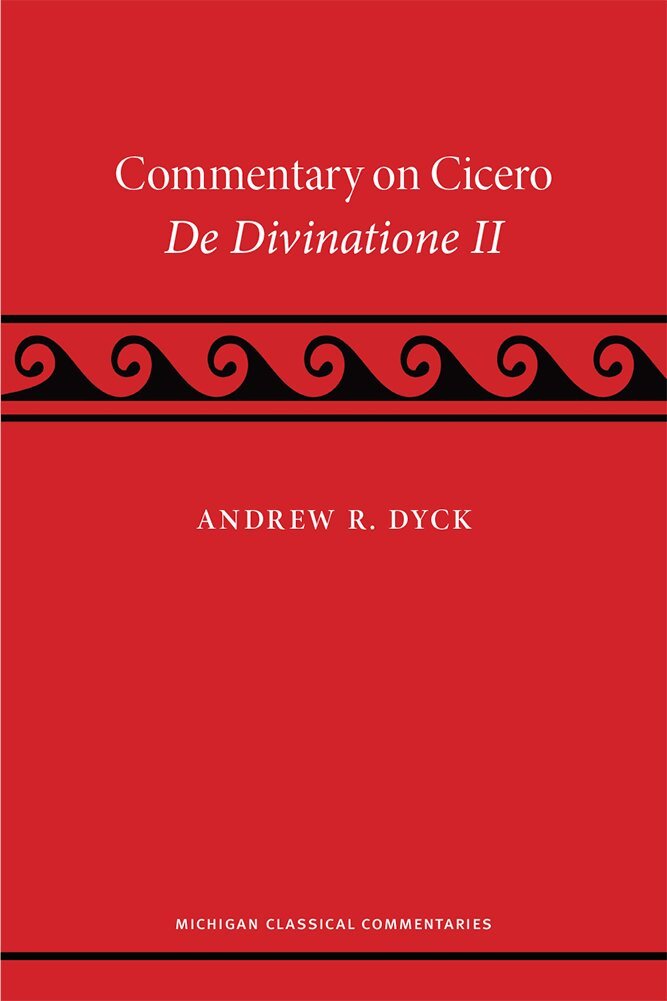
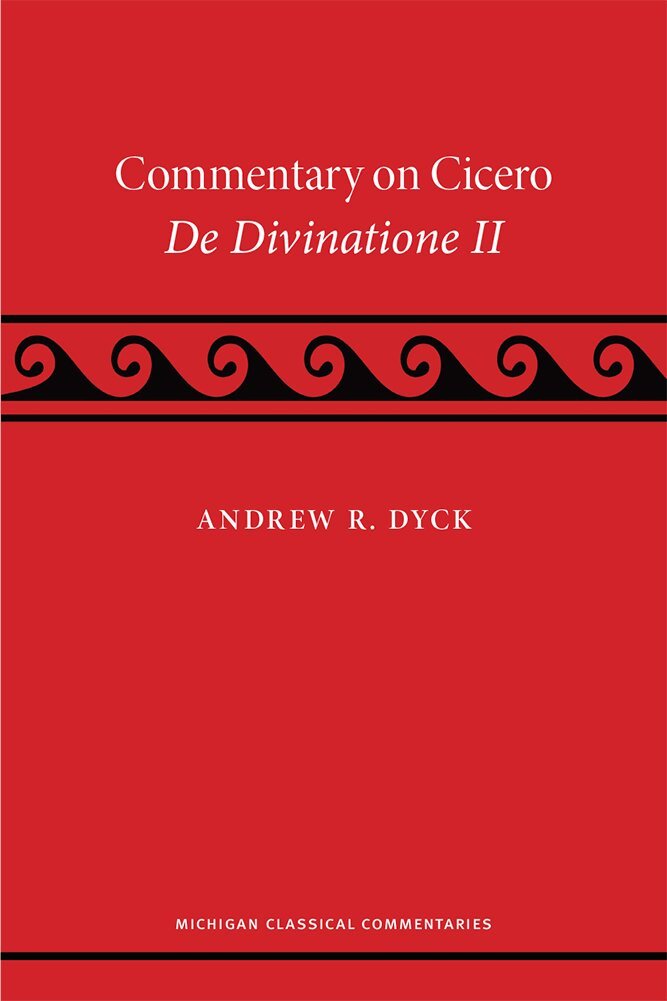
Andrew R. Dyck ranks among the top Latinists in Ciceronian studies. In this new volume, he offers the first commentary on Cicero’s De Divinatione II in nearly a century. This commentary aims to equip students and scholars of Latin with the kinds of historical and philosophical background and linguistic and stylistic information needed to understand and appreciate Cicero’s text on Roman religion and divination. Dyck situates Cicero’s text in the context of Roman religion in antiquity, and he traces the subsequent reception of the text. The introduction reviews recent interpretations of De Divinatione. Dyck rejects the view that has recently been widespread in Anglophone studies that De Divinatione stages a debate between roughly equal opponents and without the emergence of a clear authorial point of view. Instead he argues that a careful reading shows that Cicero as author is invested in the argument, with the particular aim of countering superstition.Celia Schultz’s earlier volume in this series presented the text and commentary for De Divinatione I. With Andrew Dyck’s companion volume on the second book of De Divinatione, students and teachers are well served with crucial texts from one of Rome’s most famous philosophers, as he considers important Roman practices and beliefs.
414 kr
Skickas inom 7-10 vardagar
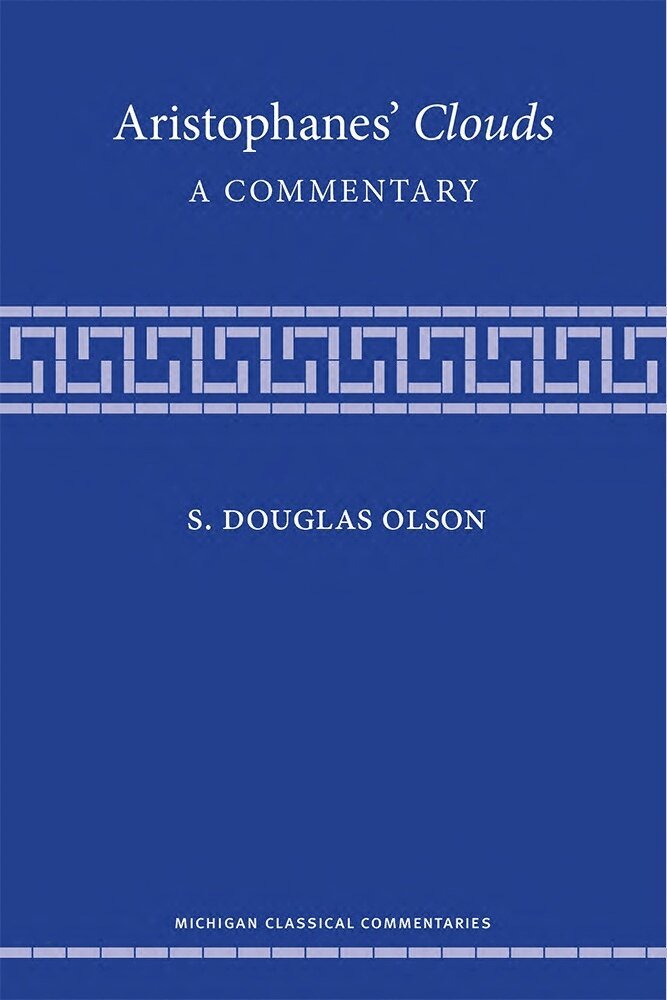
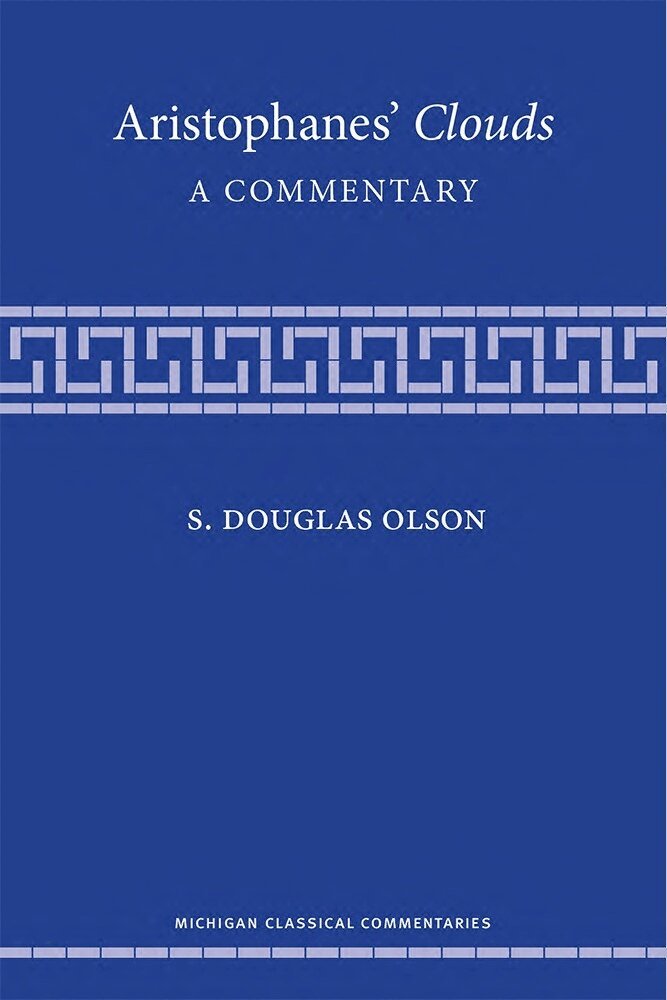
This is the first substantial commentary on Clouds since Dover’s 1968 edition. Intended for intermediate Greek students at undergraduate and graduate levels, the commentary pays careful attention to the basic characteristics of ancient Greek syntax, as well as to how Greek words are formed and can be analyzed. It offers robust staging notes, information about daily life in late 5th-century Athens, and constant reference to the rhetorical and dramatic strategies of the text. Full support is offered for those interested in the metrical structure of the songs, but in a way that allows instructors to leave such issues aside, should they choose to do so. The first and second appendices offer a basic means of entry into the rich but complex world of the comic fragments. An English-language bibliography is provided. The edition will interest professional classicists of all sorts seeking an accessible introduction to one of Aristophanes’ greatest plays, to philosophers concerned with Socrates and the sophistic movement, and to theater professionals who wish to stage the play.
488 kr
Skickas inom 7-10 vardagar
Distinguished Latinist Andrew R. Dyck presents the first English commentary on Cicero’s De Natura Deorum II in over fifty years. This text is the only connected exposition of Stoic theology to survive from the ancient world. It includes an argument for the existence of the gods from the construction of the cosmos taken up by later thinkers, as well as an exposition of the world-order and divine providence according to Stoic doctrine. After a period in which Cicero’s philosophical works were treated mainly as sources for reconstructing the thought of earlier philosophers, they are now coming to be appreciated as intelligent and skillful works in their own right. This book will assist students and others studying Cicero’s De Natura Deorum II by providing its historical context, improved Latin text, and a detailed commentary with references to the latest literature on the subject.
414 kr
Skickas inom 7-10 vardagar
Lively and critically aware, T. H. M. Gellar-Goad’s A Commentary on Plautus’ Curculio is the new reference text on the play. Curculio follows the efforts of the title character to trick a sex-trafficker into handing over an enslaved woman to the young man infatuated with her instead of to the soldier who’s paid for her—and will turn out to be her long-lost brother. As Plautus’ shortest comedy, Curculio has proven to be a desirable text for university performances. The play exemplifies Plautus’ style, with a blend of erotic, deception, and recognition plotlines, plus a wide range of archetypal characters. Gellar-Goad’s commentary is the complete package, with introductions to themes, content, humor, meter, and syntax; notes on matters of performance, interpretation, and social history; and a text with aids to scansion and clarifying stage directions.This up-to-date, authoritative commentary on the play will prove useful to directors and actors and will readily introduce students to the joys of Roman comedy.
382 kr
Skickas inom 7-10 vardagar
Thucydides’ History of the Peloponnesian War is one of the most significant historical and political texts of Ancient Greece, enjoying a broad appeal among the educated general public since at least 1628. The past decade has seen the historian garner significant attention even in the popular press, as scholars and politicians alike have sought to employ the History to analyze current international relations. Despite this popularity, the complexity of Thucydides’ Greek has left the original language surprisingly challenging. Commentary on Thucydides, Book 3 remedies this situation by offering detailed linguistic explanations and grammatical clarifications designed to appeal both to seasoned Classicists and to a broader group of non-specialist readers who may still be developing their Greek language skills. Starting with 428 BCE, Book 3 covers a critical period of the Peloponnesian War in which the conflict began to manifest its extraordinary violence and scale. The book contains influential and controversial discussions, including Thucydides’ own analysis of the nature of war and the ways that it teaches “lessons of violence” to individuals and states. Book 3 also features the famous Mytilenean Debate, an argument premised on the thesis that all international relations are, or should be, fundamentally amoral. Educated readers have always looked to Thucydides in turbulent times, and this commentary will open up his text to a wider audience.
1 142 kr
Skickas inom 7-10 vardagar
In Reading Medieval Latin with the Legend of Barlaam and Josaphat, Donka D. Markus offers comprehensive commentary on the 13th-century Dominican theologian Jacobus de Voragine’s retelling of the ancient story of the life of the Buddha that will resonate with contemporary students of Latin.Jacobus’s version of the legend serves as a compelling, original Latin text. Vividly conveyed through parables, fables, and anecdotes, it naturally lends itself to a critical consideration of ethical principles and philosophical truths commonly shared across many cultures. With its rich stylistic devices and authentic classical Latin word order, it provides superb training for reading rhetorical prose before advancing to the works of more complex classical prose authors. At the same time, the text offers a unique opportunity for systematically learning the special features of Late and Medieval Latin. Included in this volume are two presentations of Jacobus’s text: one maintaining the original orthography reflecting Latin as it appears in medieval manuscripts, and one in which the orthography follows Classical Latin norms.This textbook is designed for intermediate-level learners of Classical or Medieval Latin, whether in college, high school, or by self-directed study. The 5,000-word narrative text lends itself to a semester-long experience of reading one continuous work of prose. Each of the legend’s embedded stories can also be read as an independent selection with the help of the ample commentary, vocabulary, and grammar guidance. The extensive introduction provides the necessary background to contextualize the legend in its Latin iteration and sufficient historical information to make the reading meaningful for those without prior knowledge of Buddhism or medieval history. Additionally, this work makes Latin attractive to students of diverse backgrounds, as it highlights the language’s important role in disseminating the universally shared cultural legacy of humanity.
1 068 kr
Skickas inom 7-10 vardagar
The Euthyphro is crucially important for understanding Plato’s presentation of the last days of Socrates, dramatized in four brief dialogues: Euthyphro, Apology, Crito, and Phaedo. In addition to narrating this evocative series of events in the life of Plato’s philosophical hero, the texts also can be read as reflecting how a wise man faces death. This particular dialogue contains Socrates’ vivid examination of the intentions of Euthyphro to prosecute his own father for murder and culminates in an attempt to understand holiness—a topic central both to Euthyphro’s justification of his actions and to the charge of impiety that Socrates faces before the Athenian court.This accessible student commentary by Charles Platter presents an introduction to the Euthyphro, the full Greek text, and a commentary designed for undergraduates and selected graduate students. As part of the series Michigan Classical Commentaries, now edited by Josiah Osgood and Alexander Sens at Georgetown University, and K. Sara Myers at the University of Virginia, the volume is sized and priced for student use.
1 090 kr
Skickas inom 7-10 vardagar
A Commentary on Aristophanes’ Knights presents a fresh look at the play that cemented Aristophanes’ reputation as a rising star in comic theater. Knights offers an examination of social and political life in ancient Athens during the empire-destroying Peloponnesian War, as well as giving us Aristophanes’ comic send-up of the dangerous populist demagogue Cleon. This is a thoroughly modern commentary on a key play in the theatrical genre of Old Comedy, which satirized virtually every aspect of Athenian life in a period when Athens was at the height of its power and international prestige.In addition to the complete Greek text and commentary, this volume includes a substantial introduction to the playwright’s career and to the historical and political background of the play. It includes advice for students on grammar and syntax, meter, festivals and staging, as well as topical and literary references and allusions that will help guide students to a mature appreciation of the comedy’s humor, seriousness, and artistic quality. Priced and sized for classroom use, this is the first full commentary on Knights since 1901 and will be widely welcomed.
1 058 kr
Skickas inom 7-10 vardagar
Andrew R. Dyck ranks among the top Latinists in Ciceronian studies. In this new volume, he offers the first commentary on Cicero’s De Divinatione II in nearly a century. This commentary aims to equip students and scholars of Latin with the kinds of historical and philosophical background and linguistic and stylistic information needed to understand and appreciate Cicero’s text on Roman religion and divination. Dyck situates Cicero’s text in the context of Roman religion in antiquity, and he traces the subsequent reception of the text. The introduction reviews recent interpretations of De Divinatione. Dyck rejects the view that has recently been widespread in Anglophone studies that De Divinatione stages a debate between roughly equal opponents and without the emergence of a clear authorial point of view. Instead he argues that a careful reading shows that Cicero as author is invested in the argument, with the particular aim of countering superstition.Celia Schultz’s earlier volume in this series presented the text and commentary for De Divinatione I. With Andrew Dyck’s companion volume on the second book of De Divinatione, students and teachers are well served with crucial texts from one of Rome’s most famous philosophers, as he considers important Roman practices and beliefs.
1 142 kr
Skickas inom 7-10 vardagar
This is the first substantial commentary on Clouds since Dover’s 1968 edition. Intended for intermediate Greek students at undergraduate and graduate levels, the commentary pays careful attention to the basic characteristics of ancient Greek syntax, as well as to how Greek words are formed and can be analyzed. It offers robust staging notes, information about daily life in late 5th-century Athens, and constant reference to the rhetorical and dramatic strategies of the text. Full support is offered for those interested in the metrical structure of the songs, but in a way that allows instructors to leave such issues aside, should they choose to do so. The first and second appendices offer a basic means of entry into the rich but complex world of the comic fragments. An English-language bibliography is provided. The edition will interest professional classicists of all sorts seeking an accessible introduction to one of Aristophanes’ greatest plays, to philosophers concerned with Socrates and the sophistic movement, and to theater professionals who wish to stage the play.
1 290 kr
Skickas inom 7-10 vardagar
Distinguished Latinist Andrew R. Dyck presents the first English commentary on Cicero’s De Natura Deorum II in over fifty years. This text is the only connected exposition of Stoic theology to survive from the ancient world. It includes an argument for the existence of the gods from the construction of the cosmos taken up by later thinkers, as well as an exposition of the world-order and divine providence according to Stoic doctrine. After a period in which Cicero’s philosophical works were treated mainly as sources for reconstructing the thought of earlier philosophers, they are now coming to be appreciated as intelligent and skillful works in their own right. This book will assist students and others studying Cicero’s De Natura Deorum II by providing its historical context, improved Latin text, and a detailed commentary with references to the latest literature on the subject.
1 142 kr
Skickas inom 7-10 vardagar
Lively and critically aware, T. H. M. Gellar-Goad’s A Commentary on Plautus’ Curculio is the new reference text on the play. Curculio follows the efforts of the title character to trick a sex-trafficker into handing over an enslaved woman to the young man infatuated with her instead of to the soldier who’s paid for her—and will turn out to be her long-lost brother. As Plautus’ shortest comedy, Curculio has proven to be a desirable text for university performances. The play exemplifies Plautus’ style, with a blend of erotic, deception, and recognition plotlines, plus a wide range of archetypal characters. Gellar-Goad’s commentary is the complete package, with introductions to themes, content, humor, meter, and syntax; notes on matters of performance, interpretation, and social history; and a text with aids to scansion and clarifying stage directions.This up-to-date, authoritative commentary on the play will prove useful to directors and actors and will readily introduce students to the joys of Roman comedy.
1 223 kr
Skickas inom 7-10 vardagar
Thucydides’ History of the Peloponnesian War is one of the most significant historical and political texts of Ancient Greece, enjoying a broad appeal among the educated general public since at least 1628. The past decade has seen the historian garner significant attention even in the popular press, as scholars and politicians alike have sought to employ the History to analyze current international relations. Despite this popularity, the complexity of Thucydides’ Greek has left the original language surprisingly challenging. Commentary on Thucydides, Book 3 remedies this situation by offering detailed linguistic explanations and grammatical clarifications designed to appeal both to seasoned Classicists and to a broader group of non-specialist readers who may still be developing their Greek language skills. Starting with 428 BCE, Book 3 covers a critical period of the Peloponnesian War in which the conflict began to manifest its extraordinary violence and scale. The book contains influential and controversial discussions, including Thucydides’ own analysis of the nature of war and the ways that it teaches “lessons of violence” to individuals and states. Book 3 also features the famous Mytilenean Debate, an argument premised on the thesis that all international relations are, or should be, fundamentally amoral. Educated readers have always looked to Thucydides in turbulent times, and this commentary will open up his text to a wider audience.
1 142 kr
Skickas inom 7-10 vardagar
Erin K. Moodie presents a rigorous yet accessible guide to Plautus’ satirical play Poenulus for use in the contemporary classroom. Likely written and staged in the years following the Second Punic War between Rome and Carthage, Poenulus tells the tale of a young Carthaginian, the adopted son and heir of the man who purchased him as a slave when he was a child, who is in love with a female Carthaginian slave and prostitute. The comedy, especially Plautus’ portrayal of his main character, compels the reader to consider Rome’s relationship with Carthage, its former enemy; Plautus’ role in choosing and adapting plays for the Roman stage; and the constraints of the palliata genre. A detailed introduction, map, and comprehensive notes approach the text from several angles, enabling the advanced undergraduate or graduate student to grapple directly with the issues the Poenulus raises. The Latin text is based primarily on that of Friedrich Leo, while Moodie’s introduction and commentary provide assistance with early Latin grammar and syntax, Plautine meter, Roman history, and the influences on and performance contexts of Roman comedy. The commentary also introduces students to modern scholarship on the genre, including metatheatrical interpretations and performance criticism.