Monographs of the Danish Institute at Athens – serie
Visar alla böcker i serien Monographs of the Danish Institute at Athens. Handla med fri frakt och snabb leverans.
9 produkter
9 produkter
Ancient Harbours of the Piraeus
Volume I.1. the Zea Shipsheds and Slipways, Architecture and Topography
Inbunden, Engelska, 2012
802 kr
Skickas inom 5-8 vardagar
The immense historical importance of the navy of Classical Athens is evident in her struggles against Persia ending at the Battle of Salamis, the city's central role in the First Delian League, the decades of Athens' supremacy as an imperial naval power, the victories and vicissitudes of the Peloponnesian War, and the revival and fall of the Athenian navy during the 4th century BC. With Athens navy's importance came that of her harbour city, the Piraeus, where naval bases in Zea, Mounichia and Kantharos Harbours housed hundreds of triremes that served as the primary arm of Athenian power. This first volume of the peer-reviewed Ancient Harbours of the Piraeus series is the culmination of the first phase of archaeological investigations by the Zea Harbour Project, 2001-2006. The study focuses on Zea Harbour, where two previously unidentified building phases were discovered: the unroofed Phase 1 slipways, most likely belonging to the early 5th century BC, and the Phase 2 shipsheds built later in that century. This is the first solid material evidence of the naval installations dating to the zenith of Athenian military, political and cultural hegemony. In addition, shipsheds (Phase 3) that have been documented previously by W. Dorpfeld and I.C. Dragatsis (1885) are dated to 375-350 BC (terminus post quem) and architecturally redefined as double-unit shipsheds designed to house two ships stored end to end. Also among the principle discoveries are the establishment and measurement of relative changes in sea level since antiquity - a key piece of the puzzle, and one that has led to a broader understanding of the topography of the ancient harbours of the Piraeus. The naval installations built in Zea Harbour in the 4th century BC were amongst the largest building complexes of antiquity and were essential for maintaining an operational fleet. In the late 330s BC, the shipsheds at Zea extended over an area of more than 55,000 m2; including the shipsheds in Kantharos and Mounichia Harbours, the total area covered by the shipshed complexes in the Piraeus was close to 110,000 m2. Hundreds of colonnades and side-walls carried the massive tiled roofs of these shipsheds, which clearly conveyed Athens' determination to 'monumentalise' and glorify the naval bases that protected the city's fleet of swift triremes at the height of her power.
665 kr
Skickas inom 5-8 vardagar
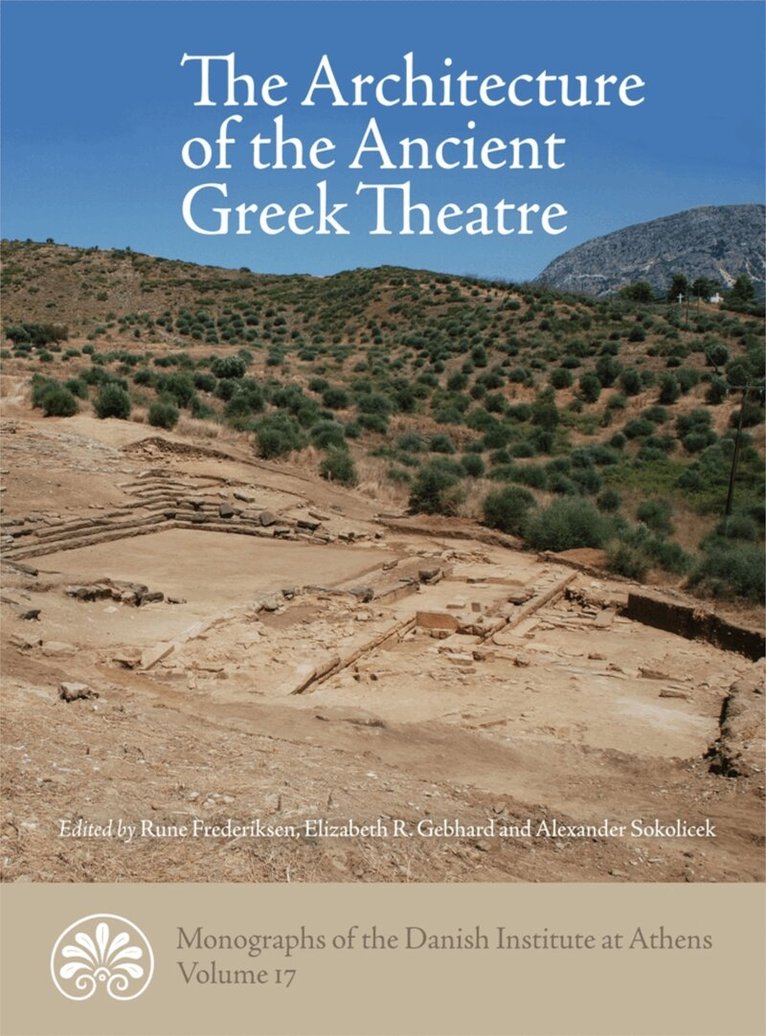
In this volume the leading experts on ancient Greek theatre architecture present new excavation results and new analyses of individual monuments. Many well-known theatres such as the one of Dionysos in Athens and others at for instance Messene, Sikyon, Chaironeia in Greece and Aphrodisias in Turkey have been re-examined since their original publication with stunning results. New research also includes less well-known or newly discovered ancient Greek theatres in Albania, Turkey, Cyprus and Sicily. Further studies on the history of research, regional theatrical developments, terminology and function, as well as a perspective on Roman theatres built in Greek traditions make this volume a comprehensive book of new research for specialist scholars as well as for students and the interested public. Fundamental publications on the topic have not been presented for many years, and this book aims to form a new foundation for the study of theatre architecture.
Del 22 - Monographs of the Danish Institute at Athens
Material Koinai in the Greek Early Iron Age and Archaic Period
Inbunden, Engelska, 2018
542 kr
Skickas inom 5-8 vardagar
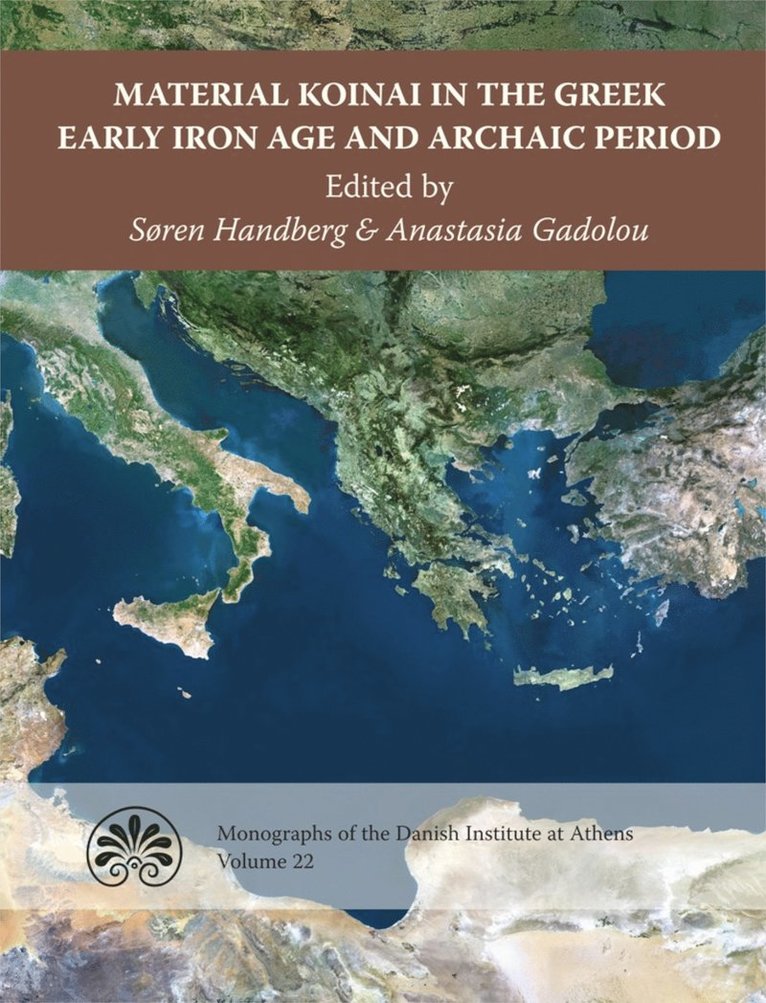
The ancient Greek word koine was used to describe the new common language dialect that became widespread in the ancient Greek world after the conquests of Alexander the Great. Modern scholars have increasingly used the word to conceptualise regional homogeneities in the material culture of the ancient Mediterranean.In this volume, twenty scholars from various disciplines present case studies that focus on the fundamental question of how to perceive and the social and cultural mechanisms that led to the spread and consumption of material culture in the Greek early Iron Age. Combined the chapters provide a critical examination of the use of the koine concept as a heuristic tool in historical research and discuss to what degree similarities in material culture reflect cultural connections.The volume will be of interest scholars interested in archaeological theory and method, the social significance of material culture, and the history of the ancient Greek world in the first half of the first millennium BC.
404 kr
Skickas inom 5-8 vardagar
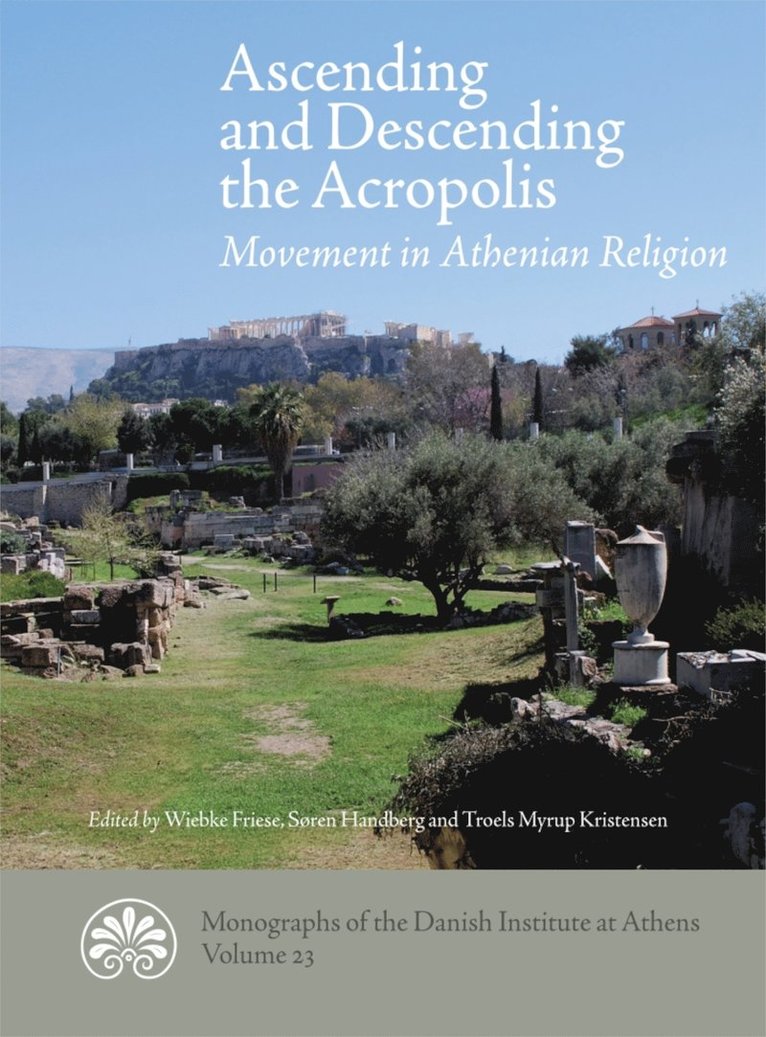
Ascending and Descending the Acropolis – Mobility in Athenian Religion provides new perspectives on religious mobilities within the geographically limited region of Attica in Greece from the Late Bronze Age to the second century AD. Attica is a particularly fruitful region to study these forms of mobility, as it provides rich evidence across a range of material and textual sources for a variety of different mobile situations – both inside the city of Athens itself (such as on and circumnavigating the Acropolis) and to sanctuaries in its hinterland (such as Eleusis and Brauron), as well to as more distant sanctuaries, such as Delphi.
Del 15 - Monographs of the Danish Institute at Athens
Ancient Harbours of the Piraeus
Volume II. Zea Harbour: the Group 1 and 2 Shipsheds and Slipways - Architecture, Topography and Finds
Inbunden, Engelska, 2019
665 kr
Skickas inom 5-8 vardagar
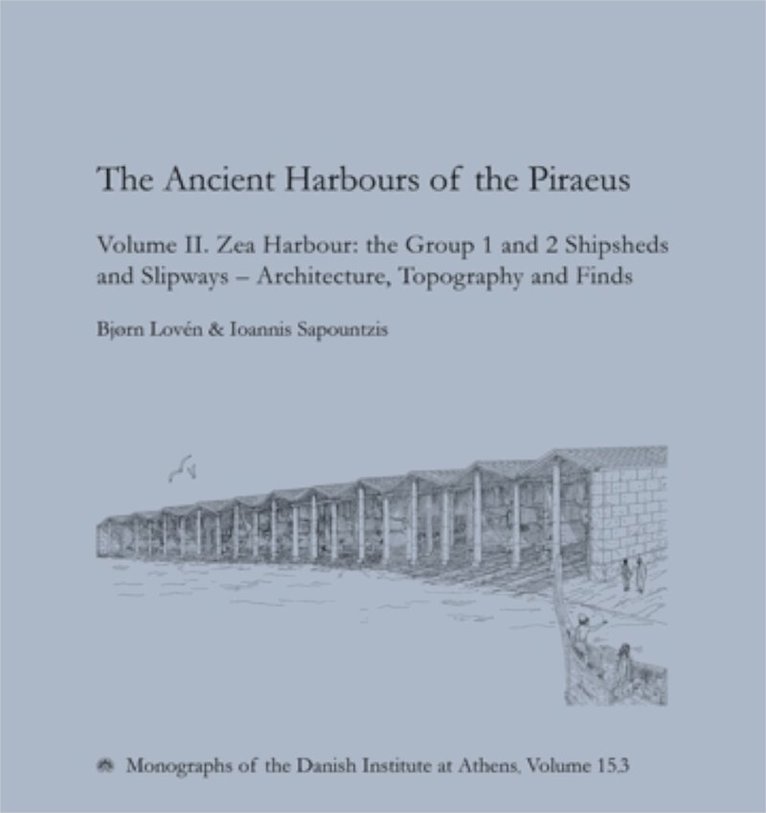
Volume 15,3: Architecture, Topography, Finds. Expanding on the publication of the shipsheds and slipways found in the northern half of Group 1 (Area 1) on the eastern side of Zea Harbour in Volume I.1–2 (2011) of the peer-reviewed Ancient Harbours of the Piraeus series, Volume II presents further results of the archaeological investigations conducted by the Zea Harbour Project (ZHP) in 2004-2010 and 2012 of ancient shipsheds and slipways in Zea Harbour (Pashalimani), both identified and possible, making them the best documented structures in Athens’ naval bases and in the wider Mediterranean. Approximately half of Volume II is devoted to the remains of shipsheds and possible shipsheds in the southern half of Group 1 (Area 2), while studies of structures identified as wide unroofed slipways in Group 2 (Area 3) on the south-eastern side of the same harbour basin occupy the balance of the book. After Chapter 1’s introduction to terminology and methodology, Chapter 2 presents the architecture of the shipsheds and possible shipsheds found in the southern half of Group 1 (Area 2), along with the arrangement and topography of this massive naval complex, which in the 4th century BC covered between 11,630 m2 and 11,989 m2. Chapter 3 examines and catalogues the ceramics and other small finds discovered in the same area, discussing their excavation contexts, composition, and chronological significance. Chapter 4 focuses on the architecture and topography of seven wide, unroofed slipways found in Group 2 in the northern part of Area 3 that represent a building type previously unknown in the Piraeus, probably designed either for a larger warship known as the penteres (‘five’), introduced into the Athenian navy between 329/8 BC and 326/5 BC, or for a larger Hellenistic-period warship type. Chapter 5 analyses and catalogues the ceramic small finds recovered during the excavation of the structures featured in Chapter 4. Chapter 6 presents the new evidence regarding relative sea-level change in the harbours of Zea and Mounichia and its impact on the reconstructed lengths and layouts of the slipways and shipsheds at Zea in Group 1 (Areas 1–2) along with the wide slipways of Group 2, including greater accuracy in the recalculated lengths of the Group 1 shipsheds and slipways presented in Volume I; furthermore, it reaffirms the validity of the ZHP’s methodology and published results in relation to shipsheds around the Mediterranean. Chapter 7 recapitulates the authors’ topographical, architectural, and chronological conclusions regarding the complexes at Zea and Mounichia, which contain the only identifiable shipsheds for triremes anywhere in the ancient world. Descriptive catalogues of the Area 2 and 3 quarries and Area 2 trenches (Appendices 1–2), Figures, and Plates complete the volume.
Kalydon in Aitolia I II Reports and Studies
Danish/Greek Field Work 2001-2005
Inbunden, Engelska, 2011
802 kr
Skickas inom 5-8 vardagar
In 2001 the Danish Institute at Athens commenced a large scale archaeological field project in ancient Kalydon in Aitolia. Kalydon is located around eight kilometres as the crow flies from Chalkis, on the west side of Mount Varassova in the direction of the present-day capital of Aitolia, Messolonghi. Kalydon plays a considerable role in ancient mythology as described in Homer's Iliad. For that reason, the important Sanctuary of Artemis Laphria outside the city walls and a so-called Heroon/palaestra, were excavated by a team of Danish and Greek archaeologists during the years 1926 to 1935. The new investigations are thus a continuation of an earlier Danish/Greek cooperation, this time with focus on the town itself. Various methods were used in order to examine the town itself. A surveyor initiated the topographical measurements of the city, the fortification walls and the visible remains of terrace walls and buildings. The town inside the walls was surveyed by a team, which collected and counted the objects from the surface - pottery, tiles, metals, loom weights etc. Finally, excavations concentrated on a peristyle building which was partly excavated, and a tile kiln situated in the so-called Lower Town. Larger sections of the remains on the Acropolis were excavated and a small-scale survey of the Central Town gave indications of the use of the habitation quarters. The town within the walls comprised an area of approximately 35 ha (350,000 m2). The investigations gave a good picture of the town in antiquity and of the function of the various quarters. The most important building in the Lower Town was probably the peristyle building with its colonnade and courtyard where athletic games took place. In a room in one of the corners of the building, a cult of the Anatolian goddess Cybele was established. Findings of marble sculpture, incense burners, clay figurines and lamps indicate the function of the room. The objects were found almost as they were left when the roof collapsed around the middle of the 1st century AD. On the Acropolis a shrine was already established by late Archaic times, in the late 6th century BC.
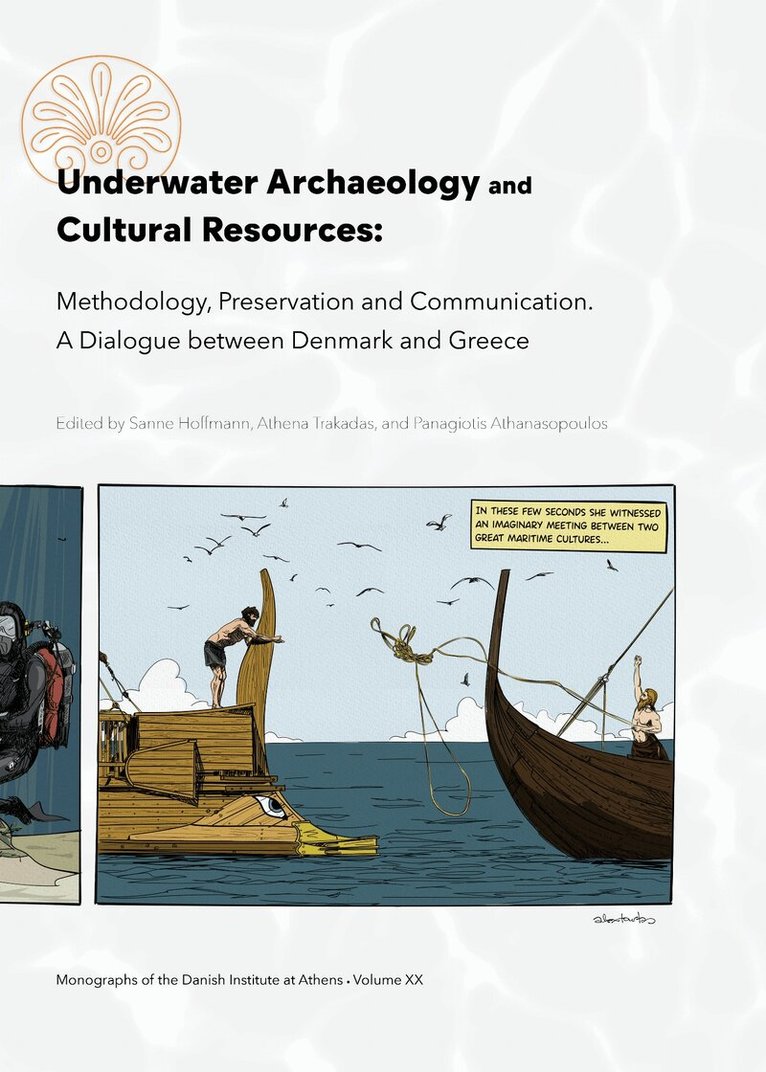
Underwater Archaeology and Cultural Resources
Methodology, Preservation and Communication. a Dialogue Between Denmark and Greece
Inbunden, Engelska, 2026
267 kr
Skickas inom 5-8 vardagar
Denmark and Greece both possess vast territorial waters that hold irreplaceable tangible cultural heritage including shipwrecks and submerged settlements. These countries have therefore been at the global forefront of developing the discipline of underwater archaeology. Underwater Archaeology and Cultural Resources: Methodology, Preservation and Communication – A Dialogue Between Denmark and Greece presents shared and distinct approaches to underwater cultural heritage. This publication features contributions from leading Danish and Greek specialists, based on a series of double lectures held at the Danish Institute at Athens, and captures vital cross-cultural and scientific exchanges that highlight best practices and innovations in exploring, preserving and communicating underwater cultural heritage. Designed to engage both academic audiences and the wider public, the book provides valuable insights into how underwater heritage can be studied, protected, and meaningfully shared with society.
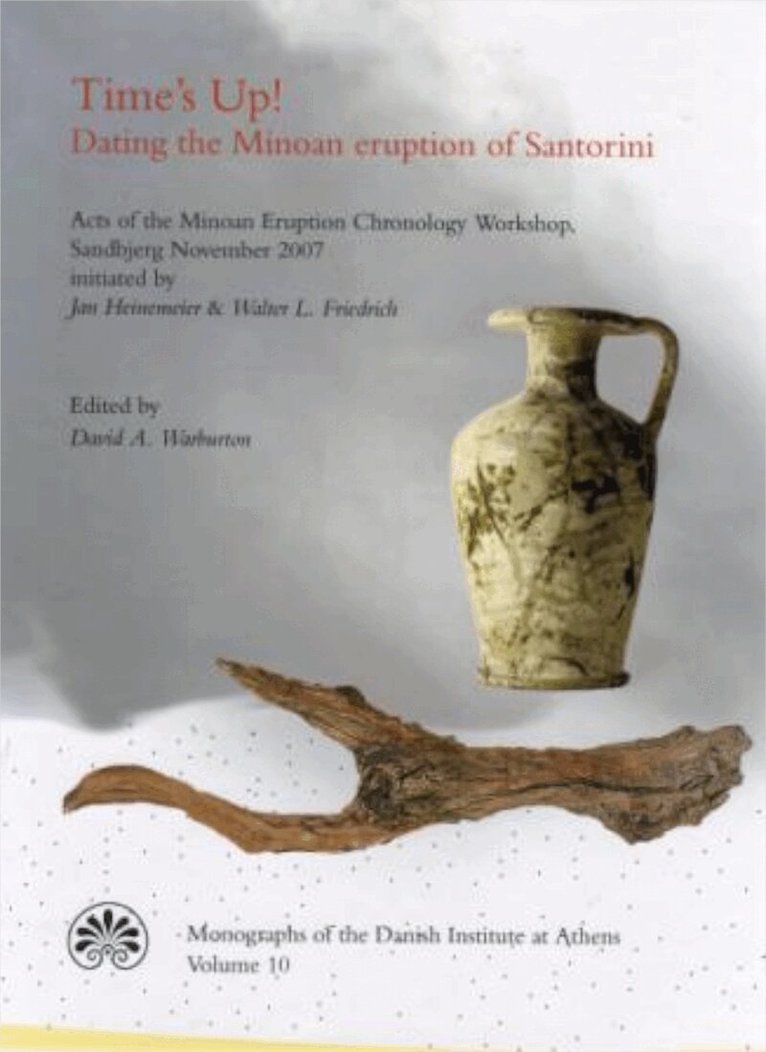
Del 10 - Monographs of the Danish Institute at Athens
Time's Up!
Acts of the Minoan Eruption Chronology Workshop, Sandjberg November 2007 Initiated by Jan Heinemeier & Walter L Friedrich
Inbunden, Engelska, 2009
500 kr
Skickas inom 5-8 vardagar
The volcanic eruption of Santorini was the greatest in historical times. Assigned to the Late Minoan IA period, archaeological correlations implied a date late in the 16th century BC. Yet indirect natural science evidence suggested a date in the 17th century. The dating ceased to be indirect when branches of olive trees were found buried in the debris of the eruption. The radiocarbon Accelerator Mass Spectrometry (AMS) dating technique and the intcal04 calibration curve suggested a two-sigma range date between 1600 and 1627 BC. The debate continues; the papers here cover the radiocarbon results, the ice cores, the geology, and the archaeology, offering in-depth access to a controversy linking the natural sciences and the humanities. Aside from volcanologists, it will interest scholars of Bronze Age Aegean archaeology, the chronology of the eastern Mediterranean in the second millennium BC, archaeological methodology, the principles of radiocarbon dating and its application to Bronze Age sources.
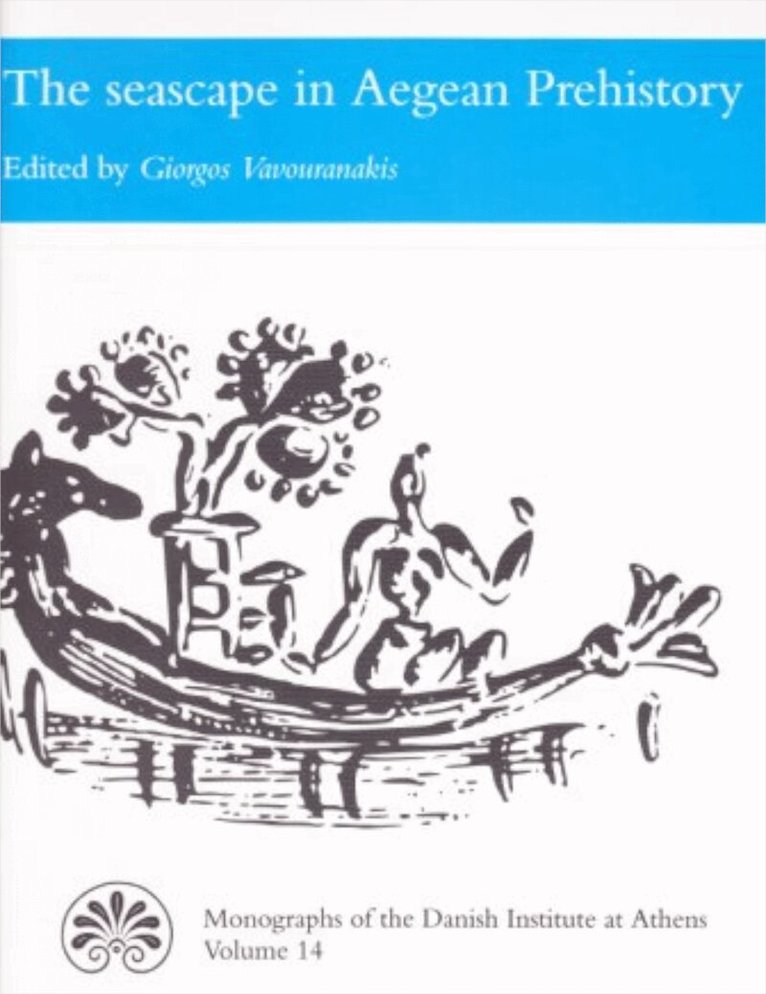
Del 14 - Monographs of the Danish Institute at Athens
Seascape in Aegean Prehistory
Inbunden, Engelska, 2011
396 kr
Skickas
This book is about the relationship between the people and the sea in the prehistoric Aegean. It explores how people understood the sea as an integral part of their way of life and examines the role the sea played in the prehistoric societies of the archipelago. It may at first seem obvious -- even self-evident -- that there had been a close relationship between people and the sea, since the Aegean Archipelago is the dominant feature of its wider area. It spreads over at total area of about 214,000 sq km. This large area of water includes over 1000 islands, many of which are populated today. The Aegean Sea and its islands epitomise Greece in the minds of many people today. Nonetheless, we should remember that the land that borders the Aegean features the important mountain range of Pindos, the plains of Thessaly and Macedonia and, next to Greece, Turkey, with the solid landmass of Asia Minor. These places have always accommodated extensive and flourishing communities that were not related to the sea at all. Furthermore, many people on Mount Ida in Crete had never seen the sea in the recent past, despite being on an island, while until recently many Greeks living close to the coast had not known how to swim. A maritime way of life may be an obvious option, but it is neither the only nor an inevitable one in the Aegean. There is always room for choice in the relation between people and the sea and this relation may acquire various forms and different degrees of intimacy.