Monographs on Statistics and Applied Probability - Böcker
Visar alla böcker i serien Monographs on Statistics and Applied Probability. Handla med fri frakt och snabb leverans.
12 produkter
12 produkter
536 kr
Skickas inom 10-15 vardagar
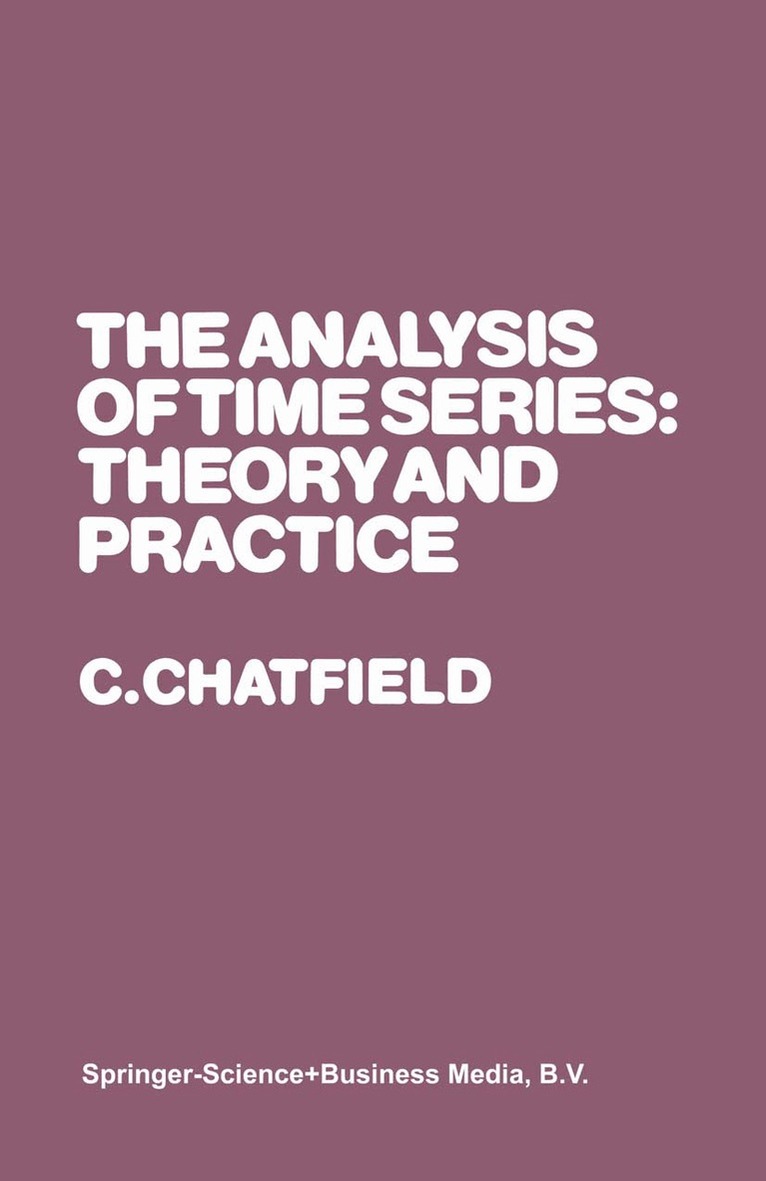
Time-series analysis is an area of statistics which is of particular interest at the present time. Time series arise in many different areas, ranging from marketing to oceanography, and the analysis of such series raises many problems of both a theoretical and practical nature. I first became interested in the subject as a postgraduate student at Imperial College, when I attended a stimulating course of lectures on time-series given by Dr. (now Professor) G. M. Jenkins. The subject has fascinated me ever since. Several books have been written on theoretical aspects of time-series analysis. The aim of this book is to provide an introduction to the subject which bridges the gap between theory and practice. The book has also been written to make what is rather a difficult subject as understandable as possible. Enough theory is given to introduce the concepts of time-series analysis and to make the book mathematically interesting. In addition, practical problems are considered so as to help the reader tackle the analysis of real data. The book assumes a knowledge of basic probability theory and elementary statistical inference (see Appendix III). The book can be used as a text for an undergraduate or postgraduate course in time-series, or it can be used for self tuition by research workers. Throughout the book, references are usually given to recent readily accessible books and journals rather than to the original attributive references. Wold's (1965) bibliography contains many time series references published before 1959.
536 kr
Skickas inom 10-15 vardagar
The biggest single influence on the development of the subject of design of experiments over the past quarter-century has been the availability of computers. Prior to the computer it was essential that any design had a straightforward method of analysis, which meant that the mathematical and combinatorial properties of the designs were of primary importance. Many of the designs proposed and studied also possessed important statistical properties and thus continue to be practically useful but, now that ease of analysis is less important, a very large number of these designs no longer have any real value. With the advent ofthe computer it has become possible to study families of designs which have relatively simple methods of construction and which provide large numbers of designs. Within a family, the designs which satisfy certain desirable statistical, rather than mathematical, properties can then be identified using a combin ation of theory and computing. One of the primary aims of this monograph is to study families of block and row-column designs, both unifactor and multifactor, whose methods of construction are cyclical in nature; hence the title Cyclic Designs. The usual practice adopted in books on the design of experiments is to follow the description of a particular design by its method of analysis and, possibly, a numerical example.
Stochastic Abundance Models
With Emphasis on Biological Communities and Species Diversity
Häftad, Engelska, 2012
528 kr
Skickas inom 10-15 vardagar
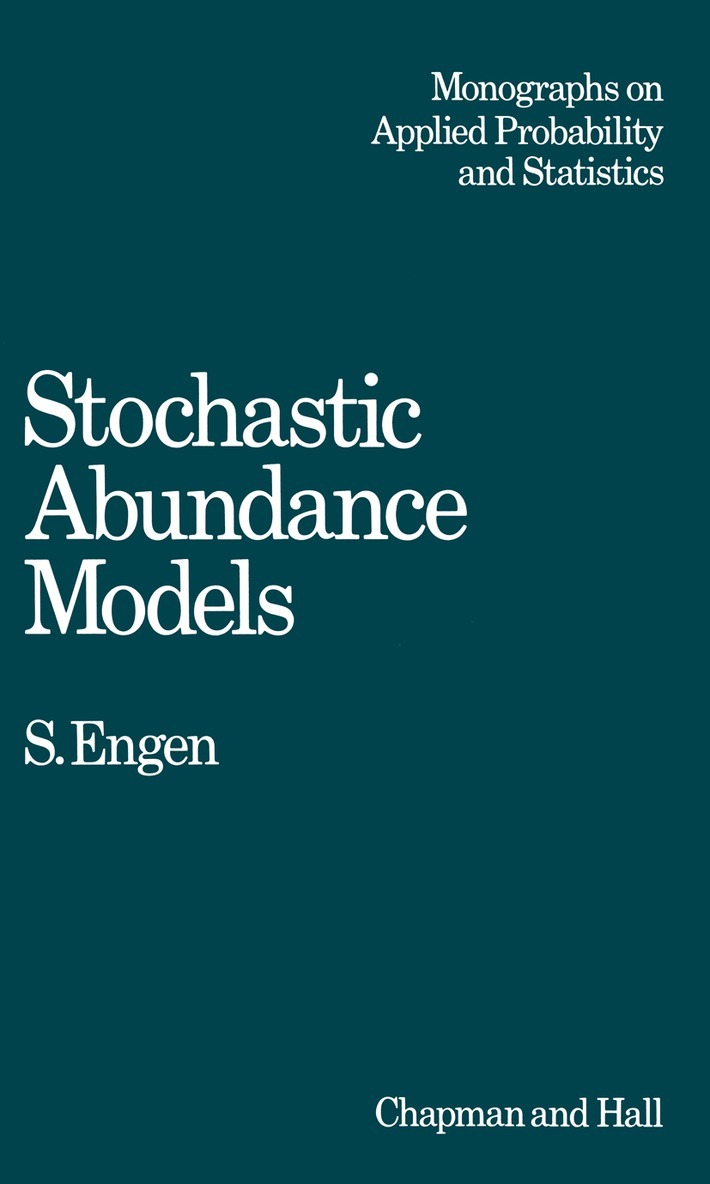
This monograph deals with the analysis of populations of elements. Each element is a member of one and only one class, and we shall mainly be concerned with populations with a large number of classes. No doubt the present theory has its outspring in ecology, where the elements symbolize the individual animals or plants, while the classes are the various species of the ecological community under consideration. Some basic ideas point back to a classical contribution by R.A. Fisher (1943, in collaboration with A.S. Corbet and c.B. Williams) representing a breakthrough for the theoretical analysis of diverse populations. Though most of the work in this field has been carried out by ecologists, statisticians and biometri cians have, over the past 15 years, shown an ever increasing interest in the topic. Besides being directed towards biometricians and statisticians, this monograph may hopefully be of interest for any research worker dealing with the classification of units into a large number of classes, in particular ecologists, sociologists and linguists. However, some background in statistics and probability theory is required. It would be unless to read the present book without some knowledge of the continuous and discrete probability distributions summarized in section 1.1, and the use of generating functions. In particular, a clear intuitive and formal understanding of the concept of condi tional probability and conditional distributions is required in order to interpret the various models correctly.
536 kr
Skickas inom 10-15 vardagar
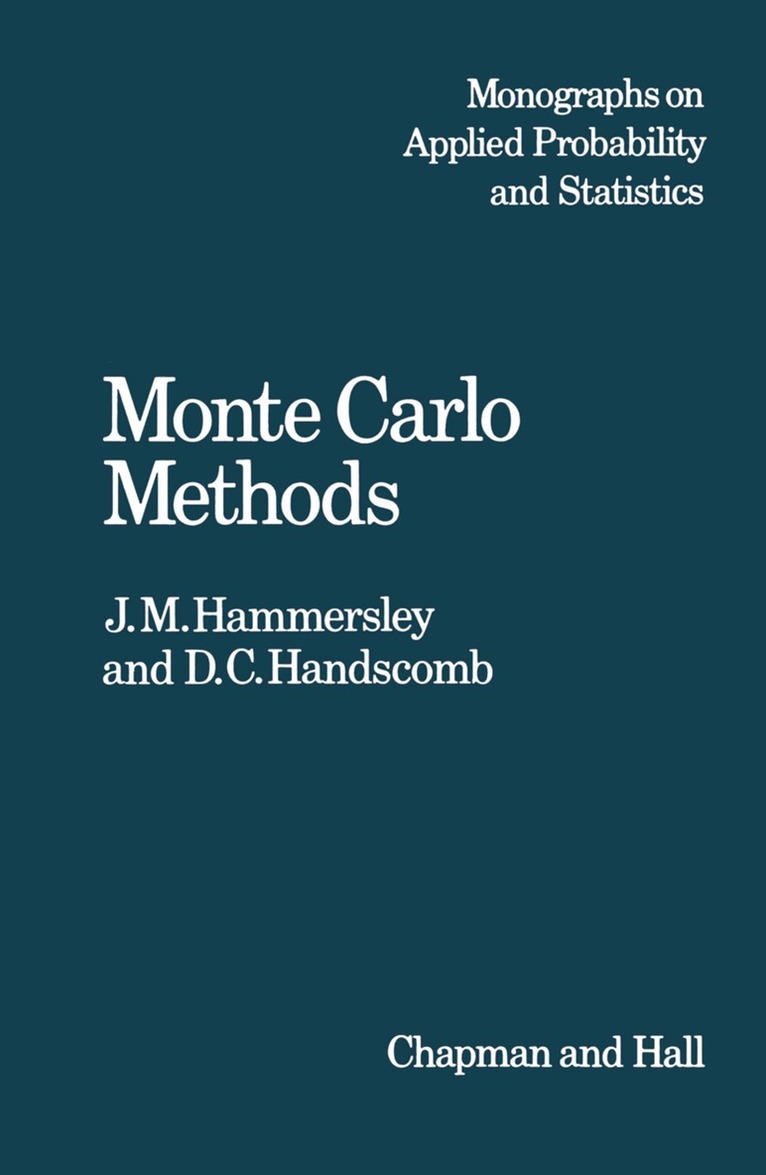
This monograph surveys the present state of Monte Carlo methods. For the sake of completeness, we cast a very brief glance in Chapter 4 at the direct simulation used in industrial and operational research, where the very simplest Monte Carlo techniques are usually sufficient.
528 kr
Skickas inom 10-15 vardagar
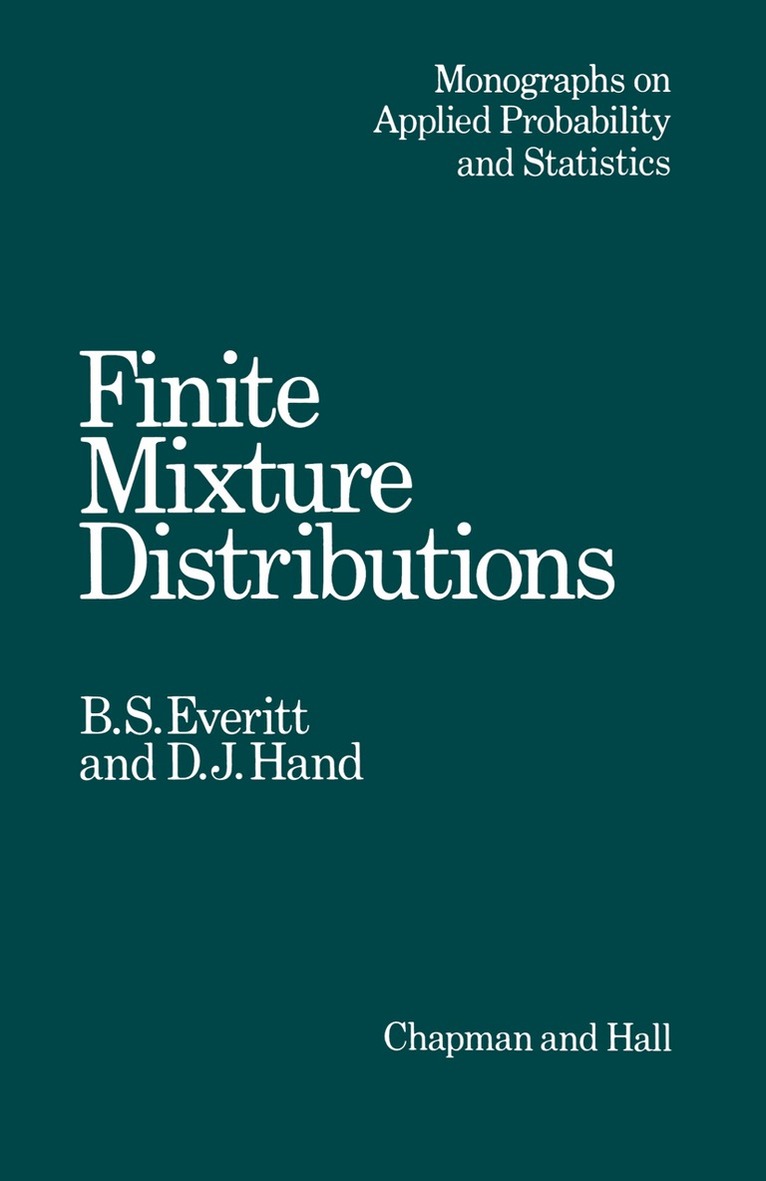
Finite mixture distributions arise in a variety of applications ranging from the length distribution of fish to the content of DNA in the nuclei of liver cells. The literature surrounding them is large and goes back to the end of the last century when Karl Pearson published his well-known paper on estimating the five parameters in a mixture of two normal distributions. In this text we attempt to review this literature and in addition indicate the practical details of fitting such distributions to sample data. Our hope is that the monograph will be useful to statisticians interested in mixture distributions and to re search workers in other areas applying such distributions to their data. We would like to express our gratitude to Mrs Bertha Lakey for typing the manuscript. Institute oj Psychiatry B. S. Everitt University of London D. l Hand 1980 CHAPTER I General introduction 1. 1 Introduction This monograph is concerned with statistical distributions which can be expressed as superpositions of (usually simpler) component distributions. Such superpositions are termed mixture distributions or compound distributions. For example, the distribution of height in a population of children might be expressed as follows: h(height) = fg(height: age)f(age)d age (1. 1) where g(height: age) is the conditional distribution of height on age, and/(age) is the age distribution of the children in the population.
552 kr
Skickas inom 10-15 vardagar
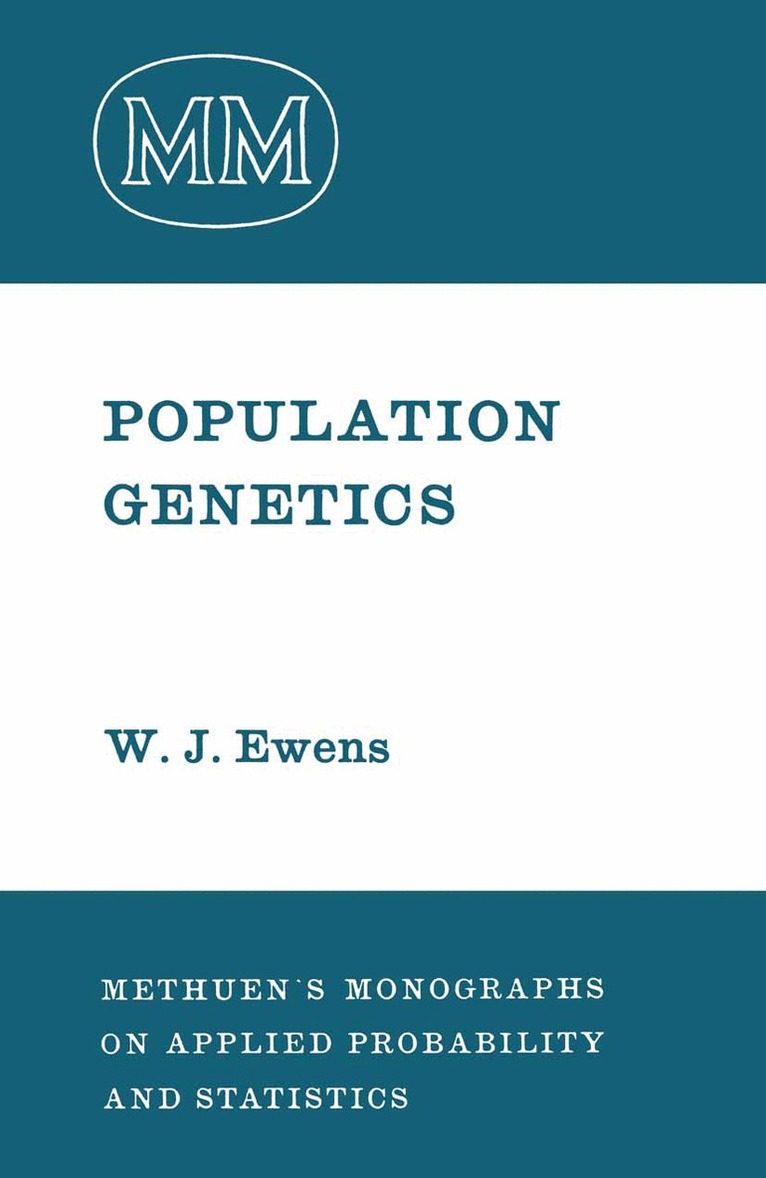
Population genetics is the mathematical investigation of the changes in the genetic structure of populations brought about by selection, mutation, inbreeding, migration, and other phenomena, together with those random changes deriving from chance events. These changes are the basic components of evolutionary progress, and an understanding of their effect is therefore necessary for an informed discussion of the reasons for and nature of evolution. It would, however, be wrong to pretend that a mathematical theory, depending as it must on a large number of simplifying assump tions, should be accepted unreservedly and that its conclusions should be accepted uncritically. No-one would pretend that in the event of disagreement between observation and mathematical prediction, the discrepancy is due to anything other than the inadequacy of the mathematical treatment. The biological world is, of course, far too complex for the study of population genetics to be simply a branch of applied mathematics, so that while we are concerned here with the mathematical theory, I have tried to indicate which of our results should continue to apply in a context wider than that in which they are formally derived. The difficulties involved in the joint discussions of mathematical and genetical problems are obvious enough. I have tried to aim this book rather more at the mathematician than at the geneticist, and for this reason a brief glossary of common genetical terms is included.
536 kr
Skickas inom 10-15 vardagar
528 kr
Skickas inom 10-15 vardagar
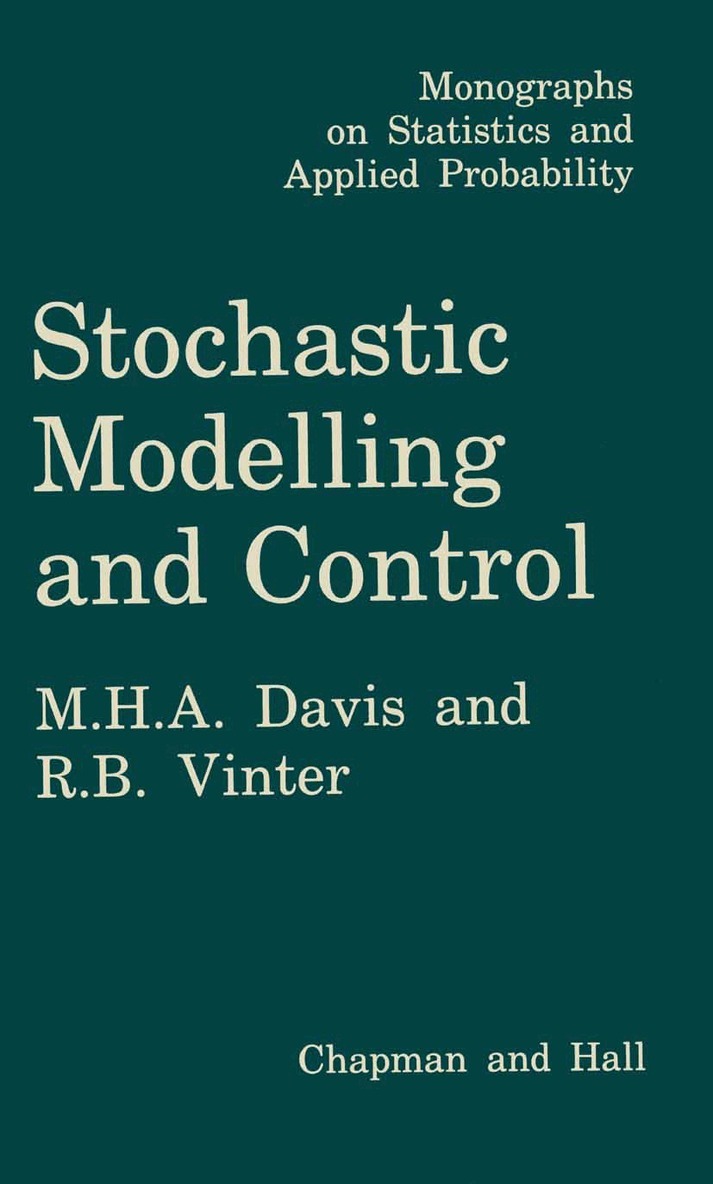
The type of system we are interested in is a discrete-time or sampled-data system where the relation between input and output is (at least approximately) linear and where additive random dis turbances are also present, so that the behaviour of the system must be investigated by statistical methods.
528 kr
Skickas inom 10-15 vardagar
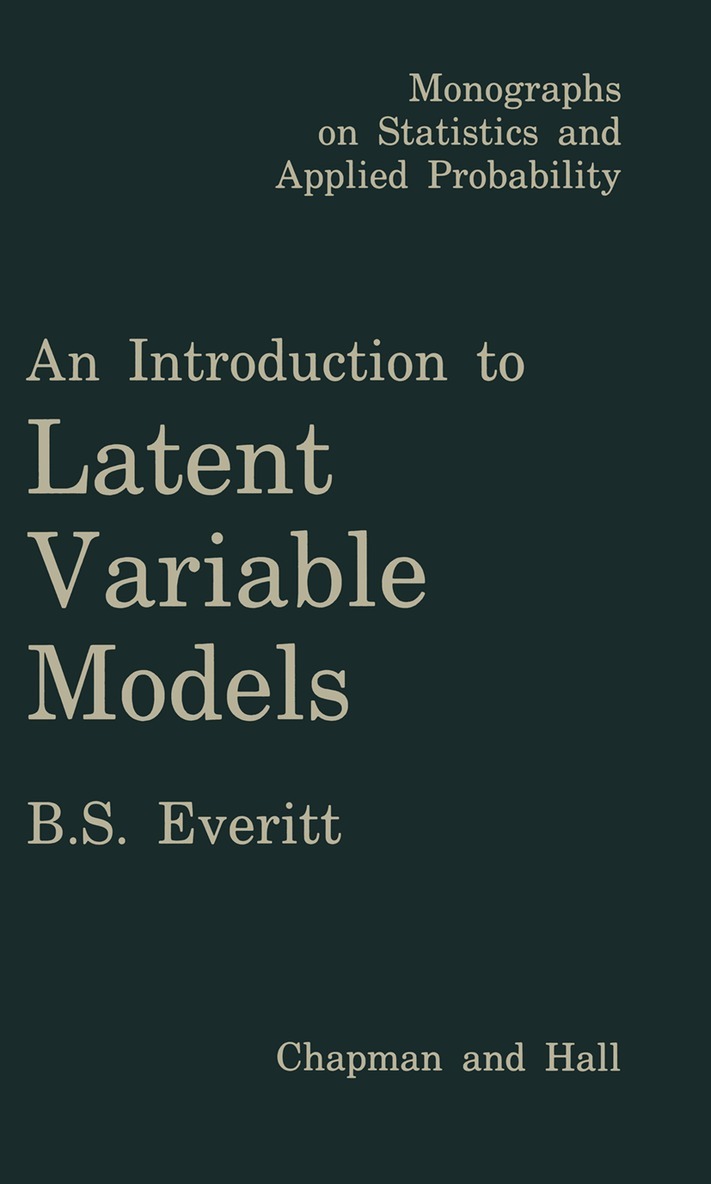
Latent variable models are used in many areas of the social and behavioural sciences, and the increasing availability of computer packages for fitting such models is likely to increase their popularity. This book attempts to introduce such models to applied statisticians and research workers interested in exploring the structure of covari ance and correlation matrices in terms of a small number of unob servable constructs. The emphasis is on the practical application of the procedures rather than on detailed discussion of their mathe matical and statistical properties. It is assumed that the reader is familiar with the most commonly used statistical concepts and methods, particularly regression, and also has a fair knowledge of matrix algebra. My thanks are due to my colleagues Dr David Hand and Dr Graham Dunn for helpful comments on the book, to Mrs Bertha Lakey for her careful typing of a difficult manuscript and to Peter Cuttance for assistance with the LlSREL package. In addition the text clearly owes a great deal to the work on structural equation models published by Karl Joreskog, Dag Sorbom, Peter Bentler, Michael Browne and others.
536 kr
Skickas inom 10-15 vardagar
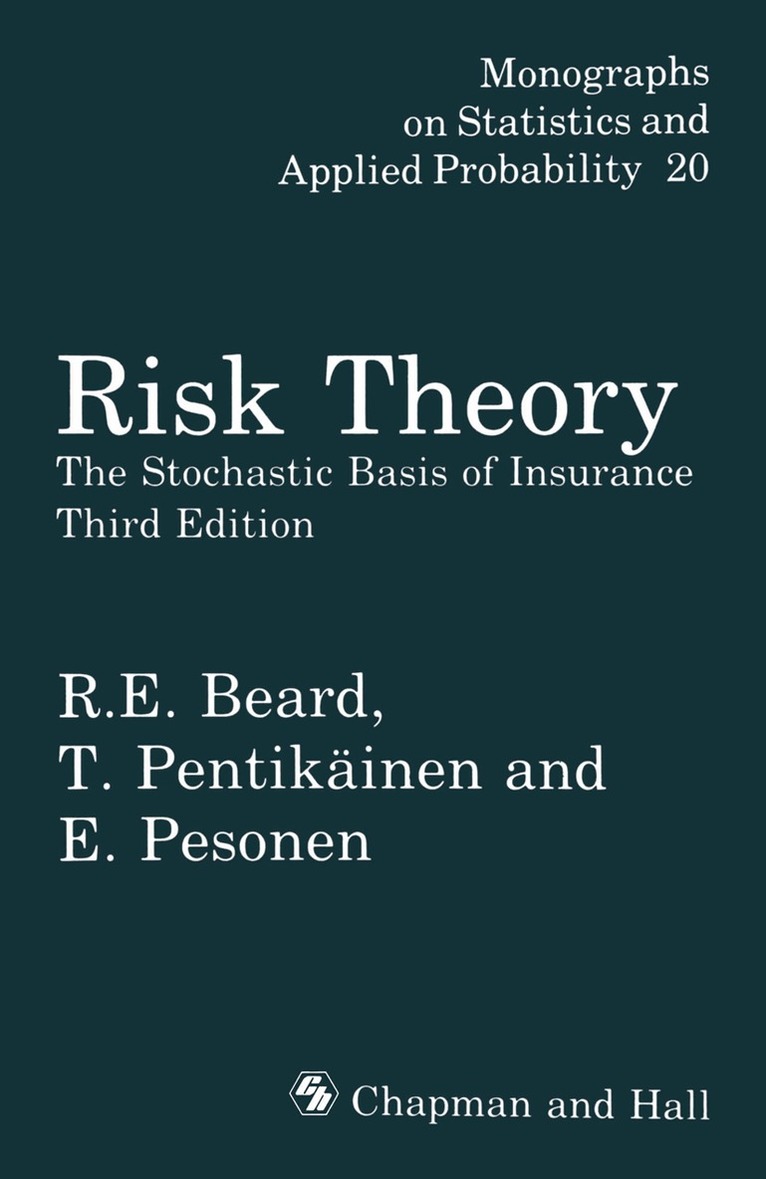
The theory of risk already has its traditions. A review of its classical results is contained in Bohlmann (1909). This classical theory was associated with life insurance mathematics, and dealt mainly with deviations which were expected to be produced by random fluctua tions in individual policies. According to this theory, these deviations are discounted to some initial instant; the square root of the sum of the squares of the capital values calculated in this way then gives a measure for the stability of the portfolio. A theory constituted in this manner is not, however, very appropriate for practical purposes. The fact is that it does not give an answer to such questions as, for example, within what limits a company's probable gain or loss will lie during different periods. Further, non-life insurance, to which risk theory has, in fact, its most rewarding applications, was mainly outside the field of interest of the risk theorists. Thus it is quite understandable that this theory did not receive very much attention and that its applications to practical problems of insurance activity remained rather unimportant. A new phase of development began following the studies of Filip Lundberg (1909, 1919), which, thanks to H. Cramer (1926), e.O.
1 170 kr
Skickas inom 10-15 vardagar
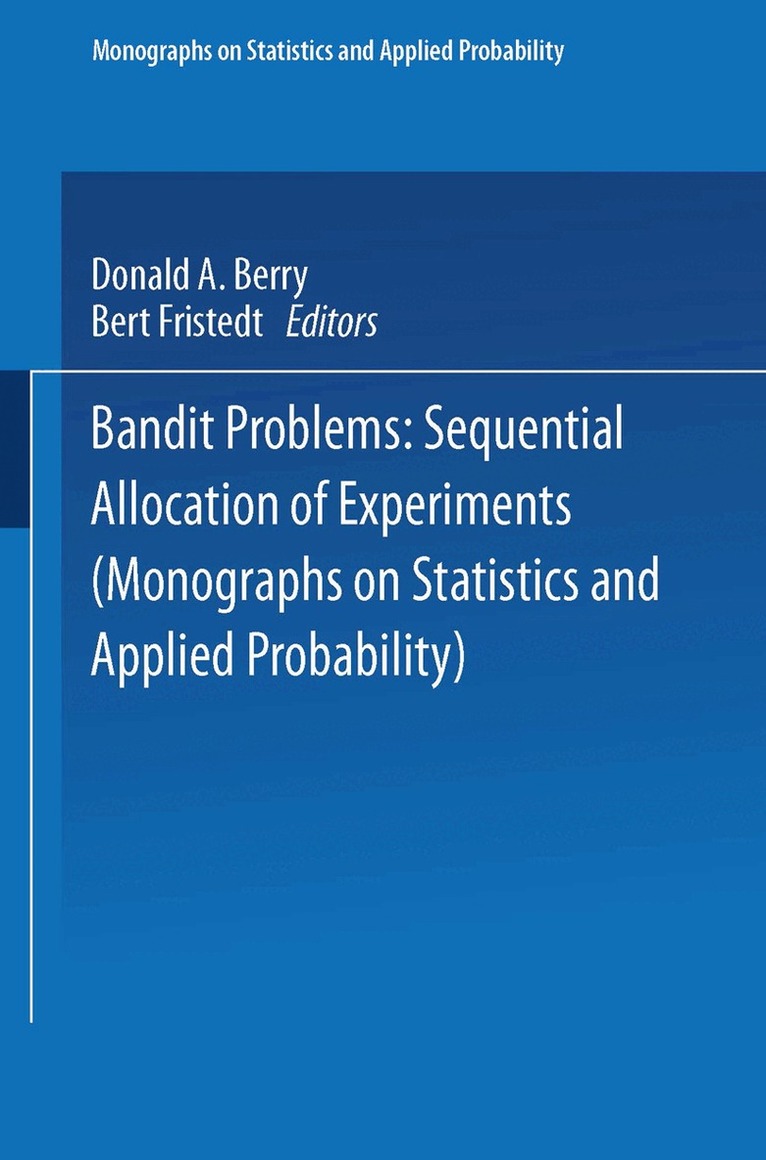
Our purpose in writing this monograph is to give a comprehensive treatment of the subject. We define bandit problems and give the necessary foundations in Chapter 2. Many of the important results that have appeared in the literature are presented in later chapters; these are interspersed with new results. We give proofs unless they are very easy or the result is not used in the sequel. We have simplified a number of arguments so many of the proofs given tend to be conceptual rather than calculational. All results given have been incorporated into our style and notation. The exposition is aimed at a variety of types of readers. Bandit problems and the associated mathematical and technical issues are developed from first principles. Since we have tried to be comprehens ive the mathematical level is sometimes advanced; for example, we use measure-theoretic notions freely in Chapter 2. But the mathema tically uninitiated reader can easily sidestep such discussion when it occurs in Chapter 2 and elsewhere. We have tried to appeal to graduate students and professionals in engineering, biometry, econ omics, management science, and operations research, as well as those in mathematics and statistics. The monograph could serve as a reference for professionals or as a telA in a semester or year-long graduate level course.
1 170 kr
Skickas inom 10-15 vardagar
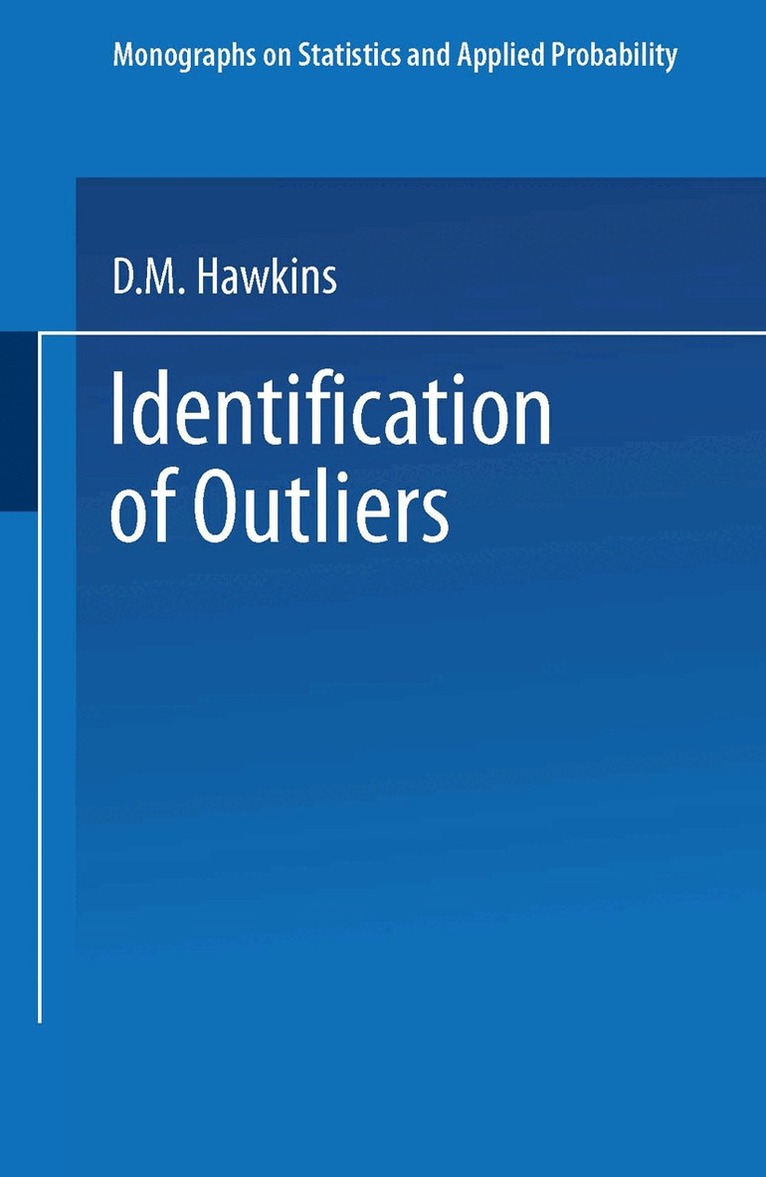
The problem of outliers is one of the oldest in statistics, and during the last century and a half interest in it has waxed and waned several times. Currently it is once again an active research area after some years of relative neglect, and recent work has solved a number of old problems in outlier theory, and identified new ones. The major results are, however, scattered amongst many journal articles, and for some time there has been a clear need to bring them together in one place. That was the original intention of this monograph: but during execution it became clear that the existing theory of outliers was deficient in several areas, and so the monograph also contains a number of new results and conjectures. In view of the enormous volume ofliterature on the outlier problem and its cousins, no attempt has been made to make the coverage exhaustive. The material is concerned almost entirely with the use of outlier tests that are known (or may reasonably be expected) to be optimal in some way. Such topics as robust estimation are largely ignored, being covered more adequately in other sources. The numerous ad hoc statistics proposed in the early work on the grounds of intuitive appeal or computational simplicity also are not discussed in any detail.