• Fri frakt över 249 kr
  • •
  • Snabba leveranser
  • •
  • Billiga böcker
Kundservice

Du är på sajten för privatpersoner.

Företag, bibliotek eller offentlig verksamhet?

Du handlar på classic.bokus.com, där alla dina funktioner finns intakta.
Till classic.bokus.com
Bokus logotyp. Gå till startsidan.
  • Erbjudanden
  • Nyheter
  • Student
  • Topplistor
  • Barn & ungdom
  • Bokus Play
  • E-böcker
  • Pocketböcker
  • Spel & pussel

10% rabatt på allt med kod NYSTART10 →

Sidfot

Mina sidor

    Hjälp

    • Kundservice
    • Vanliga frågor och svar
    • Frakt och leverans
    • Retur vid ångerrätt
    • Reklamera vara
    • Betalning
    • Köpvillkor
    • Allmänna villkor
    • Information om webbplatsens tillgänglighet

    Om Bokus

    • Om oss
    • Pressrum
    • För studenter
    • För företag
    • För bibliotek och offentlig verksamhet
    • För leverantörer
    • Hållbarhet

    Populärt

    • Aktuella erbjudanden
    • Presentkort
    • Studentlitteratur
    • Nya böcker
    • Topplistor
    • Signerade böcker
    • Engelska böcker

    Inspiration

    • Boktips
    • BookTok
    • Populära bokserier
    • Barnbokskaraktärer
    • Populära författare
    Logotyp för Bokus
    Följ oss på Facebook (extern länk)Följ oss på Instagram (extern länk)Följ oss på YouTube (extern länk)Följ oss på TikTok (extern länk)
    bokus @ CookiesAnpassa cookiesIntegritetspolicyKöpvillkor
    Till Citymail hemsida (extern länk)Till Budbee hemsida (extern länk)Till Postnord hemsida (extern länk)Till Schenker hemsida (extern länk)Till Early Bird hemsida (extern länk)Till Walleys hemsida (extern länk)
    1. Samhälle och politik
    2. Samhälle och kultur
    3. Kultur och medier
    4. Referensverk och tvärvetenskap

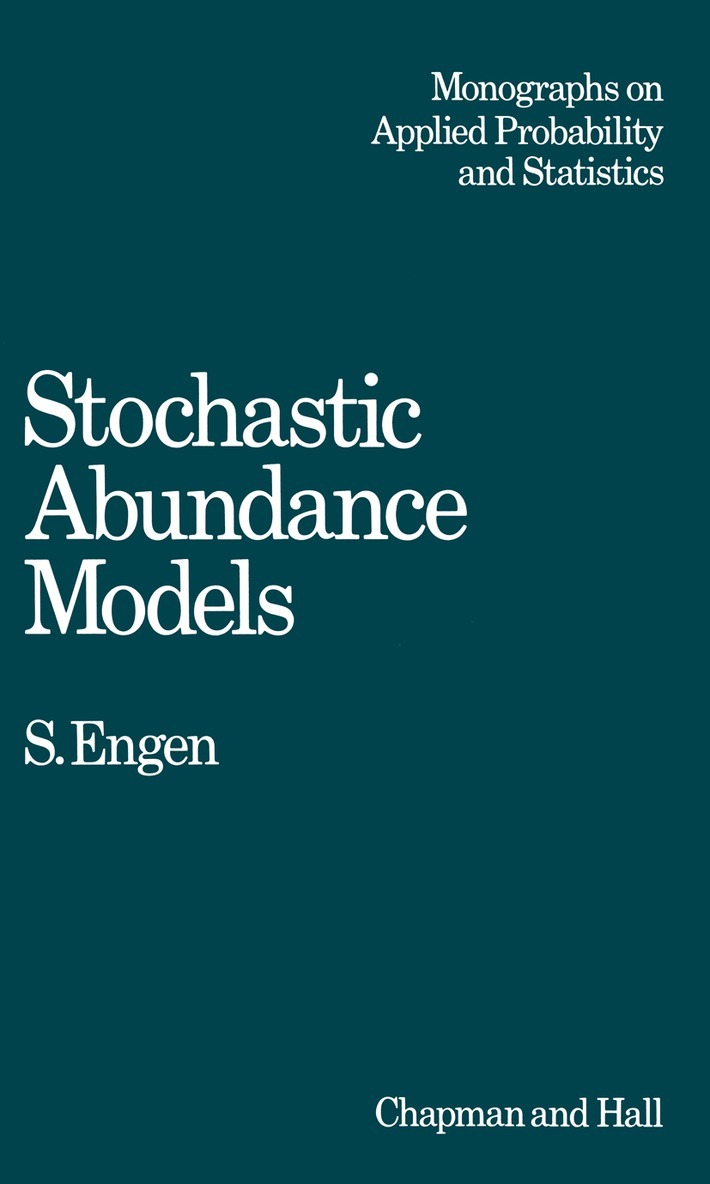
    Stochastic Abundance Models

    With Emphasis on Biological Communities and Species Diversity

    AvS. Engen

    Häftad, Engelska, 2012

    Del i serien Monographs on Statistics and Applied Probability

    538 kr

    Beställningsvara. Skickas inom 10-15 vardagar. Fri frakt över 249 kr.

    Fler format och utgåvor

    E-bok

    700 kr

    Beskrivning

    This monograph deals with the analysis of populations of elements. Each element is a member of one and only one class, and we shall mainly be concerned with populations with a large number of classes. No doubt the present theory has its outspring in ecology, where the elements symbolize the individual animals or plants, while the classes are the various species of the ecological community under consideration. Some basic ideas point back to a classical contribution by R.A. Fisher (1943, in collaboration with A.S. Corbet and c.B. Williams) representing a breakthrough for the theoretical analysis of diverse populations. Though most of the work in this field has been carried out by ecologists, statisticians and biometri­ cians have, over the past 15 years, shown an ever increasing interest in the topic. Besides being directed towards biometricians and statisticians, this monograph may hopefully be of interest for any research worker dealing with the classification of units into a large number of classes, in particular ecologists, sociologists and linguists. However, some background in statistics and probability theory is required. It would be unless to read the present book without some knowledge of the continuous and discrete probability distributions summarized in section 1.1, and the use of generating functions. In particular, a clear intuitive and formal understanding of the concept of condi­ tional probability and conditional distributions is required in order to interpret the various models correctly.

    Produktinformation

    • Utgivningsdatum:2012-02-12
    • Mått:140 x 216 x 8 mm
    • Vikt:186 g
    • Format:Häftad
    • Språk:Engelska
    • Serie:Monographs on Statistics and Applied Probability
    • Antal sidor:126
    • Förlag:Springer
    • ISBN:9789400957862

    Utforska kategorier

    • Referensverk och tvärvetenskap inom Samhälle och politik

    Innehållsförteckning

    • I: Theoretical Treatement.- 1. Introduction.- 2. Sampling from a Population of Classes.- 3. Abundance Models.- 4. Sample Coverage.- 5. Indices of Diversity and Equitability.- II: Ecological Applications.- 6. Abundance Models in Ecology.- 7. Abundance Models in Ecology—Examples.- References.- Appendix A: The Structural Distribution for the Model dealt with in Example 2.4.- Appendix B: Tables.- Author Index.