Music and Change: Ecological Perspectives - Böcker
Visar alla böcker i serien Music and Change: Ecological Perspectives. Handla med fri frakt och snabb leverans.
17 produkter
17 produkter
646 kr
Skickas inom 10-15 vardagar
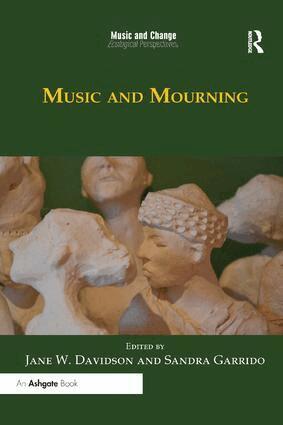
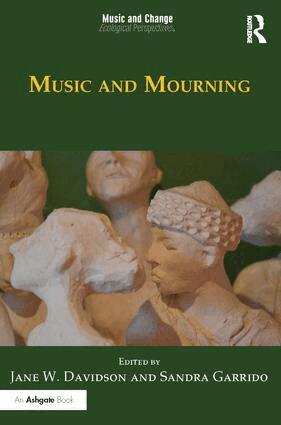
While grief is suffered in all cultures, it is expressed differently all over the world in accordance with local customs and beliefs. Music has been associated with the healing of grief for many centuries, with Homer prescribing music as an antidote to sorrow as early as the 7th Century BC. The changing role of music in expressions of grief and mourning throughout history and in different cultures reflects the changing attitudes of society towards life and death itself. This volume investigates the role of music in mourning rituals across time and culture, discussing the subject from the multiple perspectives of music history, music psychology, ethnomusicology and music therapy.
646 kr
Skickas inom 10-15 vardagar
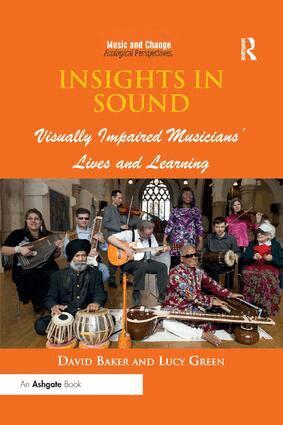
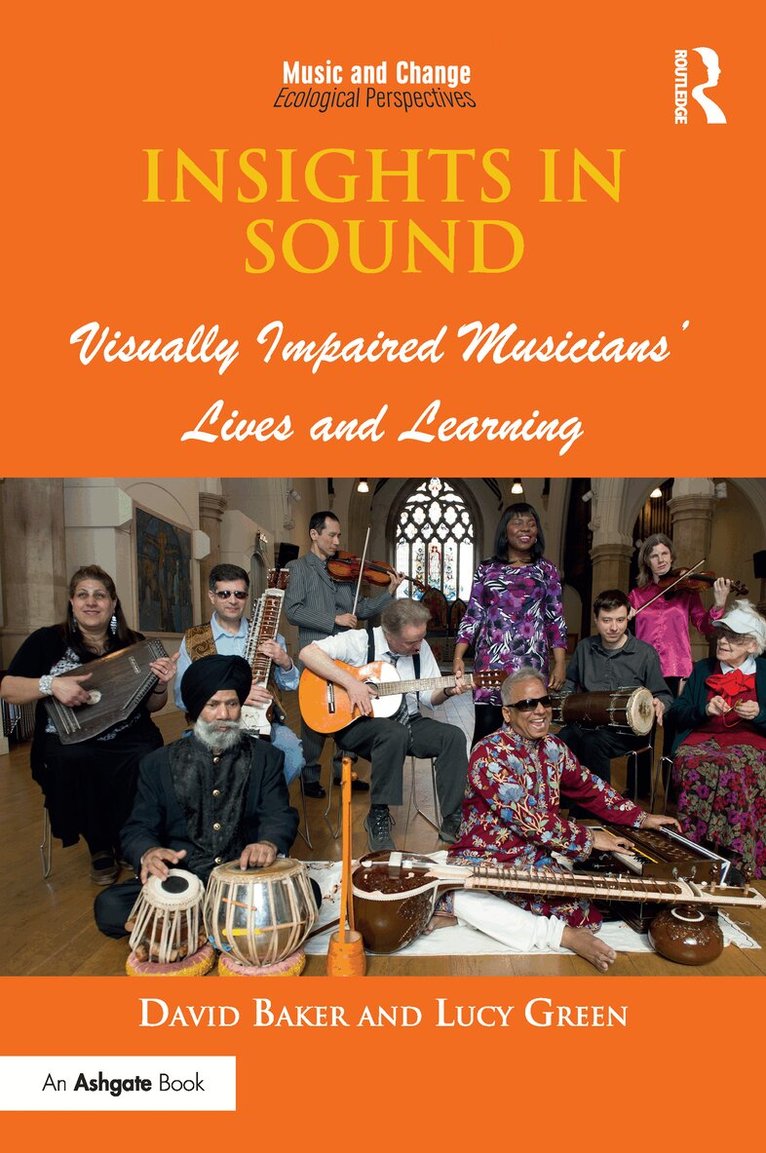
Music has long been a way in which visually impaired people could gain financial independence, excel at a highly-valued skill, or simply enjoy musical participation. Existing literature on visual impairment and music includes perspectives from the social history of music, ethnomusicology, child development and areas of music psychology, music therapy, special educational needs, and music education, as well as more popular biographical texts on famous musicians. But there has been relatively little sociological research bringing together the views and experiences of visually impaired musicians themselves across the life course. Insights in Sound: Visually Impaired Musicians’ Lives and Learning aims to increase knowledge and understanding both within and beyond this multifaceted group. Through an international survey combined with life-history interviews, a vivid picture is drawn of how visually impaired musicians approach and conceive their musical activities, with detailed illustrations of the particular opportunities and challenges faced by a variety of individuals. Baker and Green look beyond affiliation with particular musical styles, genres, instruments or practices. All 'levels' are included: from adult beginners to those who have returned to music-making after a gap; and from 'regular' amateur and professional musicians, to some who are extraordinarily 'elite' or 'successful'. Themes surrounding education, training, and informal learning; notation and ear playing; digital technologies; and issues around disability, identity, opportunity, marginality, discrimination, despair, fulfilment, and joy surfaced, as the authors set out to discover, analyse, and share insights into the worlds of these musicians.
627 kr
Skickas inom 10-15 vardagar
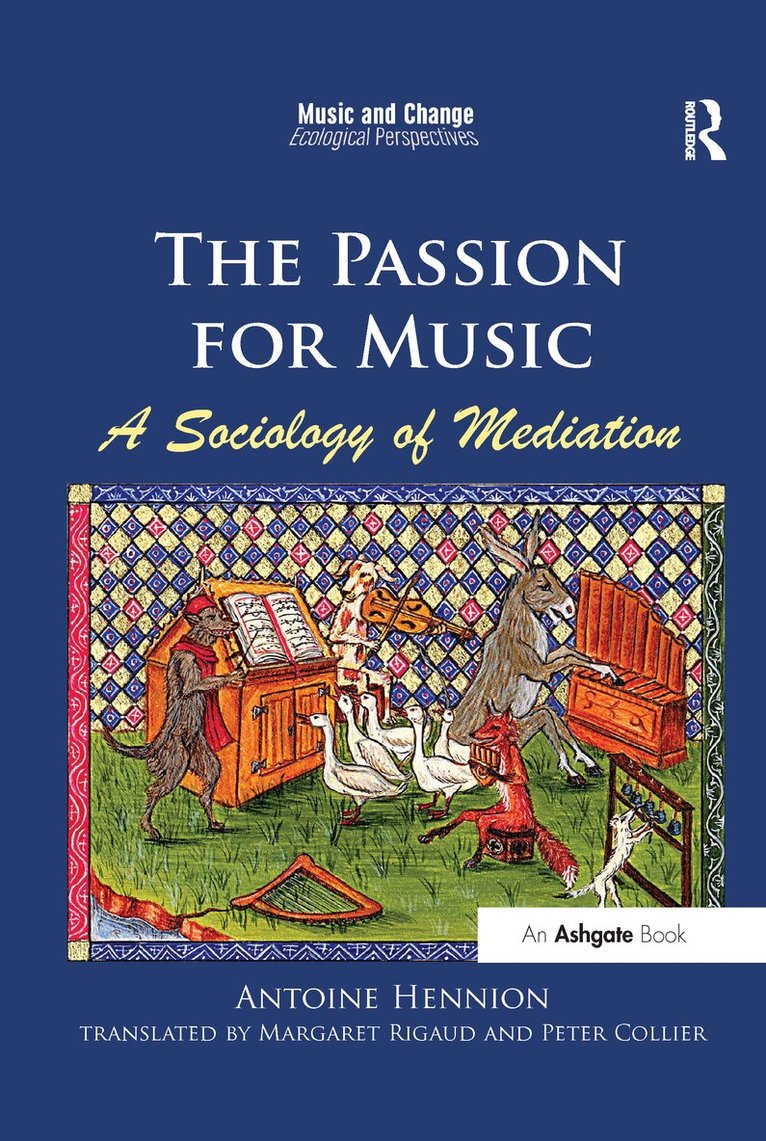
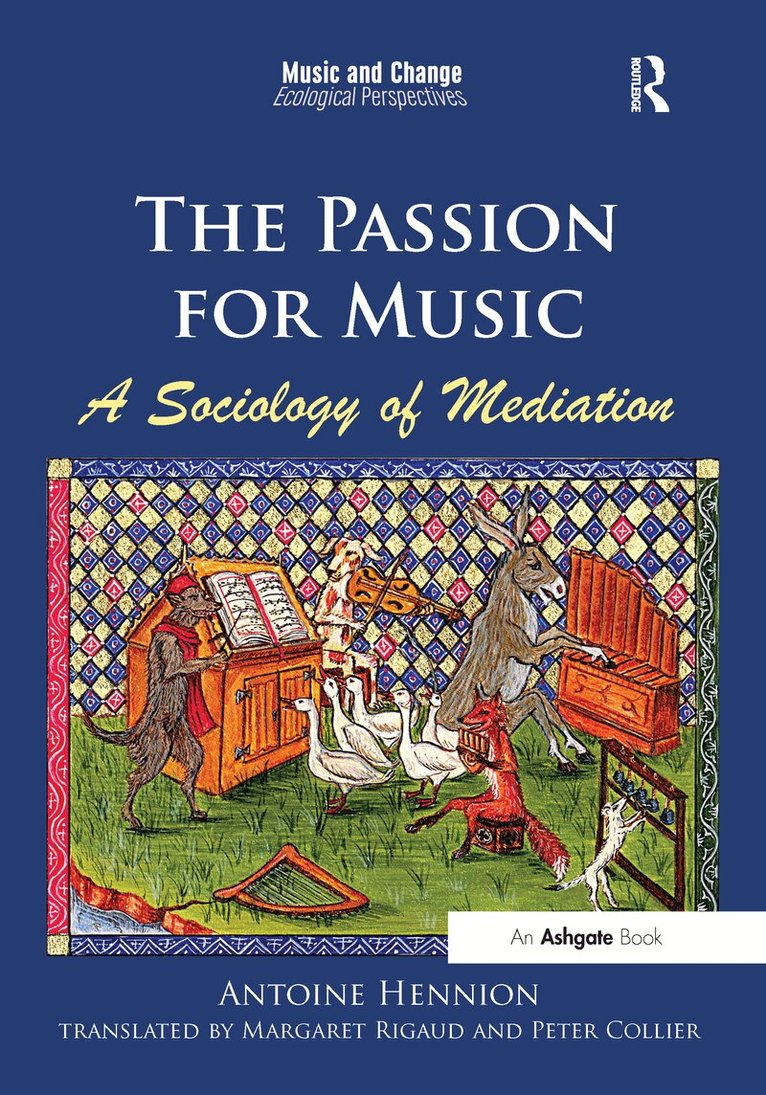
Music is an accumulation of mediators: instruments, languages, sheets, performers, scenes, media and so on. There is no musical object ’in itself’; music must always be made again. In this innovative book, Hennion turns the elusiveness of music into a resource for a pragmatic analysis: by which collective process do we make music appear among us? Rather than offering a sociology of music, The Passion for Music listens to the lesson provided by the case of music - this art of infinite mediations. Learning from music allows us to transform the paradigm to be offered by sociology, by confronting it (from Durkheim and Weber to Bourdieu) with a different way of considering objects. For this task, Hennion draws on aesthetics (Adorno) and art history (Haskell, Baxandall), as well as science and technology studies and popular music studies (Latour, Frith, DeNora). As part of that project, The Passion for Music presents a wide-ranging series of case studies, restoring attention to the rich and varied intermediaries through which music is brought to life: from the debate around the reinterpretation of baroque music, to the classroom, the rock scene, the classical music concert, Bach’s ’social career’ in the nineteenth and twentieth centuries, and the practices of music ’amateurs’ today. This is the first English translation of one of the most important works of French scholarship on music and society.
694 kr
Skickas inom 10-15 vardagar
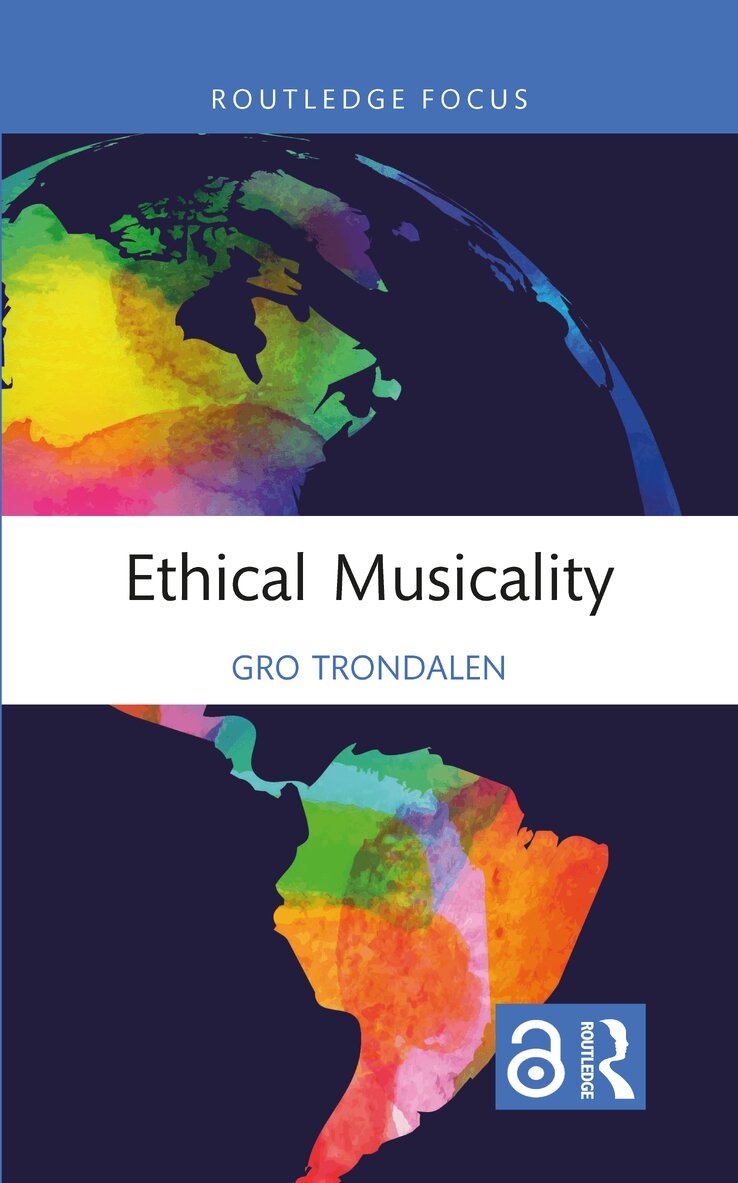
Ethical Musicality addresses the crossroads between music and ethics, combining philosophical knowledge, theoretical reflection, and practical understanding. When tied together, music and ethics link profoundly, offering real-life perspectives that would otherwise be inaccessible to us. The first part elucidates music and ethics through some influential and selected scholars ranging from Antiquity via modern philosophy to contemporary voices. In the second part, different roles and arenas are illustrated and explored through various music practices in real-life encounters for the musician, the music educator, the music therapist, the musicologist, the ‘lay’ musician, and the music researcher. The third part unfolds an ethical musicality focusing on the body, relationship, time, and space. Following these fundamental existentials, ethical musicality expands our lifeworld, including context, involvement, power, responsibility, sustainability, and hope. Such an ethical musicality meets us with a calling to humanity - offering hope of a ‘good life’.The Open Access version of this book, available at http://www.taylorfrancis.com, has been made available under a CC BY NC ND Creative Commons Attribution-NonCommercial-NoDerivatives (CC-BY-NC-ND) 4.0 International license
277 kr
Skickas inom 10-15 vardagar
Ethical Musicality addresses the crossroads between music and ethics, combining philosophical knowledge, theoretical reflection, and practical understanding. When tied together, music and ethics link profoundly, offering real-life perspectives that would otherwise be inaccessible to us. The first part elucidates music and ethics through some influential and selected scholars ranging from Antiquity via modern philosophy to contemporary voices. In the second part, different roles and arenas are illustrated and explored through various music practices in real-life encounters for the musician, the music educator, the music therapist, the musicologist, the ‘lay’ musician, and the music researcher. The third part unfolds an ethical musicality focusing on the body, relationship, time, and space. Following these fundamental existentials, ethical musicality expands our lifeworld, including context, involvement, power, responsibility, sustainability, and hope. Such an ethical musicality meets us with a calling to humanity - offering hope of a ‘good life’.The Open Access version of this book, available at http://www.taylorfrancis.com, has been made available under a CC BY NC ND Creative Commons Attribution-NonCommercial-NoDerivatives (CC-BY-NC-ND) 4.0 International license
2 325 kr
Kommande
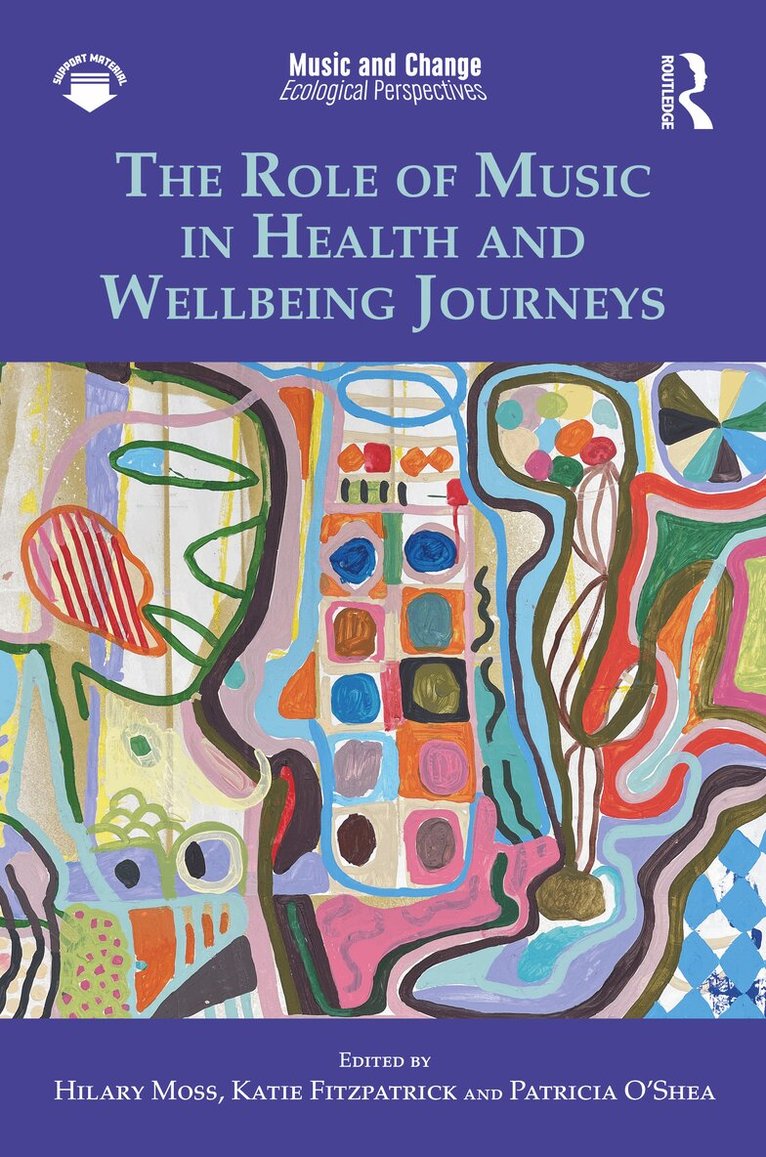
The Role of Music in Health and Wellbeing Journeys is a collection of stories exploring the transformative role of music in people's lives. Through diverse experiences, this book highlights music's capacity to foster connection, wellbeing, health, and personal growth, making it a valuable resource for health, music, and therapeutic communities.Readers will discover compelling narratives that demonstrate the profound impact of music in health and wellbeing contexts, from chronic illness to mental health recovery, and end-of-life care. Alongside personal accounts, professional reflections offer thoughtful insights into how music can be a catalyst for hope and change. This book provides practical ideas for integrating music into care and therapeutic settings while considering the experiences of those on health journeys.This book is essential reading for healthcare professionals, music therapists, educators, arts and health professionals, and anyone curious about music’s ability to contribute to health and wellbeing, as well as those interested in how music can connect us to ourselves and each other.
2 325 kr
Kommande
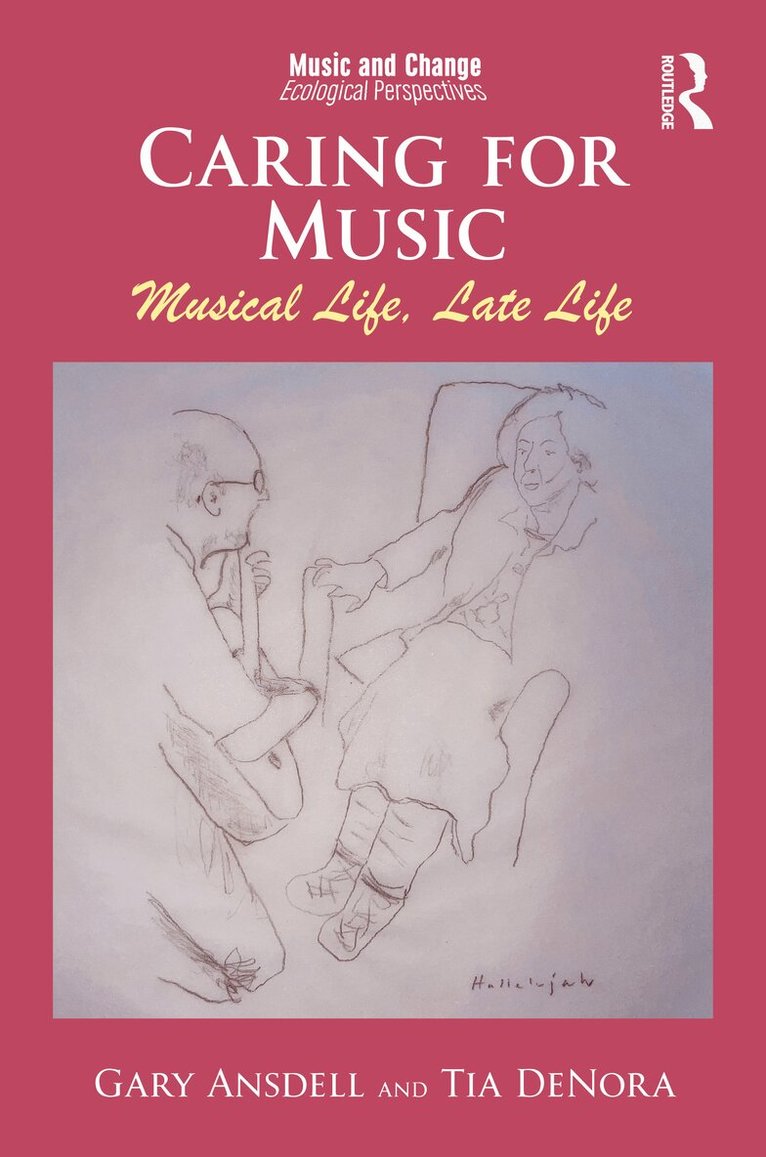
Caring for Music takes us into the everyday musical life of ‘Hill House’ - a residential care home – to offer a moving portrait of a music therapist working alongside residents, care staff, family and friends over many years. The book documents the rich musical practices that emerge when people care for music together. Readers gain access to innovative micro-methods for documenting music-in-action, revealing often-unnoticed capabilities and contributions from residents, staff, and visitors alike. Music is not seen as a magical solution for managing symptoms within a ‘tragic situation’. Instead, shared, creative music-making fosters moments of connection, relationship, community, celebration and shared pleasure for everyone in the home; a means of genuine person-centred caring.
575 kr
Kommande
Caring for Music takes us into the everyday musical life of ‘Hill House’ - a residential care home – to offer a moving portrait of a music therapist working alongside residents, care staff, family and friends over many years. The book documents the rich musical practices that emerge when people care for music together. Readers gain access to innovative micro-methods for documenting music-in-action, revealing often-unnoticed capabilities and contributions from residents, staff, and visitors alike. Music is not seen as a magical solution for managing symptoms within a ‘tragic situation’. Instead, shared, creative music-making fosters moments of connection, relationship, community, celebration and shared pleasure for everyone in the home; a means of genuine person-centred caring.
2 159 kr
Skickas inom 10-15 vardagar
Music has long been a way in which visually impaired people could gain financial independence, excel at a highly-valued skill, or simply enjoy musical participation. Existing literature on visual impairment and music includes perspectives from the social history of music, ethnomusicology, child development and areas of music psychology, music therapy, special educational needs, and music education, as well as more popular biographical texts on famous musicians. But there has been relatively little sociological research bringing together the views and experiences of visually impaired musicians themselves across the life course. Insights in Sound: Visually Impaired Musicians’ Lives and Learning aims to increase knowledge and understanding both within and beyond this multifaceted group. Through an international survey combined with life-history interviews, a vivid picture is drawn of how visually impaired musicians approach and conceive their musical activities, with detailed illustrations of the particular opportunities and challenges faced by a variety of individuals. Baker and Green look beyond affiliation with particular musical styles, genres, instruments or practices. All 'levels' are included: from adult beginners to those who have returned to music-making after a gap; and from 'regular' amateur and professional musicians, to some who are extraordinarily 'elite' or 'successful'. Themes surrounding education, training, and informal learning; notation and ear playing; digital technologies; and issues around disability, identity, opportunity, marginality, discrimination, despair, fulfilment, and joy surfaced, as the authors set out to discover, analyse, and share insights into the worlds of these musicians.
653 kr
Skickas inom 10-15 vardagar
"Music triggered a healing process from within me. I started singing for the joy of singing myself and it helped me carry my recovery beyond the state I was in before I fell ill nine years ago to a level of well-being that I haven't had perhaps for thirty years." This book explores the experiences of people who took part in a vibrant musical community for people experiencing mental health difficulties, SMART (St Mary Abbotts Rehabilitation and Training). Ansdell (a music therapist/researcher) and DeNora (a music sociologist) describe their long-term ethnographic work with this group, charting the creation and development of a unique music project that won the 2008 Royal Society for Public Health Arts and Health Award. Ansdell and DeNora track the 'musical pathways' of a series of key people within SMART, focusing on changes in health and social status over time in relation to their musical activity. The book includes the voices and perspectives of project members and develops with them a new understanding of how music promotes their health and wellbeing. A contemporary ecological understanding of 'music and change' is outlined, drawing on and further developing theory from music sociology and Community Music Therapy. This innovative book will be of interest to anyone working in the mental health field, but also music therapists, sociologists, musicologists, music educators and ethnomusicologists. This volume completes a three part 'triptych', alongside the other volumes, Music Asylums: Wellbeing Through Music in Everyday Life, and How Music Helps: In Music Therapy and Everyday Life.
2 159 kr
Skickas inom 10-15 vardagar
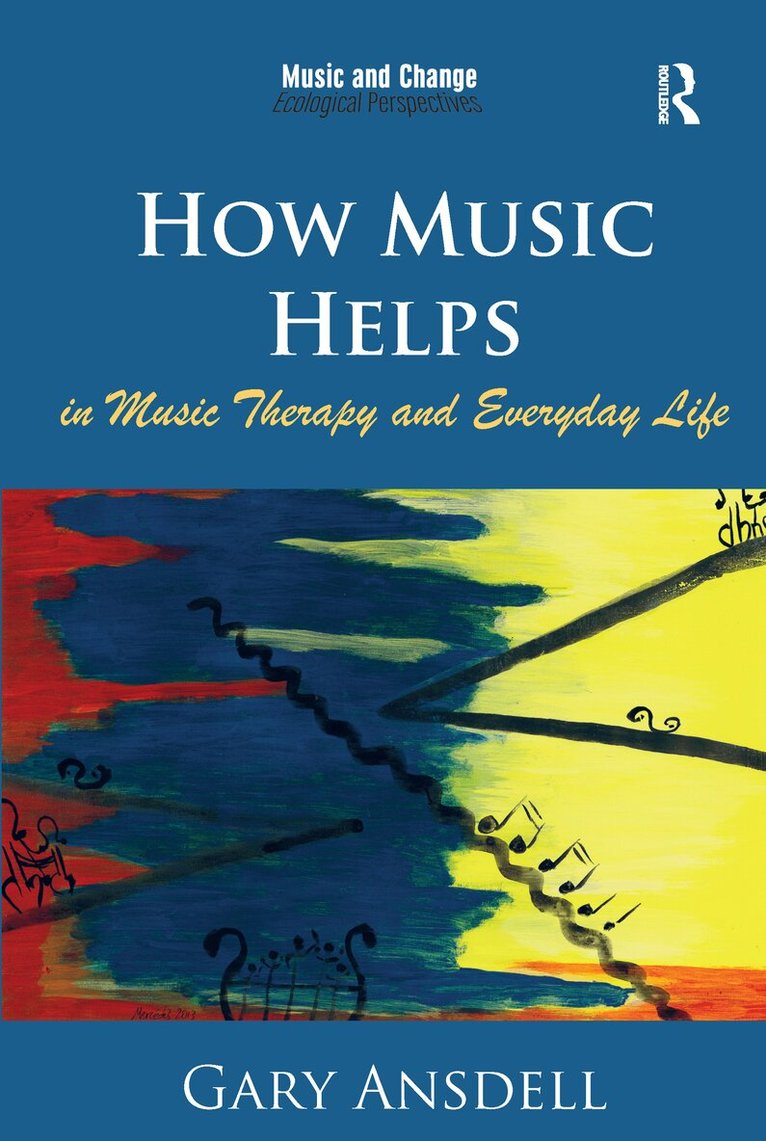
Why is music so important to most of us? How does music help us both in our everyday lives, and in the more specialist context of music therapy? This book suggests a new way of approaching these topical questions, drawing from Ansdell's long experience as a music therapist, and from the latest thinking on music in everyday life. Vibrant and moving examples from music therapy situations are twinned with the stories of 'ordinary' people who describe how music helps them within their everyday lives. Together this complementary material leads Ansdell to present a new interdisciplinary framework showing how musical experiences can help all of us build and negotiate identities, make intimate non-verbal relationships, belong together in community, and find moments of transcendence and meaning. How Music Helps is not just a book about music therapy. It has the more ambitious aim to promote (from a music therapist's perspective) a better understanding of 'music and change' in our personal and social life. Ansdell's theoretical synthesis links the tradition of Nordoff-Robbins music therapy and its recent developments in Community Music Therapy to contemporary music sociology and music studies. This book will be relevant to practitioners, academics, and researchers looking for a broad-based theoretical perspective to guide further study and policy in music, well-being, and health.
2 287 kr
Skickas inom 7-10 vardagar
"Music triggered a healing process from within me. I started singing for the joy of singing myself and it helped me carry my recovery beyond the state I was in before I fell ill nine years ago to a level of well-being that I haven't had perhaps for thirty years." This book explores the experiences of people who took part in a vibrant musical community for people experiencing mental health difficulties, SMART (St Mary Abbotts Rehabilitation and Training). Ansdell (a music therapist/researcher) and DeNora (a music sociologist) describe their long-term ethnographic work with this group, charting the creation and development of a unique music project that won the 2008 Royal Society for Public Health Arts and Health Award. Ansdell and DeNora track the 'musical pathways' of a series of key people within SMART, focusing on changes in health and social status over time in relation to their musical activity. The book includes the voices and perspectives of project members and develops with them a new understanding of how music promotes their health and wellbeing. A contemporary ecological understanding of 'music and change' is outlined, drawing on and further developing theory from music sociology and Community Music Therapy. This innovative book will be of interest to anyone working in the mental health field, but also music therapists, sociologists, musicologists, music educators and ethnomusicologists. This volume completes a three part 'triptych', alongside the other volumes, Music Asylums: Wellbeing Through Music in Everyday Life, and How Music Helps: In Music Therapy and Everyday Life.
2 159 kr
Skickas inom 10-15 vardagar
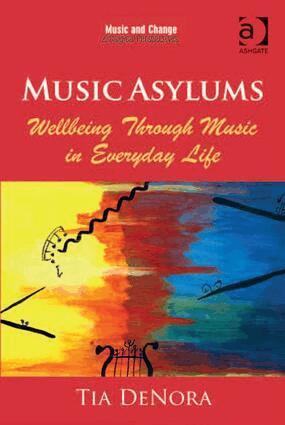
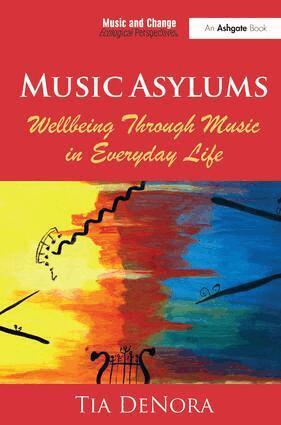
Taking a cue from Erving Goffman’s classic work, Asylums, Tia DeNora develops a novel interdisciplinary framework for music, health and wellbeing. Considering health and illness both in medical contexts and in the often-overlooked realm of everyday life, DeNora argues that these identities are by no means mutually exclusive. Moreover, she suggests that the promotion of health and more specifically, mental health, involves a great deal more than a concern with medication, genetic predispositions, clinical and neuro-scientific procedures. Adopting a holistic, interactionist focus, Music Asylums reconnects states of wellness and wellbeing to encounters with others and - critically - to opportunities for aesthetic experience. Building on DeNora's earlier work on music as a technology of self in everyday life, the book presents music as an active ingredient of action, identity, capacity and consciousness. From there, it suggests that access to, and evaluation of, music is an important ethical matter. Intended for scholars and practitioners in psychiatry and psychology, palliative care, socio-music studies, music psychology and the allied health professions, Music Asylums showcases music's role in the existential project of being and staying well, mentally and physically, from moment-to-moment and across all realms of social life.
2 159 kr
Skickas inom 10-15 vardagar
Music is an accumulation of mediators: instruments, languages, sheets, performers, scenes, media and so on. There is no musical object ’in itself’; music must always be made again. In this innovative book, Hennion turns the elusiveness of music into a resource for a pragmatic analysis: by which collective process do we make music appear among us? Rather than offering a sociology of music, The Passion for Music listens to the lesson provided by the case of music - this art of infinite mediations. Learning from music allows us to transform the paradigm to be offered by sociology, by confronting it (from Durkheim and Weber to Bourdieu) with a different way of considering objects. For this task, Hennion draws on aesthetics (Adorno) and art history (Haskell, Baxandall), as well as science and technology studies and popular music studies (Latour, Frith, DeNora). As part of that project, The Passion for Music presents a wide-ranging series of case studies, restoring attention to the rich and varied intermediaries through which music is brought to life: from the debate around the reinterpretation of baroque music, to the classroom, the rock scene, the classical music concert, Bach’s ’social career’ in the nineteenth and twentieth centuries, and the practices of music ’amateurs’ today. This is the first English translation of one of the most important works of French scholarship on music and society.
590 kr
Skickas inom 10-15 vardagar
Taking a cue from Erving Goffman’s classic work, Asylums, Tia DeNora develops a novel interdisciplinary framework for music, health and wellbeing. Considering health and illness both in medical contexts and in the often-overlooked realm of everyday life, DeNora argues that these identities are by no means mutually exclusive. Moreover, she suggests that the promotion of health and more specifically, mental health, involves a great deal more than a concern with medication, genetic predispositions, clinical and neuro-scientific procedures. Adopting a holistic, interactionist focus, Music Asylums reconnects states of wellness and wellbeing to encounters with others and - critically - to opportunities for aesthetic experience. Building on DeNora's earlier work on music as a technology of self in everyday life, the book presents music as an active ingredient of action, identity, capacity and consciousness. From there, it suggests that access to, and evaluation of, music is an important ethical matter. Intended for scholars and practitioners in psychiatry and psychology, palliative care, socio-music studies, music psychology and the allied health professions, Music Asylums showcases music's role in the existential project of being and staying well, mentally and physically, from moment-to-moment and across all realms of social life.
646 kr
Skickas inom 10-15 vardagar
Why is music so important to most of us? How does music help us both in our everyday lives, and in the more specialist context of music therapy? This book suggests a new way of approaching these topical questions, drawing from Ansdell's long experience as a music therapist, and from the latest thinking on music in everyday life. Vibrant and moving examples from music therapy situations are twinned with the stories of 'ordinary' people who describe how music helps them within their everyday lives. Together this complementary material leads Ansdell to present a new interdisciplinary framework showing how musical experiences can help all of us build and negotiate identities, make intimate non-verbal relationships, belong together in community, and find moments of transcendence and meaning. How Music Helps is not just a book about music therapy. It has the more ambitious aim to promote (from a music therapist's perspective) a better understanding of 'music and change' in our personal and social life. Ansdell's theoretical synthesis links the tradition of Nordoff-Robbins music therapy and its recent developments in Community Music Therapy to contemporary music sociology and music studies. This book will be relevant to practitioners, academics, and researchers looking for a broad-based theoretical perspective to guide further study and policy in music, well-being, and health.
2 367 kr
Skickas inom 10-15 vardagar
While grief is suffered in all cultures, it is expressed differently all over the world in accordance with local customs and beliefs. Music has been associated with the healing of grief for many centuries, with Homer prescribing music as an antidote to sorrow as early as the 7th Century BC. The changing role of music in expressions of grief and mourning throughout history and in different cultures reflects the changing attitudes of society towards life and death itself. This volume investigates the role of music in mourning rituals across time and culture, discussing the subject from the multiple perspectives of music history, music psychology, ethnomusicology and music therapy.