Music and Material Culture - Böcker
Visar alla böcker i serien Music and Material Culture. Handla med fri frakt och snabb leverans.
16 produkter
16 produkter
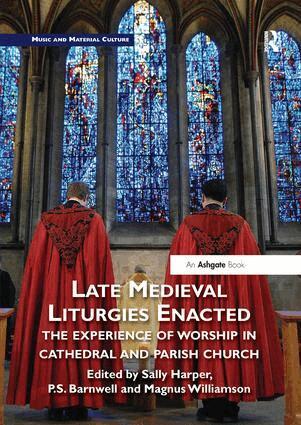
Late Medieval Liturgies Enacted
The Experience of Worship in Cathedral and Parish Church
Häftad, Engelska, 2019
629 kr
Skickas inom 10-15 vardagar
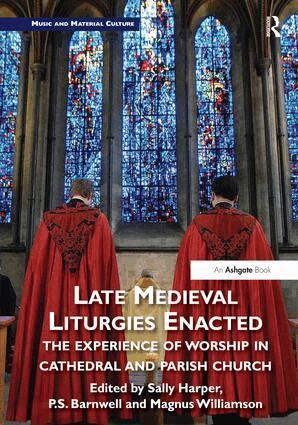
This book critically explores ways in which our understanding of late medieval liturgy can be enhanced through present-day enactment. It is a direct outcome of a practice-led research project, led by Professor John Harper and undertaken at Bangor University between 2010 and 2013 in partnership with Salisbury Cathedral and St Fagans National History Museum, near Cardiff. The book seeks to address the complex of ritual, devotional, musical, physical and architectural elements that constitute medieval Latin liturgy, whose interaction can be so difficult to recover other than through practice. In contrast with previous studies of reconstructed liturgies, enactment was not the exclusive end-goal of the project; rather it has created a new set of data for interpretation and further enquiry. Though based on a foundation of historical, musicological, textual, architectural and archaeological research, new methods of investigation and interpretation are explored, tested and validated throughout. There is emphasis on practice-led investigation and making; the need for imagination and creativity; and the fact that enactment participants can only be of the present day. Discussion of the processes of preparation, analysis and interpretation of the enactments is complemented by contextual studies, with particular emphasis on the provision of music. A distinctive feature of the work is that it seeks to understand the experiences of different groups within the medieval church - the clergy, their assistants, the singers, and the laity - as they participated in different kinds of rituals in both a large cathedral and a small parish church. Some of the conclusions challenge interpretations of these experiences, which have been current since the Reformation. In addition, some consideration is given to the implications of understanding past liturgy for present-day worship.
704 kr
Skickas inom 10-15 vardagar
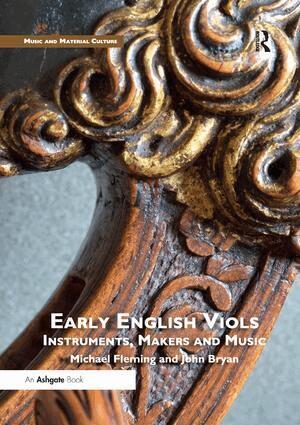
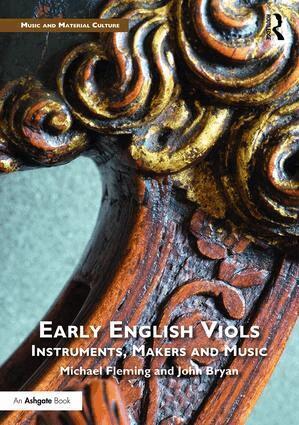
Winner of the Nicholas Bessaraboff PrizeMusical repertory of great importance and quality was performed on viols in sixteenth- and early seventeenth-century England. This is reported by Thomas Mace (1676) who says that ’Your Best Provision’ for playing such music is a chest of old English viols, and he names five early English viol makers than which ’there are no Better in the World’. Enlightened scholars and performers (both professional and amateur) who aim to understand and play this music require reliable historical information and need suitable viols, but so little is known about the instruments and their makers that we cannot specify appropriate instruments with much precision. Our ignorance cannot be remedied exclusively by the scrutiny or use of surviving antique viols because they are extremely rare, they are not accessible to performers and the information they embody is crucially compromised by degradation and alteration. Drawing on a wide variety of evidence including the surviving instruments, music composed for those instruments, and the documentary evidence surrounding the trade of instrument making, Fleming and Bryan draw significant conclusions about the changing nature and varieties of viol in early modern England.
2 167 kr
Skickas inom 10-15 vardagar
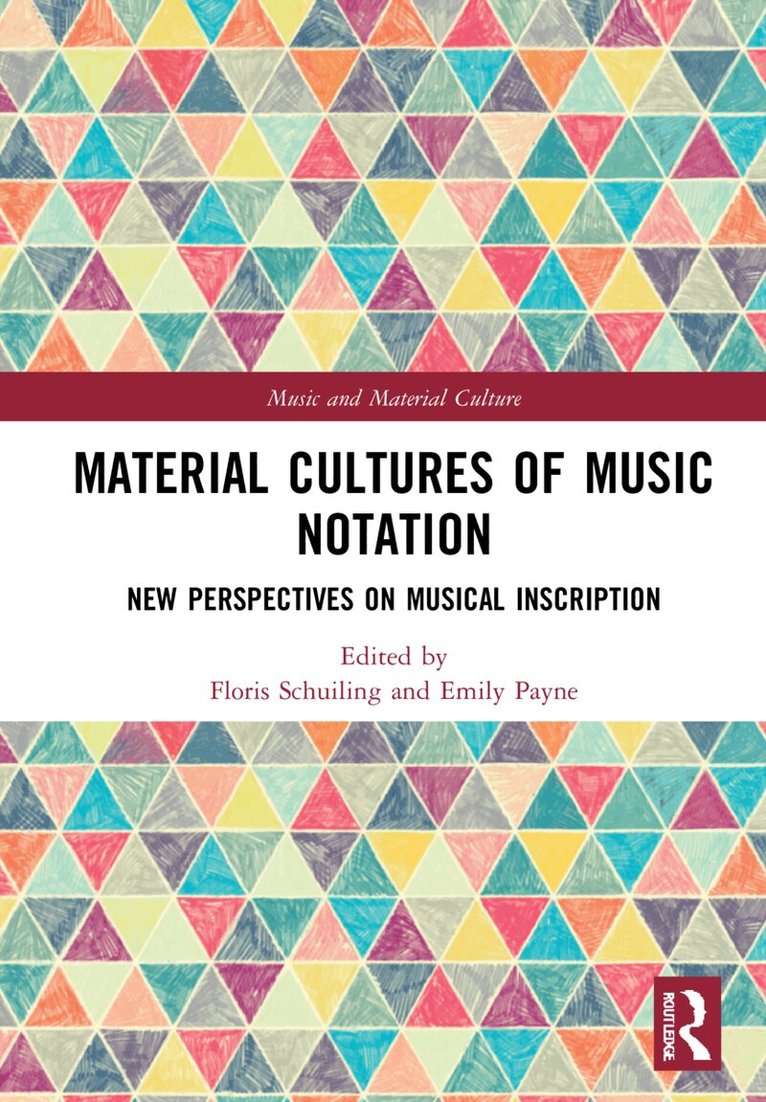
Material Cultures of Music Notation brings together a collection of essays that explore a fundamental question in the current landscape of musicology: how can writing and reading music be understood as concrete, material practices in a wider cultural context? Drawing on interdisciplinary approaches from musicology, media studies, performance studies, and more, the chapters in this volume offer a wide array of new perspectives that foreground the materiality of music notation. From digital scores to the transmission of manuscripts in the Middle Ages, the volume deliberately disrupts boundaries of discipline, historical period, genre, and tradition, by approaching notation's materiality through four key interrelated themes: knowledge, the body, social relations, and technology. Together, the chapters capture vital new work in an essential emerging area of scholarship.
2 167 kr
Skickas inom 10-15 vardagar
This book presents a varied and nuanced analysis of the dynamics of the printing, publication, and trade of music in the sixteenth and early seventeenth centuries across Western and Northern Europe. Chapters consider dimensions of music printing in Britain, the Holy Roman Empire, the Netherlands, France, Spain and Italy, showing how this area of inquiry can engage a wide range of cultural, historical and theoretical issues. From the economic consequences of the international book trade to the history of women music printers, the contributors explore the nuances of the interrelation between the materiality of print music and cultural, aesthetic, religious, legal, gender and economic history. Engaging with the theoretical turns in the humanities towards material culture, mobility studies and digital research, this book offers a wealth of new insights that will be relevant to researchers of early modern music and early print culture alike.
648 kr
Skickas inom 10-15 vardagar
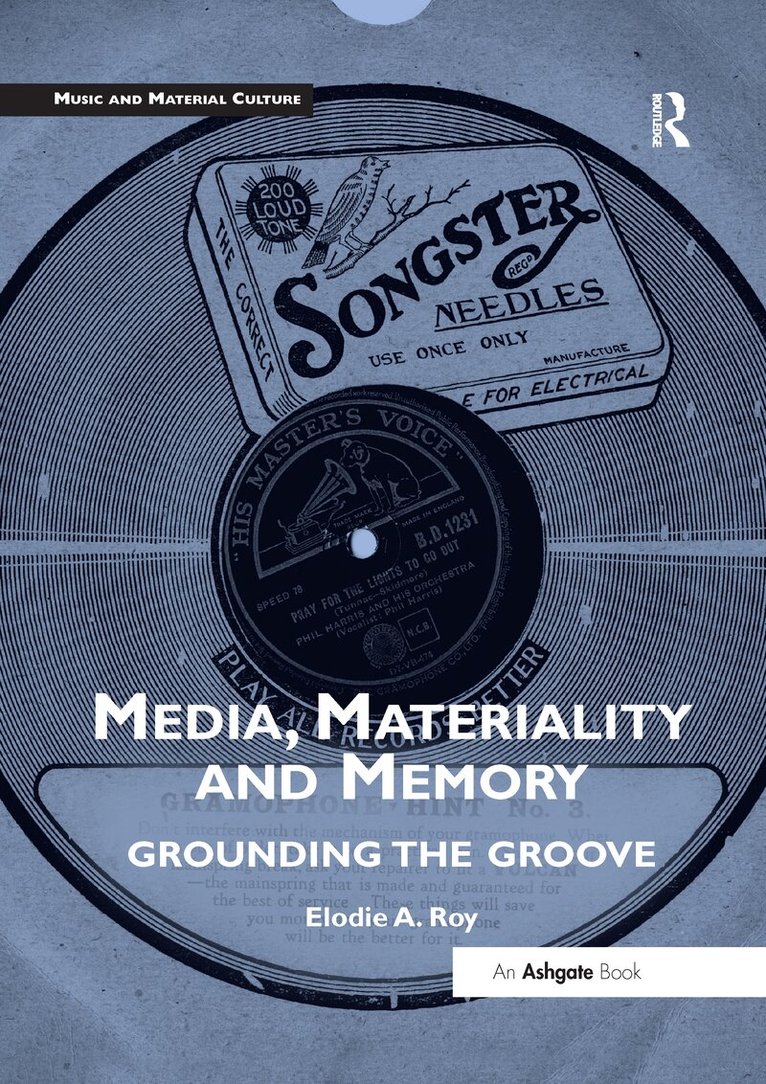
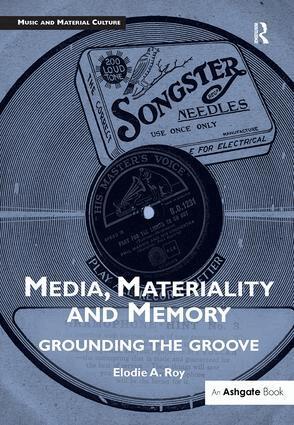
Media, Materiality and Memory: Grounding the Groove examines the entwinement of material music objects, technology and memory in relation to a range of independent record labels, including Sarah Records, Ghost Box and Finders Keepers. Moving from Edison’s phonograph to digital music files, from record collections to online archives, Roy argues that materiality plays a crucial role in constructing and understanding the territory of recorded sound. How do musical objects ‘write’ cultural narratives? How can we unearth and reactivate past histories by looking at yesterday’s media formats? What is the nature, and fate, of the physical archive in an increasingly dematerialized world? In what ways do physical and digital musical objects coexist and intersect? With its innovative theoretical approach, the book explores the implications of materialization in the fashioning of a musical world and its cultural transmission. A substantial contribution to the field of music and material culture studies, Media, Materiality and Memory also provides a nuanced and timely reflection on nostalgia and forgetting in the digital age.
648 kr
Skickas inom 10-15 vardagar
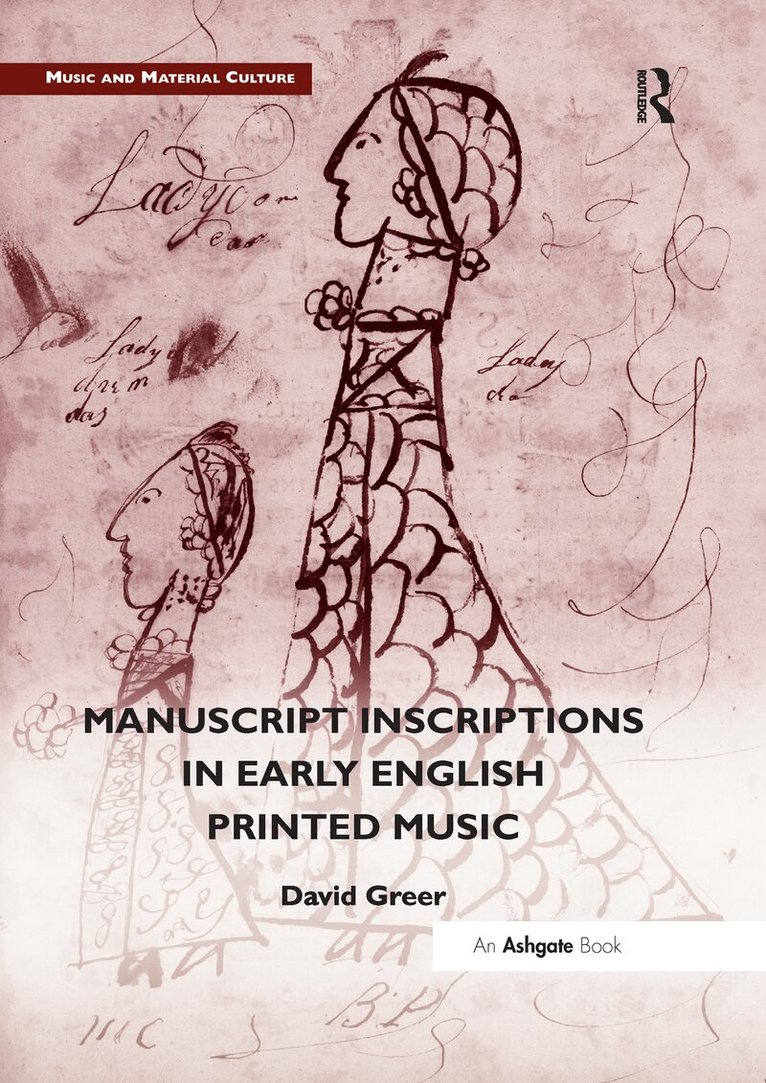
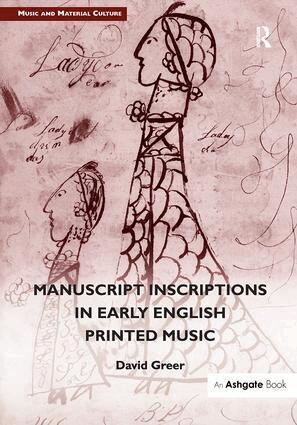
Who were the first owners of the music published in England in the sixteenth and early seventeenth centuries? Who went to ‘the dwelling house of … T. East, by Paules wharfe’ and bought a copy of Byrd’s Psalmes, sonets, & songs when it appeared in 1588? Who purchased a copy of Dowland’s First booke of songes in 1597? What other books formed part of their music library? In this survey of surviving books of music published before 1640, David Greer has gleaned information about the books’ early and subsequent owners by studying the traces they left in the books themselves: handwritten inscriptions, including names and other marks of ownership - even the scribbles and drawings a child of the family might put into a book left lying about. The result is a treasure trove of information about musical culture in early modern England. From inscriptions and marks of ownership Greer has been able to re-assemble early sets of partbooks, as well as collections of books once bound together. The search has also turned up new music. At a time when paper was expensive, new pieces were copied into blank spaces in printed books. In these jottings we find a ‘hidden repertory’ of music, some of it otherwise undiscovered music by known composers. In other cases, we see owners altering the words of songs, to suit new and personal purposes: a love-song in praise of Daphne becomes a heartfelt song to ‘my Jesus’; and ‘Faire Leonilla’ becomes Ophelia (perhaps the first mention of this character in Hamlet outside the play itself). On a more practical level, the users of the music sometimes made corrections to printing errors, and there are indications that some of these were last-minute corrections made in the printing-house (a useful guide for the modern editor). The temptation to ‘scribble in books’ was as irresistible to some Elizabethans as it is to some of us today. In doing so they left us clues to their identity, how they kept their music, how they used it, and the multifarious ways in which it played a part in their lives.
732 kr
Skickas inom 10-15 vardagar
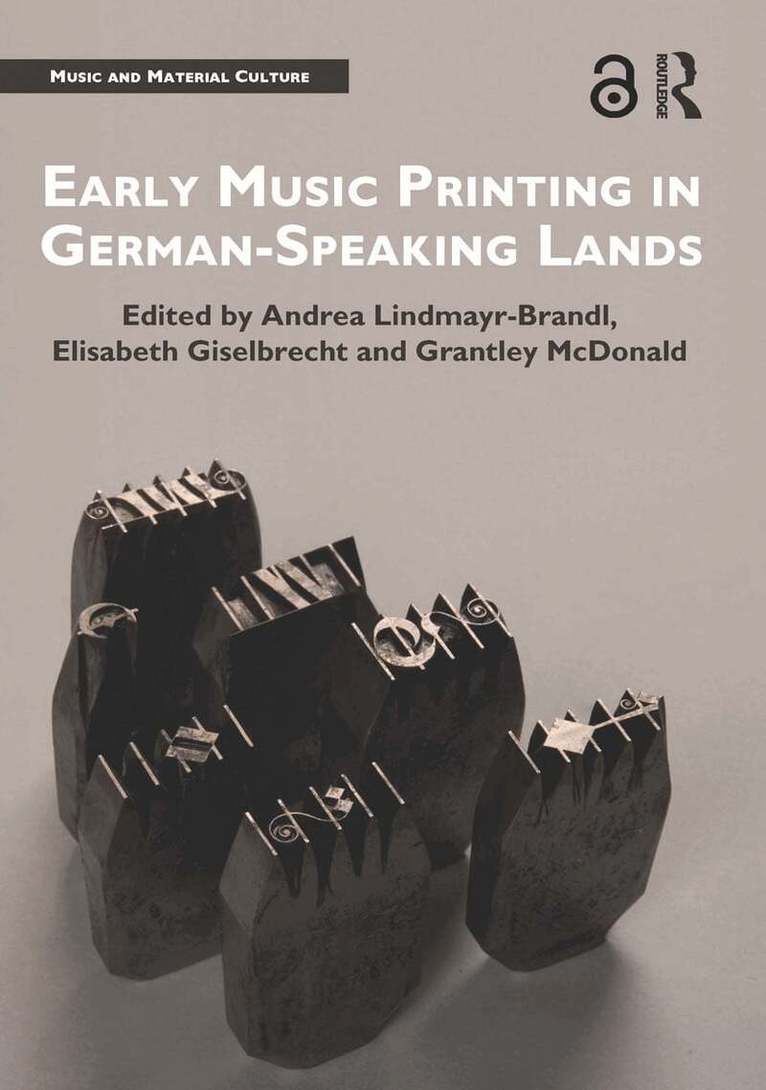
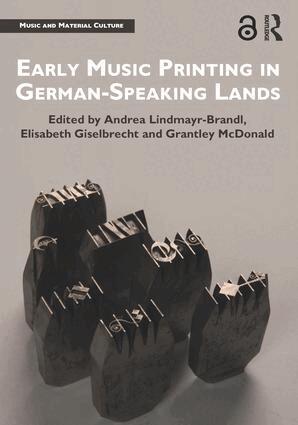
The book draws upon the rich information gathered for the online database Catalogue of early German printed music / Verzeichnis deutscher Musikfrühdrucke (vdm), the first systematic descriptive catalogue of music printed in the German-speaking lands between c. 1470 and 1540, allowing precise conclusions about the material production of these printed musical sources. Chapter 9 of this book is freely available as a downloadable Open Access PDF under a Creative Commons Attribution-Non Commercial-No Derivatives 3.0 license. https://s3-us-west-2.amazonaws.com/tandfbis/rt-files/docs/OA+PDFs+for+Cara/9781138241053_oachapter9.pdfChapter 8 of this book is freely available as a downloadable Open Access PDF under a Creative Commons Attribution-Non Commercial-No Derivatives 3.0 license. https://s3-us-west-2.amazonaws.com/tandfbis/rt-files/docs/Open+Access+Chapters/9781138241053_oachapter8.p
592 kr
Skickas inom 10-15 vardagar
This book presents a varied and nuanced analysis of the dynamics of the printing, publication, and trade of music in the sixteenth and early seventeenth centuries across Western and Northern Europe. Chapters consider dimensions of music printing in Britain, the Holy Roman Empire, the Netherlands, France, Spain and Italy, showing how this area of inquiry can engage a wide range of cultural, historical and theoretical issues. From the economic consequences of the international book trade to the history of women music printers, the contributors explore the nuances of the interrelation between the materiality of print music and cultural, aesthetic, religious, legal, gender and economic history. Engaging with the theoretical turns in the humanities towards material culture, mobility studies and digital research, this book offers a wealth of new insights that will be relevant to researchers of early modern music and early print culture alike.
592 kr
Skickas inom 10-15 vardagar
Material Cultures of Music Notation brings together a collection of essays that explore a fundamental question in the current landscape of musicology: how can writing and reading music be understood as concrete, material practices in a wider cultural context? Drawing on interdisciplinary approaches from musicology, media studies, performance studies, and more, the chapters in this volume offer a wide array of new perspectives that foreground the materiality of music notation. From digital scores to the transmission of manuscripts in the Middle Ages, the volume deliberately disrupts boundaries of discipline, historical period, genre, and tradition, by approaching notation's materiality through four key interrelated themes: knowledge, the body, social relations, and technology. Together, the chapters capture vital new work in an essential emerging area of scholarship.
2 446 kr
Skickas inom 10-15 vardagar
The book draws upon the rich information gathered for the online database Catalogue of early German printed music / Verzeichnis deutscher Musikfrühdrucke (vdm), the first systematic descriptive catalogue of music printed in the German-speaking lands between c. 1470 and 1540, allowing precise conclusions about the material production of these printed musical sources.Chapters 8 and 9 of this book are freely available as downloadable Open Access PDFs at http://www.taylorfrancis.com under a Creative Commons Attribution-Non Commercial-No Derivatives (CC-BY-NC-ND) 4.0 license.
879 kr
Skickas inom 10-15 vardagar
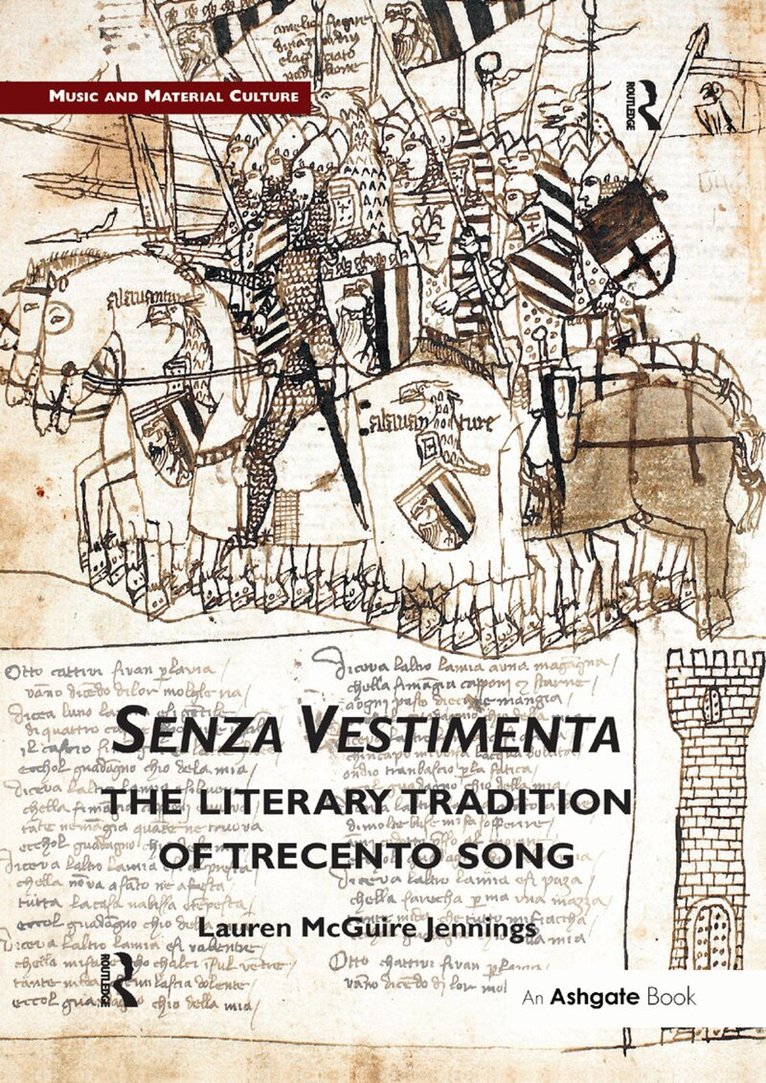
The metaphor of marriage often describes the relationship between poetry and music in both medieval and modern writing. While the troubadours stand out for their tendency to blur the distinction between speaking and singing, between poetry and song, a certain degree of semantic slippage extends into the realm of Italian literature through the use of genre names like canzone, sonetto, and ballata. Yet, paradoxically, scholars have traditionally identified a 'divorce' between music and poetry as the defining feature of early Italian lyric. Senza Vestimenta reintegrates poetic and musical traditions in late medieval Italy through a fresh evaluation of more than fifty literary sources transmitting Trecento song texts. These manuscripts have been long noted by musicologists, but until now they have been used to bolster rather than to debunk the notion that so-called 'poesia per musica' was relegated to the margins of poetic production. Jennings revises this view by exploring how scribes and readers interacted with song as a fundamentally interdisciplinary art form within a broad range of literary settings. Her study sheds light on the broader cultural world surrounding the reception of the Italian ars nova repertoire by uncovering new, diverse readers ranging from wealthy merchants to modest artisans.
2 420 kr
Skickas inom 10-15 vardagar
The metaphor of marriage often describes the relationship between poetry and music in both medieval and modern writing. While the troubadours stand out for their tendency to blur the distinction between speaking and singing, between poetry and song, a certain degree of semantic slippage extends into the realm of Italian literature through the use of genre names like canzone, sonetto, and ballata. Yet, paradoxically, scholars have traditionally identified a 'divorce' between music and poetry as the defining feature of early Italian lyric. Senza Vestimenta reintegrates poetic and musical traditions in late medieval Italy through a fresh evaluation of more than fifty literary sources transmitting Trecento song texts. These manuscripts have been long noted by musicologists, but until now they have been used to bolster rather than to debunk the notion that so-called 'poesia per musica' was relegated to the margins of poetic production. Jennings revises this view by exploring how scribes and readers interacted with song as a fundamentally interdisciplinary art form within a broad range of literary settings. Her study sheds light on the broader cultural world surrounding the reception of the Italian ars nova repertoire by uncovering new, diverse readers ranging from wealthy merchants to modest artisans.
Late Medieval Liturgies Enacted
The Experience of Worship in Cathedral and Parish Church
Inbunden, Engelska, 2016
2 240 kr
Skickas inom 10-15 vardagar
This book critically explores ways in which our understanding of late medieval liturgy can be enhanced through present-day enactment. It is a direct outcome of a practice-led research project, led by Professor John Harper and undertaken at Bangor University between 2010 and 2013 in partnership with Salisbury Cathedral and St Fagans National History Museum, near Cardiff. The book seeks to address the complex of ritual, devotional, musical, physical and architectural elements that constitute medieval Latin liturgy, whose interaction can be so difficult to recover other than through practice. In contrast with previous studies of reconstructed liturgies, enactment was not the exclusive end-goal of the project; rather it has created a new set of data for interpretation and further enquiry. Though based on a foundation of historical, musicological, textual, architectural and archaeological research, new methods of investigation and interpretation are explored, tested and validated throughout. There is emphasis on practice-led investigation and making; the need for imagination and creativity; and the fact that enactment participants can only be of the present day. Discussion of the processes of preparation, analysis and interpretation of the enactments is complemented by contextual studies, with particular emphasis on the provision of music. A distinctive feature of the work is that it seeks to understand the experiences of different groups within the medieval church - the clergy, their assistants, the singers, and the laity - as they participated in different kinds of rituals in both a large cathedral and a small parish church. Some of the conclusions challenge interpretations of these experiences, which have been current since the Reformation. In addition, some consideration is given to the implications of understanding past liturgy for present-day worship.
2 167 kr
Skickas inom 10-15 vardagar
Who were the first owners of the music published in England in the sixteenth and early seventeenth centuries? Who went to ‘the dwelling house of … T. East, by Paules wharfe’ and bought a copy of Byrd’s Psalmes, sonets, & songs when it appeared in 1588? Who purchased a copy of Dowland’s First booke of songes in 1597? What other books formed part of their music library? In this survey of surviving books of music published before 1640, David Greer has gleaned information about the books’ early and subsequent owners by studying the traces they left in the books themselves: handwritten inscriptions, including names and other marks of ownership - even the scribbles and drawings a child of the family might put into a book left lying about. The result is a treasure trove of information about musical culture in early modern England. From inscriptions and marks of ownership Greer has been able to re-assemble early sets of partbooks, as well as collections of books once bound together. The search has also turned up new music. At a time when paper was expensive, new pieces were copied into blank spaces in printed books. In these jottings we find a ‘hidden repertory’ of music, some of it otherwise undiscovered music by known composers. In other cases, we see owners altering the words of songs, to suit new and personal purposes: a love-song in praise of Daphne becomes a heartfelt song to ‘my Jesus’; and ‘Faire Leonilla’ becomes Ophelia (perhaps the first mention of this character in Hamlet outside the play itself). On a more practical level, the users of the music sometimes made corrections to printing errors, and there are indications that some of these were last-minute corrections made in the printing-house (a useful guide for the modern editor). The temptation to ‘scribble in books’ was as irresistible to some Elizabethans as it is to some of us today. In doing so they left us clues to their identity, how they kept their music, how they used it, and the multifarious ways in which it played a part in their lives.
2 167 kr
Skickas inom 10-15 vardagar
Media, Materiality and Memory: Grounding the Groove examines the entwinement of material music objects, technology and memory in relation to a range of independent record labels, including Sarah Records, Ghost Box and Finders Keepers. Moving from Edison’s phonograph to digital music files, from record collections to online archives, Roy argues that materiality plays a crucial role in constructing and understanding the territory of recorded sound. How do musical objects ‘write’ cultural narratives? How can we unearth and reactivate past histories by looking at yesterday’s media formats? What is the nature, and fate, of the physical archive in an increasingly dematerialized world? In what ways do physical and digital musical objects coexist and intersect? With its innovative theoretical approach, the book explores the implications of materialization in the fashioning of a musical world and its cultural transmission. A substantial contribution to the field of music and material culture studies, Media, Materiality and Memory also provides a nuanced and timely reflection on nostalgia and forgetting in the digital age.
2 446 kr
Skickas inom 10-15 vardagar
Winner of the Nicholas Bessaraboff PrizeMusical repertory of great importance and quality was performed on viols in sixteenth- and early seventeenth-century England. This is reported by Thomas Mace (1676) who says that ’Your Best Provision’ for playing such music is a chest of old English viols, and he names five early English viol makers than which ’there are no Better in the World’. Enlightened scholars and performers (both professional and amateur) who aim to understand and play this music require reliable historical information and need suitable viols, but so little is known about the instruments and their makers that we cannot specify appropriate instruments with much precision. Our ignorance cannot be remedied exclusively by the scrutiny or use of surviving antique viols because they are extremely rare, they are not accessible to performers and the information they embody is crucially compromised by degradation and alteration. Drawing on a wide variety of evidence including the surviving instruments, music composed for those instruments, and the documentary evidence surrounding the trade of instrument making, Fleming and Bryan draw significant conclusions about the changing nature and varieties of viol in early modern England.