National Gallery of Art Systematic Catalogues – Serie
Visar alla böcker i serien National Gallery of Art Systematic Catalogues. Handla med fri frakt och snabb leverans.
2 produkter
2 produkter
985 kr
Skickas inom 7-10 vardagar
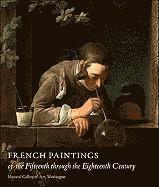
Georges de La Tour's haunting depiction of a repentant Mary Magdalen gazing into a mirror by candlelight; Jean Simeon Chardin's perfectly balanced image of a young boy making a house of cards; Jean Honore Fragonard's monumental suite of landscapes showing aristocrats at play in picturesque gardens--these are among the familiar and beloved masterpieces in the National Gallery of Art, which houses one of the most important collections of French old master paintings outside France. This lavishly illustrated book, written by leading scholars and the result of years of research and technical analysis, catalogues nearly one hundred paintings, from works by Francois Clouet in the sixteenth century to paintings by elisabeth Louise Vigee Le Brun in the eighteenth. French art before the revolution is characterized by an astonishing variety of styles and themes and by a consistently high quality of production, the result of an efficient training system developed by the traditional guilds and the Royal Academy of Painting and Sculpture, founded in 1648 by King Louis XIV.The National Gallery collection reflects this quality and diversity, featuring excellent examples by all the leading painters: ideal landscapes by Claude Lorrain and biblical subjects by Nicolas Poussin, two artists who spent most of their careers in Rome; deeply moving religious works by La Tour, Sebastien Bourdon, and Simon Vouet; portraits of the grandest format (Philippe de Champaigne's Omer Talon) and the most intimate (Nicolas de Largillierre's Elizabeth Throckmorton); and familiar scenes of daily life by the Le Nain brothers in the seventeenth century and Chardin in the eighteenth. The Gallery's collection is especially notable for its holdings of eighteenth-century painting, from Jean Antoine Watteau to Hubert Robert, and including marvelous suites of paintings by Francois Boucher and Fragonard. All these works are explored in detailed, readable entries that will appeal as much to the general art lover as to the specialist.
985 kr
Skickas inom 7-10 vardagar
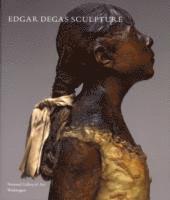
As an artist, Edgar Degas (1834-1917) defies easy description. Allied with the French impressionists through his commitment to portraying modern life, he also took an independent course, preferring line over color and the visible brushstroke, and working in a studio instead of out-of-doors. He is perhaps best known as a painter, but his most widely known work is a sculpture, Little Dancer Aged Fourteen. Executed in wax, near life-sized, dressed in a ballerina's tutu, with real ballet slippers and real hair, the sculpture caused a sensation when it was exhibited in 1881. It is the only sculpture Degas ever showed publicly, though more than one hundred--of dancers, horses, and bathers--were found in his studio after he died, all dusty, some fallen apart. For almost forty years after his death, these works were known only through the bronzes his heirs had cast from the originals.Then, in 1955, the waxes themselves appeared on the art market. Thanks to the discernment and generosity of Paul Mellon, the majority are now preserved at the National Gallery of Art, Washington, most on permanent display. This groundbreaking volume honors this extraordinary gift by linking art and science.It brings together the insights of a distinguished art historian of nineteenth-century painting and sculpture and the specialized knowledge of National Gallery conservators and scientists who have published pioneering technical studies. Including essays on Degas' life and work, his sculptural technique and materials, and the story of the sculptures after his death, it features art-historical and technical discussions of every work in the collection as well as indispensable concordances and bibliography. The richly illustrated text is intended for both art lover and specialist. Was Degas the sculptor technically inept or unusually inventive? How do we understand his sculpture in light of his paintings, prints, and photographs? These questions and many others are explored with originality and depth, adding immeasurably to our understanding of the artistic avant-garde in the late nineteenth century and to our appreciation of this controversial artist.