New Directions in Anthropological Writing - Böcker
Visar alla böcker i serien New Directions in Anthropological Writing. Handla med fri frakt och snabb leverans.
6 produkter
6 produkter
234 kr
Skickas inom 10-15 vardagar
274 kr
Skickas inom 10-15 vardagar
Adherents to the ""zar"" cult in northern Sudan encounter spirits that are parallels of historically relevant figures in the known human world. Those possessed, usually women, meet aliens who speak about issues confronting a village such as the increasing influence of formal Islam or encroaching Western economic domination. By manifesting spirits while possessed, women also can provocatively embody their moral antitheses. In learning to accommodate their spirits, they learn the antilanguage of ""zar"" and are able metaphorically to reformulate everyday discourse to portray consciousness of their subordination. The book is organized into three parts: part 1 examines the moral universe of village women by discussion the meaning of female circumcision, personhood, kinship, marriage, and bodily integrity. Part 2 introduces the ""zar"" cult and, with several examples, describes the conditions under which possession, initially an illness, might occur. The author discusses the role of possession in the lives of men as well as women, both as members of families exhibiting a propensity for spirit intrusion and as individuals suffering from poor self-image largely occasioned by infertility. Part 3 describes the spirit world apart from specific incidents of possession in order to understand what messages villagers will derive from their experiences of spirits. Based on nearly two years of ethnographic field work in a Muslim village in northern Sudan, Janice Boddy's study offers a multidimensional interpretation of the ""zar"" that is grounded in observation, anthropological theory, and practice.
257 kr
Skickas inom 7-10 vardagar
The aim of this book is to present in their historical context the debates that have been taking place in the Muslim world recently. It describes the place of Iranian culture in contemporary art and thought and the increasing influence Muslims are having on Western societies. In an introductory autobiographical chapter, Mehdi Abedi introduces readers to the world of Shi'ite believers. Beginning with the overthrow of Mossadegh in 1953 he describes Iranian class structure, patronage network, socialization, and religious psychology and shows how the political consciousness of an entire generation of Iranian youth - both religious fundamentalist and Marxist - was formed and exercised. Continuing with a description of how Muslims read and interpret the Qur'an, Michael Fischer and Mehdi Abedi set the interpretations against contemporary theories of reading in the modernist and postmodernist West and against contemporary Jewish and Christian thought. Other chapters analyze the hajj, the pilgrimage to Mecca and its various functions; describe the debate about nationalism and Islam between Shariati and Motahhari, two thinkers crucial to the revolution; outline the historical evolution of Baha'ism as apart from Shi'ism; and consider the burgeoning diaspora of Muslims in the West, using Houston as an example. A final chapter considers Iranian art as illustrative of the postmodern, intercultural context of the revolution and of contemporary Islam.
Power and Performance
Ethnographic Explorations Through Proverbial Wisdom and Theater in Shaba, Zaire
Häftad, Engelska, 1990
269 kr
Skickas inom 10-15 vardagar
Power is eaten whole (""Le pouvoir se mange entier""). In 1985 the distinguished anthropologist Johannes Fabian, engaged in fieldwork in the Shaba province of Zaire, first encountered this saying about power. Its implications - for the charismatic religious movements Fabian was examining, for the highly charged political atomosphere of Zaire, and for the culture of the Lub peoples - continued to intrigue him, but its meaning remained elusive. On a later visit, he mentioned the saying to a company of popular actors, and triggered an ethnographic brainstorm. They decided it would be just the right topic for their next play. This book examines traditional proverbs about power. Above all, it relates how the performance of ""Le pouvoir se mange entier"" was created, rehearsed, and performed by the Troupe Mufwankolo. The play deals with the issue of power through a series of conflicts between villages and their chief. Both rehearsal and performance versions of the text of this drama are included, in Swahili and in English translation. Observation, to Fabian, is itself a social process so throughout, he and the actors worked together to enact, analyze, interpret, and concretely ""unpack"" the meanings of the saying. The result is a book containing reflections, asides, evocative descriptions of settings and events, yet with a continuing concern for the limitations of the ethnographer's perspective and of the power relations that are never absent from ethnographic works. Much of what ethnographers study as ""culture"" is performance, says Fabian, and his work is an attempt to redirect the anthropologist's work from ""informative"" to ""peformative"" ethnography. His discussions of collaborative strategy of ""performance"" vs ""text"" as goals, of translation, and of a host of other issues will enrich current theoretical debates about power, representation and the dialogues of ethnography that go well beyond the immediate African context.
194 kr
Skickas inom 10-15 vardagar
An exploration of cosmology, connecting the Western philosophical tradition with the cosmological traditions of non-Western societies. Using the mythology and philosophy of the Maori as a counterpoint, it finds a philosophical common denominator in the thought of Zeno of Elea.
257 kr
Skickas inom 7-10 vardagar
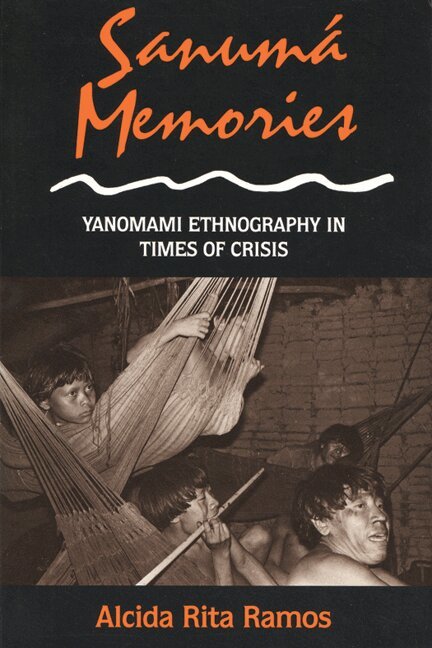
This text provides an anthropological account of the Yanomami and their social organisation, kinship and marriage, moving from the microcosm of individual experience to the broader sociological trends that engulf them. It draws on extensive fieldwork among the Sanuma.