New Directions in Tejano History - Böcker
Visar alla böcker i serien New Directions in Tejano History. Handla med fri frakt och snabb leverans.
9 produkter
9 produkter
558 kr
Skickas inom 10-15 vardagar
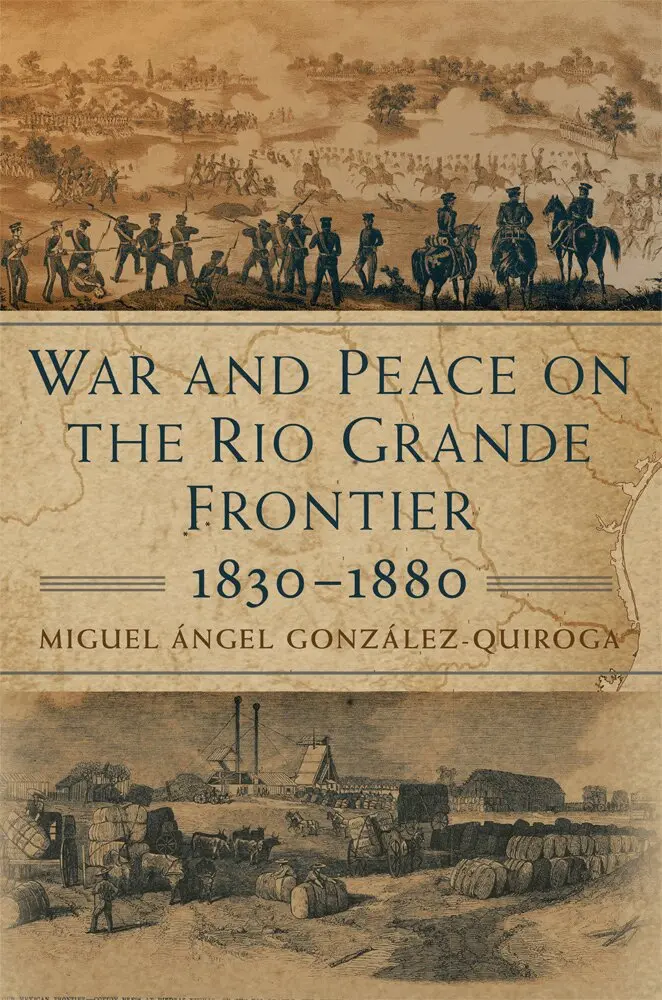
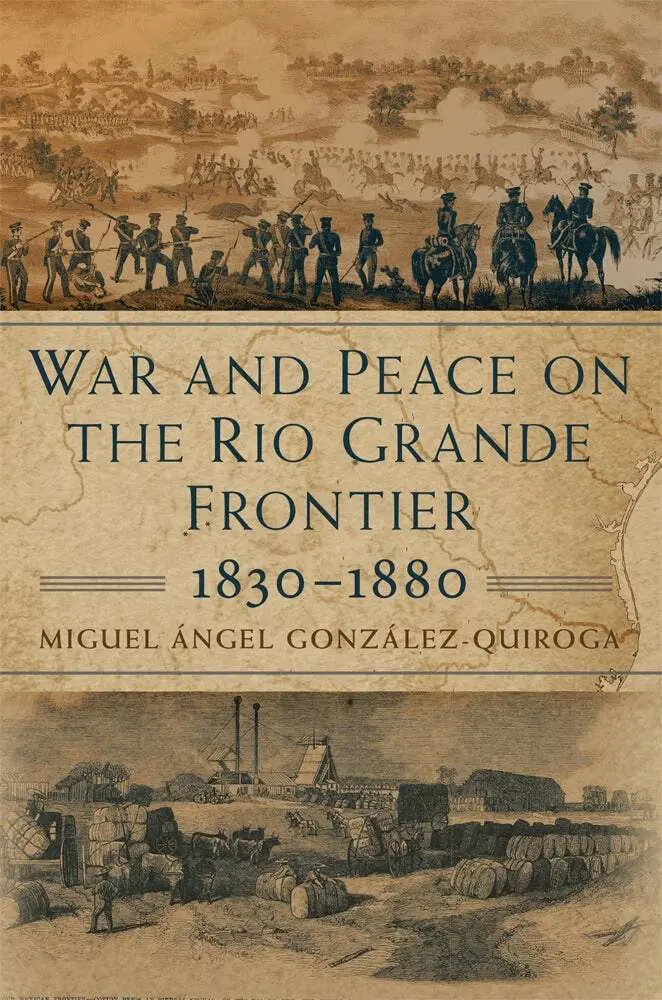
The historical record of the Rio Grande valley through much of the nineteenth century reveals well-documented violence fueled by racial hatred, national rivalries, lack of governmental authority, competition for resources, and an international border that offered refuge to lawless men. Less noted is the region's other everyday reality, one based on coexistence and cooperation among Mexicans, Anglo-Americans, and the Native Americans, African Americans, and Europeans who also inhabited the borderlands. War and Peace on the Rio Grande Frontier, 1830-1880 is a history of these parallel worlds focusing on a border that gave rise not only to violent conflict but also cooperation and economic and social advancement.Meeting here are the Anglo-Americans who came to the border region to trade, spread Christianity, and settle; Mexicans seeking opportunity in el norte; Native Americans who raided American and Mexican settlements alike for plunder and captives; and Europeans who crisscrossed the borderlands seeking new futures in a fluid frontier space. Historian Miguel Ángel González-Quiroga draws on national archives, letters, consular records, periodicals, and a host of other sources to give voice to borderlanders' perspectives as he weaves their many, varied stories into one sweeping narrative. The tale he tells is one of economic connections and territorial disputes, of refugees and bounty hunters, speculation and stakeholding, smuggling and theft and other activities in which economic considerations often carried more weight than racial prejudice.Spanning the Anglo settlement of Texas in the 1830s, the Texas Revolution, the Republic of Texas , the US-Mexican War, various Indian wars, the US Civil War, the French intervention into Mexico, and the final subjugation of borderlands Indians by the combined forces of the US and Mexican armies, this is a magisterial work that forever alters, complicates, and enriches borderlands history.
269 kr
Skickas inom 10-15 vardagar
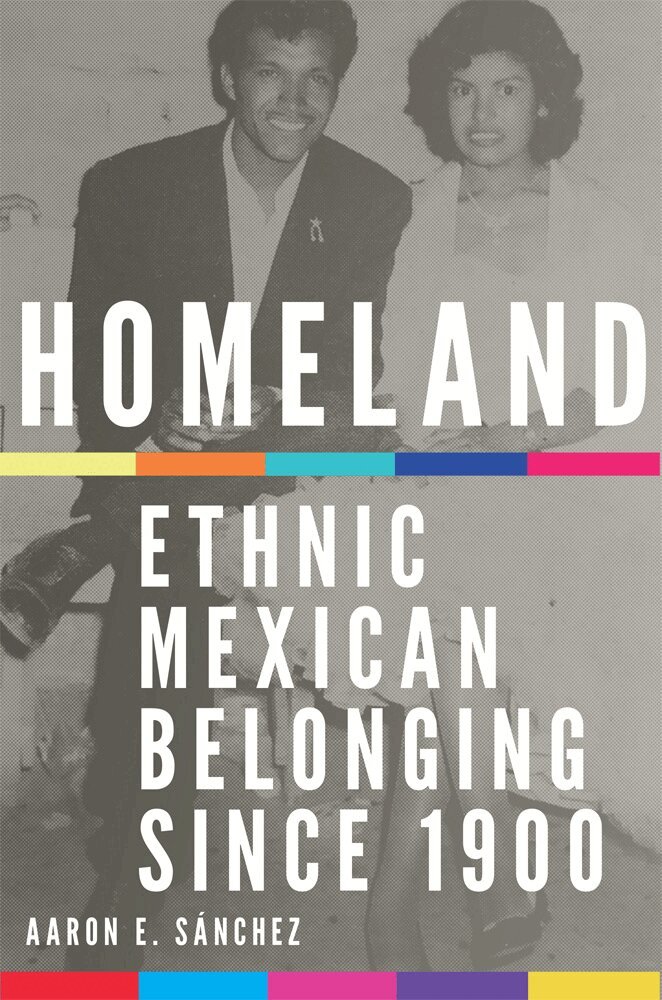
Ideas defer to no border - least of all the idea of belonging. So where does one belong, and what does belonging even mean, when a border inscribes one's identity? This dilemma, so critical to the ethnic Mexican community, is at the heart of Homeland, an intellectual, cultural, and literary history of belonging in ethnic Mexican thought through the twentieth century.Belonging, as Aaron E. SÁnchez's sees it, is an interwoven collection of ideas that defines human connectedness and that shapes the contours of human responsibilities and our obligations to one another. In Homeland, SÁnchez traces these ideas of belonging to their global, national, and local origins, and shows how they have transformed over time.For pragmatic, ideological, and political reasons, ethnic Mexicans have adapted, adopted, and abandoned ideas about belonging as shifting conceptions of citizenship disrupted old and new ways of thinking about roots and shared identity around the global. From the Mexican Revolution to the Chicano Movement, in Texas and across the nation, journalists, poets, lawyers, labor activists, and people from all walks of life have reworked or rejected citizenship as a concept that explained the responsibilities of people to the state and to one another. A wealth of sources - poems, plays, protests, editorials, and manifestos - demonstrate how ethnic Mexicans responded to changes in the legitimate means of belonging in the twentieth century. With competing ideas from both sides of the border they expressed how they viewed their position in the region, the nation, and the world - in ways that sometimes united and often divided the community.A transnational history that reveals how ideas move across borders and between communities, Homeland offers welcome insight into the defining and changing concept of belonging in relation to citizenship. In the process, the book marks another step in a promising new direction for Mexican American intellectual history.
In the Midst of Radicalism
Mexican American Moderates During the Chicano Movement, 1960–1978
Häftad, Engelska, 2022
283 kr
Skickas inom 10-15 vardagar
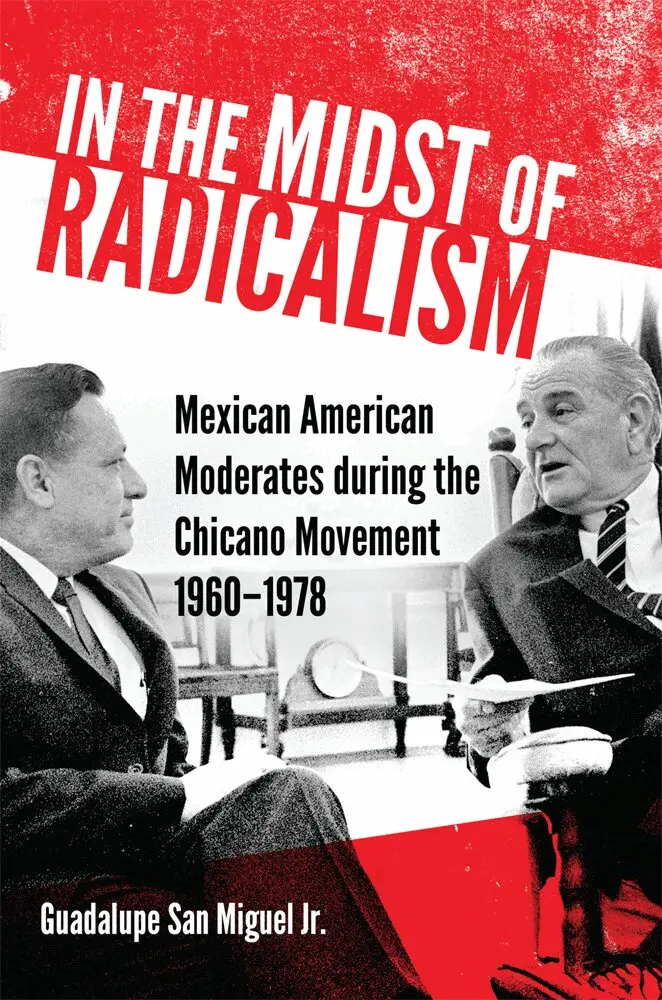
The Chicano Movement of the 1960s and ’70s, like so much of the period’s politics, is best known for its radicalism: militancy, distrust of mainstream institutions, demands for rapid change. Less understood, yet no less significant in its aims, actions, and impact, was the movement’s moderate elements. In the Midst of Radicalism presents the first full account of these more mainstream liberal activists—those who rejected the politics of protest and worked within the system to promote social change for the Mexican American community.The radicalism of the Chicano Movement marked a sharp break from the previous generation of Mexican Americans. Even so, historian Guadalupe San Miguel Jr. contends, the first-generation agenda of moderate social change persisted. His book reveals how, even in the ferment of the ’60s and ’70s, Mexican American moderates used conventional methods to expand access to education, electoral politics, jobs, and mainstream institutions. Believing in the existing social structure, though not the status quo, they fought in the courts, at school board meetings, as lobbyists and advocates, and at the ballot box. They did not mount demonstrations, but in their own deliberate way, they chipped away at the barriers to their communities’ social acceptance and economic mobility. Were these men and women pawns of mainstream political leaders, or were they true to the Mexican American community, representing its diverse interests as part of the establishment? San Miguel explores how they contributed to the struggle for social justice and equality during the years of radical activism. His book assesses their impact and how it fit within the historic struggle for civil rights waged by others since the early 1900s.In the Midst of Radicalism for the first time shows us these moderate Mexican American activists as they were—playing a critical role in the Chicano Movement while maintaining a long-standing tradition of pursuing social justice for their community.
You Will Never Be One of Us
A Teacher, a Texas Town, and the Rural Roots of Radical Conservatism
Inbunden, Engelska, 2022
365 kr
Skickas inom 10-15 vardagar
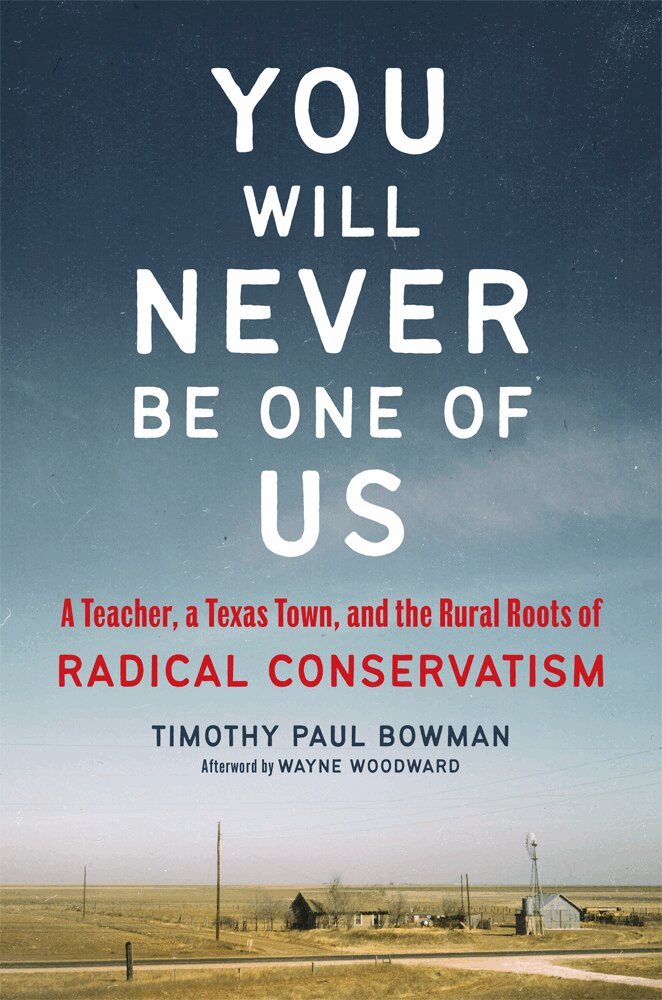
During the spring semester of 1975, Wayne Woodward, a popular young English teacher at La Plata Junior High School in Hereford, Texas, was unceremoniously fired. His offense? Founding a local chapter of the American Civil Liberties Union (ACLU). Believing he had been unjustly targeted, Woodward sued the school district. You Will Never Be One of Us chronicles the circumstances surrounding Woodward’s dismissal and the ensuing legal battle. Revealing a uniquely regional aspect of the cultural upheaval of the 1970s, the case offers rare insight into the beginnings of the rural-urban, local-national divide that continues to roil American politics.By 1975 Hereford, a quiet farming town in the Texas Panhandle, had become “majority minority,” and Woodward’s students were mostly the children of Mexican and Mexican American workers at local agribusinesses. Most townspeople viewed the ACLU as they did Woodward’s long hair and politics: as threatening a radical liberal takeover—and a reckoning for the town’s white power structure. Locals were presented with a choice: either support school officials who sought to rid themselves of a liberal troublemaker, or side with an idealistic young man whose constitutional rights might have been violated. In Timothy Bowman’s deft telling, Woodward’s story exposes the sources and depths of rural America's political culture during the latter half of the twentieth century and the lengths to which small-town conservatives would go to defend it.In defining a distinctive rural, middle-American “Panhandle conservatism,” You Will Never Be One of Us extends the study of the conservative movement beyond the suburbs of the Sunbelt and expands our understanding of a continuing, perhaps deepening, rift in American political culture.
283 kr
Skickas inom 10-15 vardagar
The historical record of the Rio Grande valley through much of the nineteenth century reveals well-documented violence fueled by racial hatred, national rivalries, lack of governmental authority, competition for resources, and an international border that offered refuge to lawless men. Less noted is the region’s other everyday reality, one based on coexistence and cooperation among Mexicans, Anglo-Americans, and the Native Americans, African Americans, and Europeans who also inhabited the borderlands. War and Peace on the Rio Grande Frontier, 1830–1880 is a history of these parallel worlds focusing on a border that gave rise not only to violent conflict but also cooperation and economic and social advancement.Meeting here are the Anglo-Americans who came to the border region to trade, spread Christianity, and settle; Mexicans seeking opportunity in el norte; Native Americans who raided American and Mexican settlements alike for plunder and captives; and Europeans who crisscrossed the borderlands seeking new futures in a fluid frontier space. Historian Miguel Ángel GonzÁlez-Quiroga draws on national archives, letters, consular records, periodicals, and a host of other sources to give voice to borderlanders’ perspectives as he weaves their many, varied stories into one sweeping narrative. The tale he tells is one of economic connections and territorial disputes, of refugees and bounty hunters, speculation and stakeholding, smuggling and theft and other activities in which economic considerations often carried more weight than racial prejudice.Spanning the Anglo settlement of Texas in the 1830s, the Texas Revolution, the Republic of Texas , the US-Mexican War, various Indian wars, the US Civil War, the French intervention into Mexico, and the final subjugation of borderlands Indians by the combined forces of the US and Mexican armies, this is a magisterial work that forever alters, complicates, and enriches borderlands history.Published in association with the William P. Clements Center for Southwest Studies at Southern Methodist University in Dallas, Texas
Raza Schools Volume 4
The Fight for Latino Educational Autonomy in a West Texas Borderlands Town
Inbunden, Engelska, 2023
1 054 kr
Skickas inom 10-15 vardagar
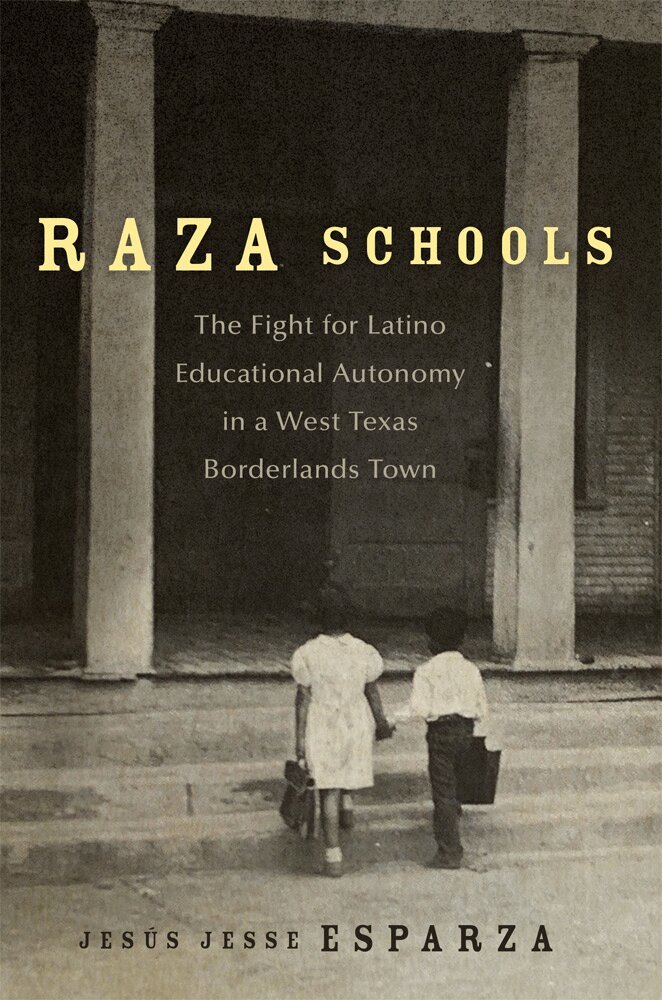
In 1929, a Latino community in the borderlands city of Del Rio, Texas, established the first and perhaps only autonomous Mexican American school district in Texas history. How it did so—against a background of institutional racism, poverty, and segregation—is the story JesÚs Jesse Esparza tells in Raza Schools, a history of the rise and fall of the San Felipe Independent School District from the end of World War I through the post–civil rights era.The residents of San Felipe, whose roots Esparza traces back to the nineteenth century, faced a Jim Crow society in which deep-seated discrimination extended to education, making biased curriculum, inferior facilities, and prejudiced teachers the norm. Raza Schools highlights how the people of San Felipe harnessed the mechanisms and structures of this discriminatory system to create their own educational institutions, using the courts whenever necessary to protect their autonomy. For forty-two years, the Latino community funded, maintained, and managed its own school system—until 1971, when in an attempt to address school segregation, the federal government forced the San Felipe Independent School District to consolidate with a larger neighboring, mostly white school district. Esparza describes the ensuing clashes—over curriculum, school governance, teachers’ positions, and funding—that challenged Latino autonomy. While focusing on the relationships between Latinos and whites who shared a segregated city, his work also explores the experience of African Americans who lived in Del Rio and attended schools in both districts as a segregated population.Telling the complex story of how territorial pride, race and racism, politics, economic pressures, local control, and the federal government collided in Del Rio, Raza Schools recovers a lost chapter in the history of educational civil rights—and in doing so, offers a more nuanced understanding of race relations, educational politics, and school activism in the US-Mexico borderlands.
Raza Schools Volume 4
The Fight for Latino Educational Autonomy in a West Texas Borderlands Town
Häftad, Engelska, 2023
324 kr
Skickas inom 10-15 vardagar
In 1929, a Latino community in the borderlands city of Del Rio, Texas, established the first and perhaps only autonomous Mexican American school district in Texas history. How it did so—against a background of institutional racism, poverty, and segregation—is the story JesÚs Jesse Esparza tells in Raza Schools, a history of the rise and fall of the San Felipe Independent School District from the end of World War I through the post–civil rights era.The residents of San Felipe, whose roots Esparza traces back to the nineteenth century, faced a Jim Crow society in which deep-seated discrimination extended to education, making biased curriculum, inferior facilities, and prejudiced teachers the norm. Raza Schools highlights how the people of San Felipe harnessed the mechanisms and structures of this discriminatory system to create their own educational institutions, using the courts whenever necessary to protect their autonomy. For forty-two years, the Latino community funded, maintained, and managed its own school system—until 1971, when in an attempt to address school segregation, the federal government forced the San Felipe Independent School District to consolidate with a larger neighboring, mostly white school district. Esparza describes the ensuing clashes—over curriculum, school governance, teachers’ positions, and funding—that challenged Latino autonomy. While focusing on the relationships between Latinos and whites who shared a segregated city, his work also explores the experience of African Americans who lived in Del Rio and attended schools in both districts as a segregated population.Telling the complex story of how territorial pride, race and racism, politics, economic pressures, local control, and the federal government collided in Del Rio, Raza Schools recovers a lost chapter in the history of educational civil rights—and in doing so, offers a more nuanced understanding of race relations, educational politics, and school activism in the US-Mexico borderlands.
Colonizing Ourselves Volume 5
Tejano Back-to-Mexico Movements and the Making of a Settler Colonial Nation
Inbunden, Engelska, 2024
503 kr
Skickas inom 10-15 vardagar
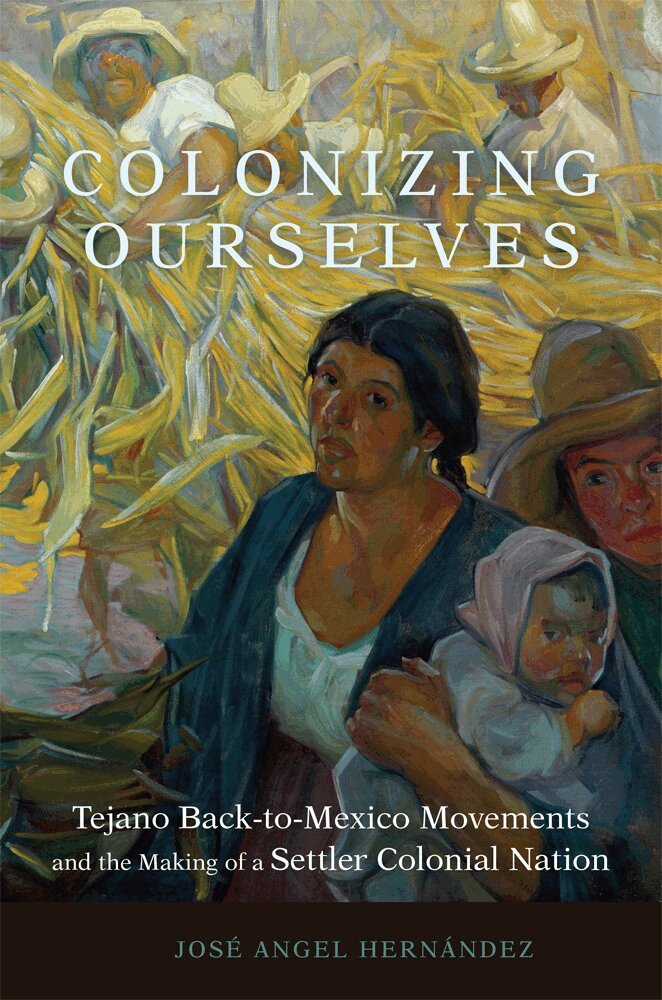
In the late nineteenth century, the Mexican government, seeking to fortify its northern borders and curb migration to the United States, set out to relocate “Mexico-Texano” families, or Tejanos, on Mexican land. In Colonizing Ourselves, José Angel Hernández explores these movements back to Mexico, also known as autocolonization, as distinct in the history of settler colonization.Unlike other settler colonial states that relied heavily on overseas settlers, especially from Europe and Asia, Mexico received less than 1 percent of these nineteenth-century immigrants. This reality, coupled with the growing migration of farmers and laborers northward toward the United States, led ultimately to passage of the 1883 Land and Colonization Law. This legislation offered incentives to any Mexican in the United States willing to resettle in the republic: Tejanos, as well as other Mexican expatriates abroad, were to be granted twice the amount of land for settlement that other immigrants received. The campaign worked: ethnic Mexicans from Texas and the Mexican interior, as well as Indigenous peoples from Mexico, established numerous colonies on the northern frontier.Leading one of the most notable back-to-Mexico movements was Luis Siliceo, a Texan who, with a subsidized newspaper, El Colono, and the backing of Porfirio Díaz’s administration, secured a contract to resettle Tejano families across several Mexican states. The story of this partnership, which Hernández traces from the 1890s through the turn of the century, provides insight into debates about settler colonization in Mexico. Viewed from various global, national, and regional perspectives, it helps to make sense of Mexico’s autocolonization policy and its redefinition of Indigenous and settler populations during the nineteenth century.
412 kr
Kommande
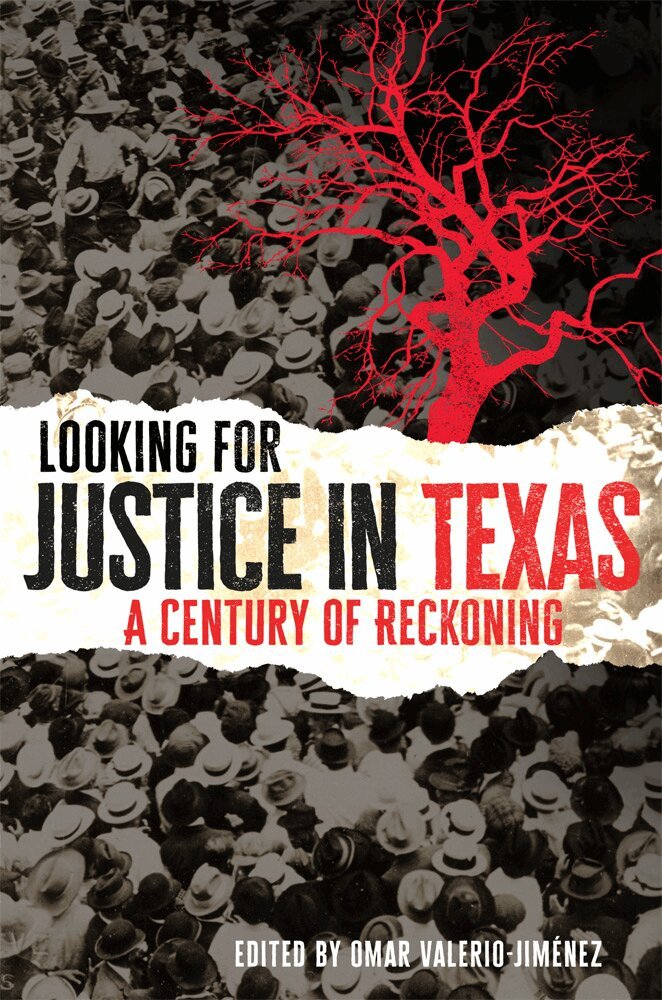
Communities of color have long been subject to extreme policing and surveillance in Texas. Despite such formidable challenges, these communities have launched multiple movements to ensure public safety and equal treatment before the law. Looking for Justice in Texas provides historical context for these contemporary problems by examining potent examples of over-policing and multiple acts of resistance that took place in the Lone Star State during the twentieth century.The contributors to this edited volume, both established and emerging scholars, employ original research to demonstrate that the over-policing of African Americans, Mexican Americans, and immigrants has an extensive history in Texas. Looking for Justice delves into a range of pertinent topics, including how the circuits of power link borderlands policing to law enforcement in other states, white club women's support for the installation of a Confederate memorial and the removal of a middle-class African-American community, the influence of the Ku Klux Klan in the establishment of local police departments, the courts' role in racial and gender-based discrimination against African Americans in East Texas the racialization of citizenship as a result of moral policing, the mobilization of Chicanos in response to anti-Mexican violence, and connections between the racialization of US citizenship and the policing of African immigrants.While much progress has been made in the struggle for justice, significant challenges remain among the state's communities of color. As volume editor Omar Valerio-Jiménez emphasizes in his thought-provoking conclusion, Texas's history of policing and struggles for racial justice are particularly relevant and important to understand in the present day if more progress is to be achieved.