New Kierkegaard Research - Böcker
Visar alla böcker i serien New Kierkegaard Research. Handla med fri frakt och snabb leverans.
12 produkter
12 produkter
1 076 kr
Skickas inom 10-15 vardagar
Søren Kierkegaard’s authorship exhibits two different trajectories concerning the relation of responsible human agency to sovereign divine agency: one trajectory stresses free human striving, while the other trajectory emphasizes the dominance of divine agency. The first theme led to the view of Kierkegaard as the champion of autonomous existential “leaps,” while the second led to the construal of Kierkegaard as a devout Lutheran who trusted absolutely in God’s gracious governance. Lee C. Barrett argues that Kierkegaard, influenced by Kant’s critique of metaphysics, did not attempt to integrate human and divine agencies in any speculative theory. Instead, Kierkegaard deploys them to encourage different passions and dispositions that can be integrated in a coherent human life, making use of literary strategies to foster the different passions and dispositions that are associated with the themes of human responsibility and divine governance. Kierkegaard on God’s Will and Human Freedom: An Upbuilding Antinomy offers an incisive account of what makes Kierkegaard’s conception of theology as a matter of edification rather than speculation so distinctive and enduringly worthwhile.
1 160 kr
Skickas inom 10-15 vardagar
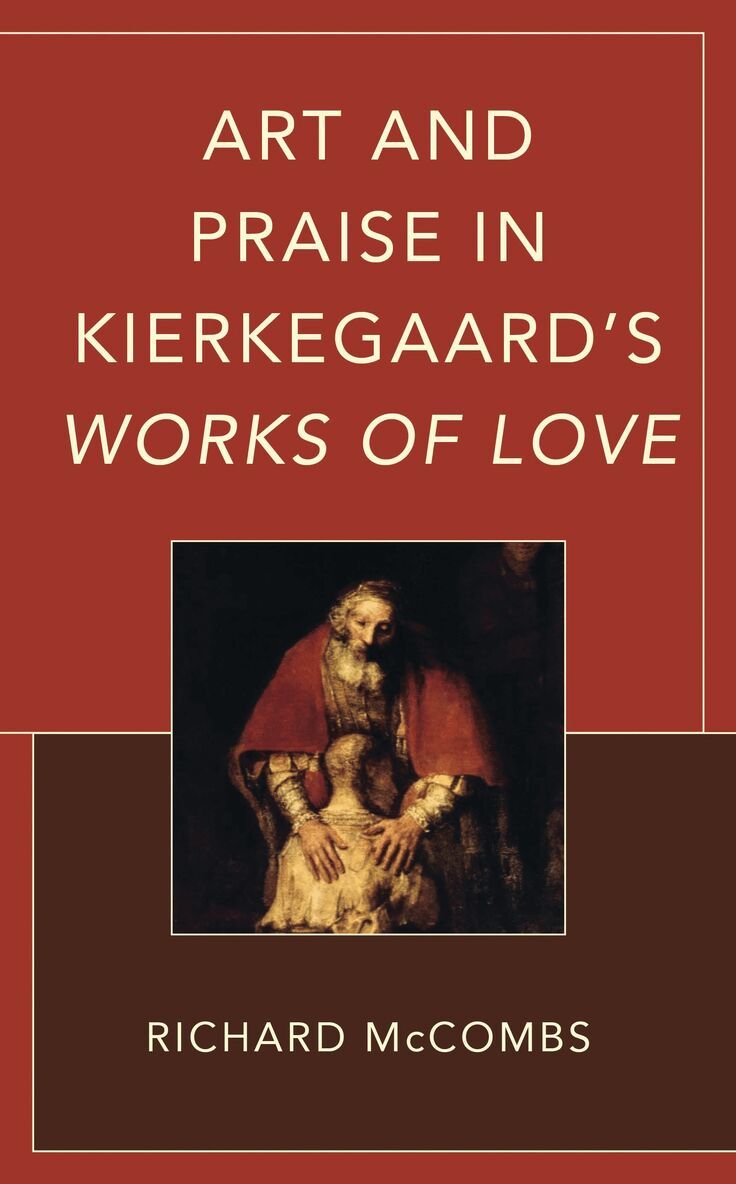
Since art is essential to the love of one’s neighbor as oneself and to love’s chief goal of building up one another, we cannot understand love without also understanding its art. Observing that praise is ubiquitous in Søren Kierkegaard’s writings, Richard McCombs interprets Kierkegaard’s Works of Love as a eulogy of love’s arts of forgiveness, peace-making, and building up one’s neighbor in maturity and charity. Kierkegaard stresses love's ability to achieve results, calling love irresistible and almost magical in overcoming obstacles to its purposes; living the life of faith and love involves skillful attention to the specificity of the episodes in an individual’s life, and the creative imagining of new ways of enacting these virtues. McCombs argues that Kierkegaard’s ideas about the art of love reveal limits or exceptions to his individualism and to his anti-consequentialism in ethics. Art and Praise in Kierkegaard’s Works of Love explores Kierkegaard’s distinct praises of love through texts like Works of Love, The Brothers Karamazov, and Middlemarch to illustrate, complement, and sometimes correct Kierkegaard’s profound account of love’s art and wisdom, suggesting ways that the art of praise bears on other questions in aesthetics, ethics, and religion.
1 209 kr
Skickas inom 10-15 vardagar
Kierkegaardian Phenomenologies, edited by J. Aaron Simmons, Jeffrey Hanson, and Wojciech Kaftanski, offers a substantive, diverse, and timely consideration of phenomenological engagements within the thought of Søren Kierkegaard. Featuring original essays from a distinguished collection of established and emerging global scholars representing different schools of thought, this volume explains how the interest in a phenomenological reading of Kierkegaard is not only vital, but continues to grow in importance by cultivating new readers and inviting old readers to revisit their views. Divided into four parts—"Phenomenological Explorations", "On Hearing and Seeing", "Rethinking Faith and Despair", and "Kierkegaard and New Phenomenology"—this collection not only reflects the current state of scholarly conversations in both Kierkegaardian studies and phenomenological research, but also envisions new directions in which they should go, exploring ways that a Kierkegaardian approach to phenomenology might help us to re-envision Kierkegaard scholarship and re-enliven phenomenological philosophy.
1 406 kr
Kommande
The perennial enigma of the human condition is our propensity—seemingly innate—to subvert the universal moral law that ultimately corrupts our character.This book explores this phenomenon through the perspectives of Augustine, Kant, and Kierkegaard. Erik Hanson attends to the problem of culpability inherent in Augustine's account, while demonstrating that Kierkegaard's assessment retained much of the existential and theological intuition he shared with Augustine, even as he wrote in critical dialogue with Kant.Hanson shows that Kant's analysis of radical evil (das radikale Böse) presents a philosophical counterpart to Augustine's theological description of original sin (peccatum originale). Augustine held that human evil is the outworking of an inherited corruption of human agency, arising from the Edenic transgression of our forebears. This account presented a problem that medieval theologians struggled to resolve: If human evil is a transgenerational penalty, how can succeeding generations bear responsibility for what lay outside their agency? If it is an inherited sickness, how can they remain culpable? This tension between inherited guilt (reatus) and inherited corruption (vitium) lies at the heart of the Augustinian dilemma.Hanson argues that while Kant's response retains the centrality of individual liability, it cannot account for evil's origin, a shortcoming Kierkegaard takes up in The Concept of Anxiety. Yet Kierkegaard also retains the Augustinian basis for evil's universality in his account of despair (fortvivlelse) as developed in The Sickness Unto Death. For Kierkegaard, despair is not merely a Kantian subversion of the moral law, but an ontological misrelation of the self to itself before God. This defiance against the possibility of a God-relation, rather than mere moral transgression, accounts for every subsequent human evil.
1 142 kr
Skickas inom 10-15 vardagar
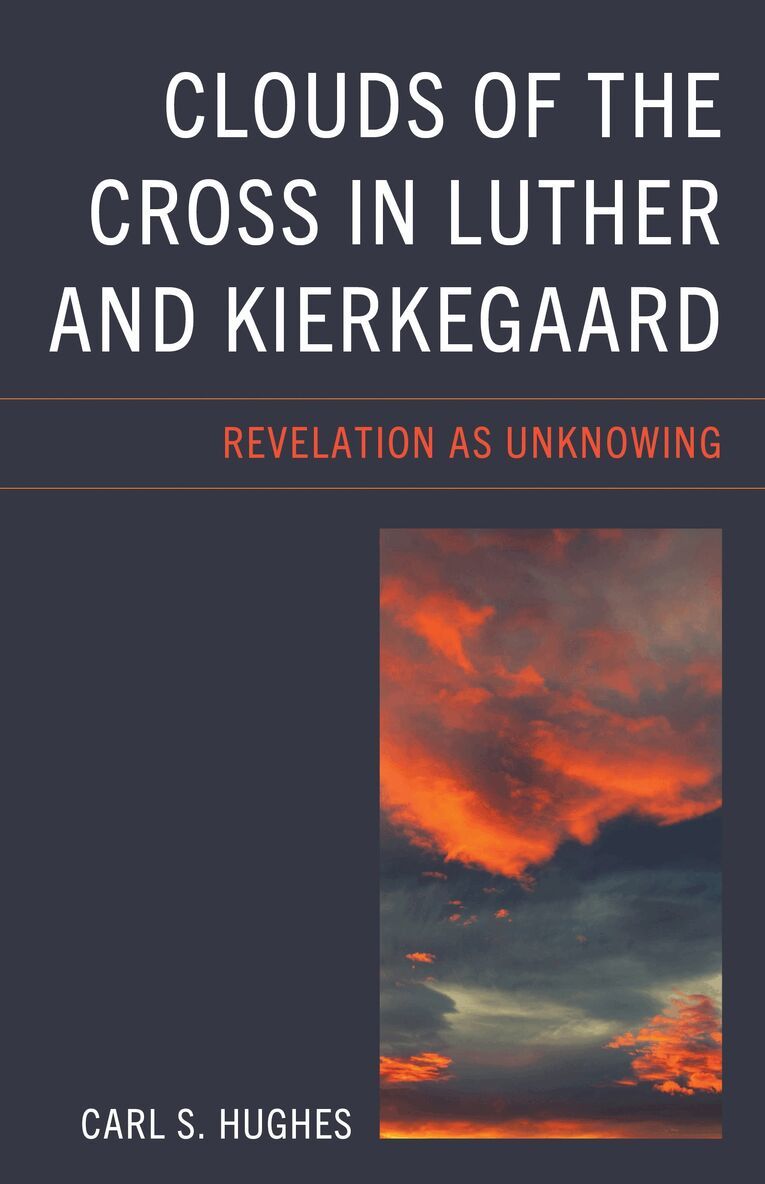
What do Christians mean when they talk about revelation? What sort of truth do Jesus and the Bible disclose? Knowledge or doctrine, required beliefs or a moral code, the answers Christians give to these questions tend to be objective in form: something they “have” that others lack. In Clouds of the Cross in Luther and Kierkegaard: Revelation as Unknowing, Carl S. Hughes draws on Martin Luther and Søren Kierkegaard—two of the most Christocentric and biblically oriented theologians in history—to suggest a much-needed alternative. Hughes blends historical, philosophical, and constructive approaches to theology in lively and engaging prose. He spotlights the objectifying tendencies in Luther’s thought that become so influential in modernity, while also finding resources in Luther’s own theology for a very different approach. Then, Hughes turns to Søren Kierkegaard—one of Luther’s fiercest critics and, at the same time, most faithful inheritors. Hughes argues that Kierkegaard carries some of Luther’s most provocative themes further than Luther himself ever dares. The result is a “Kierkegaardian-Lutheran” theology of revelation that resonates with mystical and apophatic theology, resembles art more than information, and transforms lives to incarnate the love of Christ in diverse and ever-changing ways.
1 406 kr
Kommande
There are reflections of Plotinus’ philosophy in the existential dialectic of Søren Kierkegaard: in both, there is a form of truth that is unknown by reason and yet known by faith.This book challenges the traditional view that Kierkegaard is not a systematic philosopher. Although Johannes Climacus articulates Kierkegaard’s rejection of Hegel’s systematic philosophy, Kierkegaard also praises the metaphysical structure and content of certain ancient philosophers. Because Kierkegaard ultimately takes a leap of faith beyond the realm of reason, his philosophy is closer to Plotinus’ philosophy than it is to Plato’s. Kierkegaard (1813-1855) and Plotinus (205-270AD) share a set of “existential structures” that have to do with the nature of the self and reality. Kierkegaard, like Plotinus, uses several literary tools for a twofold paradoxical reason; his literary style both disguises the systematic nature of his work and reveals the edifying nature of his philosophy. The tools that Kierkegaard uses include his use of pseudonymous authors, sarcasm, paradox, irony and humour. Plotinus, whilst communicating directly, uses irony, metaphors, myths, and paradoxes to convey his metaphysical concepts. Kierkegaard and Plotinus also both have edifying goals, as they seek to inspire their readers to authentic selfhood. They are both grounded in a descent from the absolute and point towards an ascent; they distinguish between the ascent to the ethical-religious realm where the divine principles can be contemplated, and to a higher and final ascent to the absolute principle. They both also count as existentialists, and therefore it is Plotinus who deserves the title of “first existentialist.” The metaphysical framework that the two authors share is intended to lead, purify, and elevate the individual, systematically, to the highest spiritual level. For both, metaphysics should be edifying.
1 142 kr
Skickas inom 10-15 vardagar
Volume one of Søren Kierkegaard’s Either/Or explores the crisis of the modern secular void—with its attendant doubt, ennui, and alienation—from the first-person perspective of an aesthete who, lacking any epistemic or moral foundations, grows increasingly obsessed with what he calls “the interesting.” In a close explication of the history of that aesthetic concept and a thorough exegesis of this volume, Kierkegaard’s Concept of the Interesting: The Aesthetic Gulf in Either/Or I explores the aesthete’s views on beauty, opera and music, tragedy and comedy, time, unhappiness, the difference between suffering and pain, boredom, eroticism, deception, and seduction, along with the ways in which these precipitate the ambition for increasingly interesting experiences. In this examination, Anthony Eagan thoroughly reveals Kierkegaard’s own perspective on how an exclusively aesthetic attitude can lead to an ever-more voracious tendency to interpret the world in a private, self-defeating, and unscrupulous fashion—one arising from and ultimately leading to moral solipsism and despair. This book develops a comprehensive understanding of Either/Or I that is crucial for understanding the rest of Kierkegaard’s authorship.
1 496 kr
Skickas inom 5-8 vardagar
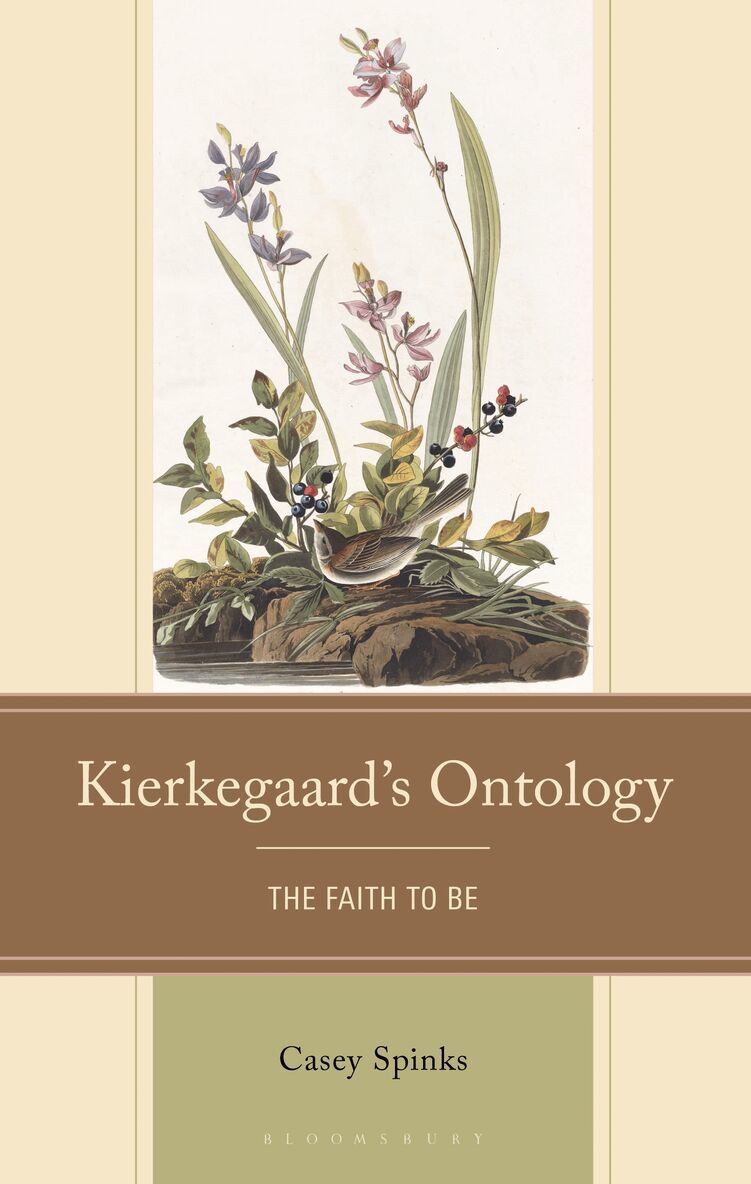
What is it to be? And what is it to be a Christian? Casey Spinks suggests these two questions belong together when readers attend to Kierkegaard’s authorship, and such attention calls for the task of uncovering Kierkegaard’s fundamental ontology.This book argues that the heart of that ontology is to be found in the religious discourses of his Second Authorship. Using the devotional discourse The Lily of the Field and the Bird of the Air as his guide, Spinks argues that Kierkegaard offers a distinct Christian sense of being: faith. In particular, in his Second Authorship, he moves from irony to earnestness, and identifies silence, obedience, and joy as ontologically significant categories. This Christian ontology fundamentally opposes the rationalist ontology of G.W.F. Hegel—as well as any other philosophical ontology based on autonomous reason or human subjectivity. As a result, Kierkegaard proves to be a unique Christian figure in the history of Western metaphysics, one with forceful relevance to contemporary questions of first philosophy and first theology.
1 142 kr
Skickas inom 10-15 vardagar
Ethical Silence: Kierkegaard on Communication, Education, andHumility examines a new area of Kierkegaard scholarship: the ethical value of silence. Through exegesis of Kierkegaard’s later writings, works in what is known as his second authorship, Sergia Hay argues that silence is an essential element of his Christian ethics. Starting with an overview of Kierkegaard’s ideas concerning ethics and communication, Hay builds a case for a Kierkegaardian notion of ethical silence by showing how silence contributes to the fulfillment of ethical imperatives by halting chatter, setting the “fundamental tone” for ethical activity, curbing excessive self-love, and providing another mode for educating and expressing love. Most importantly, silence can be used to humble the self and elevate the neighbor, creating conditions of Christian equality. Ethical silence is not the silence of the ineffable or what cannot be said, this is the silence of what can be said but should not.
488 kr
Skickas inom 10-15 vardagar
Ethical Silence: Kierkegaard on Communication, Education, andHumility examines a new area of Kierkegaard scholarship: the ethical value of silence. Through exegesis of Kierkegaard’s later writings, works in what is known as his second authorship, Sergia Hay argues that silence is an essential element of his Christian ethics. Starting with an overview of Kierkegaard’s ideas concerning ethics and communication, Hay builds a case for a Kierkegaardian notion of ethical silence by showing how silence contributes to the fulfillment of ethical imperatives by halting chatter, setting the “fundamental tone” for ethical activity, curbing excessive self-love, and providing another mode for educating and expressing love. Most importantly, silence can be used to humble the self and elevate the neighbor, creating conditions of Christian equality. Ethical silence is not the silence of the ineffable or what cannot be said, this is the silence of what can be said but should not.
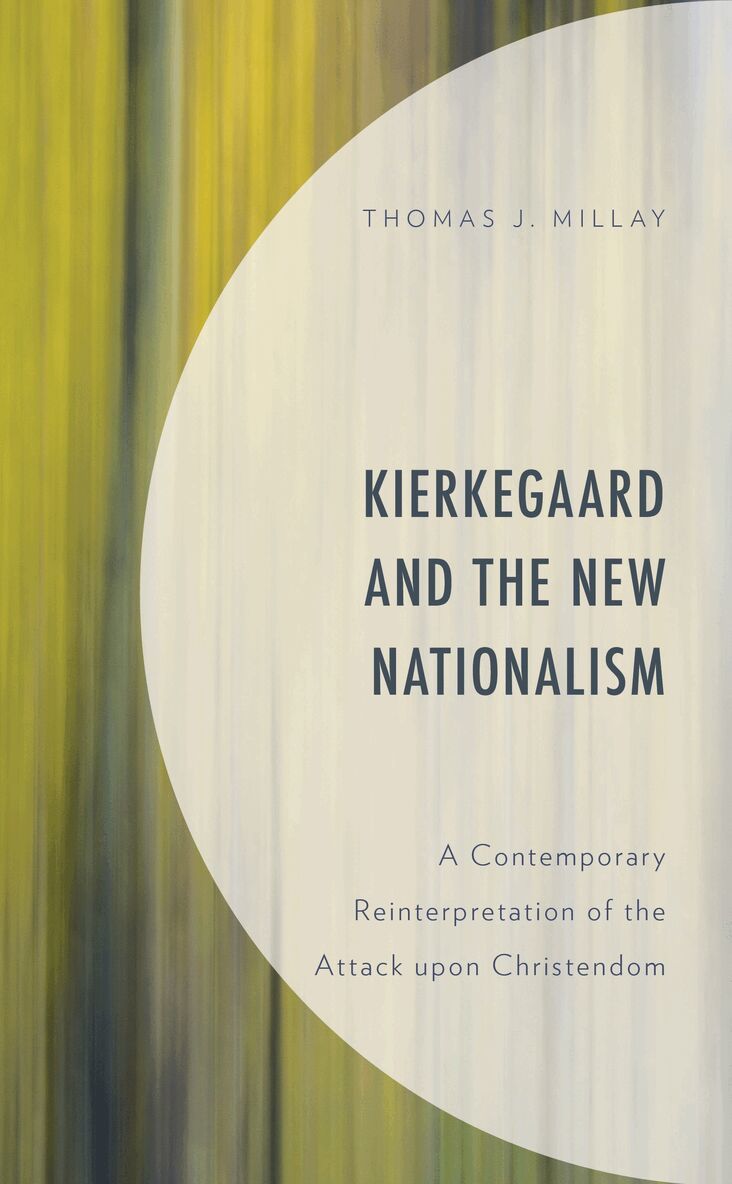
Kierkegaard and the New Nationalism
A Contemporary Reinterpretation of the Attack upon Christendom
Inbunden, Engelska, 2021
1 142 kr
Skickas inom 10-15 vardagar
A 2023 Choice Reviews Outstanding Academic TitleNationalism is a globally resurgent phenomenon. From Britain to India to the United States of America, we find nations vociferously reasserting their own sovereignty, ethnic composition, and intrinsic superiority. Thomas J. Millay demonstrates how Kierkegaard’s ascetic voice speaks directly to our present crisis.Kierkegaard and the New Nationalism: A Contemporary Reinterpretation of the Attack upon Christendom analyzes the late writings of Kierkegaard in light of this new relevance, for Kierkegaard’s attack upon Christendom is also an attack upon nationalism. For Kierkegaard, taking on nationalism is not simply a matter of undermining false identity constructions. Attacking nationalism is a matter of renunciation: it requires ascetic discipline, such that the selfish motives at the core of one’s identity construction are uprooted and replaced by a self-giving love marked by the willingness to suffer.
Kierkegaard and the New Nationalism
A Contemporary Reinterpretation of the Attack upon Christendom
Häftad, Engelska, 2023
434 kr
Skickas inom 10-15 vardagar
A 2023 Choice Reviews Outstanding Academic TitleNationalism is a globally resurgent phenomenon. From Britain to India to the United States of America, we find nations vociferously reasserting their own sovereignty, ethnic composition, and intrinsic superiority. Thomas J. Millay demonstrates how Kierkegaard’s ascetic voice speaks directly to our present crisis.Kierkegaard and the New Nationalism: A Contemporary Reinterpretation of the Attack upon Christendom analyzes the late writings of Kierkegaard in light of this new relevance, for Kierkegaard’s attack upon Christendom is also an attack upon nationalism. For Kierkegaard, taking on nationalism is not simply a matter of undermining false identity constructions. Attacking nationalism is a matter of renunciation: it requires ascetic discipline, such that the selfish motives at the core of one’s identity construction are uprooted and replaced by a self-giving love marked by the willingness to suffer.