New Material Histories of Music – serie
Visar alla böcker i serien New Material Histories of Music. Handla med fri frakt och snabb leverans.
17 produkter
17 produkter
347 kr
Skickas inom 7-10 vardagar
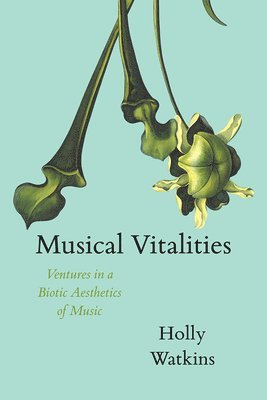
Does it make sense to refer to bird song—a complex vocalization, full of repetitive and transformative patterns that are carefully calculated to woo a mate—as art? What about a pack of wolves howling in unison or the cacophony made by an entire rain forest?Redefining music as “the art of possibly animate things,” Musical Vitalities charts a new path for music studies that blends musicological methods with perspectives drawn from the life sciences. In opposition to humanist approaches that insist on a separation between culture and nature—approaches that appear increasingly untenable in an era defined by human-generated climate change—Musical Vitalities treats music as one example of the cultural practices and biotic arts of the animal kingdom rather than as a phenomenon categorically distinct from nonhuman forms of sonic expression. The book challenges the human exceptionalism that has allowed musicologists to overlook music’s structural resemblances to the songs of nonhuman species, the intricacies of music’s physiological impact on listeners, and the many analogues between music’s formal processes and those of the dynamic natural world. Through close readings of Austro-German music and aesthetic writings that suggest wide-ranging analogies between music and nature, Musical Vitalities seeks to both rekindle the critical potential of nineteenth-century music and rejoin the humans at the center of the humanities with the nonhumans whose evolutionary endowments and planetary fates they share.
398 kr
Skickas inom 7-10 vardagar
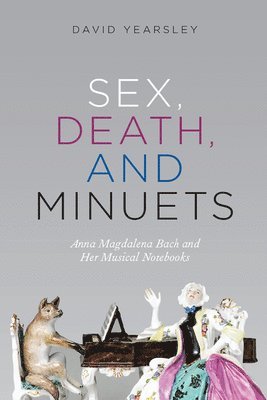
At one time a star in her own right as a singer, Anna Magdalena (1701-60) would go on to become, through her marriage to the older Johann Sebastian Bach, history's most famous musical wife and mother. The two musical notebooks belonging to her continue to live on, beloved by millions of pianists young and old. Yet the pedagogical utility of this music--long associated with the sound of children practicing and mothers listening--has encouraged a rosy and one-sided view of Anna Magdalena as a model of German feminine domesticity.Sex, Death, and Minuets offers the first in-depth study of these notebooks and their owner, reanimating Anna Magdalena as a multifaceted historical subject--at once pious and bawdy, spirited and tragic. In these pages, we follow Magdalena from young and flamboyant performer to bereft and impoverished widow--and visit along the way the coffee house, the raucous wedding feast, and the family home. David Yearsley explores the notebooks' more idiosyncratic entries--like its charming ditties on illicit love and searching ruminations on mortality--against the backdrop of the social practices and concerns that women shared in eighteenth-century Lutheran Germany, from status in marriage and widowhood, to fulfilling professional and domestic roles, money, fashion, intimacy and sex, and the ever-present sickness and death of children and spouses. What emerges is a humane portrait of a musician who embraced the sensuality of song and the uplift of the keyboard, a sometimes ribald wife and oft-bereaved mother who used her cherished musical notebooks for piety and play, humor and devotion--for living and for dying.
496 kr
Skickas inom 7-10 vardagar
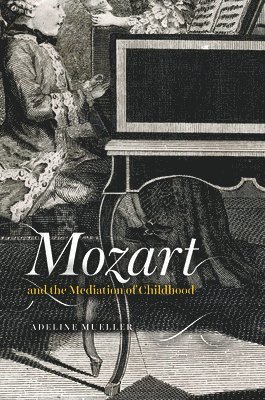
The story of Wolfgang Amadeus Mozart’s precocity is so familiar as to be taken for granted. In scholarship and popular culture, Mozart the Wunderkind is often seen as belonging to a category of childhood all by himself. But treating the young composer as an anomaly risks minimizing his impact. In this book, Adeline Mueller examines how Mozart shaped the social and cultural reevaluation of childhood during the Austrian Enlightenment. Whether in a juvenile sonata printed with his age on the title page, a concerto for a father and daughter, a lullaby, a musical dice game, or a mass for the consecration of an orphanage church, Mozart’s music and persona transformed attitudes toward children’s agency, intellectual capacity, relationships with family and friends, political and economic value, work, school, and leisure time. Thousands of children across the Habsburg Monarchy were affected by the Salzburg prodigy and the idea he embodied: that childhood itself could be packaged, consumed, deployed, “performed”—in short, mediated—through music. This book builds upon a new understanding of the history of childhood as dynamic and reciprocal, rather than a mere projection or fantasy—as something mediated not just through texts, images, and objects but also through actions. Drawing on a range of evidence, from children’s periodicals to Habsburg court edicts and spurious Mozart prints, Mueller shows that while we need the history of childhood to help us understand Mozart, we also need Mozart to help us understand the history of childhood.
317 kr
Skickas inom 7-10 vardagar
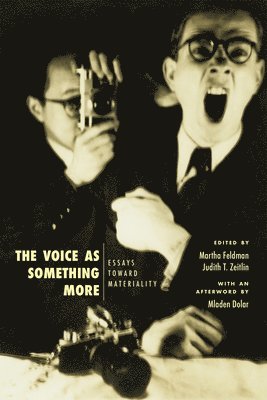
In the contemporary world, voices are caught up in fundamentally different realms of discourse, practice, and culture: between sounding and nonsounding, material and nonmaterial, literal and metaphorical. In The Voice as Something More, Martha Feldman and Judith Zeitlin tackle these paradoxes with a bold and rigorous collection of essays that look at voice as both object of desire and material object. Using Mladen Dolar's influential A Voice and Nothing More as a reference point, The Voice as Something More reorients Dolar's psychoanalytic analysis around the material dimensions of voices--their physicality and timbre, the fleshiness of their mechanisms, the veils that hide them, and the devices that enhance and distort them. Throughout, the essays put the body back in voice. Ending with a new essay by Dolar that offers reflections on these vocal aesthetics and paradoxes, this authoritative, multidisciplinary collection, ranging from Europe and the Americas to East Asia, from classics and music to film and literature, will serve as an essential entry point for scholars and students who are thinking toward materiality.
986 kr
Tillfälligt slut
In the contemporary world, voices are caught up in fundamentally different realms of discourse, practice, and culture: between sounding and nonsounding, material and nonmaterial, literal and metaphorical. In The Voice as Something More, Martha Feldman and Judith Zeitlin tackle these paradoxes with a bold and rigorous collection of essays that look at voice as both object of desire and material object. Using Mladen Dolar's influential A Voice and Nothing More as a reference point, The Voice as Something More reorients Dolar's psychoanalytic analysis around the material dimensions of voices--their physicality and timbre, the fleshiness of their mechanisms, the veils that hide them, and the devices that enhance and distort them. Throughout, the essays put the body back in voice. Ending with a new essay by Dolar that offers reflections on these vocal aesthetics and paradoxes, this authoritative, multidisciplinary collection, ranging from Europe and the Americas to East Asia, from classics and music to film and literature, will serve as an essential entry point for scholars and students who are thinking toward materiality.
488 kr
Skickas inom 7-10 vardagar
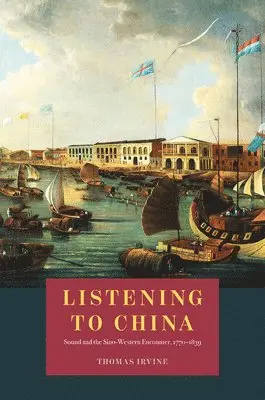
From bell ringing to fireworks, gongs to cannon salutes, a dazzling variety of sounds and soundscapes marked the China encountered by the West around 1800. These sounds were gathered by diplomats, trade officials, missionaries, and other travelers and transmitted back to Europe, where they were reconstructed in the imaginations of writers, philosophers, and music historians such as Jean-Philippe Rameau, Johann Nikolaus Forkel, and Charles Burney. Thomas Irvine gathers these stories in Listening to China, exploring how the sonic encounter with China shaped perceptions of Europe’s own musical development. Through these stories, Irvine not only investigates how the Sino-Western encounter sounded, but also traces the West’s shifting response to China. As the trading relationships between China and the West broke down, travelers and music theorists abandoned the vision of shared musical approaches, focusing instead on China’s noisiness and sonic disorder and finding less to like in its music. At the same time, Irvine reconsiders the idea of a specifically Western music history, revealing that it was comparison with China, the great “other,” that helped this idea emerge. Ultimately, Irvine draws attention to the ways Western ears were implicated in the colonial and imperial project in China, as well as to China’s importance to the construction of musical knowledge during and after the European Enlightenment. Timely and original, Listening to China is a must-read for music scholars and historians of China alike.
Search for Medieval Music in Africa and Germany, 1891-1961
Scholars, Singers, Missionaries
Inbunden, Engelska, 2020
725 kr
Skickas inom 11-20 vardagar
This innovative book reassesses the history of musicology, unearthing the field’s twentieth-century German and global roots. In the process, Anna Maria Busse Berger exposes previously unseen historical relationships such as those between the modern rediscovery of medieval music, the rise of communal singing, and the ways in which African music intersected with missionary work in the German colonial period. Ultimately, Busse Berger offers a monumental new account of the early twentieth-century music culture in Germany and East Africa.The book unfolds in three parts. Busse Berger starts with the origins of comparative musicology circa 1900, when early proponents used ideas from comparative linguistics to test whether parallels could be drawn between nonwestern and medieval European music. She then turns to youth movements of the era—the Wandervogel, Jugendmusikbewegung, and Singbewegung—whose focus on joint music making influenced many musicologists. Finally, she considers case studies of Protestant and Catholic mission societies in what is now Tanzania, where missionaries—many of them musicologists and former youth-group members—extended the discipline via ethnographic research and a focus on local music and communities. In highlighting these long-overlooked transnational connections and the role of global music in early musicology, Busse Berger shapes a fresh conception of music scholarship during a pivotal part of the twentieth century.
455 kr
Skickas inom 7-10 vardagar
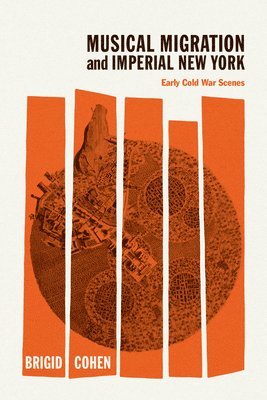
Through archival work and storytelling, Musical Migration and Imperial New York revises many inherited narratives about experimental music and art in postwar New York.From the urban street level of music clubs and arts institutions to the world-making routes of global migration and exchange, this book redraws the map of experimental art to reveal the imperial dynamics and citizenship struggles that continue to shape music in the United States.Beginning with the material conditions of power that structured the cityscape of New York in the early Cold War years, Brigid Cohen looks at a wide range of artistic practices (concert music, electronic music, jazz, performance art) and actors (Edgard Varèse, Charles Mingus, Yoko Ono, and Fluxus founder George Maciunas) as they experimented with new modes of creativity. Cohen links them with other migrant creators vital to the city’s postwar culture boom, creators whose stories have seldom been told (Halim El-Dabh, Michiko Toyama, Vladimir Ussachevsky). She also gives sustained and serious treatment to the work of Yoko Ono, something long overdue in music scholarship. Musical Migration and Imperial New York is indispensable reading, offering a new understanding of global avant-gardes and American experimental music as well as the contrasting feelings of belonging and exclusion on which they were built.
455 kr
Skickas inom 7-10 vardagar
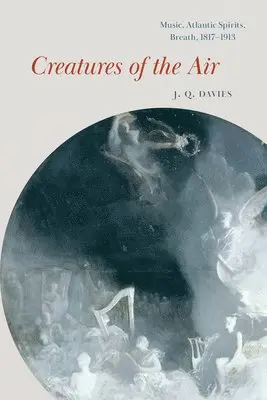
An account of nineteenth-century music in Atlantic worlds told through the history of the art’s elemental medium, the air.Often experienced as universal and incorporeal, music seems an innocent art form. The air, the very medium by which music constitutes itself, shares with music a claim to invisibility. In Creatures of the Air, J. Q. Davies interrogates these claims, tracing the history of music’s elemental media system in nineteenth-century Atlantic worlds. He posits that air is a poetic domain, and music is an art of that domain.From West Central African ngombi harps to the European J. S. Bach revival, music expressed elemental truths in the nineteenth century. Creatures of the Air tells these truths through stories about suffocation and breathing, architecture and environmental design, climate strife, and racial turmoil. Contributing to elemental media studies, the energy humanities, and colonial histories, Davies shows how music, no longer just an innocent luxury, is implicated in the struggle for control over air as a precious natural resource. What emerges is a complex political ecology of the global nineteenth century and beyond.
391 kr
Skickas inom 7-10 vardagar
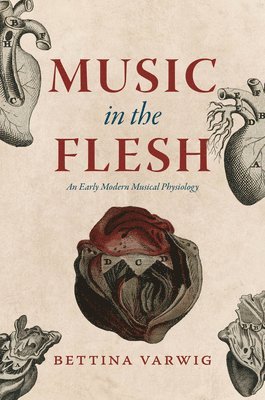
A corporeal history of music-making in early modern Europe.Music in the Flesh reimagines the lived experiences of music-making subjects—composers, performers, listeners—in the long seventeenth century. There are countless historical testimonies of the powerful effects of music upon the early modern body; it is described as moving, ravishing, painful, dangerous, curative, and miraculous while affecting “the circulation of the humors, the purification of the blood, the dilation of the vessels and pores.”How were these early modern European bodies constituted that music generated such potent bodily-spiritual effects? Bettina Varwig argues that early modern music-making practices challenge our modern understanding of human nature as a mind-body dichotomy. Instead, they persistently affirm a more integrated anthropology, in which body, soul, and spirit remain inextricably entangled. Moving with ease across repertories and regions, sacred and vernacular musics, and domestic and public settings, Varwig sketches a “musical physiology” that is as historically illuminating as it is relevant for present-day performance. This book makes a significant contribution not just to the history of music, but also to the history of the body, the senses, and the emotions, revealing music as a unique access point for reimagining early modern modes of being-in-the-world.
1 025 kr
Skickas inom 7-10 vardagar
An expansive analysis of the relationship between human and machine in music. From the mid-eighteenth century on, there was a logic at work in musical discourse and practice: human or machine. That discourse defined a boundary of absolute difference between human and machine, with a recurrent practice of parsing “human” musicality from its “merely mechanical” simulations. In Sounding Human, Deirdre Loughridge tests and traverses these boundaries, unmaking the “human or machine” logic and seeking out others, better characterized by conjunctions such as and or with.Sounding Human enters the debate on posthumanism and human-machine relationships in music, exploring how categories of human and machine have been continually renegotiated over the centuries. Loughridge expertly traces this debate from the 1737 invention of what became the first musical android to the creation of a “sound wave instrument” by a British electronic music composer in the 1960s, and the chopped and pitched vocals produced by sampling singers’ voices in modern pop music. From music-generating computer programs to older musical instruments and music notation, Sounding Human shows how machines have always actively shaped the act of music composition. In doing so, Loughridge reveals how musical artifacts have been—or can be—used to help explain and contest what it is to be human.
292 kr
Skickas inom 7-10 vardagar
An expansive analysis of the relationship between human and machine in music. From the mid-eighteenth century on, there was a logic at work in musical discourse and practice: human or machine. That discourse defined a boundary of absolute difference between human and machine, with a recurrent practice of parsing “human” musicality from its “merely mechanical” simulations. In Sounding Human, Deirdre Loughridge tests and traverses these boundaries, unmaking the “human or machine” logic and seeking out others, better characterized by conjunctions such as and or with.Sounding Human enters the debate on posthumanism and human-machine relationships in music, exploring how categories of human and machine have been continually renegotiated over the centuries. Loughridge expertly traces this debate from the 1737 invention of what became the first musical android to the creation of a “sound wave instrument” by a British electronic music composer in the 1960s, and the chopped and pitched vocals produced by sampling singers’ voices in modern pop music. From music-generating computer programs to older musical instruments and music notation, Sounding Human shows how machines have always actively shaped the act of music composition. In doing so, Loughridge reveals how musical artifacts have been—or can be—used to help explain and contest what it is to be human.
944 kr
Skickas inom 7-10 vardagar
The first book to consider the shellac disc as a global format.With the rise of the gramophone around 1900, the shellac disc traveled the world and eventually became the dominant sound format in the first half of the twentieth century. Format Friction brings together a set of local encounters with the shellac disc, beginning with its preconditions in South Asian knowledge and labor, to offer a global portrait of this format.Spun at seventy-eight revolutions per minute, the shellac disc rapidly became an industrial standard even while the gramophone itself remained a novelty. The very basis of this early sound reproduction technology was friction, an elemental materiality of sound shaped through cultural practice. Using friction as a lens, Gavin Williams illuminates the environments plundered, the materials seized, and the ears entangled in the making of a sound format. Bringing together material, political, and music history, Format Friction decenters the story of a beloved medium, and so explores new ways of understanding listening in technological culture more broadly.
252 kr
Skickas inom 7-10 vardagar
The first book to consider the shellac disc as a global format.With the rise of the gramophone around 1900, the shellac disc traveled the world and eventually became the dominant sound format in the first half of the twentieth century. Format Friction brings together a set of local encounters with the shellac disc, beginning with its preconditions in South Asian knowledge and labor, to offer a global portrait of this format.Spun at seventy-eight revolutions per minute, the shellac disc rapidly became an industrial standard even while the gramophone itself remained a novelty. The very basis of this early sound reproduction technology was friction, an elemental materiality of sound shaped through cultural practice. Using friction as a lens, Gavin Williams illuminates the environments plundered, the materials seized, and the ears entangled in the making of a sound format. Bringing together material, political, and music history, Format Friction decenters the story of a beloved medium, and so explores new ways of understanding listening in technological culture more broadly.
973 kr
Skickas inom 7-10 vardagar
The first granular study of nineteenth-century composer devotion—a network of devotees who preserved tangible traces of composers through relics, rituals, pilgrimage, exhumation, and embalming. During the nineteenth century, music institutions promoted artworks they deemed timeless and made composers into figureheads of a lasting Western canon. Alongside this institutional face of the canon was a more intimate impulse to preserve, touch, and embrace the residues of the dead. In Germany and Austria between 1870 and 1930, music lovers venerated the bodies, houses, and belongings of composers as relics, shrines, and talismans. In The Composer Embalmed, Abigail Fine documents the vernacular and eccentric ways that composers have been remembered.Fine navigates a wealth of unknown archival material to recover the stories of devotees: from pilgrims who felt time stop in historic houses to music-loving doctors who made skulls into sacred specimens, dilettantes who displayed Beethoven’s mask as a relic of the “beautiful death,” and interwar critics of those dilettantes who disparaged piety as a false religion, a kitsch replica. In isolation, these practices may look like simple acts of affection. But in the aggregate, Fine asserts, acts of devotion constituted what we might broadly understand as relic culture—a culture that sought to possess the body of the departed genius, and that superimposed habits of anthropological collecting onto artifacts of Austro-German heritage. By excavating objects, ephemera, amateur lyric, visitors’ books, letters, and travelogues, The Composer Embalmed reveals the underbelly of the canon, where guilty pleasures blur the boundary between sanctity and desecration.
301 kr
Skickas inom 7-10 vardagar
The first granular study of nineteenth-century composer devotion—a network of devotees who preserved tangible traces of composers through relics, rituals, pilgrimage, exhumation, and embalming. During the nineteenth century, music institutions promoted artworks they deemed timeless and made composers into figureheads of a lasting Western canon. Alongside this institutional face of the canon was a more intimate impulse to preserve, touch, and embrace the residues of the dead. In Germany and Austria between 1870 and 1930, music lovers venerated the bodies, houses, and belongings of composers as relics, shrines, and talismans. In The Composer Embalmed, Abigail Fine documents the vernacular and eccentric ways that composers have been remembered.Fine navigates a wealth of unknown archival material to recover the stories of devotees: from pilgrims who felt time stop in historic houses to music-loving doctors who made skulls into sacred specimens, dilettantes who displayed Beethoven’s mask as a relic of the “beautiful death,” and interwar critics of those dilettantes who disparaged piety as a false religion, a kitsch replica. In isolation, these practices may look like simple acts of affection. But in the aggregate, Fine asserts, acts of devotion constituted what we might broadly understand as relic culture—a culture that sought to possess the body of the departed genius, and that superimposed habits of anthropological collecting onto artifacts of Austro-German heritage. By excavating objects, ephemera, amateur lyric, visitors’ books, letters, and travelogues, The Composer Embalmed reveals the underbelly of the canon, where guilty pleasures blur the boundary between sanctity and desecration.
828 kr
Kommande
A new account of the emergence of modern cultural politics through a study of music and theater in Berlin around 1800.Berlin around 1800 has been seen—at the time and since—as somewhat behind other major European cities in terms of its musical culture, peripheral to the momentous developments attributed to the period. By contrast, early nineteenth-century Berlin has been exhaustively studied as the site of a nascent German-national movement and the Prussian Reforms. In Performing Politics, Katherine Hambridge examines the confluence of music and politics in Berlin around 1800, engaging directly with the themes of being behind/ahead, central/peripheral, in order to tell new stories about nineteenth-century German history, musical and otherwise.Performing Politics emphasizes events as much as repertoires, and non-canonical repertoires over the more familiar music of this period: dynastic birthday celebrations, the music of historical dramas, political song and communal singing, popular music theater. By focusing our attention on the unfamiliar specificity of Berlin Nationaltheater, Hambridge reenergizes our understanding of 1800–1815 as a key period in the development of musical and political modernity. Using sources largely unexploited by musicologists, and phenomena neglected by historians, she reveals the quotidian aesthetics, values, and practices that shaped both the sociopolitical narratives and musical developments of the time. Performing Politics is thus not only a history of music and theater in Berlin at a critical moment, but a music history of modern cultural politics.