Nobel Foundation Symposia - Böcker
Visar alla böcker i serien Nobel Foundation Symposia. Handla med fri frakt och snabb leverans.
9 produkter
9 produkter
1 062 kr
Skickas inom 10-15 vardagar
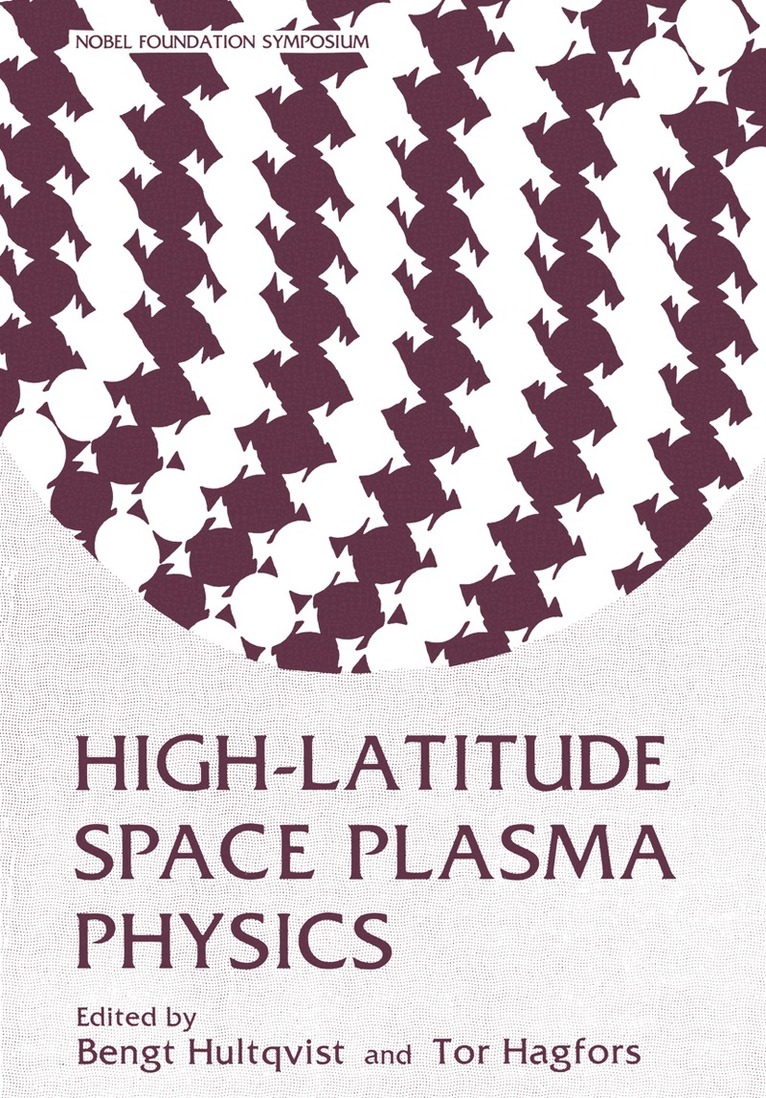
Nobel symposium No. 54 on High Latitude Magnetospheric/Iono- spheric Plasma Physics was organized in Kiruna, Sweden on March 22-25, 1982 by Kiruna Geophysical Institute and EISCAT Scientific Association. Some 50 leading experts from Western Europe, America and USSR were invited to the Symposium. One main purpose of the Symposium was to prepare for the intense European research effort in space plasma physics in the middle 1980's, in which the EISCAT facilities and the Swedish satellite Viking are two of the more important constituents. The prograuune of the symposium was tied to the physics of those regions of near space where EISCAT and Viking are expected to pro- vide important new observational results. This is rather well covered by the t it Ie of these proceedings: High Lat itude Space Plasma Physics. The first two sessions dealt with the physics of the high latitude ionosphere and the third one with how this part of near space is affected by the properties of the solar wind and the interplanetary magnetic field.The remaining three sessions covered fairly extensively the high latitude magnetospheric physics at altitudes of 1-2 earth radii, which is the main scien- tific object of the Viking project. The Prograuune COllDlittee of the Kiruna Nobel Symposium was composed of the following European scientists: P. Bauer (Issy-les-Moulineaux), R. Bostrom (Uppsala), C. G. FalthallDlar (Stockholm), T. Hagfors (Kiruna, Cochairman), o. Holt (Troms,s), B. Hultqvist (Kiruna, Cochairman), H. Kohl (Lindau), J. Oksman (Oulu), H. Rishbeth (Chilton), and L. Stenflo (Ume!).
1 062 kr
Skickas inom 10-15 vardagar
Silicon chemistry was initiated in 1823 by Berzelius who prepared elemental silicon. In many ways silicon was considered a typical opposite of carbon, although the two elements are closely related as to their electronic structure, both having four valence electrons. The properties of their compounds are, however, extreme ly different. Both form extended structures, but in different ways - carbon by covalent carbon-carbon bonds; silicon by polar silicon- -oxygen-silicon bonds. The complex carbon compounds are integral parts of all living matter, plants and animals. The corresponding silicon compounds build up a major part of dead matter, soils and minerals. As recently as twenty years ago the title of this Symposium, "BiOChemistry of Silicon", would have been considered as contradictio in adjecto. However, the development in the field has, during the past fifteen years, been overwhelming and has convinced us that silicon is a necessary element in the life processes, for animals as well as for plants. Interesting therapeutical uses have been suggested, but we have also become increasingly aware of serious occupational diseases - asbestosis and silicosis - and of possible cancerogenic effects. It is our hope that this volume will give some idea about various aspects of silicon compounds which were discussed during the Symposium.
550 kr
Skickas inom 10-15 vardagar
Ladies and Gentlemen, dear guests, It is my great pleasure and privilege to extend our heartiest wel come to you, the participants of this 33rd Nobel symposium. To those of you who have not attended a Nobel symposium before I would like just briefly to explain why Nobel's name is linked to this series of symposia. Alfred Nobel, who died in San Remo in 1896, donated the main part of his fortune to the promotion of in ternational science and culture by establishing annual prizes for outstanding discoveries or contributions within five fields, che mistry, physics, physiology or medicine, literature and peace. The annual awards should be distributed by five corresponding prize committees out of which four in Stockholm and one in Oslo (at that time Sweden and Norway were a united kingdom). The Nobel Foundation was instituted in 1900 with the main function to administer econo mically the Nobel Donation. It has done so very successfully. The Foundation has even been abl~ to beat the inflation and the prizes have steadily increased during the last 20 years. It might interest you to hear that this year's prizes will amount to 681. 000 Sw. crowns each. Due to the favourable financial development and also due to addi tional donations the Nobel Foundation decided to extend its inte rests by promoting the arrangements of symposia, lectures and other international scientific activities.
534 kr
Skickas inom 10-15 vardagar
Nobel Symposium No. 30 on the Physics of the Hot Plasma in the Magnetosphere was held at Kiruna Geophysical Institute, Kiruna, Sweden from April 2-4, 1975. Some 40 leading experts from America, USSR, and Western Europe attended the Symposium. The purpose of the meeting was to review and discuss the physics of the hot plasma in the magnetosphere with special empha sis on unsolved problems on which attention needs to be focused during the International Magnetospheric Study 1976-1978. The field is very extensive and complete coverage of all aspects was of course not possible. The radiation belts proper were, for instance, not covered. There were no formal contributed papers, but much time was devoted to discussion. These proceedings contain all review papers except the one by R.Z. Sagdeev. They are ordered by subject, starting, after the introductory lecture, with the problem of how the plasma enters the magnetosphere and ending with the question of the interaction with the ionosphere. The Organizing Committee for the symposium was composed of the following Swedish scientists: E.-A. Brunberg, C.G. Fa1thammar, I. Hu1then, B. Hu1tqvist (chairman), L. Stenf10, and H. Wilhe1msson. The Symposium was financed by the Nobel Foundation through grants from the Tercentenary Foundation of the Bank of Sweden, by the Swedish Board for Space Activities, and the Royal Swedish Academy of Sciences, which is gratefully acknowledged. Appreciated contributions "in natura" were also received from the town of Kiruna and the LKAB Company.
534 kr
Skickas inom 10-15 vardagar
According to the classical concept of Geoffrey Harris the pituitary gland is controlled by the brain by means of blood-borne chemical messengers produced by central neurons. The recent isolation and structural characterization of several such messengers by Roger Guillemin and Andrew Schally and their collaborators brought the final proof for this hypothesis. This also meant that the extensive knowledge collected in the field of neurobiology now became highly relevant for the endocrinologists. For this reason it was felt important to organize a symposium which brought together experts in the fields of neurobiology and endocrinology. The idea was to focus the attention on neuronal mechanisms, particularly those related to chemical transmission, which may be of importance for the central regulation of hormonal secretion patterns. We would like to express our sincere gratitude to the Nobel Founda tion for supporting the organization of the Nobel Symposium 42 on "Principles of the Central Regulation of the Endocrine System". We would also like to express our thanks to all participants, to Professor Carl-Gustaf Bernhard, Permanent Secretary of the Royal Academy of Sciences, for making the facilities of the Academ- available to us, and to the Symposium secretaries Mrs. Gun Hultgren, Mrs. Lena Persson and Mrs. Ulla-Britt Wedin. It is a pleasure to acknowledge the generous financial support from the Nobel Foundation and its Nobel Symposium Committee through grants from the Tercentenary Foundation of the Bank of Sweden, and from the Swedish Medical Research Council, KABI AB, Stockholm, and ASTRA AB, Sodertalje.
550 kr
Skickas inom 10-15 vardagar
The 55th Nobel Symposium entitled "Genetics of the Immune Response" took place in Saltsjobaden, Sweden, June 15 - 17, 1982. The topic was selected for several reasons, such as the rapid progress in the genetic analysis of immunoglobulin and MHC genes and the elucidation of the mechanism of switch to different immunoglobulin classes and subclasses. The genetic advances formed a basis for discussions of problems relating to regulation of T cell subsets, mechanisms of activation and regulation of B cell differentiation and an analysis of the network hypothesis. The format of the symposium was arranged so as to include two sessions in the morning and two in the afternoon. Each session was introduced by one speaker, followed by free discussion. The intro ductory lectures are included in the proceedings. The participants summarized their contributions to the discussion in written form. In addi tion to the closed sessions, there was one open session at the Karolinska Institute with lectures by Drs. L. Hood, C. Milstein, D. Baltimore, J. Klein and B. Benacerraf, which are not included in these procee din gs. The symposium was sponsored by the Nobel Foundation and its Nobel Symposium Committee through grants from the Tercentenary Fund of the Bank of Sweden and the Knut & Alice Wallenberg Foundation. The Swedish Medical Research Council, the Swedish Cancer Society and the Swedish Ministry of Education and Cultural Affairs also made contri butions.
534 kr
Skickas inom 10-15 vardagar
Since 1965 the Nobel Foundation sponsors, through grants from the Bank of Sweden Tercentenary Fund, Sym posia on subjects which are considered to be of central scientific importance and for which new results of a special interest have been reached. The aim of these Symposia is to bring together, by personal invitation, a limited number of leading scientists from various countries to discuss the current research situation within the field and to define the most urgent problems to be solved. One of the most important fields in modern biome dical research concerns the structure and function of biological membranes. Research on this subject is very active and important scientific contributions appear at an increasing rate. It was therefore considered highly appropriate to devote Nobel Symposium 34 to the struc ture of membranes in order to get an expert summary of what is now known in the field. The Symposium was held at Hotel Billingehus in Skovde (about 150 km from Goteborg), Sweden, from June 7 to 11, 1976. In addition to the grant from the Nobel Foundation financial support was received from the No bel Institute of Chemistry of the Royal Academy of Sciences and from the Science Fund of Wilhelm and Martina Lundgren. The Symposium was attended by some 50 scientists. The papers in this Volume had been distributed in ad vance to all partiCipants. Therefore only summary pre sentations needed be given at the Symposium and the main emphasis was put on discussions.
534 kr
Skickas inom 10-15 vardagar
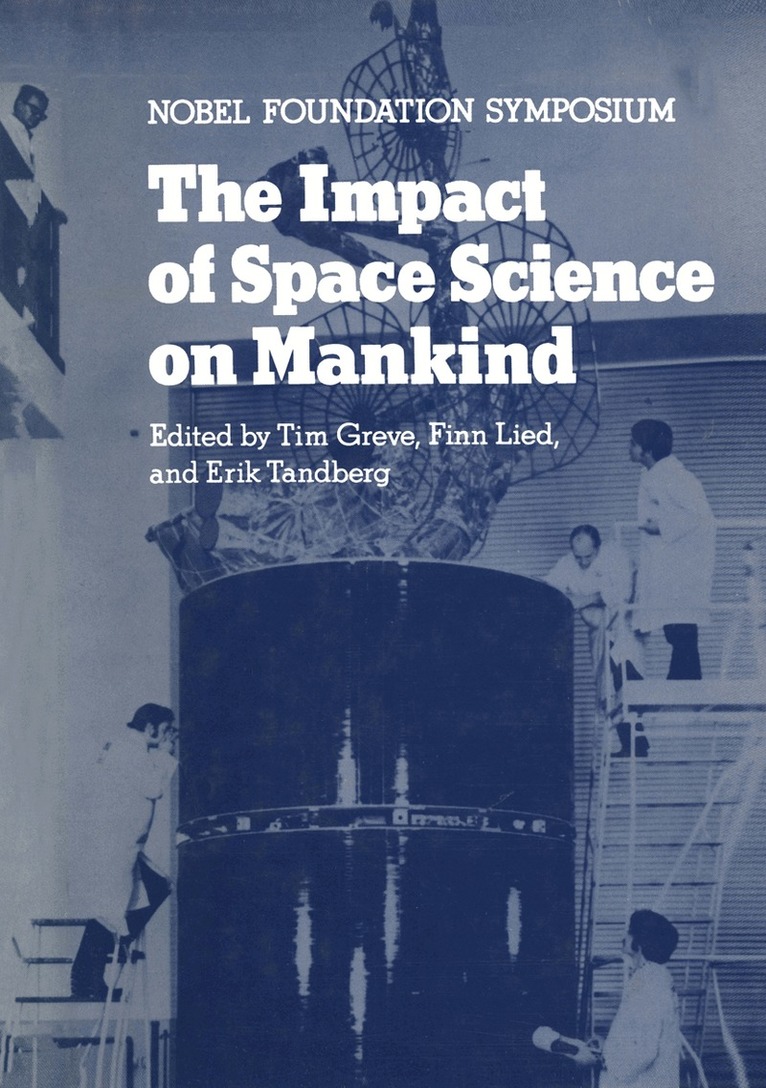
Nobel Symposium No 31 on The Impact of Space Science on Man kind was held at Spatind, Norway, September 7 - 12, 1975. Twenty seven leading experts from the United States, the U. S. S. R. and Western Europe attended the Symposium. Four main subjects were discussed: The Impact of Space Science, introduced by Profe. ssor Reimar Lust; The Impact of Space Communica tion, ihtroduced by Dr Joseph Charyk; The Impact of Earth Resources Exploration from Space, introduced by Dr William Nordberg; and The Impact of Space Assisted Meteorology, introduced by Dr Robert M White. This book contains edited summaries of the papers presented at the Symposium and summaries of the discussions. The Symposium was financed by the Nobel Foundation through grants from the Tercentenary Foundation of the Bank of Sweden and organized by a special committee appointed by the Norwegian Nobel Institute. Tim Greve Finn Lied Erik Tandberg vii CONTENTS The Impact of Space Science 1 R. Lust The Impact of Space Science on Mankind (Discussion) 13 T. R. Larsen (ed. ) Satellite Communications 25 J. V. Charyk The Impact of Space Communication (Discussion) 57 G. Rosenberg (ed. ) The Impact of Earth Resources Exploration from Space 67 W. Nordberg The Impact of Earth Resources Exploration from Space 79 (Discussion) E. Tandberg (ed. ) The Environmental Satellite: What It Means for Man 91 R. M. White The Impact of Space Assisted Meteorology (Discussion) 111 E. Tandberg (ed.
1 062 kr
Skickas inom 10-15 vardagar
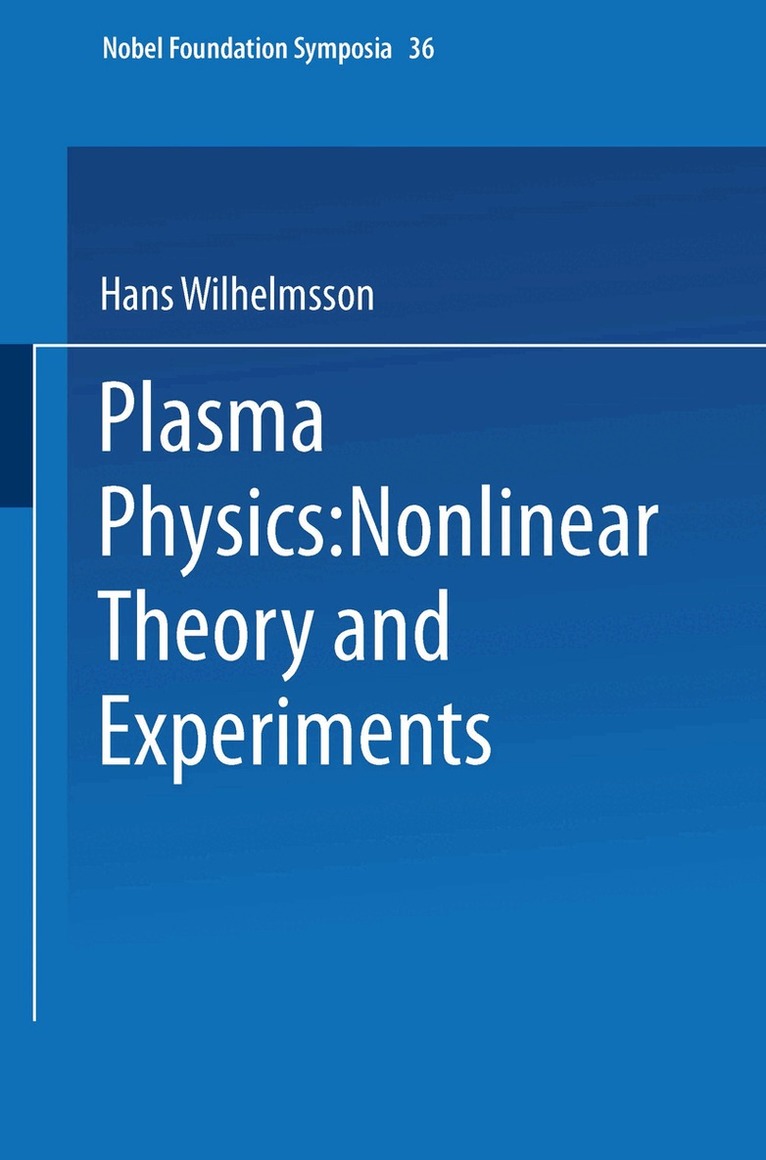
A Nobel Foundation Symposium on the subject: "Nonlinear Effects 1n Plasmas", was held at Aspenasgarden, Lerum, in the G6teborg area of Sweden from June 11-17, 1976. The Symposium was the 36th in the series of Nobel Foundation Symposia, which have been held mainly within the areas of physics, chemistry, medicine, literature and peace prizes. Some 30 leading experts from the United States, Soviet Union, Japan and Western Europe attended the Symposium. The purpose of the Symposium was to discuss various topics in the field of modern plasma physics. We had to select from this vast area of active research a suitable common theme with a great number of new and interesting contributions. We decided to devote our Sym posium in particular to nonlinear effects in plasmas and to emphasize some areas where important developments seemed to be taking place. In recent years basic theory and experiments in nonlinear plasma physics have been stimulated largely by the need for an energy source based on fusion of light nuclei. In many laboratories all over the world attempts are being made to come closer to the final goal by studying magnetically confined plasmas and systems of inertial con finement. Heating of plasmas to fusion temperatures remains a key problem. There are good reasons to believe that the nonlinear effects in plasmas will play an important role for fusion, a long-range program which is still largely in its basic research phase.