Ohio River Valley Series - Böcker
Visar alla böcker i serien Ohio River Valley Series. Handla med fri frakt och snabb leverans.
14 produkter
14 produkter
440 kr
Skickas inom 3-6 vardagar
Since the nineteenth century, the Ohio River has represented a great divide for African Americans. It provided a passage to freedom along the underground railroad, and during the industrial age, it was a boundary between the Jim Crow South and the urban North. The Ohio became known as the "River Jordan," symbolizing the path to the promised land. In the urban centers of Pittsburgh, Cincinnati, Louisville, and Evansville, blacks faced racial hostility from outside their immediate neighborhoods as well as class, color, and cultural fragmentation among themselves. Yet despite these pressures, African Americans were able to create vibrant new communities as former agricultural workers transformed themselves into a new urban working class. Unlike most studies of black urban life, Trotter's work considers several cities and compares their economic conditions, demographic makeup, and political and cultural conditions. Beginning with the arrival of the first blacks in the Ohio Valley, Trotter traces the development of African American urban centers through the civil rights movement and the developments of recent years.
440 kr
Skickas inom 3-6 vardagar
" Originally part of the Rivers of America Series, The Ohio traces the river from its headwaters in Pittsburgh to the point it empties into the Mississippi, nearly a thousand miles and five states later. The Ohio gives us a rare portrait of the frontier era of this region, from backwoods entertainment to learning and the arts. From early exploration to land disputes, clashes with Native American inhabitants to the birth of steamboat travel, the Ohio River comes alive through the retelling of the incidents and anecdotes that shaped its history of what the French called ""the beautiful river.""
492 kr
Skickas inom 3-6 vardagar
Few mementoes remain of what Ohio was like before white people transformed it. The readings in this anthology -- the diaries of a trader and a missionary, the letter of a frontier housewife, the travel account of a wide-eyed young English tourist, the memoir of an escaped slave, and many others -- are eyewitness accounts of the Ohio frontier. They tell what people felt and thought about coming to the very fringes of white civilization -- and what the people thought and did who saw them coming.Each succeeding group of newcomers -- hunters, squatters, traders, land speculators, farmers, missionaries, fresh European immigrants -- established a sense of place and community in the wilderness. Their writings tell of war, death, loneliness, and deprivation, as well as courage, ambition, success, and fun. We can see the lust for the land, the struggle for control of it, the terrors and challenges of the forest, and the determination of white settlers to change the land, tame it, "improve" it.The new Ohio these settlers created had no room for its native inhabitants. Their dispossession is a defining theme of the book. As the forests receded and the farms expanded, the Indians were pressured to move out. By the time the last tribe, the Wyandots, left in 1843, they were regarded as relics of the romantic past, and the frontier experience came to a close.Anyone fascinated by the panorama of America's westward migration will respond to the dramatic stories told in these pages.
655 kr
Skickas inom 3-6 vardagar
America. Enterprise. Metropolis. Cairo. Rome. These are a few of the grandly named villages and towns along the lower Ohio River. The optimism with which early settlers named these towns reveals much about the history of American expansion. Though none became the next great American city, it was not for lack of ambition or entrepreneurial spirit. Why didn't a major city develop on the lower Ohio? What geographic, economic, and cultural factors caused one place to prosper and another to wither? How did Evansville become the largest and most influential city in the region? How did smaller cities such as Owensboro and Paducah succeed?Regardless of how appealing a locale looked on the map, luck, fate, culture, and leadership all helped determine success or failure. The fate of Cairo, Illinois -- on paper an ideal site for a metropolis -- emphasizes the extent to which human decisions, rather than physical landscape, affected a town's prosperity. The location of a canal or railroad terminus, the construction of a factory, or the activities of local boosters all mattered greatly. Darrel Bigham examines these towns and villages from the 1790s, when the first settlements appeared, to the 1920s, when the modern pattern of life associated with automobiles, economic upheaval, and mass culture emerged. Bigham's intimate knowledge of the area offers a true sense of the towns and villages and discloses fundamental truths about the workings of the American dream.
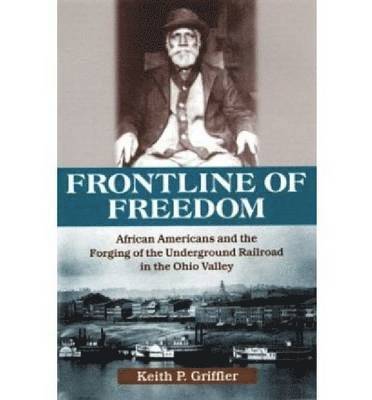
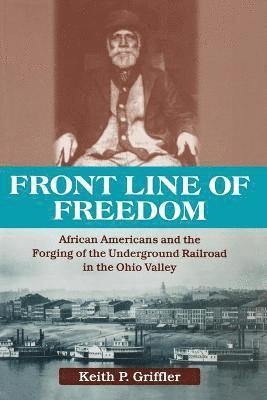
Front Line of Freedom
African Americans and the Forging of the Underground Railroad in the Ohio Valley
Inbunden, Engelska, 2004
798 kr
Skickas inom 3-6 vardagar
The Underground Railroad, an often misunderstood antebellum institution, has been viewed as a simple combination of mainly white "conductors" and black "passengers." Keith P. Griffler takes a new, battlefield-level view of the war against American slavery as he reevaluates one of its front lines: the Ohio River, the longest commercial dividing line between slavery and freedom. In shifting the focus from the much discussed white-led "stations" to the primarily black-led frontline struggle along the Ohio, Griffler reveals for the first time the crucial importance of the freedom movement in the river's port cities and towns. Front Line of Freedom fully examines America's first successful interracial freedom movement, which proved to be as much a struggle to transform the states north of the Ohio as those to its south. In a climate of racial proscription, mob violence, and white hostility, the efforts of Ohio Valley African Americans to establish and maintain communities became inextricably linked to the steady stream of fugitives crossing the region. As Griffler traces the efforts of African Americans to free themselves, Griffler provides a window into the process by which this clandestine network took shape and grew into a powerful force in antebellum America.
584 kr
Skickas inom 3-6 vardagar
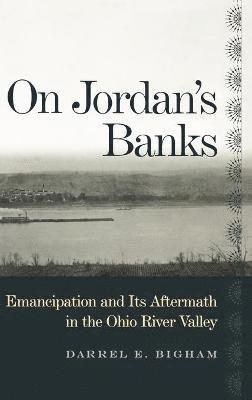
This comprehensive history examines communities on the northern and southern shores of the Ohio River that developed as a consequence of the Civil War. Darrel E. Bigham describes how these communities were shaped by the presence or absence of slavery and how the abolition of slavery and the rise of free labor became the rule of law on both banks. Focusing on this critical period of vast social, economic, and political change, Bigham demonstrates that African Americans on both sides of the river made remarkable advances in spite of being offered little with which to make a meaningful new start. Emancipation brought about the formation of numerous communities that provided shelter and fueled the African American struggle for equality.
440 kr
Skickas inom 3-6 vardagar
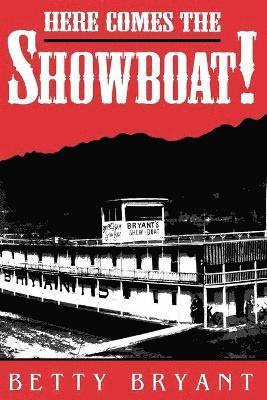
"I was born at the tail end of a unique and delightful era and raised on one of the last showboats to struggle for survival against the devastating crunch of progress.... Our showboat's express purpose was carrying entertainment to hundreds of thousands of river-bottom farmers along our water-bordered frontier." -- from the bookBetty Bryant was a river rat. The Floating Theater was her home, and the river was her back yard. While other children were learning to walk, she was learning to swim. She knew how to set a trotline, gig a frog, catch a crawdad, and strip the mud vein out of a carp by the time she was four. In this colorful memoir, Betty shares her own piece of Americana, the small, family-owned showboat of the early twentieth century. Billy Bryant's Showboat plied the inland waterways of the Ohio River watershed from before the First World War until 1942, bringing a blend of melodrama and vaudeville, laughter and therapeutic tears, into the lives of isolated people in rural communities along the way. Betty made her first professional appearance at the age of six weeks when she played a baby in "Uncle Tom's Cabin." In her twenty years of touring, she acted, danced, and grew up in the tradition of "family entertainment, by families, for families." Here Comes the Showboat! is told with the ageless wonder of a child who loved the showboat and the eager audiences its uniquely American entertainment touched. It is a treasure trove of humorous anecdotes, touching remembrances, and delightful photographs of Betty, the three generations who ran the family showboat, miners, musselers, shantyboaters, farmers, merchants, and actors whose lives intersected along the Ohio River.
428 kr
Skickas inom 3-6 vardagar
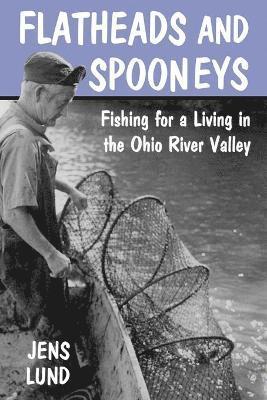
Since the early 1800s, people have made a living fishing and harvesting mussels in the lower Ohio Valley. These river folk are conscious of an occupational and social identity separate from those who earn their living from the land. Sustained by a shared love of the river, deriving joy from the beauty of their chosen environment, and feeling great pride in their ability to subsist on its wild resources and to master the skills required to make a living from it, many still identify with the nomadic houseboat-dwelling subculture that flourished on the river from the early nineteenth century to the 1950s.Today's community of fisherfolk is small and economically marginal, but their activities sustain a complex set of traditional skills and a body of verbal folklore associated with river life. In Flatheads and Spoonies, Jens Lund describes the activities, boats, gear, verbal lore, and sense of identity of the fisher folk of the lower Ohio River Valley and provides historical and ethnobiological background for their way of life. Lund connects the importance of river fish in the diet of inhabitants of the valley to local fishing activities and explores the relationship between river people and those whose culture is primarily land-based, painting a colorful portrait of river fishing and river life.This book offers a look -- historical and ethnographic -- at a little-known aspect of traditional life in the American Midwest, still surviving today despite immense changes in environment, resources, and economic base.
440 kr
Skickas inom 3-6 vardagar
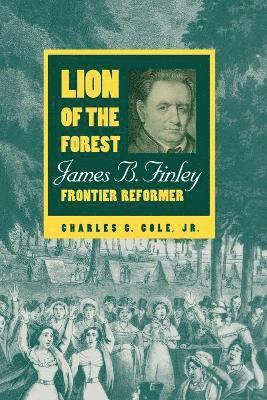
James B. Finley -- circuit rider, missionary, prison reformer, church official -- transformed the Ohio River Valley in the nineteenth century. As a boy he witnessed frontier raids, and as a youth he was known as the "New Market Devil" In adulthood, he traveled the Ohio forests, converting thousands through his thunderous preaching-and he was not abovebringing hecklers under control with his fists.Finley criticized the federal government's Indian policy and his racist contemporaries, contributed to the temperance and prison reform movements, and played a key role in the 1844 division of the Methodist Episcopal Church over the slavery issue.Making extensive use of letters, diaries, and church and public documents, Charles C. Cole, Jr. details Finley's influence on the moral and religious development of the Ohio River area.Cole evaluates Finley's writings and focuses on his ideas. He traces the important changes in Finley's attitudes toward slavery and abolition and provides new insights into his views on politics, economics and religion. For anyone with an interest in early life and religion in the Ohio River Valley, Lion of the Forest supplies a critical but sympathetic portrait of a complex, colorful and controversial figure.
369 kr
Skickas inom 3-6 vardagar
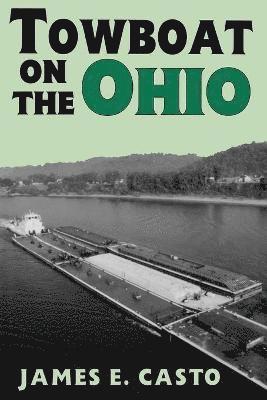
To get a personal look at what it is like to work on the Ohio River, newspaperman James E. Casto spent eight days aboard the Blazer as it traveled the Ohio from Huntington, West Virginia, to Pittsburgh, up the Allegheny and the Mongahela, and then back to Huntington. The Paul G. Blazer, a gleaming white towboat owned and operated by Ashland Oil, pushes a group -- or "tow," as the rivermen call it -- of nine barges on this trip. Along the way, Casto introduces us to Captain Ronnie Davis, pilot Ronnie Burge, engineer Steve Bellomy, the mates, the deckhands, and the cook, as well as the river itself, the life and the beauty that are the Ohio.Interwoven with the narrative of the trip upriver and back is the history of commerce on the Ohio -- of how the flatboats and keelboats gave way to the steamboats and how, in turn, the steamboats were replaced by today's powerful, diesel-powered boats such as the Blazer. Mark Twain wrote that the Mississippi had a new story to tell every day. The same can be said of the Ohio. As engaging as it is informative, Towboat on the Ohio tells one of the many stories of the busy, hardworking Ohio River.
Front Line of Freedom
African Americans and the Forging of the Underground Railroad in the Ohio Valley
Häftad, Engelska, 2010
440 kr
Skickas inom 3-6 vardagar
The Underground Railroad, an often misunderstood antebellum institution, has been viewed as a simple combination of mainly white "conductors" and black "passengers." Keith P. Griffler takes a new, battlefield-level view of the war against American slavery as he reevaluates one of its front lines: the Ohio River, the longest commercial dividing line between slavery and freedom. In shifting the focus from the much discussed white-led "stations" to the primarily black-led frontline struggle along the Ohio, Griffler reveals for the first time the crucial importance of the freedom movement in the river's port cities and towns. Front Line of Freedom fully examines America's first successful interracial freedom movement, which proved to be as much a struggle to transform the states north of the Ohio as those to its south. In a climate of racial proscription, mob violence, and white hostility, the efforts of Ohio Valley African Americans to establish and maintain communities became inextricably linked to the steady stream of fugitives crossing the region. As Griffler traces the efforts of African Americans to free themselves, Griffler provides a window into the process by which this clandestine network took shape and grew into a powerful force in antebellum America.
440 kr
Skickas inom 3-6 vardagar
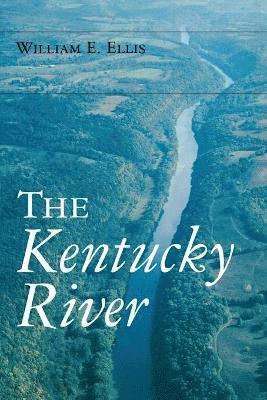
A sweeping cultural history, The Kentucky River reflects the rich tapestry of life along the banks. Flowing with tales of river ghosts and hidden treasures lying in the backwaters, the book records the myths and events the river has spawned. Bill Ellis also celebrates the Kentucky's influence on such figures as writer Wendell Berry and painter Paul Sawyier.Beginning with an intriguing overview of the river's formation and characteristics, Ellis shows how the stream has helped shape Kentucky's environment, economy, and political culture. In centuries past, flotillas of flatboats carried whiskey, pork, and valuable raw materials downriver to markets in Louisiana. Later, the river became a source of entertainment as showboats brought theater, movies, music, and dancing to otherwise isolated communities.The book describes the environmental impact of settlement, logging, mining, and industrialization, developments that have sometimes tainted the Kentucky's mighty waters with silt, sewage, and trash. In the last thirty years, however, Kentuckians have come together in major efforts to clean and preserve the Kentucky's waters and the life along its banks. Advocates for the river achieved a victory in protecting the stunning Kentucky River Palisades between Boonesborough and Frankfort, and efforts continue to preserve the irreplaceable river for future generations.
461 kr
Skickas inom 3-6 vardagar
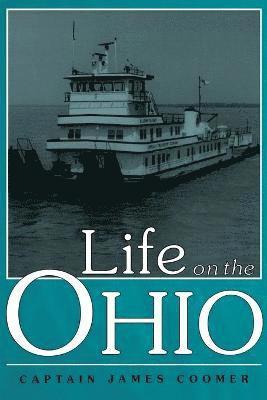
When young James Coomer was offered a job as deckhand on the tugboat Pat Murphy at a dollar an hour, he took his first smell of diesel fuel and knew he was hooked. Life on the Ohio puts the reader in the pilot's seat as Coomer wrestles with runaway barges, navigates through ice and fog, pacifies angry crew members, and contends with the loneliness of working a thirty-day stretch. A modern counterpart to Twain's account of life as a steamboat pilot, Life on the Ohio depicts the working river as it is today with its immense towboats, gigantic locks and dams, and millions of tons of cargo. Coomer captures the movement of the boats and the colorful language of river people. Coomer admits that he stuck at his job not for money but for love of the river and his work. "Over the years I had experiences I wouldn't trade for a barge full of gold," he says, "and that's what this book is all about."
497 kr
Skickas inom 3-6 vardagar
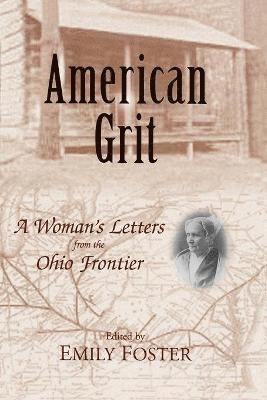
In 1826 thirty-year-old Anna Briggs Bentley, her husband, and their six children left their close Quaker community and the worn-out tobacco farms of Sandy Spring, Maryland, for frontier Ohio. Along the way, Anna sent back home the first of scores of letters she wrote her mother and sisters over the next fifty years as she strove to keep herself and her children in their memories. With Anna's natural talent for storytelling and her unique, female perspective, the letters provide a sustained and vivid account of everyday domestic life on the Ohio frontier. She writes of carving a farm out of the forest, bearing many children, darning and patching the family clothes, standing her ground in religious controversy, nursing wounds and fevers, and burying beloved family and friends. Emily Foster presents these revealing letters of a pioneer woman in a framework of insightful commentary and historical context, with genealogical appendices.