Darrel E. Bigham – författare
Visar alla böcker från författaren Darrel E. Bigham. Handla med fri frakt och snabb leverans.
7 produkter
7 produkter
Inbunden, Engelska, 1987
717 kr
Skickas inom 10-15 vardagar
Despite its growth as an industrial center, Evansville remained heavily influenced by the virulent racism of its antebellum past. Bigham traces the devlopment of a black community, focusing on the origin and nature of the obstacles to equal opportunity. He reveals, however, that black Evansvillians built a richly variegated subculture, relying heavily on their own resources, and occasional assistance from sympathetic whites.
Inbunden, Engelska, 1997
639 kr
Skickas inom 3-6 vardagar
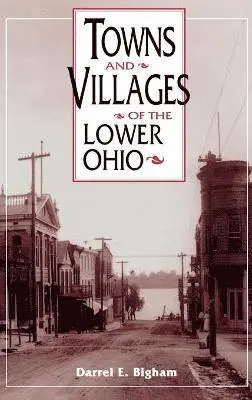
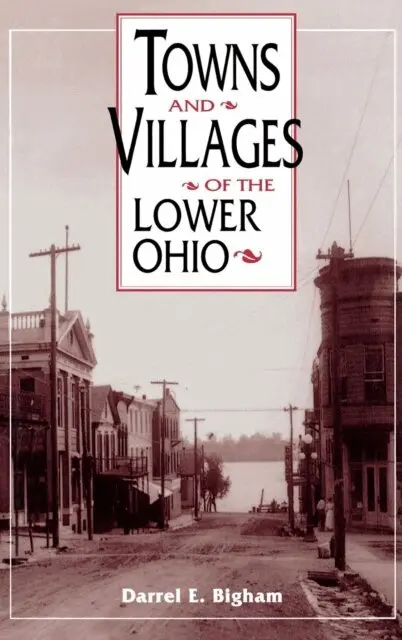
America. Enterprise. Metropolis. Cairo. Rome. These are a few of the grandly named villages and towns along the lower Ohio River. The optimism with which early settlers named these towns reveals much about the history of American expansion. Though none became the next great American city, it was not for lack of ambition or entrepreneurial spirit. Why didn't a major city develop on the lower Ohio? What geographic, economic, and cultural factors caused one place to prosper and another to wither? How did Evansville become the largest and most influential city in the region? How did smaller cities such as Owensboro and Paducah succeed?Regardless of how appealing a locale looked on the map, luck, fate, culture, and leadership all helped determine success or failure. The fate of Cairo, Illinois -- on paper an ideal site for a metropolis -- emphasizes the extent to which human decisions, rather than physical landscape, affected a town's prosperity. The location of a canal or railroad terminus, the construction of a factory, or the activities of local boosters all mattered greatly. Darrel Bigham examines these towns and villages from the 1790s, when the first settlements appeared, to the 1920s, when the modern pattern of life associated with automobiles, economic upheaval, and mass culture emerged. Bigham's intimate knowledge of the area offers a true sense of the towns and villages and discloses fundamental truths about the workings of the American dream.
Inbunden, Engelska, 2005
570 kr
Skickas inom 3-6 vardagar
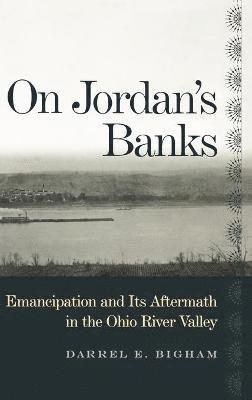
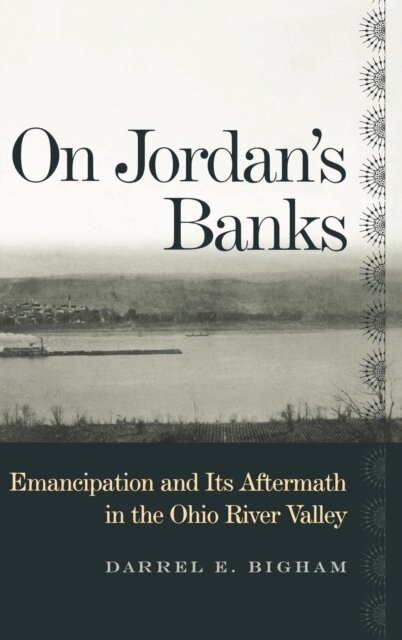
This comprehensive history examines communities on the northern and southern shores of the Ohio River that developed as a consequence of the Civil War. Darrel E. Bigham describes how these communities were shaped by the presence or absence of slavery and how the abolition of slavery and the rise of free labor became the rule of law on both banks. Focusing on this critical period of vast social, economic, and political change, Bigham demonstrates that African Americans on both sides of the river made remarkable advances in spite of being offered little with which to make a meaningful new start. Emancipation brought about the formation of numerous communities that provided shelter and fueled the African American struggle for equality.
E-bok
PDF, Engelska, 2014664 kr
Läs direkt efter köp
The story of the Ohio River and its settlements are an integral part of American history, particularly during the country's westward expansion. The vibrant African American communities along the Ohio's banks, however, have rarely been studied in depth. Blacks have lived in the Ohio River Valley since the late eighteenth century, and since the river divided the free labor North and the slave labor South, black communities faced unique challenges.In On Jordan's Banks, Darrel E. Bigham examines the lives of African Americans in the counties along the northern and southern banks of the Ohio River both before and in the years directly following the Civil War. Gleaning material from biographies and primary sources written as early as the 1860s, as well as public records, Bigham separates historical truth from the legends that grew up surrounding these communities.The Ohio River may have separated freedom and slavery, but it was not a barrier to the racial prejudice in the region. Bigham compares early black communities on the northern shore with their southern counterparts, noting that many similarities existed despite the fact that the Roebling Suspension Bridge, constructed in 1866 at Cincinnati, was the first bridge to join the shores. Free blacks in the lower Midwest had difficulty finding employment and adequate housing. Education for their children was severely restricted if not completely forbidden, and blacks could neither vote nor testify against whites in court. Indiana and Illinois passed laws to prevent black migrants from settling within their borders, and blacks already living in those states were pressured to leave.Despite these challenges, black river communities continued to thrive during slavery, after emancipation, and throughout the Jim Crow era. Families were established despite forced separations and the lack of legally recognized marriages. Blacks were subjected to intimidation and violence on both shores and were denied even the most basic state-supported services. As a result, communities were left to devise their own strategies for preventing homelessness, disease, and unemployment.Bigham chronicles the lives of blacks in small river towns and urban centers alike and shows how family, community, and education were central to their development as free citizens. These local histories and life stories are an important part of understanding the evolution of race relations in a critical American region. On Jordan's Banks documents the developing patterns of employment, housing, education, and religious and cultural life that would later shape African American communities during the Jim Crow era and well into the twentieth century.
E-bok
PDF, Engelska, 2014597 kr
Läs direkt efter köp
America. Enterprise. Metropolis. Cairo. Rome. These are a few of the grandly named villages and towns along the lower Ohio River. The optimism with which early settlers named these towns reveals much about the history of American expansion. Though none became the next great American city, it was not for lack of ambition or entrepreneurial spirit. Why didn't a major city develop on the lower Ohio? What geographic, economic, and cultural factors caused one place to prosper and another to wither? How did Evansville become the largest and most influential city in the region? How did smaller cities such as Owensboro and Paducah succeed?Regardless of how appealing a locale looked on the map, luck, fate, culture, and leadership all helped determine success or failure. The fate of Cairo, Illinois-on paper an ideal site for a metropolis-emphasizes the extent to which human decisions, rather than physical landscape, affected a town's prosperity. The location of a canal or railroad terminus, the construction of a factory, or the activities of local boosters all mattered greatly. Darrel Bigham examines these towns and villages from the 1790s, when the first settlements appeared, to the 1920s, when the modern pattern of life associated with automobiles, economic upheaval, and mass culture emerged. Bigham's intimate knowledge of the area offers a true sense of the towns and villages and discloses fundamental truths about the workings of the American dream.
Inbunden, Engelska, 1999
295 kr
Skickas inom 5-8 vardagar
Inbunden, Engelska, 2005
273 kr
Skickas inom 5-8 vardagar