Other Voice in Early Modern Europe (CHUP) – Serie
Visar alla böcker i serien Other Voice in Early Modern Europe (CHUP). Handla med fri frakt och snabb leverans.
2 produkter
2 produkter
345 kr
Skickas inom 7-10 vardagar
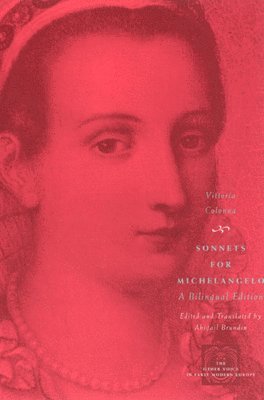
The most published and lauded woman writer of early sixteenth-century Italy, Vittoria Colonna (1490-1547) in effect defined what was the "acceptable" face of female authorship for her time. Hailed by the generation's leading male literati as an equal, she was praised both for her impeccable command of Petrarchan style and for the unimpeachable chastity and piety of the persona she promoted through her literary works. This book presents for the very first time a body of Colonna's verse that reveals much about her poetic aims and outlook, while also casting new light on one of the most famous friendships of the age, Sonnets for Michelangelo, originally presented in manuscript form to her close friend. Michelangelo Buonarroti as a personal gift, illustrates the striking beauty and originality of Colonna's mature lyric voice and distinguishes her as a poetic innovator who would be widely imitated by female writers in Italy and Europe in the sixteenth century. After three centuries of relative negleet, this new edition promises to restore Colonna to her rightful place at the forefront of female cultural production in the Renaissance.
323 kr
Skickas inom 7-10 vardagar
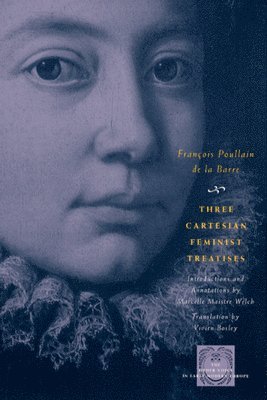
One of the most radical feminist theorists in Europe before the 19th century, Francois Poullain de la Barre (1647-1723) was a man way ahead of his time. Applying Cartesian principles to "the Woman Question", Poullain demonstrated by rational deduction that the supposedly "self-evident" inequality of the sexes was nothing more than unfounded prejudice. Poullain published three books (anonymously) on this topic in the 1670s, all of which are included in English translation in this volume. In "On the Equality of the Two Sexes" he argued that the supposedly "natural" inferiority of women was culturally produced. To help women recognize and combat this prejudice, Poullain advocated a modern, enlightened feminine education in "On the Education of Ladies". Finally, since his contemporaries largely ignored Poullain's writings, he offered a rebutal to his own arguments in "On the Excellence of Men" - a rebuttal that he promptly countered, strenghtening his original position. A truly modern feminist, Poullain laid the intellectual groundwork for the women's liberation movement centuries before it happened.