Oxford Guides to the World's Languages - Böcker
Visar alla böcker i serien Oxford Guides to the World's Languages. Handla med fri frakt och snabb leverans.
9 produkter
9 produkter
2 268 kr
Skickas inom 5-8 vardagar
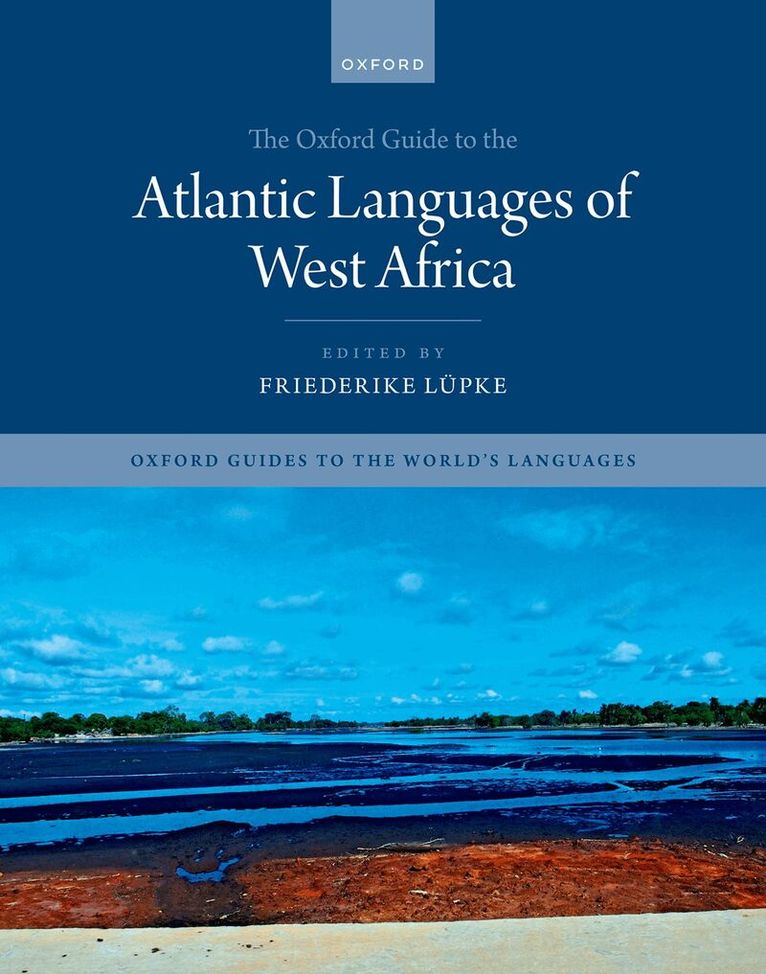
This volume presents the first book-length overview of the Atlantic languages, a small family of languages spoken mainly on the Atlantic coast of West Africa. Languages in this area have been used in diverse multilingual societies with intense language contact for the whole of their known history, and their genealogical relatedness and the impact of language contact on their lexicon and grammar have been widely debated. The book is divided into four parts. The first provides an introduction to language ecologies in the area and includes two accounts of the genealogical classification of Atlantic languages. Chapters in the second part offer grammatical overviews of individual languages, including the most important non-Atlantic contact languages (Casamance Creole and Mandinka), while the third part explores Atlantic languages from a typological perspective, with chapters that explore formal and semantic aspects of their nominal classification systems, nominalization strategies, their rich system of verbal extensions, and the stem-initial consonant mutation that is attested in a subset of languages. The final part of the book investigates Atlantic languages in their social environments, including the creation of creole identities, secret languages, Ajami writing practices, language acquisition, the spread and use of Fula as a lingua franca, digital language practices, and language ideologies. The volume is an essential tool for linguists interested in the languages of West Africa, language history and classification, patterns of language use in Atlantic societies, and typology and language contact more broadly.
2 799 kr
Skickas inom 7-10 vardagar
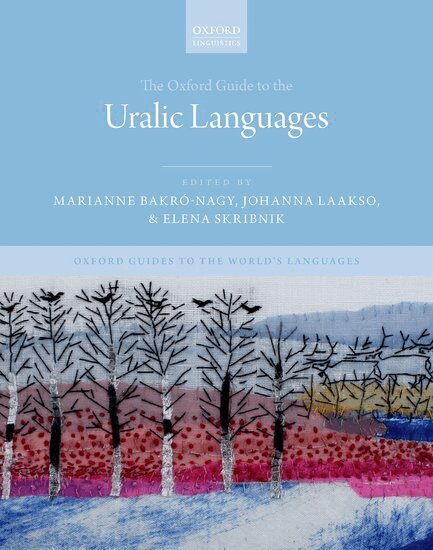
This volume offers the most comprehensive and wide-ranging treatment available today of the Uralic language family, a group of languages spoken in northern Eurasia. While there is a long history of research into these languages, much of it has been conducted within several disparate national traditions; studies of certain languages and topics are somewhat limited and in many cases outdated. The Oxford Guide to the Uralic Languages brings together leading scholars and junior researchers to offer a comprehensive and up-to-date account of the internal relations and diversity of the Uralic language family, including the outlines of its historical development, and the contacts between Uralic and other languages of Eurasia. The book is divided into three parts. Part I presents the origins and development of the Uralic languages: the initial chapters examine reconstructed Proto-Uralic and its divergence, while later chapters provide surveys of the history and codification of the three Uralic nation-state languages (Hungarian, Finnish, and Estonian) and the Uralic minority languages from Baltic Europe to Siberia. This part also explores questions of endangerment, revitalization, and language policy. The chapters in Part II offer individual structural overviews of the Uralic languages, including a number of understudied minority languages for which no detailed description in English has previously been available. The final part of the book provides cross-Uralic comparative and typological case studies of a range of issues in phonology, morphology, syntax, and the lexicon. The chapters explore a number of topics, such as information structure and clause combining, that have traditionally received very little attention in Uralic studies. The volume will be an essential reference for students and researchers specializing in the Uralic languages and for typologists and comparative linguists more broadly.
3 027 kr
Skickas inom 5-8 vardagar
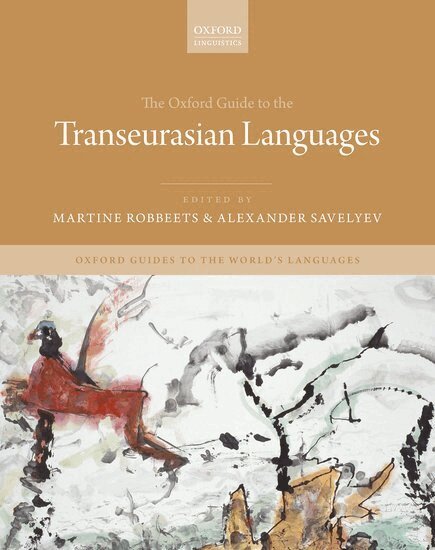
The Oxford Guide to the Transeurasian Languages provides a comprehensive account of the Transeurasian languages, and is the first major reference work in the field since 1965. The term 'Transeurasian' refers to a large group of geographically adjacent languages that includes five uncontroversial linguistic families: Japonic, Koreanic, Tungusic, Mongolic, and Turkic. The historical connection between these languages, however, constitutes one of the most debated issues in historical comparative linguistics. In the present book, a team of leading international scholars in the field take a balanced approach to this controversy, integrating different theoretical frameworks, combining both functional and formal linguistics, and showing that genealogical and areal approaches are in fact compatible with one another. The volume is divided into five parts. Part I deals with the historical sources and periodization of the Transeurasian languages and their classification and typology. In Part II, chapters provide individual structural overviews of the Transeurasian languages and the linguistic subgroups that they belong to, while Part III explores Transeurasian phonology, morphology, syntax, lexis, and semantics from a comparative perspective. Part IV offers a range of areal and genealogical explanations for the correlations observed in the preceding parts. Finally, Part V combines archaeological, genetic, and anthropological perspectives on the identity of speakers of Transeurasian languages. The Oxford Guide to the Transeurasian Languages will be an indispensable resource for specialists in Japonic, Koreanic, Tungusic, Mongolic, and Turkic languages and for anyone with an interest in Transeurasian and comparative linguistics more broadly.
2 320 kr
Skickas inom 5-8 vardagar
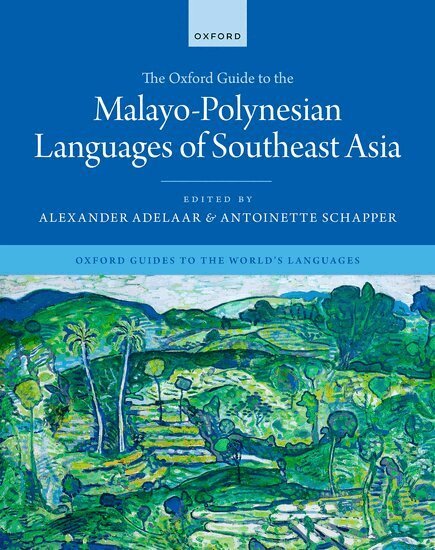
This volume presents the most wide-ranging treatment available today of the Malayo-Polynesian languages of Southeast Asia and their outliers, a group of more than 800 languages belonging to the wider Austronesian family. It brings together leading scholars and junior researchers to offer a comprehensive account of the historical relations, typological diversity, and varied sociolinguistic issues that characterize this group of languages, including current debates in their prehistories and descriptive priorities for future study.The book is divided into four parts. Part I deals with historical linguistics, including discussion of human genetics, archaeology, and cultural history. Chapters in Part II explore language contact between Malayo-Polynesian and unrelated languages, as well as sociolinguistic issues such as multilingualism, language policy, and language endangerment. Part III provides detailed overviews of the different groupings of Malayo-Polynesian languages, while Part IV offers in-depth studies of important typological features across the whole linguistic area. The Oxford Guide to the Malayo-Polynesian Languages of Southeast Asia will be an essential reference for students and researchers specializing in Austronesian languages and for typologists and comparative linguists more broadly.
3 306 kr
Skickas inom 5-8 vardagar
This volume brings together leading scholars from Africa, Europe, the Americas and beyond to provide a detailed account of the languages of the Bantu family, which cover an area from Cameroon and Kenya in the north to South Africa in the south. The Bantu family is part of the Niger-Congo phylum and one of the world's biggest language groups, comprising around 500 languages. The family includes major languages with large numbers of speakers, such as Zulu, Kinyarwanda, and Swahili, the most widely spoken and taught African language, as well as many community languages and several endangered languages. Bantu languages feature prominently in the complex and multilingual language ecologies that are characteristic of the linguistic situation in much of Africa and they provide rich evidence for the study of theoretical and comparative linguistics, language contact, and language change. They play an important role in education, commerce, culture, and artistic expression, in the media and public discourse, in governance and social justice, and are central to the future of the continent and the well-being of its communities. The first part of The Oxford Guide to the Bantu Languages provides background and context, with chapters exploring the history of research in the field; language and prehistory in Bantu-speaking Africa; and typology and variation. Chapters in the second part offer broad comparative overviews of Bantu phonology, morphology, syntax, semantics and pragmatics, socio- and applied linguistics, before Parts III - VII cover more specific topics in Bantu linguistics across a variety of subfields, ranging from structural issues such as the augment and melodic tone to historical and sociolinguistic topics such as Bantu languages in the diaspora and language policy and standardization. The chapters in the final part offer individual structural overviews of a range of languages from across the Bantu-speaking area. The book will be an essential resource for students and researchers specializing in the Bantu languages and for typologists and comparative linguists more broadly.
2 440 kr
Skickas inom 5-8 vardagar
The Oxford Guide to Australian Languages is a wide-ranging reference work that explores the more than 550 traditional and new Indigenous languages of Australia. Australian languages have long played an important role in diachronic and synchronic linguistics and are a vital testing ground for linguistic theory. Until now, however, there has been no comprehensive and accessible guide to the their vast linguistic diversity. This volume fills that gap, bringing together leading scholars and junior researchers to provide an up-to-date guide to all aspects of the languages of Australia. The chapters in the book explore typology, documentation, and classification; linguistic structures from phonology to pragmatics and discourse; sociolinguistics and language variation; and language in the community. The final part offers grammatical sketches of a selection of languages, sub-groups, and families. At a time when the number of living Australian languages is significantly reduced even compared to twenty year ago, this volume establishes priorities for future linguistic research and contributes to the language expansion and revitalization efforts that are underway.
3 301 kr
Kommande
This volume presents a wide-ranging survey of the Papuan languages, spoken on the island of New Guinea and its surroundings. They make up around 12% of the world's languages, with a level of linguistic diversity comparable to the vast Eurasian zone concentrated into just 1% of the world's land area. This is true whether we count individual languages (around 890), families and isolates (around 95), or elements of structural diversity: many linguistic phenomena were first reported or are still only attested in this region. Following a detailed introduction by the editors, The Oxford Guide to the Papuan Languages is divided into four parts. The first provides structural descriptions of 23 languages from across the region, many of which have never previously been described. Part II includes typological surveys of features that are of particular interest in Papuan languages, from tone to valency change, and from information structure to kinship terminology. Chapters in Part III explore language in its cultural context, with topics including multilingualism, sign languages, and language shift, while Part IV focuses on historical and contact studies. The volume will be a crucial reference not only for scholars of Papuan languages but also for anyone interested in the human history of this fascinating and little-known part of the world.
2 687 kr
Skickas inom 5-8 vardagar
This volume presents the most comprehensive overview in English of the languages of the Central Andes, spoken primarily in Peru and Bolivia. Efforts to describe and document Central Andean languages, as well as philological research into colonial documentation and texts, have blossomed in recent decades; here, the major protagonists and drivers of these exciting developments are given the opportunity to showcase their research achievements in one volume. Following an introductory part providing background information on the region and its cultural and linguistic diversity, chapters in Part II provide extensive descriptions of individual languages that not only reflect current knowledge, but also add to our understanding of their phonological and grammatical structures. The third part offers substantial typological comparative analyses that reflect the pivotal role Central Andean languages have played in investigations into topics of current theoretical interest, such as the notions of linguistic complexity and evidentiality. Part IV explores topics relating to the history of the language from early prehistory to the colonial period, while chapters in the final part shed light on the cultural, geographic, and sociolinguistic settings in which Central Andean languages are spoken, and discuss language contact situations and language ideologies. The Oxford Guide to the Languages of the Central Andes will be of interest not only to students and researchers specializing in Andean languages, but also to typologists, comparative linguists, and linguistic anthropologists.
3 357 kr
Skickas inom 5-8 vardagar
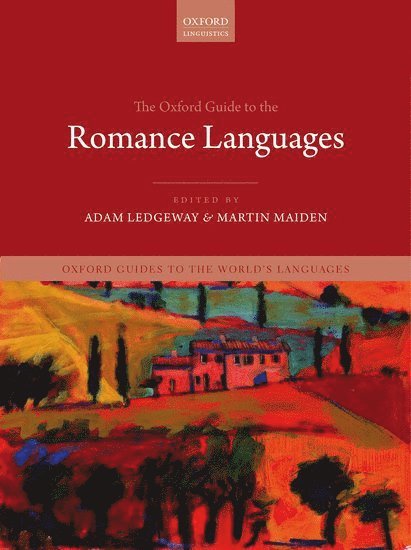
The Oxford Guide to the Romance Languages is the most exhaustive treatment of the Romance languages available today. Leading international scholars adopt a variety of theoretical frameworks and approaches to offer a detailed structural examination of all the individual Romance varieties and Romance-speaking areas, including standard, non-standard, dialectal, and regional varieties of the Old and New Worlds. The book also offers a comprehensive comparative account of major topics, issues, and case studies across different areas of the grammar of the Romance languages.The volume is organized into 10 thematic parts: Parts 1 and 2 deal with the making of the Romance languages and their typology and classification, respectively; Part 3 is devoted to individual structural overviews of Romance languages, dialects, and linguistic areas, while Part 4 provides comparative overviews of Romance phonology, morphology, syntax, semantics and pragmatics, and sociolinguistics. Chapters in Parts 5-9 examine issues in Romance phonology, morphology, syntax, syntax and semantics, and pragmatics and discourse, respectively, while the final part contains case studies of topics in the nominal group, verbal group, and the clause. The book will be an essential resource for both Romance specialists and everyone with an interest in Indo-European and comparative linguistics.