Oxford Handbooks in Religion and Theology – serie
Visar alla böcker i serien Oxford Handbooks in Religion and Theology. Handla med fri frakt och snabb leverans.
3 produkter
3 produkter
2 330 kr
Skickas inom 5-8 vardagar
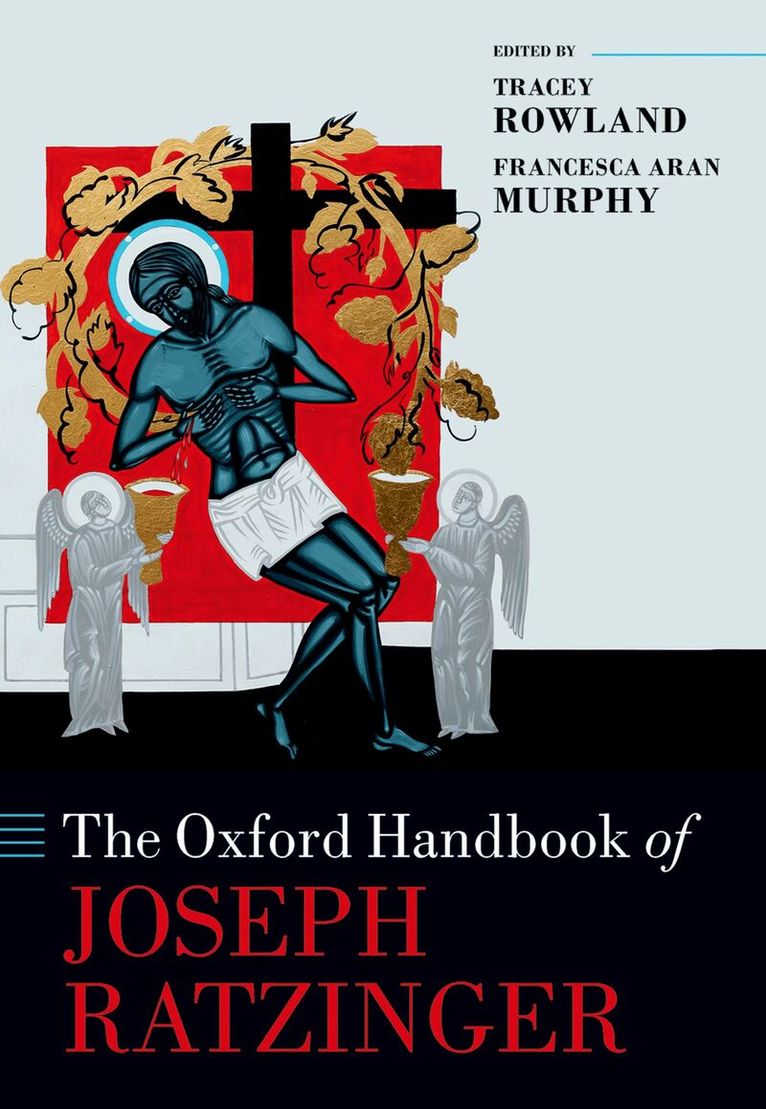
Since his earliest contributions to Catholic theology, Joseph Ratzinger has been a subject of considerable scholarly interest. His work, spanning decades of theological inquiry, has shaped contemporary thought on faith, reason, and ecclesiology. From his beginnings as a theology professor to his role as a theological advisor during the Second Vatican Council, Ratzinger consistently demonstrated a commitment to doctrinal clarity and rigorous theological reflection, shaping his intellectual trajectory. His tenure as Prefect of the Congregation for the Doctrine of the Faith under John Paul II further cemented his authority, and his writings as Benedict XVI offered a rich corpus of theological insight. Ratzinger's oeuvre is situated within that of the circle of Communio theologians, whose approach to theology is strongly Christocentric and biblical. St Augustine profoundly shaped Ratzinger's ecclesiology and his reflections on the relationship between faith and reason, a legacy further reinforced by the influence of Ratzinger's early mentors and intellectual heroes, many of whom were students of Augustine and Bonaventure. The Oxford Handbook of Joseph Ratzinger provides a comprehensive exploration of his contributions, bringing together scholars from across the Anglosphere, Africa, and Europe. Contributors include theologians, journalists, and former colleagues from the Congregation for the Doctrine of the Faith, offering perspectives on fundamental theology, moral theology, sacramental theology, scriptural exegesis, liturgical theology, theological anthropology, and ecclesiology. With chapters spanning a range of theological disciplines, this Handbook offers a definitive reference on the theological thought of Joseph Ratzinger, illuminating his enduring influence within the Catholic tradition.
2 563 kr
Skickas inom 7-10 vardagar
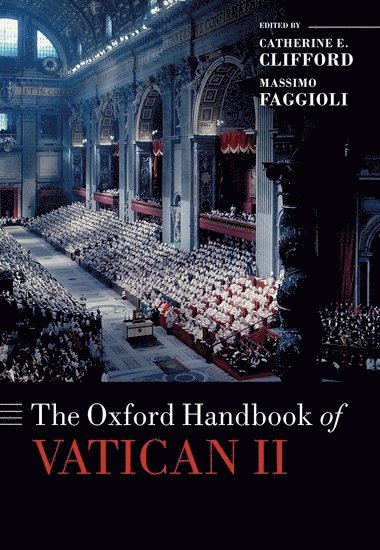
The Oxford Handbook of Vatican II is a rich source of information and reflections on many aspects of the Second Vatican Council (1962-1965), one of the most significant religious events of the twentieth century. The chapters introduce readers to the historical context and outstanding features of the conciliar event, and its principal teachings on Scripture and Tradition, the church, liturgy, religious liberty, ecumenism, interreligious dialogue, church-world relations, and mission. Consideration is given to some neglected aspects of the council, including: the forgotten papal speeches that lay out its fundamental orientation and ought to guide its interpretation; the presence and contributions of women; and the non-reception of the council among Catholic traditionalists. Ecumenical scholars reflect on the significance of Vatican II for the life of other Christian churches and the search for Christian unity; others examine Catholic dialogue with other religious traditions. Surveying the diverse receptions of the council in the perspective of a world church, chapters focusing on Asia, Africa, Latin America, North America, Oceania, and Europe reflect on the interpretation and influence of the council and its teaching on the life of the church in diverse cultural contexts. This Handbook will serve as a valuable guide to one of the most important events and bodies of Catholic teaching since the Protestant Reformation and the Council of Trent in the sixteenth century, to the interpretation of the council's teaching, and to its continuing role in guiding the life of the church in the twenty-first century..
2 501 kr
Skickas inom 5-8 vardagar
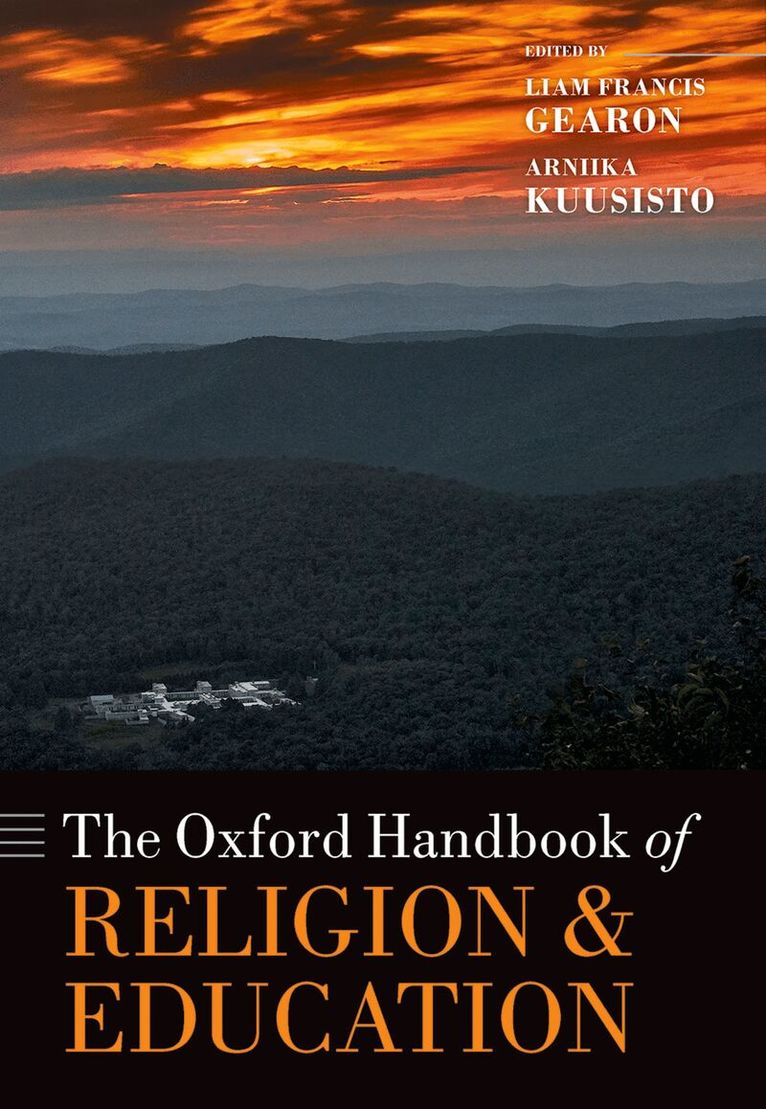
The Oxford Handbook of Religion and Education offers a multi-disciplinary work of scholarship and research highlighting the global significance of a critical interface of cultural and social, political, and theological importance. Drawing on historical perspective and contemporary reflection, the collection provides a uniquely transformative analysis of why the interface of religion and education is of such critical significance. With contributions from some of the leading thinkers in the field, this Handbook presents a cumulatively powerful argument to reassess the complexities of the intersection of religion and education. With ambitious and yet accessible intellectual engagements, the Handbook here furthers a central thesis: that the interface of religion and education is not merely a matter of arcane disputation about a domain of ancient origin or a rudimentary matter of formal educational process, but a vibrant domain of critical contestation fundamental to knowing, understanding, and living in the modern world.