Oxford Studies in Modern Legal History – serie
Visar alla böcker i serien Oxford Studies in Modern Legal History. Handla med fri frakt och snabb leverans.
12 produkter
12 produkter
2 303 kr
Skickas inom 5-8 vardagar
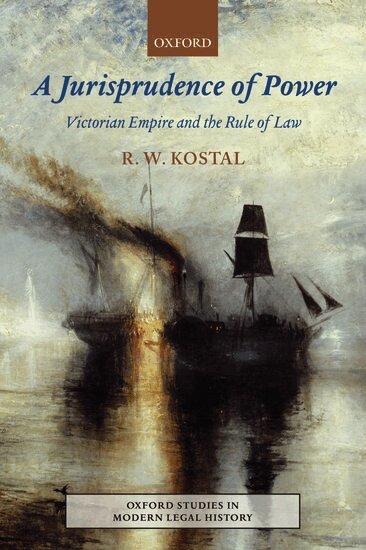
A Jurisprudence of Power concerns the brutal suppression under martial law of the Jamaica uprising of 1865, and the explosive debate and litigation these events spawned in England. The book explores the centrality of legal ideas and institutions in English politics, and of political ideas that give rise to great questions of English law. It documents how the world's most powerful and articulate political elite struggled with fundamental questions about law, morality, and power. Can a constitutional state rule a sprawling empire without breaking faith with the rule of law? Can it contend with the violent resistance of subjugated peoples without corrupting the integrity of its legal and political ideals? The book addresses these questions as it reconstructs the most prolonged and important conflict over martial law and the rule of law in the history of England in the nineteenth century.
2 520 kr
Skickas inom 7-10 vardagar
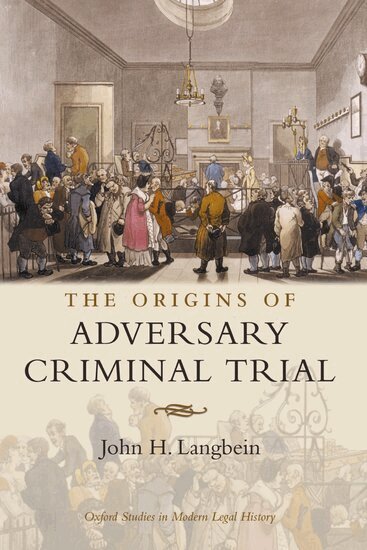
The modern adversarial criminal trial emerged from the punitive and procedural upheaval in the criminal law of the first half of the nineteenth century. The campaign against capital punishment, which marked the century's early decades, stimulated procedural reform, including the enactment in 1836 of the Prisoners' Counsel Act. The 1836 Act enabled defence counsel for the first time to address the jury in felony trials. It generated a unique debate in Parliament, the press and the legal professions on the merits and dangers of advocacy. This book examines the debate and the practical implications of procedural reform for the conduct of criminal trials. The topics discussed include the increasing sophistication of prosecution and defence advocacy, the beginnings of modern professional ethics and the conscious rationalisation of adversary procedure as the best means to discover the truth. This is the first scholarly work to analyse the practice of advocacy and to identify its significance for the administration of justice. It includes case studies of four major criminal trials which demonstrate the interrelationships between advocacy and procedure in the making of the adversarial criminal trial. This is the first title of a new series, Oxford Studies in Modern Legal History, which, under the general editorship of Professor Brian Simpson, will publish outstanding monographs on legal history covering the period 1750 onwards.
1 697 kr
Skickas inom 5-8 vardagar
Water resources were central to England's precocious economic development in the thirteenth and sixteenth centuries, and then again in the industrial, transport, and urban revolutions of the late eighteenth and early nineteenth centuries. Each of these periods saw a great deal of legal conflict over water rights, often between domestic, agricultural, and manufacturing interests competing for access to flowing water. From 1750 the common-law courts developed a large but unstable body of legal doctrine, specifying strong property rights in flowing water attached to riparian possession, and also limited rights to surface and underground waters. The new water doctrines were built from older concepts of common goods and the natural rights of ownership, deriving from Roman and Civilian law, together with the English sources of Bracton and Blackstone. Water law is one of the most Romanesque parts of English law, demonstrating the extent to which Common and Civilian law have commingled. Water law stands as a refutation of the still-common belief that English and European law parted ways irreversibly in the twelfth century. Getzler also describes the economic as well as the legal history of water use from early times, and examines the classical problem of the relationship between law and economic development. He suggests that water law was shaped both by the impact of technological innovations and by economic ideology, but above all by legalism.
703 kr
Skickas inom 5-8 vardagar
Water resources were central to England's precocious economic development in the thirteenth and sixteenth centuries, and then again in the industrial, transport, and urban revolutions of the late eighteenth and early nineteenth centuries. Each of these periods saw a great deal of legal conflict over water rights, often between domestic, agricultural, and manufacturing interests competing for access to flowing water. From 1750 the common-law courts developed a large but unstable body of legal doctrine, specifying strong property rights in flowing water attached to riparian possession, and also limited rights to surface and underground waters. The new water doctrines were built from older concepts of common goods and the natural rights of ownership, deriving from Roman and Civilian law, together with the English sources of Bracton and Blackstone. Water law is one of the most Romanesque parts of English law, demonstrating the extent to which Common and Civilian law have commingled. Water law stands as a refutation of the still-common belief that English and European law parted ways irreversibly in the twelfth century. Getzler also describes the economic as well as the legal history of water use from early times, and examines the classical problem of the relationship between law and economic development. He suggests that water law was shaped both by the impact of technological innovations and by economic ideology, but above all by legalism.
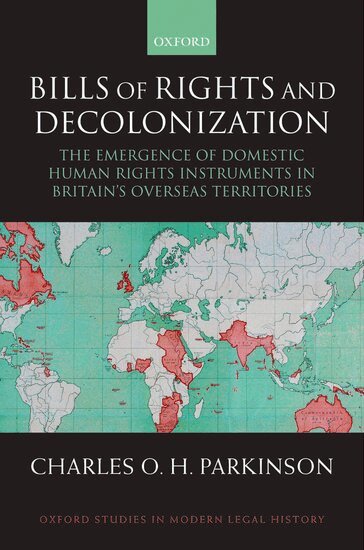
Bills of Rights and Decolonization
The Emergence of Domestic Human Rights Instruments in Britain's Overseas Territories
Inbunden, Engelska, 2007
2 169 kr
Skickas inom 5-8 vardagar
Bills of Rights and Decolonization analyzes the British Government's radical change in policy during the late 1950s on the use of bills of rights in colonial territories nearing independence. More broadly it explores the political dimensions of securing the protection of human rights at independence and the peaceful transfer of power through constitutional means. This book fills a major gap in the literature on British and Commonwealth law, history, and politics by documenting how bills of rights became commonplace in Britain's former overseas territories. It provides a detailed empirical account of the origins of the bills of rights in Britain's former colonial territories in Africa, the West Indies and South East Asia as well as in the Atlantic and Pacific Oceans. It sheds light on the development of legal systems at the point of gaining independence and raises questions about the colonial influence on the British legal establishment's change in attitude towards bills of rights in the late twentieth century. It presents an alternative perspective on the end of Empire by focusing upon one aspect of constitutional decolonization and the importance of the local legal culture in determining each dependency's constitutional settlement and provides a series of empirical case studies on the incorporation of human rights instruments into domestic constitutions when negotiated between a state and its dependencies. More generally this book highlights Britain's human rights legacy to its former Empire, and traces the genesis of the bills of rights of over thirty nations from the Commonwealth.
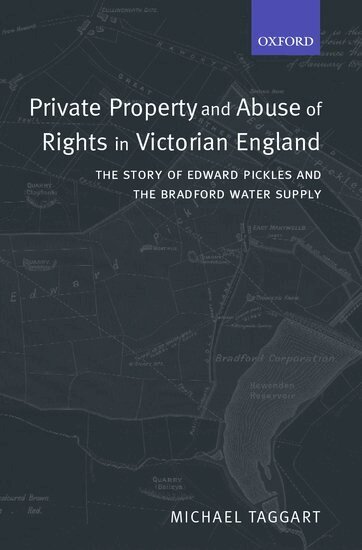
Private Property and Abuse of Rights in Victorian England
The Story of Edward Pickles and the Bradford Water Supply
Inbunden, Engelska, 2002
1 792 kr
Skickas inom 5-8 vardagar
The leading case of The Mayor, Alderman and Burgesses of the Borough of Bradford v Pickles was the first to establish the principle that it is not unlawful for a property owner to exercise his or her property rights maliciously and to the detriment of others or the public interest. Though controversial at the time, today it is often invisible and taken for granted. This book explores why the common law, in contrast to civil law systems, developed in this way.During the industrial revolution, the town of Bradford, and with it the demand for water for industrial and domestic purposes, grew rapidly. The first part of the book explores, through an analysis of correspondence, records, and newspaper reports, the development of the Bradford water supply and the genesis of the dispute that ultimately flared into litigation at the end of the nineteenth century.Several aspects of the case are of enduring doctrinal importance 100 years on. The controversial and potent common law principle of interpreting statutes so as to protect property rights wherever possible is examined in depth, as is the legal uncertainty of subterranean water rights in the nineteenth century. Finally the book attempts to explain the common lawyers' refusal to recognize a Continental-style doctrine of abuse of rights and the courts' failure to develop a prima face tort doctrine to curb maliciously inspired behaviour.
1 056 kr
Skickas inom 5-8 vardagar
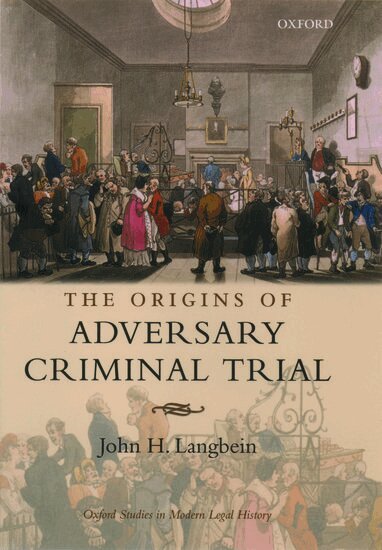
The adversary system of trial, the defining feature of the Anglo-American criminal procedure developed late in English legal history. For centuries, defendants were forbidden to have counsel, and lawyers seldom appeared for the prosecution either. Trial was meant to be an occasion for the defendant to answer the charges in person.The transformation from lawyer-free to lawyer-dominated criminal trial happened within the space of about a century, from the 1690s to the 1780s. This book explains how the lawyers captured the trial. In addition to conventional legal sources, Professor Langbein draws upon a rich vein of contemporary pamphlet accounts about trials in London's Old Bailey. The book also mines these novel sources to provide the first detailed account of the formation of the law of criminal evidence.Responding to menacing prosecutorial initiatives (including reward-seeking thieftakers amd crown witnesses induced to testify in order to save their own necks), the judges of the 1730s decided to allow the defendant to have counsel to cross-examine accusing witnesses. By restricting counsel to the work of examining and cross-examining witnesses, the judges intended that the accused would still need to respond in person to the charges against him. Langbein shows how counsel manipulated the dynamics of adversary procedure to defeat the judges' design, ultimately silencing the accused and transforming the very purpose of the criminal trial. Trial ceased to be an opportunity for the accused to speak, and became instead an occasion for defense counsel to test the prosecution case.
1 717 kr
Skickas inom 7-10 vardagar
Frederick Pollock and the English Juristic Tradition provides the first detailed historical account of one of England's great jurists.Until the later decades of the twentieth century, law developed little as an academic discipline in England. One exceptional period of intellectual growth, however, was the late-Victorian era, when a number of brilliant and now celebrated jurists produced works and devised projects which had a crucial impact on the development of English legal thought. Among this band of jurists was the great legal treatise writer, historian, and editor, Frederick Pollock. Compared with many of his contemporaries, however, Pollock has been largely overlooked by modern legal historians. Drawing upon a vast array of sources, Neil Duxbury offers a detailed picture of this enigmatic figure, examining Pollock's career, jurisprudence, philosophy of the common law, treatise writing, and editorial initiatives, and shows that Pollock's contribution to the development of English law and juristic inquiry is both complex and crucial.
805 kr
Skickas inom 5-8 vardagar
The adversary system of trial, the defining feature of the Anglo-American legal procedure, developed late in English legal history. For centuries defendants were forbidden to have legal counsel, and lawyers seldom appeared for the prosecution either. Trial was meant to be an occasion for the defendant to answer the charges in person.The transformation from lawyer-free to lawyer-dominated criminal trial happened within the space of about a century, from the 1690's to the 1780's. This book explains how the lawyers captured the trial. In addition to conventional legal sources, Professor Langbein draws upon a rich vein of contemporary pamphlet accounts about trials in London's Old Bailey. The book also mines these novel sources to provide the first detailed account of the formation of the law of criminal evidence.Responding to menacing prosecutorial initiatives (including reward-seeking thieftakers and crown witnesses induced to testify in order to save their own necks) the judges of the 1730's decided to allow the defendant to have counsel to cross-examine accusing witnesses. By restricting counsel to the work of examining and cross-examining witnesses, the judges intended that the accused would still need to respond in person to the charges against him. Professor Langbein shows how counsel manipulated the dynamics of adversary procedure to defeat the judges design, ultimately silencing the accused and transforming the very purpose of the criminal trial. Trial ceased to be an opportunity for the accused to speak, and instead became an occasion for defense counsel to test the prosecution case.
879 kr
Skickas inom 5-8 vardagar
A Jurisprudence of Power concerns the brutal suppression under martial law of the Jamaica uprising of 1865, and the explosive debate and litigation these events spawned in England. The book explores the centrality of legal ideas and institutions in English politics, and of political ideas that give rise to great questions of English law. It documents how the world's most powerful and articulate political elite struggled to define its soul, and poses penetrating questions such as can an imperial nation remain committed to laws and legality? Can it contend with the violent resistance of subjugated peoples without corrupting the integrity of its legal and political ideals? The book addresses these questions as it reconstructs the most prolonged and important conflict over martial law and the rule of law in the history of England in the nineteenth century.
1 738 kr
Skickas inom 5-8 vardagar
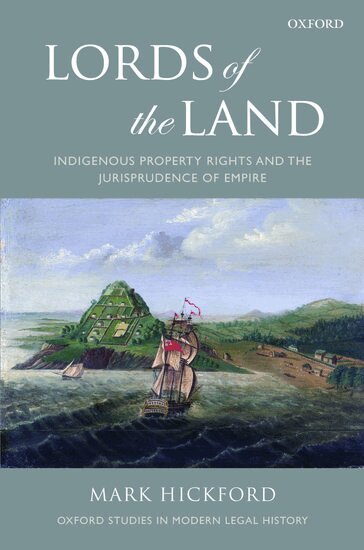
The recognition and allocation of indigenous property rights have long posed complex questions for the imperial powers of the mid-nineteenth century and their modern successors. Recognizing rights of property raises questions about pre-existing indigenous authority and power over land that continue to trouble the people and governments of settler states. Through focusing on the settlement of New Zealand during the critical period of the 1830s through to the early 1860s, this book offers a fresh assessment of the histories of indigenous property rights and the jurisprudence of empire. It shows how native title became not only a key construct for relations between Empire and tribes, but how it acted more broadly as a constitutional frame within which discourses of political authority formed and were contested at the heart of Empire and the colonial peripheries. Native title thus becomes another episode in imperial political history in which increasingly fierce and highly polemical contestation burst into violence. Native title explodes as a form of civil war that lays the foundation (by Maori ever after challenged) for revised constitutional orders. Lords of the Land considers histories of indigenous property rights not only as the stuff of entwined streams of a law of nations and constitutional theory but also as exemplars of the politics of negotiability - engaging relations of struggle and ambition for power, together with the openness and limits of incoming settler polities towards indigenous polities and laws. This study is an examination of rights as instruments of analysis and political discourse, constructed and contested in and through time. Anchored in the striking experiences of New Zealand and the politics of trans-oceanic empire, it tells a tale of indigenous political autonomy and how the vocabularies of property rights mediated relations between empire and the indigenous political communities found in newly settled lands.
Broken Engagements
The Action for Breach of Promise of Marriage and the Feminine Ideal, 1800-1940
Inbunden, Engelska, 2010
1 881 kr
Skickas inom 5-8 vardagar
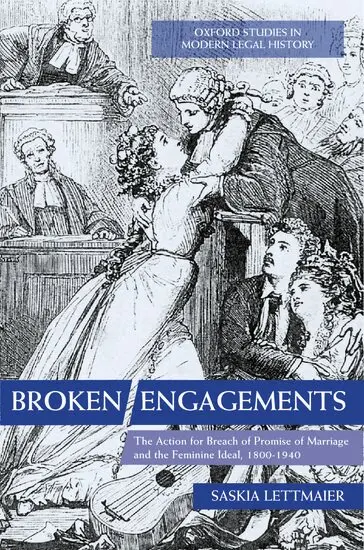
The common law action for breach of promise of marriage originated in the mid-seventeenth century, but it was not until the nineteenth century that it rose to prominence and became a regular feature in law courts and gossip columns. By 1940 the action was defunct, it was inconceivable for a respectable woman to bring such a case before the courts. What accounts for this dramatic rise and fall?This book ties the story of the action's prominence and decline between 1800 and 1940 to changes in the prevalent conception of woman, her ideal role in society, sexual relations, and the family. It argues that the idiosyncratic breach-of-promise suit and Victorian notions of ideal femininity were inextricably, and fatally, entwined. It presents the nineteenth-century breach-of-promise action as a codification of the Victorian ideal of true womanhood and explores the longer-term implications of this infusion of mythologized femininity for the law, in particular for the position of plaintiffs. Surveying three consecutive time periods - the early nineteenth century, the high Victorian and the post-Victorian periods - and adopting an interdisciplinary approach that combines the perspectives of legal history, social history, and literary analysis, it argues that the feminizing process, by shaping a cause of action in accordance with an ideal at odds with the very notion of women going to law, imported a fatal structural inconsistency that at first remained obscured, but ultimately vulgarized and undid the cause of action. Alongside more than two hundred and fifty real-life breach-of-promise cases, the book examines literary and cinematic renditions of the breach-of-promise theme, by artists ranging from Charles Dickens to P.G. Wodehouse, to expose the subtle yet unmistakable ways in which what happened (and what changed) in the breach-of-promise courtroom influenced the changing representation of the breach-of-promise plaintiff in nineteenth- and early twentieth-century literature and film.