Oxford Studies in the Abrahamic Religions - Böcker
Visar alla böcker i serien Oxford Studies in the Abrahamic Religions. Handla med fri frakt och snabb leverans.
12 produkter
12 produkter
544 kr
Skickas inom 7-10 vardagar
This book presents how ancient Christianity must be understood from the viewpoint of the history of religions in late antiquity. The continuation of biblical prophecy runs like a thread from Jesus through Mani to Muhammad. And yet this thread, arguably the single most important characteristic of the Abrahamic movement, often remains outside the mainstream, hidden, as it were, since it generates heresy. The figures of the Gnostic, the Holy man, and the mystic are all sequels of the Israelite prophet. They reflect a mode of religiosity that is characterized by high intensity. It is centripetal and activist by nature and emphasizes sectarianism and polemics, esoteric knowledge, or gnosis and charisma. The other mode of religiosity, obviously much more common than the first one, is centrifugal and irenic. It favours an ecumenical attitude, contents itself with a widely shared faith, or pistis, and reflects, in Weberian parlance, the routinisation of the new religious movement. This is the mode of priests and bishops, rather than that of martyrs and holy men. These two main modes of religion, high versus low intensity, exist simultaneously, and cross the boundaries of religious communities. They offer a tool permitting us to follow the transformations of religion in late antiquity in general, and in ancient Christianity in particular, without becoming prisoners of the traditional categories of Patristic literature. Through the dialectical relationship between these two modes of religiosity, one can follow the complex transformations of ancient Christianity in its broad religious context.
1 396 kr
Skickas inom 5-8 vardagar
Female Power and Religious Change in the Medieval Near East engages with two levels of scholarly discussion that are all too often dealt with separately in modern scholarship: the Islamization of the Near East and the place of women in pre-modern Near Eastern societies. It outlines how these two lines of inquiry can and should be read in an integrative manner. Major historical themes such as conversion to Islam, Islamization, religious violence, and the regulation of Muslim/non-Muslim ties are addressed and reframed by attending to the relatively hidden, yet highly meaningful, role that women played throughout this period.This book is about the history of Islam from the perspective of female social agents. It argues that irrespective of their religious affiliation, women possessed crucial means for affecting or hindering religious changes, not only in the form of religious conversion, but also in the adoption of practices and the delineation of communal boundaries. Its focus on the role and significance of female power in moments of religious change within family households offers a historical angle that has hitherto been relatively absent from modern scholarship. Rather than locating signs of female autonomy or authority in the political, intellectual, religious, or economic spheres, Female Power and Religious Change in the Medieval Near East is concerned with the capacity of women to affect religious communal affiliations thanks to their kinship ties.
1 600 kr
Skickas inom 5-8 vardagar
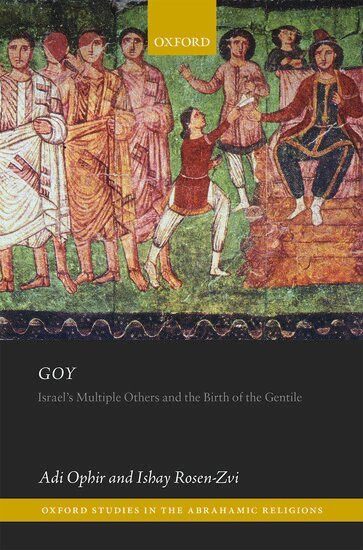
Goy: Israel's Others and the Birth of the Gentile traces the development of the term and category of the goy from the Bible to rabbinic literature. Adi Ophir and Ishay Rosen-Zvi show that the category of the goy was born much later than scholars assume; in fact not before the first century CE. They explain that the abstract concept of the gentile first appeared in Paul's Letters. However, it was only in rabbinic literature that this category became the center of a stable and long standing structure that involved God, the Halakha, history, and salvation. The authors narrate this development through chronological analyses of the various biblical and post biblical texts (including the Dead Sea scrolls, the New Testament and early patristics, the Mishnah, and rabbinic Midrash) and synchronic analyses of several discursive structures. Looking at some of the goy's instantiations in contemporary Jewish culture in Israel and the United States, the study concludes with an examination of the extraordinary resilience of the Jew/goy division and asks how would Judaism look like without the gentile as its binary contrast.
1 396 kr
Skickas inom 7-10 vardagar
Islam and its Past: Jāhiliyya, Late Antiquity, and the Qur'an brings together scholars from various disciplines and fields to consider Islamic revelation, with particular focus on the Qur'an. The collection provides a wide-ranging survey of the development and current state of Qur'anic studies in the Western academy. It shows how interest in the field has recently grown, how the ways in which it is cultivated have changed, how it has ramified, and how difficult it now is for any one scholar to keep abreast of it. Chapters explore the milieu in which the Meccan component of the Qur'an made its appearance. The general question is what we can say about that milieu by combining a careful reading of the relevant parts of the Qur'an with what we know about the religious trends of Late Antiquity in Arabia and elsewhere. More specifically, the issue is what we can learn in this way about the manner in which the 'polytheists' of the Qur'an related to the Jewish and Christian traditions: were they Godfearers in the sense familiar from the study of ancient Judaism? It looks at the Qur'an as a text of Late Antiquity-not just considering those features of it that could be seen as normal in that context, but also identifying what is innovative about it against the Late Antique background. Here the focus is on the 'believers' rather than the 'polytheists'. The volume also engages in different ways with notions of monotheism in pre-Islamic Arabia. This collection provides a broad survey of what has been happening in the field and concrete illustrations of some of the more innovative lines of research that have recently been pursued.
1 956 kr
Skickas inom 3-6 vardagar
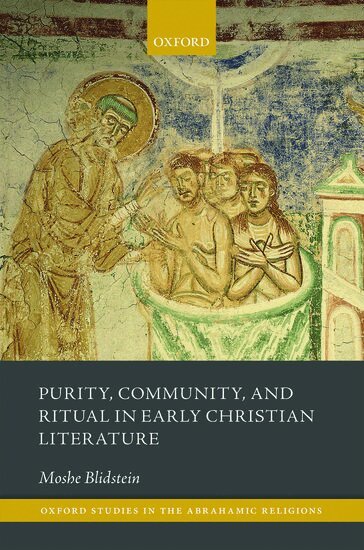
Purity, Community, and Ritual in Early Christian Literature investigates the meaning of purity, purification, defilement, and disgust for Christian writers, readers, and listeners from the first to third centuries. Anthropological and sociological works over the past decades have demonstrated how purity and defilement rituals, practices, and discourses harness the power of a raw emotion in order to shape and manipulate cultural structures. Moshe Blidstein builds on such theories to explain how early Christian writers drew on ancient Jewish and Greco-Roman traditions on purity and defilement, using them to create new types of community, form Christian identity, and articulate the relationship between body, sin, and ritual.Blidstein discusses early Christian purity issues under several headings: dietary law, death defilement, purity of the heart, defilement of outsiders, and purity of the community. Analysis of the motivations shaping the development of each area of discourse reveals two major considerations: polemical and substantive. Thus, Christian writing on dietary law and death defilement is essentially polemical, constructing Christian identity by marking the purity practices and beliefs of others as false. Concerning the subjects of baptism, eucharist, and penance, however, the discourse turns inwards and becomes more substantive, seeking to create and maintain theories of ritual and human nature coherent with the theological principles of the new religion.
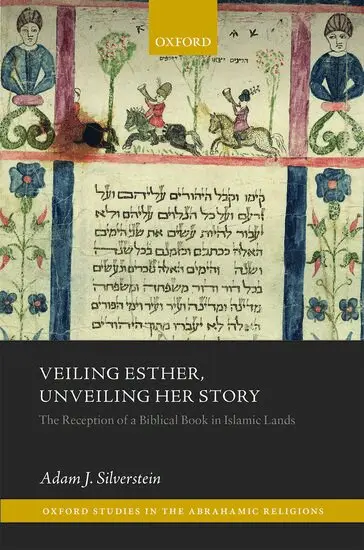
Veiling Esther, Unveiling Her Story
The Reception of a Biblical Book in Islamic Lands
Inbunden, Engelska, 2018
1 113 kr
Skickas inom 5-8 vardagar
Veiling Esther, Unveiling Her Story: The Reception of a Biblical Book in Islamic Lands examines the ways in which the Biblical Book of Esther was read, understood, and used in Muslim lands, from ancient to modern times. It focuses on case studies covering works from various periods and regions of the Muslim world, including the Qur'an, pre-modern historical chronicles and literary works, the writings of a nineteenth-century Shia feminist, a twentieth-century Iranian encyclopaedia, and others. These case studies demonstrate that Muslim sources contain valuable materials on Esther, which shed light both on the Esther story itself and on the Muslim peoples and cultures that received it. Adam J. Silverstein argues that Muslim sources preserve important pre-Islamic materials on Esther that have not survived elsewhere, some of which offer answers to ancient questions about Esther, such as the meaning of Haman's epithet in the Greek versions of the story, the reason why Mordecai refused to prostrate before Haman, and the literary context of the 'plot of the eunuchs' to kill the Persian king. Throughout the book, Silverstein shows how each author's cultural and religious background influenced his or her understanding and retelling of the Esther story. In particular, he highlights that Persian Muslims (and Jews) were often forced to reconcile or choose between the conflicting historical narratives provided by their religious and cultural heritages respectively.
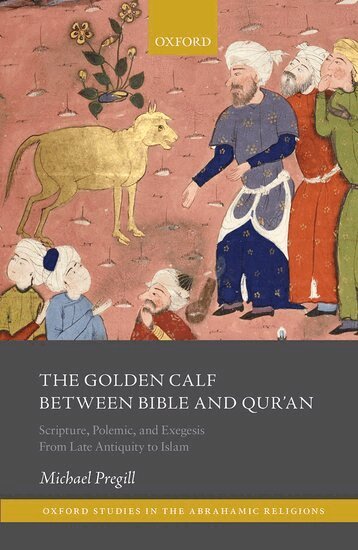
The Golden Calf between Bible and Qur'an
Scripture, Polemic, and Exegesis from Late Antiquity to Islam
Inbunden, Engelska, 2020
2 040 kr
Skickas inom 5-8 vardagar
This book explores the story of the Israelites' worship of the Golden Calf in its Jewish, Christian, and Muslim contexts, from ancient Israel to the emergence of Islam. It focuses in particular on the Qur'an's presentation of the narrative and its background in Jewish and Christian retellings of the episode from Late Antiquity. Across the centuries, the interpretation of the Calf episode underwent major changes reflecting the varying cultural, religious, and ideological contexts in which various communities used the story to legitimate their own tradition, challenge the claims of others, and delineate the boundaries between self and other. The book contributes to the ongoing reevaluation of the relationship between Bible and Qur'an, arguing for the necessity of understanding the Qur'an and Islamic interpretations of the history and narratives of ancient Israel as part of the broader biblical tradition. The Calf narrative in the Qur'an, central to the qur'anic conception of the legacy of Israel and the status of the Jews of its own time, reflects a profound engagement with the biblical account in Exodus, as well as being informed by exegetical and parascriptural traditions in circulation in the Qur'an's milieu in Late Antiquity. The book also addresses the issue of Western approaches to the Qur'an, arguing that the historical reliance of scholars and translators on classical Muslim exegesis of scripture has led to misleading conclusions about the meaning of qur'anic episodes.
458 kr
Skickas inom 7-10 vardagar
Goy: Israel's Others and the Birth of the Gentile traces the development of the term and category of the goy from the Bible to rabbinic literature. Adi Ophir and Ishay Rosen-Zvi show that the category of the goy was born much later than scholars assume; in fact not before the first century CE. They explain that the abstract concept of the gentile first appeared in Paul's Letters. However, it was only in rabbinic literature that this category became the center of a stable and long standing structure that involved God, the Halakha, history, and salvation. The authors narrate this development through chronological analyses of the various biblical and post biblical texts (including the Dead Sea scrolls, the New Testament and early patristics, the Mishnah, and rabbinic Midrash) and synchronic analyses of several discursive structures. Looking at some of the goy's instantiations in contemporary Jewish culture in Israel and the United States, the study concludes with an examination of the extraordinary resilience of the Jew/goy division and asks how would Judaism look like without the gentile as its binary contrast.
1 678 kr
Skickas inom 3-6 vardagar
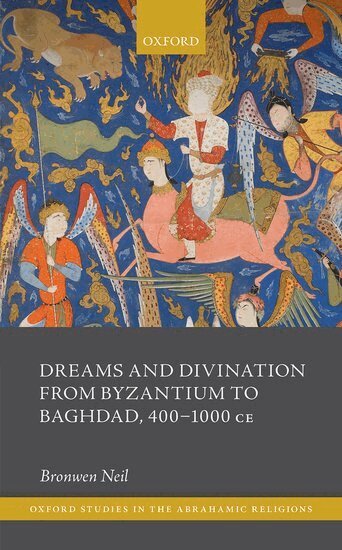
Why did dreams matter to Jews, Byzantine Christians, and Muslims in the first millennium? Dreams and Divination from Byzantium to Baghdad, 400 - 1000 CE shows how the ability to interpret dreams universally attracted power and influence in the first millennium. In a time when prophetic dreams were viewed as God's intervention in human history, male and female prophets wielded was unparalleled power in imperial courts, military camps, and religious gatherings. The three faiths drew on the ancient Near Eastern tradition of dream key manuals, which offer an insight into the hopes and fears of ordinary people. They melded pagan dream divination with their own scriptural traditions to produce a novel and rich culture of dream interpretation. Prophetic dreams enabled communities to understand their past and present circumstances as divinely ordained and helped to bolster the spiritual authority of dreamers and those who had the gift of interpreting their dreams. Bronwen Neil takes a gendered approach to the analysis of the common culture of dream interpretation across late antique Jewish, Byzantine, and Islamic sources to 1000 CE, in order to expose the ways in which dreams offered women a unique opportunity to exercise influence. The epilogue to the volume reveals why dreams still matter today to many men and women of the monotheist traditions.
1 417 kr
Skickas inom 5-8 vardagar
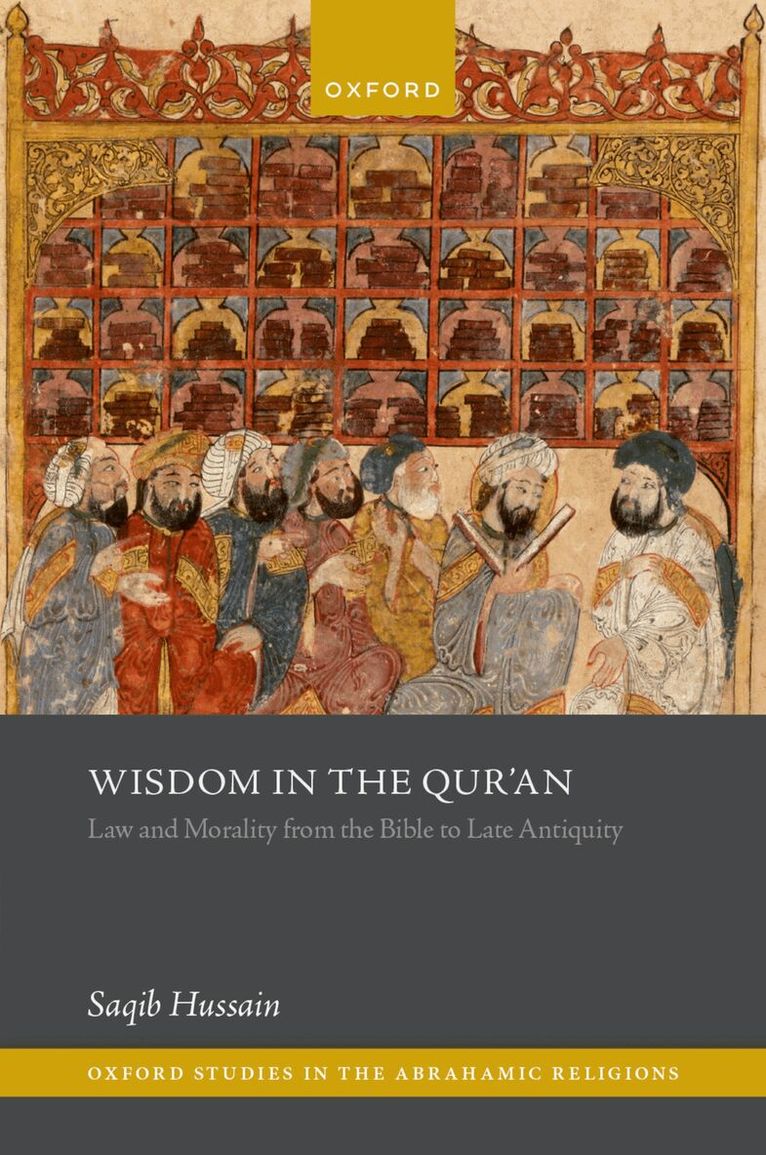
This work is the first detailed study of what the Qur'an means by 'wisdom.' It argues that the Qur'an, when it uses the term, is engaging with biblical wisdom discourse as it had been interpreted and understood in late antiquity. Biblical wisdom texts are a category of books in the Hebrew Bible and Apocrypha, such as Proverbs and Sirach, that emphasize the importance of acquiring wisdom through contemplating the natural world and one's own life experience. The presence of this wisdom genre in the Bible encouraged Hellenistic Jews and early Christians to embrace the Greek philosophical notion of natural law, the idea that what is morally right and wrong is known innately, and confirmed through divine revelation. Over subsequent centuries, church fathers and rabbis continued to debate what the relationship between divine revelation and natural law / wisdom ought to be. While the church fathers argued that much of the legal content of the Hebrew Bible should no longer be followed now that Jesus had restored natural law to its rightful position as arbiter of right and wrong, the rabbis insisted that God is at liberty to impose through Scripture whatever laws he wishes onto humanity. This book asserts that when the Qur'an invokes wisdom, it engages in that debate, and ultimately presents a relationship between Scripture and natural law that is close to the Christian conception, insisting that law must be interpreted within an ethical framework that is innate to human morality.
1 146 kr
Skickas inom 5-8 vardagar
From early Christianity to the emergence of Islam, the long late antiquity denotes a truly revolutionary period in the history of religions. In many ways, religious ritual patterns and theological worldviews were then radically transformed throughout the Near East and the Mediterranean. In particular, the traditional polytheistic systems collapsed, giving way to various forms of monotheism and dualism. In Dynamics of Monotheism in Late Antiquity, Guy G. Stroumsa seeks to analyze this multifaceted revolution as a whole, rather than focusing, as is usually the case, on distinct religious communities and traditions, such as Judaism, Zoroastrianism, Gnosticism, Christianity, Manichaeism, and earliest Islam. Many of the elements of religious change in our period can be perceived as a praeparatio coranica, as it were, as they set the scene for the advent of Islam. The thrust of the book is to identify the key dynamics through which religious change happened in the kaleidoscope of religious conceptions. The analysis emphasizes the dialectics between monotheist and dualist perceptions and systems. It will also seek to identify the core elements of the Abrahamic religions in the making.
1 464 kr
Skickas inom 5-8 vardagar
The Hebrew Bible formulates two sets of law: one for the Israelites and one for the gentile “residents” living in the Holy Land. Law Beyond Israel: From the Bible to the Qur'an argues that these biblical laws for non-Israelites form the historical basis of qur'anic law. This volume corroborates its central claim by assessing laws for gentiles in late antique Jewish and especially in Christian legal discourse, pointing to previously underappreciated legal continuity from the Hebrew Bible to the New Testament and from late antique Christianity to nascent Islam.This volume first sketches the legal obligations that the Hebrew Bible imposes on gentiles, on humanity more broadly and, more specifically, on the non-Israelite residents of the Holy Land. It then traces these laws through Second Temple Judaism to the early Jesus movement, illustrating how the biblical laws for residents inform those formulated in Acts of the Apostles. Building on this legal continuity, the study employs detailed historical and literary analyses of legal narratives in order to make three propositions. Firstly, rabbinic laws for gentiles, the so-called Noahide Laws, while offering a more lenient interpretation than the one we find in Acts, are equally based on the biblical laws for gentiles. Secondly, Christians generally appreciated and even expanded the gentile laws of Acts. Thirdly, the Qur'an reinvents Arabian religious practice by formulating its own distinctive approach to the biblical laws for gentiles, in close continuity with - and at times in critical distance from - late antique Jewish and especially Christian gentile law.