Oxford Studies in the History of Archaeology – serie
Visar alla böcker i serien Oxford Studies in the History of Archaeology. Handla med fri frakt och snabb leverans.
7 produkter
7 produkter
1 942 kr
Skickas inom 3-6 vardagar
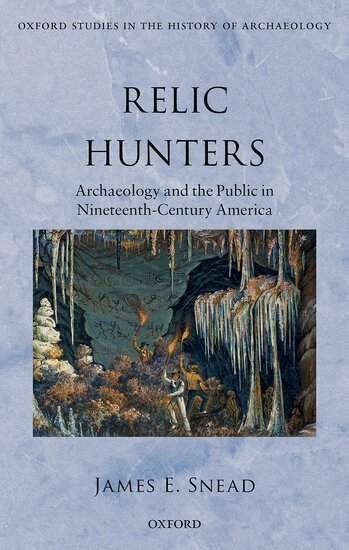
Relic Hunters is a study of the complex relationship between the people of 19th century America with the material antiquities of North America's indigenous past. As scholars struggled to explain their existence, farmers in Ohio were plowing up arrowheads, building their houses atop burial mounds, and developing their own ideas about antiquity. They experienced the new country as a "place with history" reflected in material traces that became important touch points for scientific knowledge, but for American cultural identity as well.Relic Hunters traces the encounter with American antiquities from 1812 to 1879. This encompasses the period when archaeology took root in the United States: it also spans the "deep settlement" of the Midwest and sectional strife both before and after the Civil War. At the center of the story is the first iconic find of American archaeology, known as "the Kentucky Mummy." Discovered deep in a cavern, this dessicated burial became the subject of scholarly competition, traveling exhibitions, and even poetry. The book uses the theme of the Kentucky Mummy to structure the broader story of the public and American antiquities, a tour that leads through rural museums, mound excavations, lecture tours, shady deals, and ultimately into the famous attic of the Smithsonian Institution. Ultimately, Relic Hunters is a story of the American landscape, and of the role of archaeology in shaping that place. Derived from letters, memoranda, and reports found in more than a dozen archives, this is a unique account of a critical encounter that shaped local and national identity in ways that are only now being explored.
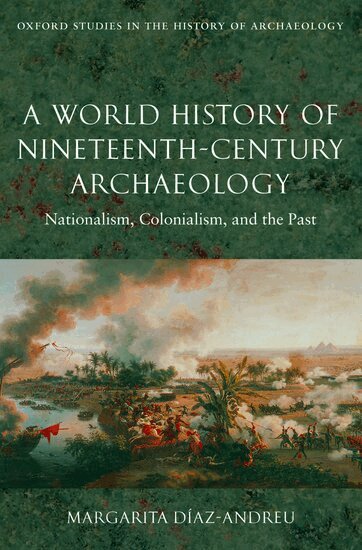
A World History of Nineteenth-Century Archaeology
Nationalism, Colonialism, and the Past
Inbunden, Engelska, 2007
2 752 kr
Skickas inom 5-8 vardagar
Margarita Diaz-Andreu offers an innovative history of archaeology during the nineteenth century, encompassing all its fields from the origins of humanity to the medieval period, and all areas of the world. The development of archaeology is placed within the framework of contemporary political events, with a particular focus upon the ideologies of nationalism and imperialism. Diaz-Andreu examines a wide range of issues, including the creation of institutions, the conversion of the study of antiquities into a profession, public memory, changes in archaeological thought and practice, and the effect on archaeology of racism, religion, the belief in progress, hegemony, and resistance.
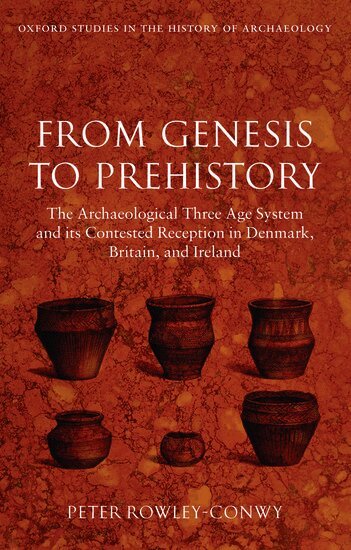
From Genesis to Prehistory
The Archaeological Three Age System and its Contested Reception in Denmark, Britain, and Ireland
Inbunden, Engelska, 2007
1 892 kr
Skickas inom 7-10 vardagar
We are now familiar with the Three Age System, the archaeological partitioning of the past into Stone Age, Bronze Age, and Iron Age. This division, which amounted at the time to a major scientific revolution, was conceived in Denmark in the 1830s. Peter Rowley-Conwy investigates the reasons why the Three Age system was adopted without demur in Scandinavian archaeological circles, yet was the subject of a bitter and long-drawn-out contest in Britain and Ireland, up to the 1870s.
2 066 kr
Skickas inom 7-10 vardagar
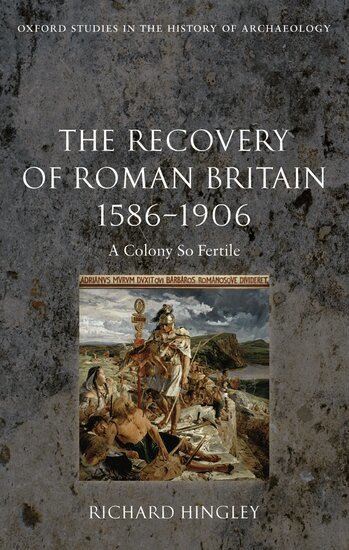
From the sixteenth century, classical texts enabled Scottish and English authors and artists to imagine the character and appearance of their forebears and to consider the relevance of these ideas to their contemporaries. Richard Hingley's study crosses traditional academic boundaries by exploring sources usually separately addressed by historians, classicists, archaeologists, and geographers, to provide a new perspective on the origin of English and Scottish identity. His book is the first full exploration of these issues to cover such a long period in the development of British society and to relate ideas derived from Roman sources to the development of empire, while also placing ideas of origin in a European context. It is illustrated throughout with artefact drawings, site plans, and photographs.
1 857 kr
Skickas inom 7-10 vardagar
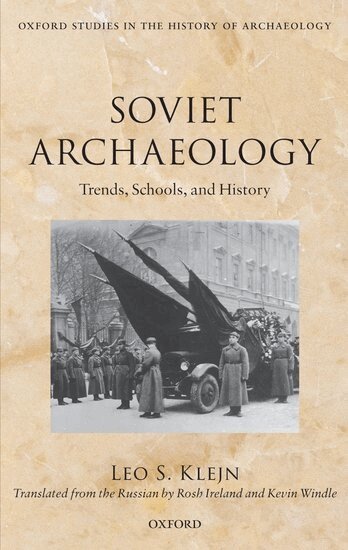
In Soviet Archaeology: Trends, Schools, and History the Russian archaeologist Leo Klejn examines the peculiar phenomenon which was Soviet archaeology, showing where it differs from Western archaeology and the archaeology of pre-revolutionary Russia, and where it reveals similarities. In this revised and expanded volume, he asks whether Soviet archaeology can be regarded as Marxist, and, if so, whether Marxism was to Russian archaeology a help or a hindrance at that time. Were the writings of Soviet archaeologists mere propaganda, driving their own political agenda, or can they be read as objective studies of our past? Klejn shows that Soviet archaeology was no monolithic bloc, though Soviet ideologists attempted to present it as such. Rather it was divided into competing schools and trends and, even beneath the veil of Marxist ideology, was often closely related to movements current in Western archaeology. Inside the system, however, the slightest deviation from the Party line was regarded as hostile, those guilty being often dismissed from their posts and condemned to life imprisonment in the Gulag, or even to death. As an archaeologist working during the turbulent years of Soviet rule, Klejn presents an account which is at once scholarly and vivid. He traces the history of archaeology in Russia from 1917 to 1991 and through the years which followed, recounting the lives and fates of prominent Soviet archaeologists in graphic descriptions with accompanying illustrations.
Relics of the Past
The Collecting and Study of Pre-Columbian Antiquities in Peru and Chile, 1837-1911
Inbunden, Engelska, 2014
2 348 kr
Skickas inom 5-8 vardagar
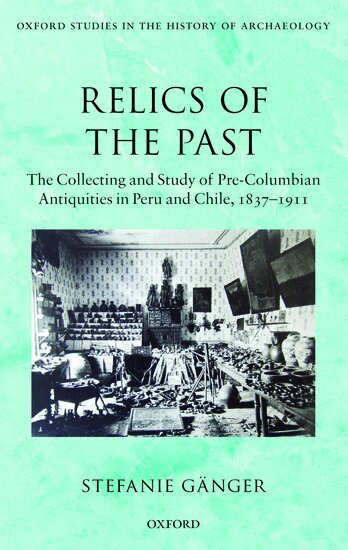
Relics of the Past tells the story of antiquities collecting, antiquarianism, and archaeology in Peru and Chile in the second half of the nineteenth and the early twentieth century. While the role of foreign travellers and scholars dedicated to the study of South America's pre-Columbian past is well documented, historians have largely overlooked the knowledge gathered and the collections formed among collectors of antiquities, antiquaries, and archaeologists born or living in South America during this period. The landed gentry, the clergy, and an urban bourgeoisie of doctors, engineers, and military officials put antiquities on display in their private mansions or bestowed them upon the public museums that were being formed by municipalities and governments in Santiago de Chile, Cuzco, or Lima. Men, and some few women, gathered antiquities on their journeys 'inland' and during sociable weekend excursions, but also on quotidian commercial voyages or in military campaigns. They bartered antiquities with their fellow collectors or haggled about their price on the antiquities market. In their hours of leisure, they marvelled at them, wrote about them, and disputed over their meaning, age, and interest in learned societies, informal gatherings, and at meetings in universities and public museums. This volume unveils a hitherto largely unknown world of antiquarian and archaeological collecting and learning in Peru and Chile.
2 213 kr
Skickas inom 5-8 vardagar
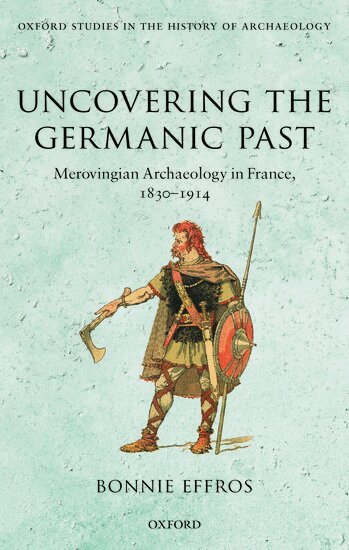
Uncovering the Germanic Past brings to light an unexpected side-effect of France's nineteenth-century Industrial Revolution. While laying tracks for new rail lines, quarrying for stone, and expanding lands under cultivation, French labourers uncovered bones and artefacts from long-forgotten cemeteries. Although their original owners were unknown, research by a growing number of amateur archaeologists of the bourgeois class determined that these were the graves of Germanic 'warriors', and their work, presented in provincial learned societies across France, documented evidence for significant numbers of Franks, Burgundians, and Visigoths in late Roman Gaul. They thus challenged prevailing views in France of the population's exclusively Gallic ancestry, contradicting the influential writings of Parisian historians like Augustin Thierry and Numa-Denis Fustel de Coulanges. Although some scholars drew on this material evidence to refine their understanding of the early ancestors of the French, most ignored, at their peril, inconvenient finds that challenged the centrality of the ancient Gauls as the forebears of France. Crossing the boundaries of the fields of medieval archaeology and history, nineteenth-century French history, and the history of science, Effros suggests how the slow progress and professionalization of Merovingian (or early medieval) archaeology, a sub-discipline in the larger field of national archaeology in France, was in part a consequence of the undesirable evidence it brought to light.