Oxford Wells Shakespeare Lectures - Böcker
Visar alla böcker i serien Oxford Wells Shakespeare Lectures. Handla med fri frakt och snabb leverans.
9 produkter
9 produkter
624 kr
Skickas inom 7-10 vardagar
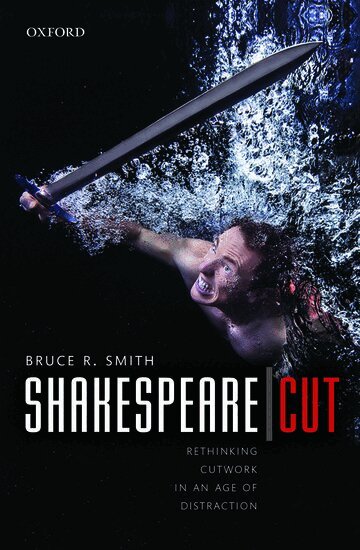
In distracted times like the present, Shakespeare too has been driven to distraction. Shakespeare | Cut considers contemporary practices of cutting up Shakespeare in stage productions, videogames, book sculptures, and YouTube postings, but it also takes the long view of how Shakespeare's texts have been cut apart in creative ways beginning in Shakespeare's own time. The book's five chapters consider cuts, cutting, and cutwork from a variety of angles: (1) as bodily experiences, (2) as essential parts of the process whereby Shakespeare and his contemporaries crafted scripts, (3) as units in perception, (4) as technologies situated at the interface between 'figure' and 'life,' and (5) as a fetish in western culture since 1900. Printed here for the first time are examples of the cut-ups that William S. Burroughs and Brion Guysin carried out with Shakespeare texts in the 1950s. Bruce R. Smith's original analysis is accompanied by twenty-four illustrations, which suggest the multiple media in which cutwork with Shakespeare has been carried out.
373 kr
Skickas inom 5-8 vardagar
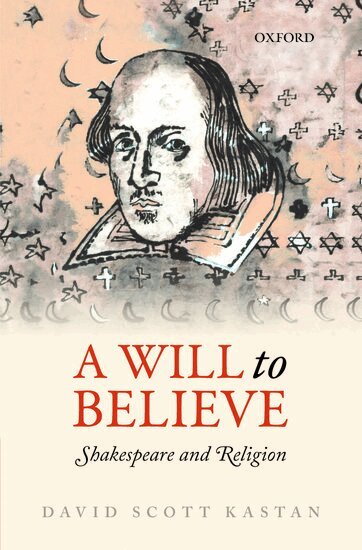
On 19 December 1601, John Croke, then Speaker of the House of Commons, addressed his colleagues: "If a question should be asked, What is the first and chief thing in a Commonwealth to be regarded? I should say, religion. If, What is the second? I should say, religion. If, What the third? I should still say, religion." But if religion was recognized as the "chief thing in a Commonwealth," we have been less certain what it does in Shakespeare's plays. Written and performed in a culture in which religion was indeed inescapable, the plays have usually been seen either as evidence of Shakespeare's own disinterested secularism or, more recently, as coded signposts to his own sectarian commitments. Based upon the inaugural series of the Oxford-Wells Shakespeare Lectures in 2008, A Will to Believe offers a thoughtful, surprising, and often moving consideration of how religion actually functions in them: not as keys to Shakespeare's own faith but as remarkably sensitive registers of the various ways in which religion charged the world in which he lived. The book shows what we know and can't know about Shakespeare's own beliefs, and demonstrates, in a series of wonderfully alert and agile readings, how the often fraught and vertiginous religious environment of Post-Reformation England gets refracted by the lens of Shakespeare's imagination.
649 kr
Skickas inom 5-8 vardagar
How original was Shakespeare and how was Shakespeare original? This lucid, innovative book sets about answering these questions by putting them in historical context and investigating how the dramatist worked with his sources: plays, poems, chronicles and prose romances. Shakespeare's Originality unlocks its topic with rewarding precision and flair, showing through a series of case studies that range across the output—from the mature comedies to the great tragedies, from Richard III to The Tempest—what can be learned about the artistry of the plays by thinking about these sources (including newly identified ones) after several decades of neglect. Discussion is enriched by such matters as Elizabethan ruffs and feathers, actors' footwork, chronicle history, modern theatre productions, debts to classical tragedy, scepticism, magic and science, the agricultural revolution, and ecological catastrophe. This is authoritative, lively work by one of the world's leading Shakespearians, accessible to the general reader as well as indispensable for students.
368 kr
Skickas inom 5-8 vardagar
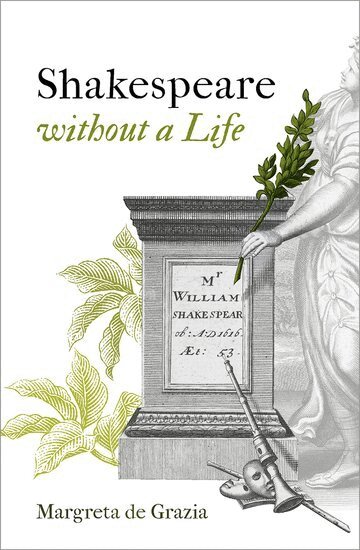
A fascinating account of how Shakespeare's works were understood and valued by readers and writers from the seventeenth to the nineteenth century, before Shakespeare's biography came to dominate readings of his plays and poetry. For almost two centuries after his death, Shakespeare had no biography. The makings of one were not available. No chronology had been devised by which to coordinate the events in his life with the writing of his works. Nor was there an archive of primary materials on which to base a life. And the only work by Shakespeare written in the first person, the Sonnets, had yet to be critically edited and incorporated into the canon. Without a biography, how could Shakespeare have been valued and understood?In Shakespeare without a Life, Margreta de Grazia looks at aspects of Shakespeare's reception between 1600 and 1800 that have been all but lost to the now still prevailing biographical impulse. It recovers the anecdote as a form of literary criticism, retrieves the ancient category of genre as the canon's organizing rubric, demonstrates how the quest for authentic documents invalidated other forms of literary record, and reveals how the desire to forge connections between Shakespeare's life and the Sonnets occluded his self-presentation as the 'deceasèd I' of a posthumous poet.
373 kr
Skickas inom 5-8 vardagar
Shakespeare's characters are thought to be his greatest achievement--imaginatively autonomous, possessed of depth and individuality, while his plots are said to be second-hand and careless of details of time and place. This view has survived the assaults of various literary theories and has even, surprisingly, been revitalized by the recent emphasis on the collaborative nature of early modern theatre. But belief in the autonomous imaginative life of Shakespeare's characters depends on another unexamined myth: the myth that Shakespeare rejected neoclassicism, playing freely with theatrical time and place. Circumstantial Shakespeare explodes these venerable critical commonplaces. Drawing on sixteenth-century rhetorical pedagogy, it reveals the importance of topics of circumstance (of Time, Place, and Motive, etc.) in the conjuring of compelling narratives and vivid mental images. 'Circumstances' -- which we now think of as incalculable contingencies -- were originally topics of forensic inquiry into human intention or passion. In drawing on the Roman forensic tradition of circumstantial proof, Shakespeare did not ignore time and place. His brilliant innovation was to use the topics of circumstance to imply offstage actions, times and places in terms of the motives and desires we attribute to the characters. His plays thus create both their own vivid and coherent dramatic worlds and a sense of the unconscious feelings of characters inhabiting them.Circumstantial Shakespeare offers new readings of Romeo and Juliet, King Lear, Lucrece, Two Gentlemen of Verona and Macbeth, as well as new interpretations of Sackville and Norton's Gorboduc and Beaumont and Fletcher's The Maid's Tragedy. It engages with eighteenth-century Shakespeare criticism, contemporary Shakespeare criticism, semiotics of theatre, Roman forensic rhetoric, humanist pedagogy, the prehistory of modern probability, psychoanalytic criticism and sixteenth-century constitutional thought.
398 kr
Skickas inom 5-8 vardagar
In distracted times like the present, Shakespeare too has been driven to distraction. Shakespeare | Cut considers contemporary practices of cutting up Shakespeare in stage productions, video games, book sculptures, and YouTube postings, but it also takes the long view of how Shakespeare's texts have been cut apart in creative ways beginning in Shakespeare's own time. The book's five chapters consider cuts, cutting, and cutwork from a variety of angles: (1) as bodily experiences, (2) as essential parts of the process whereby Shakespeare and his contemporaries crafted scripts, (3) as units in perception, (4) as technologies situated at the interface between 'figure' and 'life,' and (5) as a fetish in western culture since 1900. Printed here for the first time are examples of the cut-ups that William S. Burroughs and Brion Guysin carried out with Shakespeare texts in the 1950s. Bruce R. Smith's original analysis is accompanied by twenty-four illustrations, which suggest the multiple media in which cutwork with Shakespeare has been carried out.
654 kr
Skickas inom 7-10 vardagar
On 19 December 1601, John Croke, then Speaker of the House of Commons, addressed his colleagues: "If a question should be asked, What is the first and chief thing in a Commonwealth to be regarded? I should say, religion. If, What is the second? I should say, religion. If, What the third? I should still say, religion." But if religion was recognized as the "chief thing in a Commonwealth," we have been less certain what it does in Shakespeare's plays. Written and performed in a culture in which religion was indeed inescapable, the plays have usually been seen either as evidence of Shakespeare's own disinterested secularism or, more recently, as coded signposts to his own sectarian commitments. Based upon the inaugural series of the Oxford-Wells Shakespeare Lectures in 2008, A Will to Believe offers a thoughtful, surprising, and often moving consideration of how religion actually functions in them: not as keys to Shakespeare's own faith but as remarkably sensitive registers of the various ways in which religion charged the world in which he lived. The book shows what we know and can't know about Shakespeare's own beliefs, and demonstrates, in a series of wonderfully alert and agile readings, how the often fraught and vertiginous religious environment of Post-Reformation England gets refracted by the lens of Shakespeare's imagination.
669 kr
Skickas inom 7-10 vardagar
Shakespeare's characters are thought to be his greatest achievement--imaginatively autonomous, possessed of depth and individuality, while his plots are said to be second-hand and careless of details of time and place. . This view has survived the assaults of various literary theories and has even, surprisingly, been revitalized by the recent emphasis on the collaborative nature of early modern theatre. But belief in the autonomous imaginative life of Shakespeare's characters depends on another unexamined myth: the myth that Shakespeare rejected neoclassicism, playing freely with theatrical time and place. Circumstantial Shakespeare explodes these venerable critical commonplaces. Drawing on sixteenth-century rhetorical pedagogy, it reveals the importance of topics of circumstance (of Time, Place and Motive, etc.) in the conjuring of compelling narratives and vivid mental images. 'Circumstances'--which we now think of as incalculable contingencies--were originally topics of forensic inquiry into human intention or passion. In drawing on the Roman forensic tradition of circumstantial proof, Shakespeare did not ignore time and place. His brilliant innovation was to use the topics of circumstance to imply offstage actions, times and places in terms of the motives and desires we attribute to the characters. His plays thus create both their own vivid and coherent dramatic worlds and a sense of the unconscious feelings of characters inhabiting them.Circumstantial Shakespeare offers new readings of Romeo and Juliet, King Lear, Lucrece, Two Gentlemen of Verona and Macbeth, as well as new interpretations of Sackville and Norton's Gorboduc and Beaumont and Fletcher's The Maid's Tragedy. It engages with eighteenth-century Shakespeare criticism, contemporary Shakespeare criticism, semiotics of theatre, Roman forensic rhetoric, humanist pedagogy, the prehistory of modern probability, psychoanalytic criticism and sixteenth-century constitutional thought.
474 kr
Skickas inom 7-10 vardagar
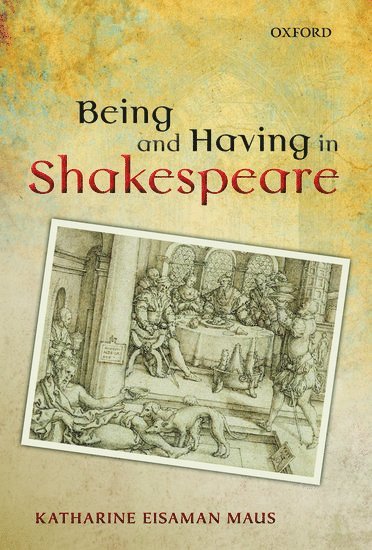
What is the relation between who a person is, and what he or she has? A number of Shakespeare's plays engage with this question, elaborating a 'poetics of property' centering on questions of authority and entitlement, of inheritance and prodigality, and of the different opportunities afforded by access to land and to chattel property. Being and Having in Shakespeare considers these presentations of ownership and authority. Richard II and the Henry IV plays construe sovereignty as a form of property right, largely construing imperium, or the authority over persons in a polity, as a form of dominium, the authority of the propertyholder. Nonetheless, what property means changes considerably from Richard's reign to Henry's, as the imagined world of the plays is reconfigured to include an urban economy of chattel consumables. The Merchant of Venice, written between Richard II and Henry IV, part 1, reimagines, in comic terms, some of the same issues broached in the history plays. It focuses in particular on the problem of the daughter's inheritance and on the different property obligations among kin, friends, business associates, and spouses. In the figure of the 'vagabond king', theoretically entitled but actually dispossessed, Henry VI, part 2 and King Lear both coordinate problems of entitlement with conundrums about distributive justice, raising fundamental questions about property relations and social organization.