Performing Latin American and Caribbean Identities - Böcker
Visar alla böcker i serien Performing Latin American and Caribbean Identities. Handla med fri frakt och snabb leverans.
14 produkter
14 produkter
518 kr
Skickas inom 5-8 vardagar
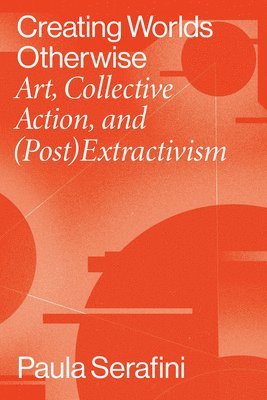
Latin American extractivism has become the ground on which activists and scholars frame the dynamics of ecological devastation, accumulation of wealth, and erosion of rights. These maladies are the detritus of longstanding extraction-oriented economies, and more recently from the expansion of the extractive frontier and the implementation of new technologies in the extraction of fossil fuels, mining, and agriculture. But the fields of sociology, political ecology, anthropology, and geography have largely ignored the role of art and cultural practices in studies of extractivism and postextractivism.The field of art theory on the other hand, has offered a number of texts that put forward insightful analyses of artwork addressing extraction, environmental devastation, and the climate crisis. However, an art theory perspective that does not engage firsthand with collective action remains limited, and fails to provide an account of the role, processes and politics of art in anti- and post-extractivist movements.Creating Worlds Otherwise offers the narratives that subaltern groups generate around extractivism, and how they develop, communicate, and mobilize these narratives through art and cultural practices. The book reports on a two-year research project into creative resistance to extractivism in Argentina, and builds on long-term engagement working on environmental justice projects and campaigns in Argentina and the UK.Creating Worlds Otherwise is structured according to the main themes of anti and post-extractivist movements: territoriality; ecofeminism and the ethics of care; human rights and the rights of nature; urban extractivism; sovereignty, autonomy and self-determination; and postextractivism and alternatives to development. It is an innovative contribution to the fields of Latin American studies, political ecology, cultural studies, and art theory, and addresses pressing questions regarding what post-extractivist worlds might look like as well as how such visions are put into practice.
1 451 kr
Skickas inom 5-8 vardagar
Extractivism has increasingly become the ground on which activists and scholars in Latin America frame the dynamics of ecological devastation, accumulation of wealth, and erosion of rights. These maladies are the direct consequences of long-standing extraction-oriented economies, and more recently from the expansion of the extractive frontier and the implementation of new technologies in the extraction of fossil fuels, mining, and agriculture. But the fields of sociology, political ecology, anthropology, and geography have largely ignored the role of art and cultural practices in studies of extractivism and post-extractivism.The field of art theory, on the other hand, has offered a number of texts that put forward insightful analyses of artwork addressing extraction, environmental devastation, and the climate crisis. However, an art theory perspective that does not engage firsthand and in depth with collective action remains limited and fails to provide an account of the role, processes, and politics of art in anti- and post-extractivist movements.Creating Worlds Otherwise examines the narratives that subaltern groups generate around extractivism, and how they develop, communicate, and mobilize these narratives through art and cultural practices. It reports on a six-year project on creative resistance to extractivism in Argentina and builds on long-term engagement working on environmental justice projects and campaigns in Argentina and the UK.It is an innovative contribution to the fields of Latin American studies, political ecology, cultural studies, and art theory, and addresses pressing questions regarding what post-extractivist worlds might look like as well as how such visions are put into practice.
482 kr
Skickas
Carmen Miranda got knocked down and kept going. Filming an appearance on The Jimmy Durante Show on August 4, 1955, the "ambassadress of samba" suddenly took a knee during a dance number, clearly in distress. Durante covered without missing a beat, and Miranda was back on her feet in a matter of moments to continue with what she did best: performing. By the next morning, she was dead from heart failure at age 46.This final performance in many ways exemplified the power of Carmen Miranda. The actress, singer, and dancer pursued a relentless mission to demonstrate the provocative theatrical force of her cultural roots in Brazil. Armed with bare-midriff dresses, platform shoes, and her iconic fruit-basket headdresses, Miranda stole the show in films like That Night in Rio and The Gang's All Here. For American film audiences, her life was an example of the exoticism of a mysterious, sensual South America. For Brazilian and Latin American audiences, she was an icon. For the gay community, she became a work of art personified and a symbol of courage and charisma.In Creating Carmen Miranda, Kathryn Bishop-Sanchez takes the reader through the myriad methods Miranda consciously used to shape her performance of race, gender, and camp culture, all to further her journey down the road to becoming a legend.
Latin America and the Transports of Opera
Fragments of a Transatlantic Discourse
Häftad, Engelska, 2024
333 kr
Skickas inom 7-10 vardagar
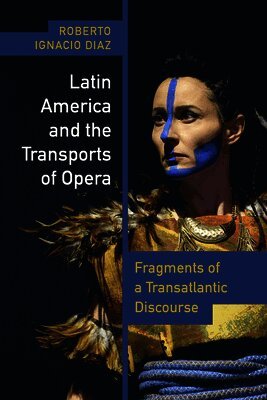
Latin America and the Transports of Opera studies a series of episodes in the historical and textual convergence of a hallowed art form and a part of the world often regarded as peripheral. Perhaps unexpectedly, the archives of opera generate new arguments about several issues at the heart of the established discussion about Latin America: the allure of European cultural models; the ambivalence of exoticism; the claims of nationalism and cosmopolitanism; and, ultimately, the place of the region in the global circulation of the arts. Opera’s transports concern literal and imagined journeys as well as the emotions that its stories and sounds trigger as they travel back and forth between Europe—the United States, too—and Latin America. Focusing mostly on librettos and other literary forms, the book analyzes CalderÓn de la Barca’s baroque play on the myth of Venus and Adonis, set to music by a Spanish composer at Lima’s viceregal court; Alejo Carpentier’s neobaroque novella on Vivaldi’s opera about Moctezuma; the entanglements of opera with class, gender and ethnicity throughout Cuban history; music dramas about enslaved persons by Carlos Gomes and Hans Werner Henze, staged in Rio de Janeiro and Copenhagen; the uses of Latin American poetry and magical realism in works by John Adams and Daniel CatÁn; and a novel by Manuel Mujica Lainez set in Buenos Aires’s Teatro ColÓn, plus a chamber opera about Victoria Ocampo with a libretto by Beatriz Sarlo. Close readings of these texts underscore the import and meanings of opera in Latin American cultural history.
Latin America and the Transports of Opera
Fragments of a Transatlantic Discourse
Inbunden, Engelska, 2024
1 451 kr
Skickas inom 5-8 vardagar
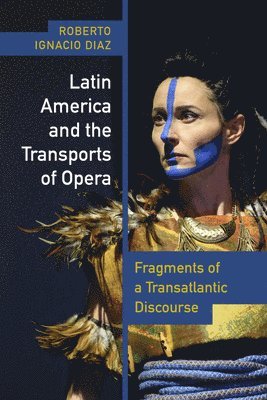
Latin America and the Transports of Opera studies a series of episodes in the historical and textual convergence of a hallowed art form and a part of the world often regarded as peripheral. Perhaps unexpectedly, the archives of opera generate new arguments about several issues at the heart of the established discussion about Latin America: the allure of European cultural models; the ambivalence of exoticism; the claims of nationalism and cosmopolitanism; and, ultimately, the place of the region in the global circulation of the arts. Opera’s transports concern literal and imagined journeys as well as the emotions that its stories and sounds trigger as they travel back and forth between Europe—the United States, too—and Latin America. Focusing mostly on librettos and other literary forms, the book analyzes CalderÓn de la Barca’s baroque play on the myth of Venus and Adonis, set to music by a Spanish composer at Lima’s viceregal court; Alejo Carpentier’s neobaroque novella on Vivaldi’s opera about Moctezuma; the entanglements of opera with class, gender and ethnicity throughout Cuban history; music dramas about enslaved persons by Carlos Gomes and Hans Werner Henze, staged in Rio de Janeiro and Copenhagen; the uses of Latin American poetry and magical realism in works by John Adams and Daniel CatÁn; and a novel by Manuel Mujica Lainez set in Buenos Aires’s Teatro ColÓn, plus a chamber opera about Victoria Ocampo with a libretto by Beatriz Sarlo. Close readings of these texts underscore the import and meanings of opera in Latin American cultural history.
518 kr
Skickas inom 5-8 vardagar
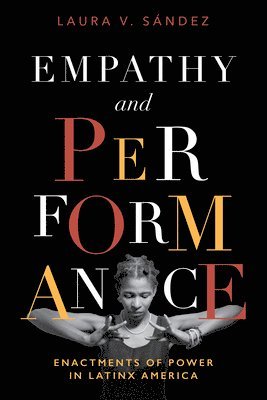
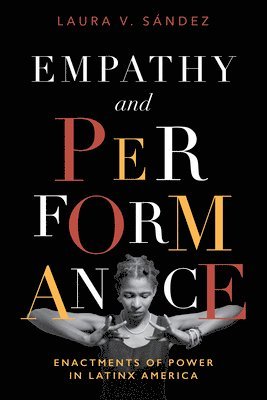
Empathy and Performance advances a study of spectators and audiences by examining works from Latin American and Latinx underrepresented author-actors. SÁndez studies the dramatized dilemma of cultural understanding in “Our America,” a term that refers to a collective political identity shared by Spanish-speaking Americans and their current struggles in the contemporary United States. SÁndez argues that to conceptualize empathy one needs to understand how subjects organize, classify, and limit themselves, not only as agents, but also as interpreters. What sort of affiliations do these performances promote? How do they break, reinforce, or queer societal expectations about the Latinx body, the white body, or simply, the staged body? To survey different answers to these queries, SÁndez analyzes performances such as “Indigurrito” (Nao Bustamante), “Dominicanish” (Josefina Baez), ¡Bienvenidos Blancos! or Welcome White People! (Alex Torra), and the apology delivered by the group Veterans Stand with Standing Rock on the Dakota Pipeline protest. In these artistic enactments, which range from 1992 to 2014, the, historical construct of boundaries and bodies becomes evident. Following recent work on empathy (Lanzoni, Maibom, Bloom, Hogan, among others), SÁndez examines the establishment of identity categories through performance and their ability to spur elaborative empathy from audiences.
1 451 kr
Skickas inom 5-8 vardagar
Empathy and Performance advances a study of spectators and audiences by examining works from Latin American and Latinx underrepresented author-actors. SÁndez studies the dramatized dilemma of cultural understanding in “Our America,” a term that refers to a collective political identity shared by Spanish-speaking Americans and their current struggles in the contemporary United States. SÁndez argues that to conceptualize empathy one needs to understand how subjects organize, classify, and limit themselves, not only as agents, but also as interpreters. What sort of affiliations do these performances promote? How do they break, reinforce, or queer societal expectations about the Latinx body, the white body, or simply, the staged body? To survey different answers to these queries, SÁndez analyzes performances such as “Indigurrito” (Nao Bustamante), “Dominicanish” (Josefina Baez), ¡Bienvenidos Blancos! or Welcome White People! (Alex Torra), and the apology delivered by the group Veterans Stand with Standing Rock on the Dakota Pipeline protest. In these artistic enactments, which range from 1992 to 2014, the, historical construct of boundaries and bodies becomes evident. Following recent work on empathy (Lanzoni, Maibom, Bloom, Hogan, among others), SÁndez examines the establishment of identity categories through performance and their ability to spur elaborative empathy from audiences.
292 kr
Skickas inom 7-10 vardagar
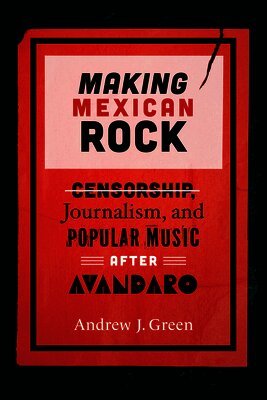
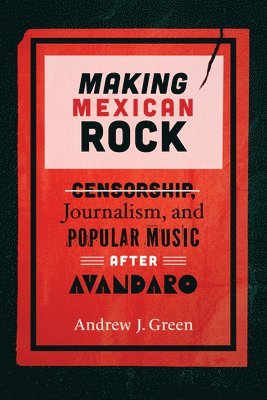
Mexican rock history has tended to end as Mexican democracy begins. The history of the genre has often been narrated teleologically: apparently censored under single‑party rule after the scandalous AvÁndaro Festival of 1971, rock constituted a potent expression of freedom in the late twentieth century, forging a strong association with Mexico’s transition away from authoritarian rule and toward neoliberal democracy. There is another story to tell, however, about the transformations in ideology underpinning rock’s emergent, cascading histories in Mexico, and about ways that these transformations have been contested. Placing history and ethnography into dialogue, Making Mexican Rock tells this story, reflecting on the imbrication of scholarship and journalism with the legitimizing myths of neoliberal globalization.Ethnomusicologist Andrew Green provides a counterpoint to studies of Latin American rock in which the state constitutes the “prime mover” of censorship against the genre. Eric Zolov’s Refried Elvis, still considered the definitive history of Mexican rock, concludes that the state censored rock by preventing its commercialization, and that rock led the resistance against single‑party rule during the democratic transition. Rock is understood, here, as a consistent antagonist of monolithic state power. Making Mexican Rock presumes a more distributed account of censorship that reflects extra‑ and para‑governmental sources of rock repression. There exist multiple “ends” of Mexican rock history, episodes of censorship which have recurred periodically ever since rock’s arrival to Mexico in the late 1950s, and there are shifts in ideology that change how these episodes are remembered—or indeed whether they are remembered at all.
1 451 kr
Skickas inom 5-8 vardagar
Mexican rock history has tended to end as Mexican democracy begins. The history of the genre has often been narrated teleologically: apparently censored under single‑party rule after the scandalous AvÁndaro Festival of 1971, rock constituted a potent expression of freedom in the late twentieth century, forging a strong association with Mexico’s transition away from authoritarian rule and toward neoliberal democracy. There is another story to tell, however, about the transformations in ideology underpinning rock’s emergent, cascading histories in Mexico, and about ways that these transformations have been contested. Placing history and ethnography into dialogue, Making Mexican Rock tells this story, reflecting on the imbrication of scholarship and journalism with the legitimizing myths of neoliberal globalization.Ethnomusicologist Andrew Green provides a counterpoint to studies of Latin American rock in which the state constitutes the “prime mover” of censorship against the genre. Eric Zolov’s Refried Elvis, still considered the definitive history of Mexican rock, concludes that the state censored rock by preventing its commercialization, and that rock led the resistance against single‑party rule during the democratic transition. Rock is understood, here, as a consistent antagonist of monolithic state power. Making Mexican Rock presumes a more distributed account of censorship that reflects extra‑ and para‑governmental sources of rock repression. There exist multiple “ends” of Mexican rock history, episodes of censorship which have recurred periodically ever since rock’s arrival to Mexico in the late 1950s, and there are shifts in ideology that change how these episodes are remembered—or indeed whether they are remembered at all.
1 200 kr
Skickas inom 5-8 vardagar
Carmen Miranda got knocked down and kept going. Filming an appearance on The Jimmy Durante Show on August 4, 1955, the ""ambassadress of samba"" suddenly took a knee during a dance number, clearly in distress. Durante covered without missing a beat, and Miranda was back on her feet in a matter of moments and continued with what she did best: performing. By the next morning, she was dead from heart failure at age 46.This final performance in many ways exemplified the power of Carmen Miranda. The actress, singer, and dancer pursued a relentless mission to demonstrate the provocative theatrical force of her cultural roots in Brazil. Armed with bare-midriff dresses, platform shoes, and her iconic fruit-basket headdresses, Miranda stole the show in films like That Night in Rio and The Gang's All Here. For American film audiences, her life was an example of the exoticism of a mysterious sensual South America. For Brazilian and Latin American audiences, she was an icon. For the gay community, she became a work of art personified and a symbol of courage and charisma.In Creating Carmen Miranda, Kathryn Bishop-Sanchez takes the reader through the myriad methods Miranda consciously used to shape her performance of race, gender, and camp culture, all to further her journey down the road to becoming a legend.
1 409 kr
Skickas inom 5-8 vardagar
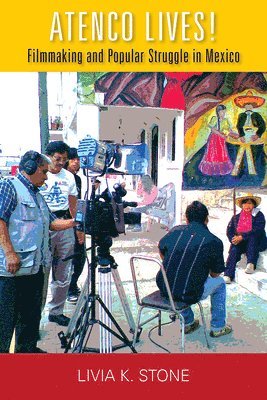
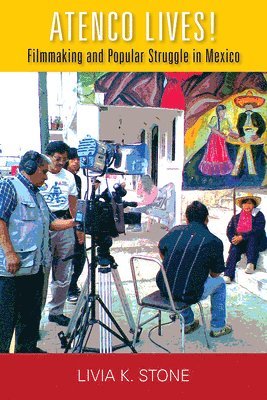
The People's Front in Defense of Land of Atenco (the ""Frente"") is an emblematic force in contemporary Mexican politics and in anti-capitalist, anti-neoliberal activist networks throughout the world. Best known for years of resistance against the encroachment of a government airport project on communal farmland, the Frente also became international news when its members were subject to state violence, rape, and intimidation in a brutal government crackdown in 2006. Through it all, documentary filmmaking has been one aspect of the Frente and its allies' efforts. The contradictions and difficulties of this moral and political project emerge in the day-to-day experiences of local, national, and international filmmakers and film distributors seeking to participate in the social movement.Stone highlights the importance of how the circulation of the physical videos, and not just their content, promotes the social movement. More broadly she shows how videographers perform their activism, navigating the tensions between neoliberal personhood or ego and an ethos of compañerismo that privileges community. Grounded in the lived experiences of Atenco's activists and allied filmmakers, Atenco Lives! documents the making and circulating of films as an ethical and political practice purposefully used to transform human relationships.
572 kr
Skickas inom 5-8 vardagar
The People's Front in Defense of Land of Atenco (the ""Frente"") is an emblematic force in contemporary Mexican politics and in anti-capitalist, anti-neoliberal activist networks throughout the world. Best known for years of resistance against the encroachment of a government airport project on communal farmland, the Frente also became international news when its members were subject to state violence, rape, and intimidation in a brutal government crackdown in 2006. Through it all, documentary filmmaking has been one aspect of the Frente and its allies' efforts. The contradictions and difficulties of this moral and political project emerge in the day-to-day experiences of local, national, and international filmmakers and film distributors seeking to participate in the social movement.Stone highlights the importance of how the circulation of the physical videos, and not just their content, promotes the social movement. More broadly she shows how videographers perform their activism, navigating the tensions between neoliberal personhood or ego and an ethos of compañerismo that privileges community. Grounded in the lived experiences of Atenco's activists and allied filmmakers, Atenco Lives! documents the making and circulating of films as an ethical and political practice purposefully used to transform human relationships.
1 620 kr
Skickas inom 5-8 vardagar
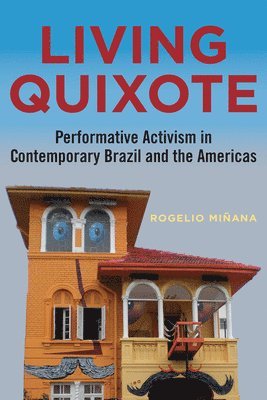
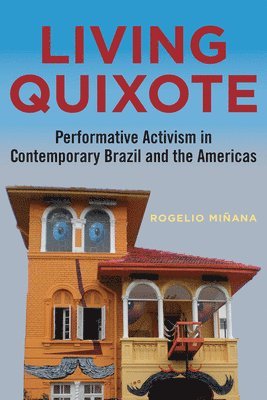
The 400th anniversaries of Don Quixote in 2005 and 2015 sparked worldwide celebrations that brought to the fore its ongoing cultural and ideological relevance. Living Quixote examines contemporary appropriations of Miguel de Cervantes's masterpiece in political and social justice movements in the Americas, particularly in Brazil.In this book, Cervantes scholar Rogelio Miñana examines long-term, Quixote-inspired activist efforts at the ground level. Through what the author terms performative activism, Quixote-inspired theater companies and nongovernmental organizations deploy a model for rewriting and enacting new social roles for underprivileged youth. Unique in its transatlantic, cross-historical, and community-based approach, Living Quixote offers both a new reading of Don Quixote and an applied model for cultural activism—a model based, in ways reminiscent of Paulo Freire, on the transformative potential of performance, literature, and art.
578 kr
Skickas inom 5-8 vardagar
The 400th anniversaries of Don Quixote in 2005 and 2015 sparked worldwide celebrations that brought to the fore its ongoing cultural and ideological relevance. Living Quixote examines contemporary appropriations of Miguel de Cervantes's masterpiece in political and social justice movements in the Americas, particularly in Brazil.In this book, Cervantes scholar Rogelio Miñana examines long-term, Quixote-inspired activist efforts at the ground level. Through what the author terms performative activism, Quixote-inspired theater companies and nongovernmental organizations deploy a model for rewriting and enacting new social roles for underprivileged youth. Unique in its transatlantic, cross-historical, and community-based approach, Living Quixote offers both a new reading of Don Quixote and an applied model for cultural activism-a model based, in ways reminiscent of Paulo Freire, on the transformative potential of performance, literature, and art.