SUNY series, Perspectives in Contemplative Studies - Böcker
Visar alla böcker i serien SUNY series, Perspectives in Contemplative Studies. Handla med fri frakt och snabb leverans.
8 produkter
8 produkter
480 kr
Skickas inom 5-8 vardagar
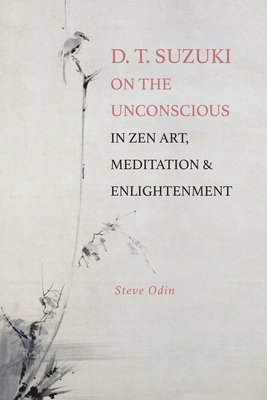
A comprehensive study of D. T. Suzuki's Zen philosophy and philosophical psychology in relation to his Buddhist understanding of the "cosmic Unconscious."This book explores how the Japanese philosopher D. T. Suzuki (1870–1966) developed an integral synthesis of Eastern and Western sources to establish a modern philosophical psychology of the "cosmic Unconscious," which he in turn used as the basis to interpret every aspect of Zen art, meditation, and enlightenment. Beyond Freud's personal unconscious and Jung's collective unconscious, according to Suzuki, is the cosmic Unconscious of Zen, which as absolute nothingness is the fountain of inexhaustible creative potentialities and the source of all Zen-inspired arts. The book demonstrates that, like the Kyoto School of modern Japanese philosophy, Suzuki's Zen endeavors to overcome the existential problem of nihilism or relative nothingness by shifting to the openness of absolute nothingness wherein emptiness is fullness and all things are disclosed in the evanescent beauty of their suchness. Suzuki, however, formulates his scheme in terms of a depth psychology where the cosmic Unconscious is the encompassing locus of absolute nothingness. Ultimately, the book argues that, by integrating both Eastern and Western views of the unconscious psyche, including the different schools of Zen and Mahayana Buddhism, as well as American, French, and German theories of the unconscious, Suzuki's Zen concept of the cosmic Unconscious constitutes a significant original contribution to philosophical psychology.
1 295 kr
Skickas
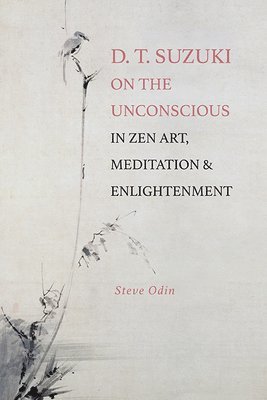
A comprehensive study of D. T. Suzuki's Zen philosophy and philosophical psychology in relation to his Buddhist understanding of the "cosmic Unconscious."This book explores how the Japanese philosopher D. T. Suzuki (1870–1966) developed an integral synthesis of Eastern and Western sources to establish a modern philosophical psychology of the "cosmic Unconscious," which he in turn used as the basis to interpret every aspect of Zen art, meditation, and enlightenment. Beyond Freud's personal unconscious and Jung's collective unconscious, according to Suzuki, is the cosmic Unconscious of Zen, which as absolute nothingness is the fountain of inexhaustible creative potentialities and the source of all Zen-inspired arts. The book demonstrates that, like the Kyoto School of modern Japanese philosophy, Suzuki's Zen endeavors to overcome the existential problem of nihilism or relative nothingness by shifting to the openness of absolute nothingness wherein emptiness is fullness and all things are disclosed in the evanescent beauty of their suchness. Suzuki, however, formulates his scheme in terms of a depth psychology where the cosmic Unconscious is the encompassing locus of absolute nothingness. Ultimately, the book argues that, by integrating both Eastern and Western views of the unconscious psyche, including the different schools of Zen and Mahayana Buddhism, as well as American, French, and German theories of the unconscious, Suzuki's Zen concept of the cosmic Unconscious constitutes a significant original contribution to philosophical psychology.
1 193 kr
Skickas
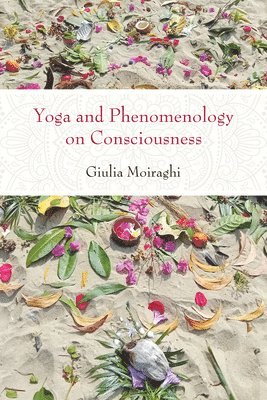
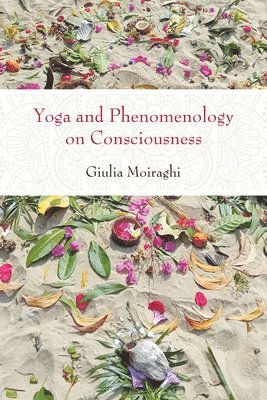
Brings yogic traditions into dialogue with current philosophical and scientific research on consciousness.In this book, philosopher and yoga practitioner Giulia Moiraghi brings yoga into dialogue with current debates on consciousness in analytic philosophy and cognitive science. The book explores embodiment's role in revealing a typically overlooked dimension of consciousness: the horizon consciousness. Bringing major thinkers in phenomenology together with the classical texts of yogic traditions, as well as the author's own firsthand experience, the book argues that yoga, across all the centuries and in its diversity of practices, points toward a common core that should not be left to an archaeological domain of study but should be integrated into ongoing philosophical research on consciousness. By helping the reader understand the relevance of key phenomenological concepts to the practice and actualization of yoga, the book provides a concise and agile tool for general practitioners in the contemplative field and for scholars in consciousness studies, Indian studies, philosophy, psychology, and cognitive science.
360 kr
Skickas
Brings yogic traditions into dialogue with current philosophical and scientific research on consciousness.In this book, philosopher and yoga practitioner Giulia Moiraghi brings yoga into dialogue with current debates on consciousness in analytic philosophy and cognitive science. The book explores embodiment's role in revealing a typically overlooked dimension of consciousness: the horizon consciousness. Bringing major thinkers in phenomenology together with the classical texts of yogic traditions, as well as the author's own firsthand experience, the book argues that yoga, across all the centuries and in its diversity of practices, points toward a common core that should not be left to an archaeological domain of study but should be integrated into ongoing philosophical research on consciousness. By helping the reader understand the relevance of key phenomenological concepts to the practice and actualization of yoga, the book provides a concise and agile tool for general practitioners in the contemplative field and for scholars in consciousness studies, Indian studies, philosophy, psychology, and cognitive science.
1 193 kr
Skickas
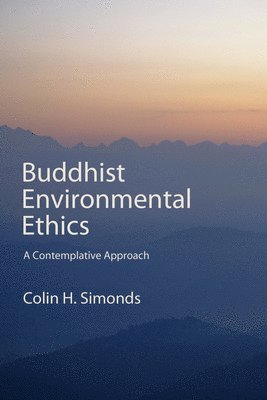
Brings Tibetan Buddhist philosophy, contemplative practice, and contemporary environmental ethics together to present a novel way of approaching the pressing issues facing our more-than-human world.In Buddhist Environmental Ethics, Colin H. Simonds presents a compelling case for using a contemplative register to approach some of our most pressing issues surrounding climate change, ecological collapse, and the exploitation of nonhuman animals. Simonds develops an emerging theory of Buddhist ethics—moral phenomenology—by engaging it with the Tibetan framework of view, meditation, action and providing a practical means by which individuals can ethically develop through contemplative practice. He then applies this theory and practical framework to the ethical and material problems facing the more-than-human world to show how a Tibetan Buddhist response to these issues offers a cogent, adaptable way to address environmental problems. In doing so, Buddhist Environmental Ethics forwards the first book-length constructive argument for an eco-Buddhist ethic in over a decade, articulates the first environmental ethic based on Tibetan Buddhist sources, and offers a timely framework for how we can experience the more-than-human world anew through contemplative practice.
360 kr
Kommande
Brings Tibetan Buddhist philosophy, contemplative practice, and contemporary environmental ethics together to present a novel way of approaching the pressing issues facing our more-than-human world.In Buddhist Environmental Ethics, Colin H. Simonds presents a compelling case for using a contemplative register to approach some of our most pressing issues surrounding climate change, ecological collapse, and the exploitation of nonhuman animals. Simonds develops an emerging theory of Buddhist ethics—moral phenomenology—by engaging it with the Tibetan framework of view, meditation, action and providing a practical means by which individuals can ethically develop through contemplative practice. He then applies this theory and practical framework to the ethical and material problems facing the more-than-human world to show how a Tibetan Buddhist response to these issues offers a cogent, adaptable way to address environmental problems. In doing so, Buddhist Environmental Ethics forwards the first book-length constructive argument for an eco-Buddhist ethic in over a decade, articulates the first environmental ethic based on Tibetan Buddhist sources, and offers a timely framework for how we can experience the more-than-human world anew through contemplative practice.
1 528 kr
Kommande
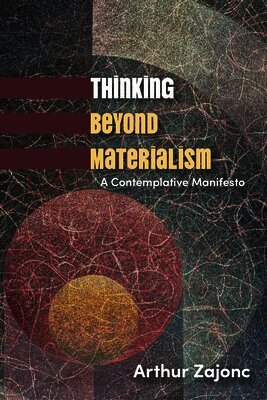
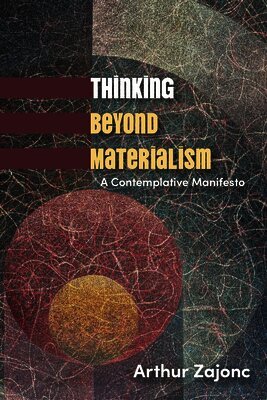
Draws on the revolutionary discoveries of modern physics to reveal a universe built on experience and relationship, offering a new foundation for an ethical and spiritual life.For centuries, science and spirituality have been viewed as irreconcilable. For the physicist Arthur Zajonc, this conflict is based on a profound misunderstanding. The true obstacle is not science itself but its entanglement with scientific materialism—a philosophy that, Zajonc argues, has been dismantled by the very discoveries of twentieth-century physics. In Thinking Beyond Materialism, Zajonc takes the reader on a journey through the implications of relativity and quantum mechanics, revealing a universe built not on inert matter but on the inner dimensions of human experience, relationship, and a productive, existential ambiguity. Drawing on his dual expertise as a physicist and meditation teacher, and his pioneering work with the Mind & Life Institute and the Dalai Lama, Zajonc charts a path toward a new worldview. The result is a "contemplative manifesto" that moves beyond outdated dogmas, proposing a science that befriends subjectivity, embraces holism, and rediscovers a firm foundation for an ethical and spiritual life.
292 kr
Kommande
Draws on the revolutionary discoveries of modern physics to reveal a universe built on experience and relationship, offering a new foundation for an ethical and spiritual life.For centuries, science and spirituality have been viewed as irreconcilable. For the physicist Arthur Zajonc, this conflict is based on a profound misunderstanding. The true obstacle is not science itself but its entanglement with scientific materialism—a philosophy that, Zajonc argues, has been dismantled by the very discoveries of twentieth-century physics. In Thinking Beyond Materialism, Zajonc takes the reader on a journey through the implications of relativity and quantum mechanics, revealing a universe built not on inert matter but on the inner dimensions of human experience, relationship, and a productive, existential ambiguity. Drawing on his dual expertise as a physicist and meditation teacher, and his pioneering work with the Mind & Life Institute and the Dalai Lama, Zajonc charts a path toward a new worldview. The result is a "contemplative manifesto" that moves beyond outdated dogmas, proposing a science that befriends subjectivity, embraces holism, and rediscovers a firm foundation for an ethical and spiritual life.