Perspectives on the Sixties Series – serie
Visar alla böcker i serien Perspectives on the Sixties Series. Handla med fri frakt och snabb leverans.
4 produkter
4 produkter
361 kr
Skickas inom 5-8 vardagar
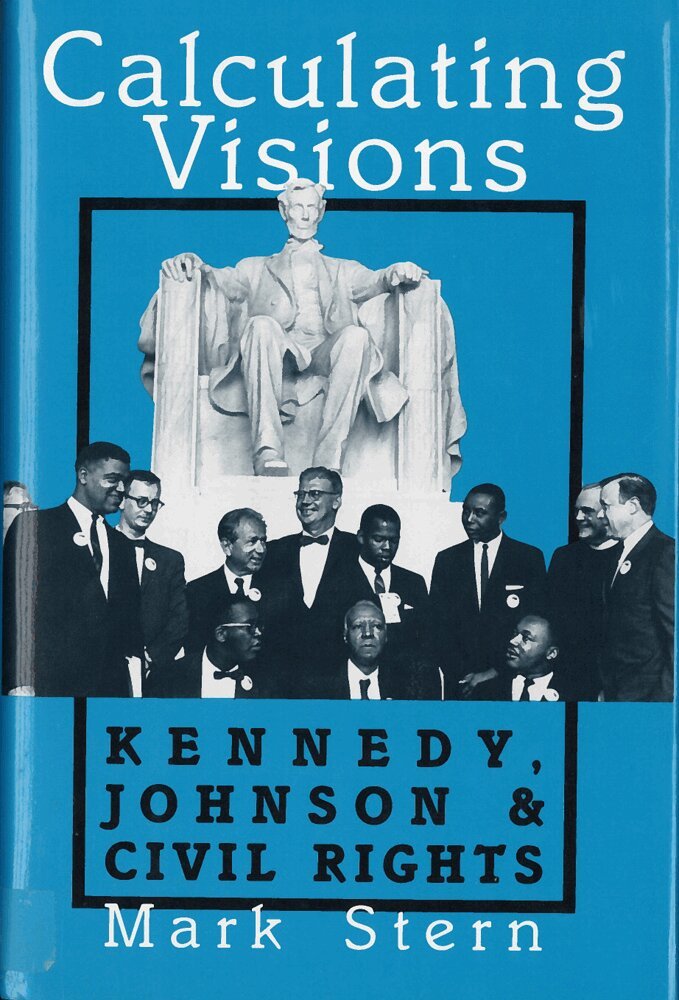
In June 1963, in the midst of national turmoil brought about by civil rights demonstrations, John Kennedy sent his administration's first major civil rights bill to the Congress. Still unsure about this move, he asked his brother Robert, "Do you think we did the right thing?" Within days of assuming the presidency, Lyndon Johnson publicly committed himself to civil rights as a "memorial" to his predecessor. Privately he told Georgia's Senator Richard Russell, the leader of the South in Congress, "Dick, you've got to get out of my way. I'm going to run you over." President Johnson would not compromise or equivocate on civil rights. John Kennedy of Massachusetts yielded to the pressure of events and became an ally of the movement, despite his fear that supporting civil rights could cost him votes in Congress and the nation. Lyndon Johnson of Texas, whom liberals loathed because he often gutted their prize legislation, became the committed champion of civil rights. Together their administrations became synonymous with the Second Reconstruction, though neither president had a prior record of strong civil rights commitment. Mark Stern explains how each man pursued power and votes, and ultimately redirected his own course of action and altered the nation's future.
379 kr
Skickas inom 5-8 vardagar
In the 1960s, the cooperative networks of food stores, restaurants, bakeries, bookstores, and housing alternatives were part counterculture, part social experiment, part economic utopia, and part revolutionary political statement. The co-ops gave activists a place where they could both express themselves and accomplish at least some small-scale changes. By the mid-1970s, dozens of food co-ops and other consumer- and work-owned enterprises were operating throughout the Twin Cities, and an alternative economic network - with a People's Warehouse at its hub - was beginning to transform the economic landscape of the metropolitan Minneapolis-St. Paul area. However, these co-op activists could not always agree among themselves on their goals. Craig Cox, a journalist who was active in the co-op movement, here provides the first book to look at food co-ops during the 1960s and 1970s. He presents a dramatic story of hope and conflict within the Minneapolis network, one of the largest co-op structures in the country. His "view from the front" of the "Co-op War" that ensued between those who wanted personal liberation through the movement and those who wanted a working-class revolution challenges us to re-thing possiblities for social and political change. Cox provides not a cynical portrait of sixties idealism, but a moving insight into an era when anything seemed possible.
379 kr
Skickas inom 5-8 vardagar
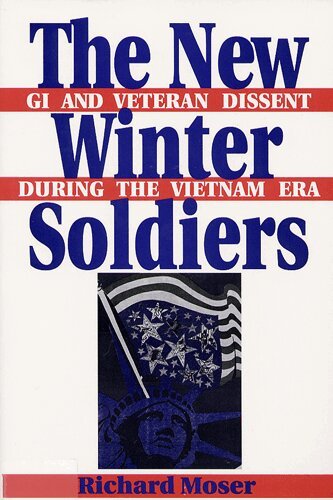
Richard Moser uses interviews and personal stories of Vietnam veterans to offer a fundamentally new interpretation of the Vietnam War and the antiwar movement. Although the Vietnam War was the most important conflict of recent American history, its decisive battle was not fought in the jungles of Vietnam, or even in the streets of the United States, but rather in the hearts and minds of American soldiers. To a degree unprecedented in American history, soldiers and veterans acted to oppose the very war they waged. Tens of thousands of soldiers and veterans engaged in desperate conflicts with their superiors and opposed the war through peaceful protest, creating a mass movement of dissident organizations and underground newspapers.Moser shows how the antiwar soldiers lived out the long tradition of the citizen soldier first created in the American Revolution and Civil War. Unlike those great upheavals of the past, the Vietnam War offered no way to fulfill the citizen-soldier's struggle for freedom and justice. Rather than abandoning such ideals, however, tens of thousands abandoned the war effort and instead fulfilled their heroic expectations in the movements for peace and justice. According to Moser, this transformation of warriors into peacemakers is the most important recent development of our military culture.The struggle for peace took these new winter soldiers into America rather than away from it. Collectively these men and women discovered the continuing potential of American culture to advance the values of freedom, equality, and justice on which the nation was founded.
Other Side of the Sixties
Young Americans for Freedom and the Rise of Conservative Politics
Häftad, Engelska, 1997
406 kr
Skickas inom 5-8 vardagar
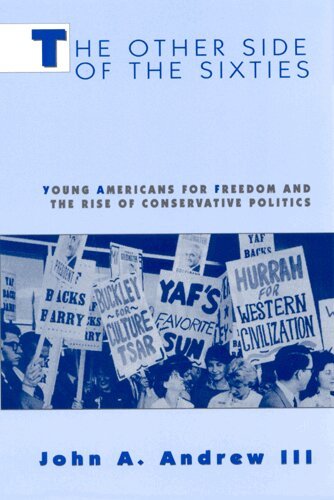
What were young conservatives doing in the 1960s while SDS and SNCC were working to move the political center to the left? The Other Side of the Sixties offers a gripping account of Young Americans for Freedom (YAF), an organization that became a leading force in promoting conservative ideas and that helped lay the groundwork for today's conservatism. John Andrew has mined unique archival material to document YAF's efforts to form a viable organization, define a new conservatism, attack the liberal establishment, and seize control of the Republican party, all while battling voter hostility and internal factionalism. The author also uncovers the Kennedy administration's use of the IRS to subvert YAF and other right-wing organizations through tax audits and investigations. By painting a more balanced portrait of political thinking in the sixties, Andrew offers a new and much needed look at the ideological atmosphere of a vibrant decade.