Philosophical Dialogues on Contemporary Problems - Böcker
Visar alla böcker i serien Philosophical Dialogues on Contemporary Problems. Handla med fri frakt och snabb leverans.
21 produkter
21 produkter
521 kr
Skickas inom 10-15 vardagar
What happens when two intelligent American college students with different attitudes about guns launch into a careful exploration of the ethics of gun policy? What might a European exchange student add to the mix? All three characters in this book are fictional, the creation of author David DeGrazia’s imagination. But their vigorous, respectful conversations over six meetings—well-informed by the latest empirical data and the best available philosophical arguments—shed needed light on the reality of guns in the U.S. today.These dialogues introduce students, professional academics, and others to the American experience with gun violence and gun policy, articulating ethical arguments supporting and opposing substantial gun control, and specific possibilities for reform. They also demonstrate how those who initially disagree about the place of guns in American society can communicate constructively and agree on many ideas.Dialogue 1 distinguishes the legal rights to private gun ownership from the ethics of gun policy and illustrates how the U.S. is an outlier with respect to gun violence, gun ownership, and gun politics. Dialogue 2 explores the overall social consequences of high rates of gun ownership and minimal regulation and enforcement. Then, turning to moral rights, Dialogue 3 probes the subtle relationships among a right to self-defense, its possible foundation(s), and alleged gun rights. Dialogue 4 turns to appeals to various liberties as possible bases for gun rights. Next, Dialogue 5 examines the possibility that various other moral rights—such as a right to a reasonably safe environment—can illuminate gun policy ethics. Finally, Dialogue 6 concludes with a fairly detailed exploration of the shape of morally defensible gun policy in the United States.Key features:Dialogue format provides an engaging and accessible exchange throughout the bookDepth of the ethical analysis refutes those who believe the issues pertaining to guns are simpleUp-to-date references and examples make the book more current than the competition.
1 968 kr
Skickas inom 10-15 vardagar
What happens when two intelligent American college students with different attitudes about guns launch into a careful exploration of the ethics of gun policy? What might a European exchange student add to the mix? All three characters in this book are fictional, the creation of author David DeGrazia’s imagination. But their vigorous, respectful conversations over six meetings—well-informed by the latest empirical data and the best available philosophical arguments—shed needed light on the reality of guns in the U.S. today.These dialogues introduce students, professional academics, and others to the American experience with gun violence and gun policy, articulating ethical arguments supporting and opposing substantial gun control, and specific possibilities for reform. They also demonstrate how those who initially disagree about the place of guns in American society can communicate constructively and agree on many ideas.Dialogue 1 distinguishes the legal rights to private gun ownership from the ethics of gun policy and illustrates how the U.S. is an outlier with respect to gun violence, gun ownership, and gun politics. Dialogue 2 explores the overall social consequences of high rates of gun ownership and minimal regulation and enforcement. Then, turning to moral rights, Dialogue 3 probes the subtle relationships among a right to self-defense, its possible foundation(s), and alleged gun rights. Dialogue 4 turns to appeals to various liberties as possible bases for gun rights. Next, Dialogue 5 examines the possibility that various other moral rights—such as a right to a reasonably safe environment—can illuminate gun policy ethics. Finally, Dialogue 6 concludes with a fairly detailed exploration of the shape of morally defensible gun policy in the United States.Key features:Dialogue format provides an engaging and accessible exchange throughout the bookDepth of the ethical analysis refutes those who believe the issues pertaining to guns are simpleUp-to-date references and examples make the book more current than the competition.
548 kr
Skickas inom 10-15 vardagar
What happens when two intelligent and highly informed fictional college students, one strongly pro-choice and the other vigorously pro-life, are asked to put together a presentation on abortion? Their conversations over five days – friendly but lively, charitable but clear – are captured in this book. Through these dialogues, students and other interested readers are introduced to the difficult moral issues of abortion. In Chapter 1, readers learn about Roe v. Wade and other relevant legal cases. Chapter 2 covers basic, philosophical issues such as: What is a person? Are fetuses persons? Is fetal potential morally relevant? How shall we define the moral community? Chapter 3 introduces students to Don Marquis’s "Why Abortion is Immoral" and also the metaphysical issues of personal identity and its relevance to abortion. Chapter 4 covers Judith Jarvis Thomson’s "A Defense of Abortion", including objections and responses to the argument from bodily autonomy. Finally, Chapter 5 looks at abortion in hard cases, such as in cases of rape, fetal disability, non-viable pregnancies, and sex-selection; the chapter also includes a conversation on fathers and abortion. With a Foreword by Laurie Shrage, topics headings in the margins, and an annotated bibliography, Dialogues on the Ethics of Abortion is an easy-to-use volume and valuable resource for anyone interested in a fair and clear-headed approach to one of the most contentious moral issues of our time.
1 900 kr
Skickas inom 10-15 vardagar
What happens when two intelligent and highly informed fictional college students, one strongly pro-choice and the other vigorously pro-life, are asked to put together a presentation on abortion? Their conversations over five days – friendly but lively, charitable but clear – are captured in this book. Through these dialogues, students and other interested readers are introduced to the difficult moral issues of abortion. In Chapter 1, readers learn about Roe v. Wade and other relevant legal cases. Chapter 2 covers basic, philosophical issues such as: What is a person? Are fetuses persons? Is fetal potential morally relevant? How shall we define the moral community? Chapter 3 introduces students to Don Marquis’s "Why Abortion is Immoral" and also the metaphysical issues of personal identity and its relevance to abortion. Chapter 4 covers Judith Jarvis Thomson’s "A Defense of Abortion", including objections and responses to the argument from bodily autonomy. Finally, Chapter 5 looks at abortion in hard cases, such as in cases of rape, fetal disability, non-viable pregnancies, and sex-selection; the chapter also includes a conversation on fathers and abortion. With a Foreword by Laurie Shrage, topics headings in the margins, and an annotated bibliography, Dialogues on the Ethics of Abortion is an easy-to-use volume and valuable resource for anyone interested in a fair and clear-headed approach to one of the most contentious moral issues of our time.
483 kr
Skickas
Written both for general readers and college students, Dialogues on Climate Justice provides an engaging philosophical introduction to climate justice, and should be of interest to anyone wanting to think seriously about the climate crisis. The story follows the life and conversations of Hope, a fictional protagonist whose life is shaped by a terrifyingly real problem: climate change. From the election of Donald Trump in 2016 until the 2060s, the book documents Hope’s discussions with a diverse cast of characters. As she ages, her conversations move from establishing the nature of the problem, to engaging with climate skepticism, to exploring her own climate responsibilities, through managing contentious international negotiations, to considering big technological fixes, and finally, as an older woman, to reflecting with her granddaughter on what one generation owes another. Following a philosophical tradition established by Plato more than two thousand years ago, these dialogues are not only philosophically substantive and carefully argued, but also distinctly human. The differing perspectives on display mirror those involved in real-world climate dialogues going on today.Key Features:Written in an engaging dialogue form, which includes characterization, clear exchanges of ideas, and a compelling story arcClearly organized to allow readers both in-depth consideration and rapid overviews of various topicsMemorable examples that enable and encourage discussion inside and outside the classroomAn Introduction to the book aimed at instructors, which includes helpful instructions for teaching the book and engaging student assignments
2 103 kr
Skickas inom 10-15 vardagar
Written both for general readers and college students, Dialogues on Climate Justice provides an engaging philosophical introduction to climate justice, and should be of interest to anyone wanting to think seriously about the climate crisis. The story follows the life and conversations of Hope, a fictional protagonist whose life is shaped by a terrifyingly real problem: climate change. From the election of Donald Trump in 2016 until the 2060s, the book documents Hope’s discussions with a diverse cast of characters. As she ages, her conversations move from establishing the nature of the problem, to engaging with climate skepticism, to exploring her own climate responsibilities, through managing contentious international negotiations, to considering big technological fixes, and finally, as an older woman, to reflecting with her granddaughter on what one generation owes another. Following a philosophical tradition established by Plato more than two thousand years ago, these dialogues are not only philosophically substantive and carefully argued, but also distinctly human. The differing perspectives on display mirror those involved in real-world climate dialogues going on today.Key Features:Written in an engaging dialogue form, which includes characterization, clear exchanges of ideas, and a compelling story arcClearly organized to allow readers both in-depth consideration and rapid overviews of various topicsMemorable examples that enable and encourage discussion inside and outside the classroomAn Introduction to the book aimed at instructors, which includes helpful instructions for teaching the book and engaging student assignments
223 kr
Skickas inom 10-15 vardagar
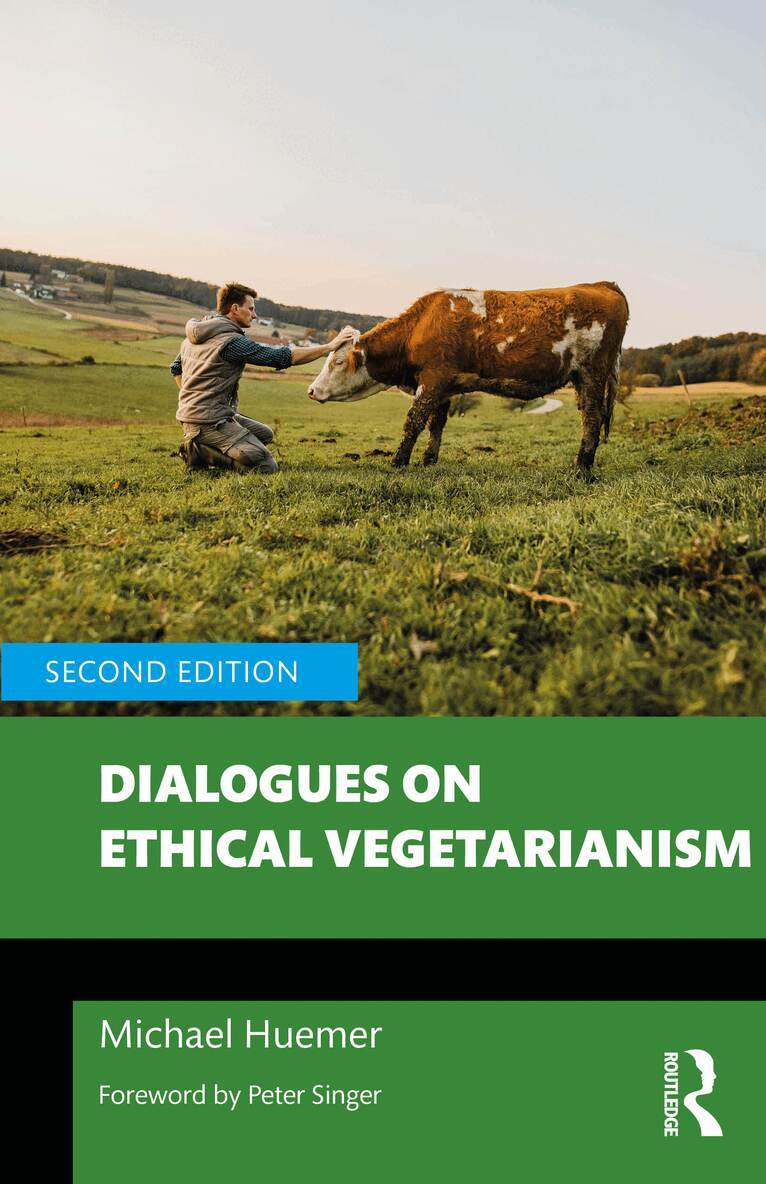
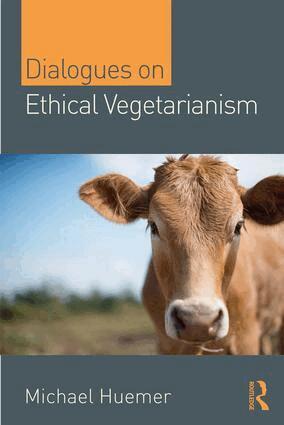
Worldwide every year, 83 billion animals are slaughtered on factory farms, at the end of brief lives full of suffering. Is it wrong to buy the products of this industry?In this book, two college students – a meat-eater and an ethical vegetarian – discuss this question in a series of dialogues conducted over five days. Issues covered include: how intelligence affects the badness of pain, whether consumers are responsible for the practices of the industry, how individual choices affect an industry, whether farm animals are better off living on factory farms than not existing at all, whether meat-eating is natural, whether morality protects those who cannot understand morality, whether morality protects those who are not members of society, whether humans alone possess souls, whether different creatures have different degrees of consciousness, why extreme animal welfare positions "sound crazy," and the role of empathy in moral judgment. The two go on to discuss the vegan life, why people who accept the arguments often fail to change their behavior, and how vegans should interact with non-vegans.This Second Edition also covers many new topics, including:Satisfying nutritional needs with plant-based foodsThe overall health effects of vegetarian dietsThe consumer costs of a plant-based dietSynthetic meatFood desertsChristian-inspired arguments for and against veganismProgressive-inspired arguments for and against veganismA new appendix offers readers delicious vegan recipes, including ones for Carrot Ginger Soup, Avocado Toast, Compassionate Chili, and The Smoothie of the Gods.Key Features:Thoroughly reviews the common arguments on both sides of the debateDialogue format provides the most engaging way of introducing the issuesWritten in clear, conversational prose for a popular audienceOffers new insights into the psychology of our dietary choices and our responsibility for influencing othersNew in this edition, several easy and delicious vegan recipes
2 103 kr
Skickas inom 10-15 vardagar
Worldwide every year, 83 billion animals are slaughtered on factory farms, at the end of brief lives full of suffering. Is it wrong to buy the products of this industry?In this book, two college students – a meat-eater and an ethical vegetarian – discuss this question in a series of dialogues conducted over five days. Issues covered include: how intelligence affects the badness of pain, whether consumers are responsible for the practices of the industry, how individual choices affect an industry, whether farm animals are better off living on factory farms than not existing at all, whether meat-eating is natural, whether morality protects those who cannot understand morality, whether morality protects those who are not members of society, whether humans alone possess souls, whether different creatures have different degrees of consciousness, why extreme animal welfare positions "sound crazy," and the role of empathy in moral judgment. The two go on to discuss the vegan life, why people who accept the arguments often fail to change their behavior, and how vegans should interact with non-vegans.This Second Edition also covers many new topics, including:Satisfying nutritional needs with plant-based foodsThe overall health effects of vegetarian dietsThe consumer costs of a plant-based dietSynthetic meatFood desertsChristian-inspired arguments for and against veganismProgressive-inspired arguments for and against veganismA new appendix offers readers delicious vegan recipes, including ones for Carrot Ginger Soup, Avocado Toast, Compassionate Chili, and The Smoothie of the Gods.Key Features:Thoroughly reviews the common arguments on both sides of the debateDialogue format provides the most engaging way of introducing the issuesWritten in clear, conversational prose for a popular audienceOffers new insights into the psychology of our dietary choices and our responsibility for influencing othersNew in this edition, several easy and delicious vegan recipes
521 kr
Skickas inom 10-15 vardagar
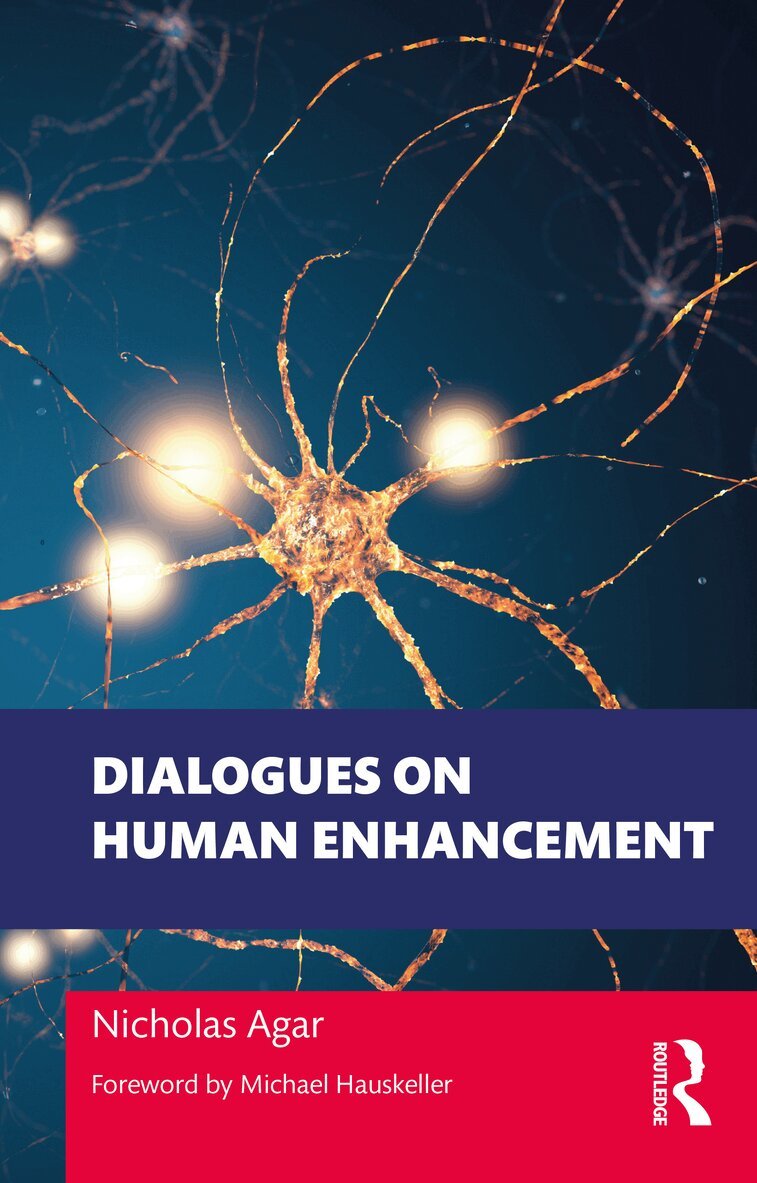
We face an emerging range of technologies that can be applied to our human natures with the goal of enhancing us. There are nootropic smart drugs and gene editing that influence the development of the brain. The near future promises cybernetic technologies that can be grafted onto our brains and bodies. The challenge for readers of Dialogues on Human Enhancement is to decide how to respond to these and other coming enhancement technologies.As you read these dialogues you will meet passionate advocates for a variety of responses to enhancement tech, ranging from blanket rejection to ecstatic endorsement. You’ll encounter Olen, for whom there is no such thing as too much enhancement. You’ll meet Winston, a bioconservative who fiercely but also imaginatively opposes any human enhancement. And there is the moderate Eugenie, who strives to distinguish between enhancement technologies that should and should not be accepted. As these characters philosophically engage with each other they will benefit from the supervisory presence of Sophie, the philosopher.Dialogues on Human Enhancement does not arrive at a single conclusion. Olen’s transhumanism, Eugenie’s moderation, and Winston’s bioconservatism are presented as viable and necessary views as we enter a future made uncertain by human enhancement tech.And the book also welcomes the voices of students, even – and especially – if they challenge the opinions of our age’s experts. As students join the conversations in this book, they will formulate their own views about how humanity could or should be in our Age of Human Enhancement.
1 968 kr
Skickas inom 10-15 vardagar
We face an emerging range of technologies that can be applied to our human natures with the goal of enhancing us. There are nootropic smart drugs and gene editing that influence the development of the brain. The near future promises cybernetic technologies that can be grafted onto our brains and bodies. The challenge for readers of Dialogues on Human Enhancement is to decide how to respond to these and other coming enhancement technologies.As you read these dialogues you will meet passionate advocates for a variety of responses to enhancement tech, ranging from blanket rejection to ecstatic endorsement. You’ll encounter Olen, for whom there is no such thing as too much enhancement. You’ll meet Winston, a bioconservative who fiercely but also imaginatively opposes any human enhancement. And there is the moderate Eugenie, who strives to distinguish between enhancement technologies that should and should not be accepted. As these characters philosophically engage with each other they will benefit from the supervisory presence of Sophie, the philosopher.Dialogues on Human Enhancement does not arrive at a single conclusion. Olen’s transhumanism, Eugenie’s moderation, and Winston’s bioconservatism are presented as viable and necessary views as we enter a future made uncertain by human enhancement tech.And the book also welcomes the voices of students, even – and especially – if they challenge the opinions of our age’s experts. As students join the conversations in this book, they will formulate their own views about how humanity could or should be in our Age of Human Enhancement.
2 103 kr
Skickas inom 10-15 vardagar
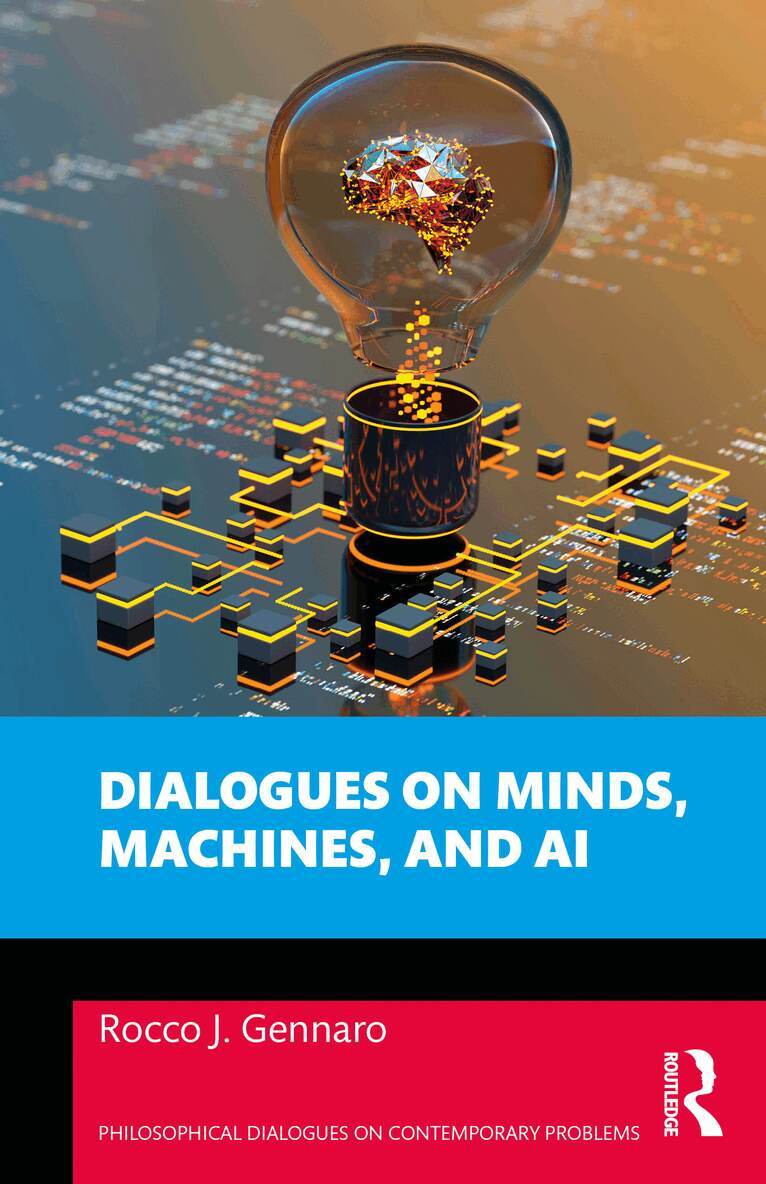
Dialogues on Minds, Machines, and AI invites readers into a series of thought-provoking debates among three college seniors bound for graduate school: Sue, completing her double major in philosophy and cognitive science; John, a computer engineering specialist; and Amy, a psychology major. Through five engaging lunchtime conversations, these students bring their diverse perspectives to fundamental questions about consciousness, artificial intelligence, and the nature of mind.The dialogues seamlessly blend discussions of popular science fiction films with critical examinations of recent AI developments, including ChatGPT, deep fakes, and other emerging technologies. Readers will explore foundational concepts at the intersection of human consciousness and machine learning: Alan Turing's influential "imitation game," John Searle's provocative "Chinese room argument," computational theories of mind, robot creativity, and the modularity of mind hypothesis. Rather than advocating for any particular viewpoint, these conversations illuminate the strengths, weaknesses, and implications of each perspective.Perfect for undergraduate students and curious minds from all backgrounds, this accessible introduction to cognitive science requires no prior knowledge of philosophy or technical subjects. The book includes a comprehensive glossary and thoughtful study questions to enhance understanding, while a carefully curated bibliography enables readers to explore specific topics in greater depth.
575 kr
Skickas inom 10-15 vardagar
Dialogues on Minds, Machines, and AI invites readers into a series of thought-provoking debates among three college seniors bound for graduate school: Sue, completing her double major in philosophy and cognitive science; John, a computer engineering specialist; and Amy, a psychology major. Through five engaging lunchtime conversations, these students bring their diverse perspectives to fundamental questions about consciousness, artificial intelligence, and the nature of mind.The dialogues seamlessly blend discussions of popular science fiction films with critical examinations of recent AI developments, including ChatGPT, deep fakes, and other emerging technologies. Readers will explore foundational concepts at the intersection of human consciousness and machine learning: Alan Turing's influential "imitation game," John Searle's provocative "Chinese room argument," computational theories of mind, robot creativity, and the modularity of mind hypothesis. Rather than advocating for any particular viewpoint, these conversations illuminate the strengths, weaknesses, and implications of each perspective.Perfect for undergraduate students and curious minds from all backgrounds, this accessible introduction to cognitive science requires no prior knowledge of philosophy or technical subjects. The book includes a comprehensive glossary and thoughtful study questions to enhance understanding, while a carefully curated bibliography enables readers to explore specific topics in greater depth.
2 103 kr
Skickas inom 10-15 vardagar
What does it mean to live a meaningful life? Can life be meaningful at all, and if it can, what exactly makes it so? This new volume in the Philosophical Dialogues on Contemporary Issues series addresses these questions through fictional dialogues that relate the theoretical problems that philosophers tend to focus on to the lives of ordinary people, the concerns they have, and the problems they face.Overseeing the seven dialogues presented in this book is the Socrates-like character, Richard Roe, a middle-aged man who has recently lost his son to COVID-19, a tragedy that sets him out on a quest to understand what makes people pursue the goals they do to give their lives meaning. Guided by an engaging set of characters and a captivating narrative, readers are invited to reflect on various contemporary issues. Among them are our common obsession with fame and celebrity, the disturbing tendency of people to rally behind morally obnoxious causes and people, mental crises as a response to the perceived meaninglessness of life, scientific efforts to halt the aging process and to postpone death indefinitely, and the future of work in an age of increasing automatization. This book shows how such issues are intimately connected to both our ability and our desire to live a meaningful life.Dialogues on the Meaning of Life is an accessible introduction to complex philosophical issues raised by theism, atheism, nihilism, transhumanism, well-being, human rights, and theories about death and friendship, and offers an easy-to-follow approach to core questions surrounding the nature of our existence.Key features include:Provides an accessible introduction to the philosophical debate on the meaning of life.Connects abstract philosophical issues to the concrete concerns of ordinary people.Develops and conveys key insights through an engaging narrative.Shows the practical relevance of philosophical theory.
575 kr
Skickas inom 10-15 vardagar
What does it mean to live a meaningful life? Can life be meaningful at all, and if it can, what exactly makes it so? This new volume in the Philosophical Dialogues on Contemporary Issues series addresses these questions through fictional dialogues that relate the theoretical problems that philosophers tend to focus on to the lives of ordinary people, the concerns they have, and the problems they face.Overseeing the seven dialogues presented in this book is the Socrates-like character, Richard Roe, a middle-aged man who has recently lost his son to COVID-19, a tragedy that sets him out on a quest to understand what makes people pursue the goals they do to give their lives meaning. Guided by an engaging set of characters and a captivating narrative, readers are invited to reflect on various contemporary issues. Among them are our common obsession with fame and celebrity, the disturbing tendency of people to rally behind morally obnoxious causes and people, mental crises as a response to the perceived meaninglessness of life, scientific efforts to halt the aging process and to postpone death indefinitely, and the future of work in an age of increasing automatization. This book shows how such issues are intimately connected to both our ability and our desire to live a meaningful life.Dialogues on the Meaning of Life is an accessible introduction to complex philosophical issues raised by theism, atheism, nihilism, transhumanism, well-being, human rights, and theories about death and friendship, and offers an easy-to-follow approach to core questions surrounding the nature of our existence.Key features include:Provides an accessible introduction to the philosophical debate on the meaning of life.Connects abstract philosophical issues to the concrete concerns of ordinary people.Develops and conveys key insights through an engaging narrative.Shows the practical relevance of philosophical theory.
1 968 kr
Skickas inom 10-15 vardagar
Dialogues on Democracy offers a panoramic overview of recent and classical debates on the meaning of democracy as a philosophical ideal. It features some of the most central discussions that exist in the literature regarding its value, its purpose, and its (possible) flaws.Accessibly written and efficiently organized, the book is structured around a fictional conversation involving four participants: a teacher of philosophy and political theory and three of her most notable and dedicated students. Their dialogues capture the essence of some of the most powerful objections and counter objections to democracy and its institutions, allowing the reader to understand the origins and logic of much philosophical thinking concerned with political life. Maskivker provides succinct but highly informative arguments in defense of democracy while deftly addressing serious questions regarding its legitimacy coming from diverse corners of the ideological spectrum. The discussion addresses issues concerned with the justification and institutional plausibility of collective government, citizen equality, political representation, citizen action, civic virtue, and many other themes.Perfectly suited for a first introduction to the philosophical analysis of democracy, the book covers extensive ground in an instructive and dynamic way. In the book, Maskivker also offers her own novel insights regarding the value of democracy and its distinct interpretations – a contribution that makes the book all the more interesting and complete.Key Features:Introduces important thinkers in the contemporary debate about theories of democracyAssumes no background knowledge of philosophy or political theoryWritten in an engaging dialogue format between four fictional characters: a teacher of philosophy and political theory and three of her most notable and dedicated students.
534 kr
Skickas inom 10-15 vardagar
Dialogues on Democracy offers a panoramic overview of recent and classical debates on the meaning of democracy as a philosophical ideal. It features some of the most central discussions that exist in the literature regarding its value, its purpose, and its (possible) flaws.Accessibly written and efficiently organized, the book is structured around a fictional conversation involving four participants: a teacher of philosophy and political theory and three of her most notable and dedicated students. Their dialogues capture the essence of some of the most powerful objections and counter objections to democracy and its institutions, allowing the reader to understand the origins and logic of much philosophical thinking concerned with political life. Maskivker provides succinct but highly informative arguments in defense of democracy while deftly addressing serious questions regarding its legitimacy coming from diverse corners of the ideological spectrum. The discussion addresses issues concerned with the justification and institutional plausibility of collective government, citizen equality, political representation, citizen action, civic virtue, and many other themes.Perfectly suited for a first introduction to the philosophical analysis of democracy, the book covers extensive ground in an instructive and dynamic way. In the book, Maskivker also offers her own novel insights regarding the value of democracy and its distinct interpretations – a contribution that makes the book all the more interesting and complete.Key Features:Introduces important thinkers in the contemporary debate about theories of democracyAssumes no background knowledge of philosophy or political theoryWritten in an engaging dialogue format between four fictional characters: a teacher of philosophy and political theory and three of her most notable and dedicated students.
575 kr
Skickas inom 10-15 vardagar
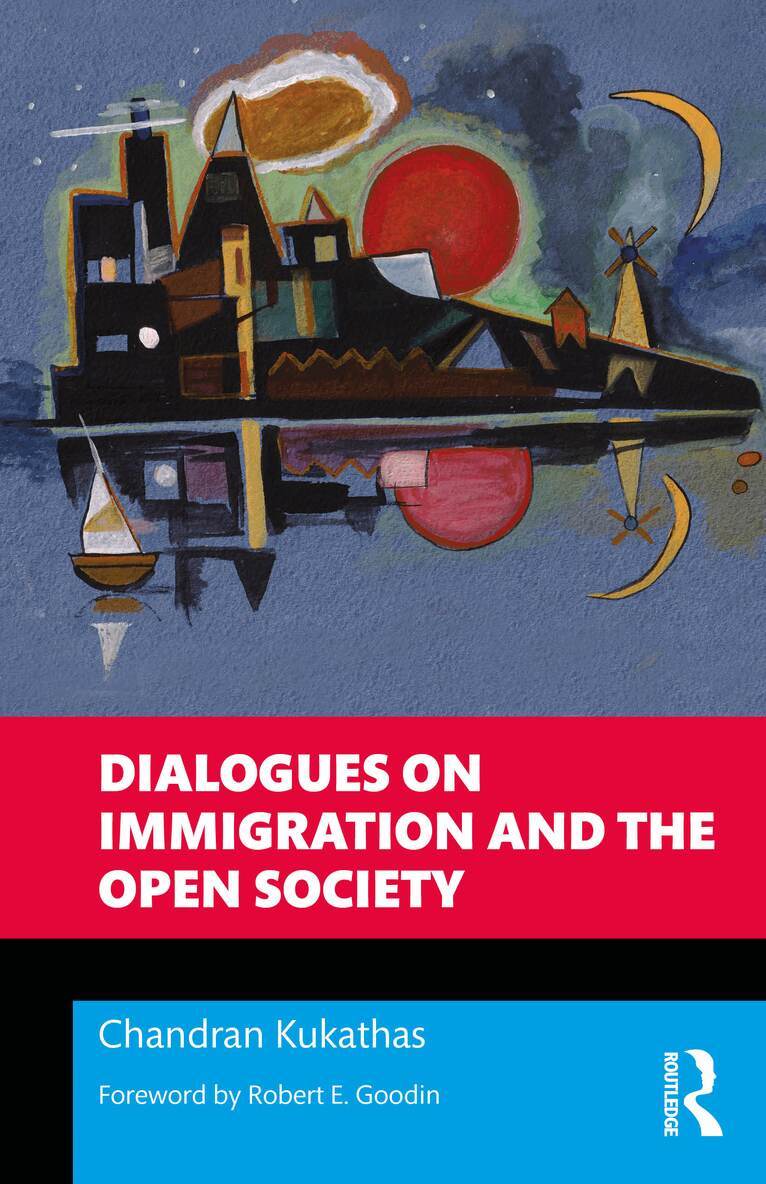
After some friendly pestering from six of his students curious about his thinking about immigration, a philosophy professor invites them to present their own ideas to him over a series of meetings throughout the term. This book is about their conversations.These dialogues introduce the reader to the most important ethical and political questions about immigration. They begin by considering the claim that significant levels of immigration pose a threat to the very civilization of the West, where the immigration issue is a particularly vexed one. The chapters that follow consider the economics of immigration, whether or not the state is justified in its efforts—or even obliged—to control immigration, and whether everyone has a right to move or if only refugees can make so strong a claim. The final chapter considers the implications of a philosophy of immigration on the ideal of an open society. Throughout the book, there is a strong emphasis on addressing the conceptual questions that are vital for making any headway in understanding practical issues. What is a refugee? What are rights? What is an open society? Indeed, what is immigration?Key Features:Written as a friendly engagement between six thoughtful but skeptical students who hold a variety of views, and a philosophy professor, who insists he’s just trying to work out the answers with their help rather than convince them of one right answer;Engages with the immigration debates in philosophy, economics and politics, without presupposing any specialist knowledge;Includes discussion of the historical and institutional aspects of immigration, so the conversation is never simply about abstract or hypothetical cases;Concludes with a substantive theory about how to think about immigration and the free society to prompt further reflection.
2 103 kr
Skickas inom 10-15 vardagar
After some friendly pestering from six of his students curious about his thinking about immigration, a philosophy professor invites them to present their own ideas to him over a series of meetings throughout the term. This book is about their conversations.These dialogues introduce the reader to the most important ethical and political questions about immigration. They begin by considering the claim that significant levels of immigration pose a threat to the very civilization of the West, where the immigration issue is a particularly vexed one. The chapters that follow consider the economics of immigration, whether or not the state is justified in its efforts—or even obliged—to control immigration, and whether everyone has a right to move or if only refugees can make so strong a claim. The final chapter considers the implications of a philosophy of immigration on the ideal of an open society. Throughout the book, there is a strong emphasis on addressing the conceptual questions that are vital for making any headway in understanding practical issues. What is a refugee? What are rights? What is an open society? Indeed, what is immigration?Key Features:Written as a friendly engagement between six thoughtful but skeptical students who hold a variety of views, and a philosophy professor, who insists he’s just trying to work out the answers with their help rather than convince them of one right answer;Engages with the immigration debates in philosophy, economics and politics, without presupposing any specialist knowledge;Includes discussion of the historical and institutional aspects of immigration, so the conversation is never simply about abstract or hypothetical cases;Concludes with a substantive theory about how to think about immigration and the free society to prompt further reflection.
575 kr
Skickas inom 10-15 vardagar
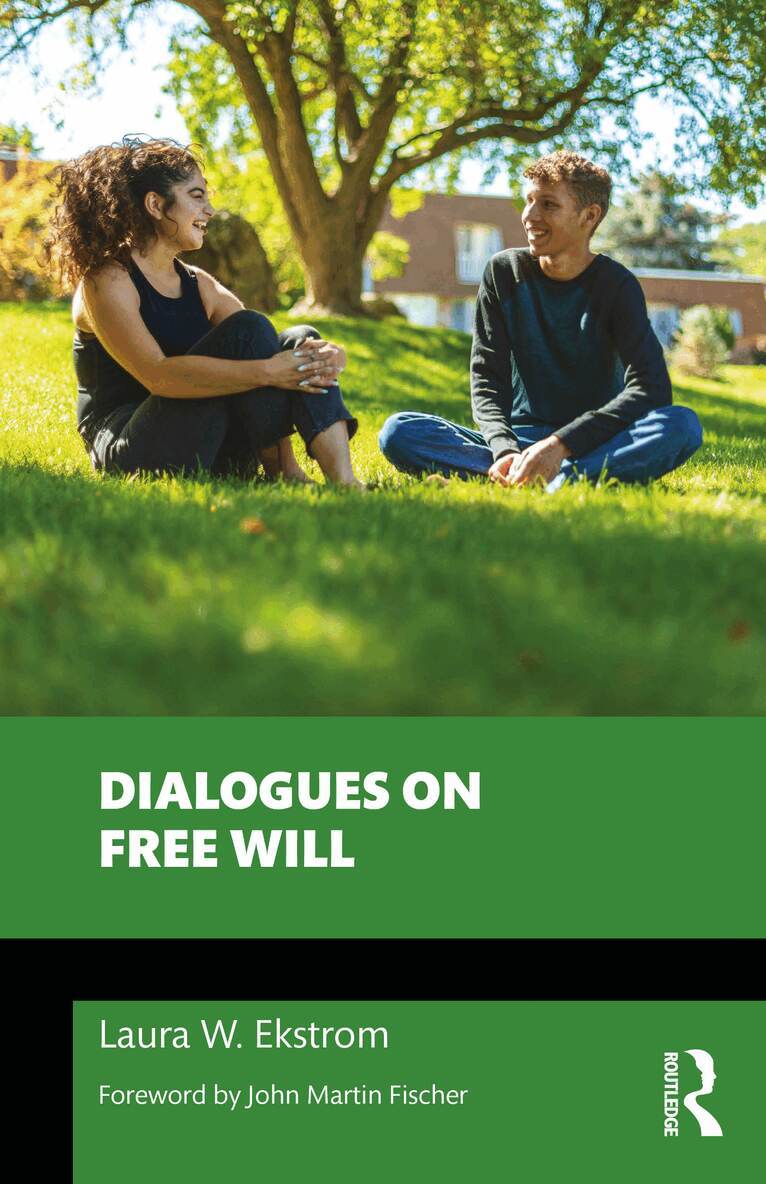
What kinds of conversations might take place when two intelligent and informed young people – one a strong believer in free will and the other just as certain that we don’t have it – get together to discuss their viewpoints? This new volume in the Philosophical Dialogues on Contemporary Problems series introduces both sides of this age-old philosophical debate in a fun and accessible way.Author and acclaimed philosopher Laura W. Ekstrom has created Rosa and Leif, two college students, who each give voice to the strongest arguments in the most important debates about free will and moral responsibility. Over the course of eleven days, Rosa, a strong defender of free will, draws on her religious beliefs and her thoughts about love and meaning in human life. Leif, her equally informed and articulate interlocutor, raises challenges to Rosa’s points, drawing on the latest research and ideas in neuroscience, theology, and social psychology. Along the way, they must carefully develop clear reasons for their positions, while offering a fair hearing to alternative viewpoints and spurring readers to reach their own conclusions.Working in a philosophical tradition established by Plato, these dialogues are both philosophically substantive and provocative, inviting readers to ponder issues that are fundamental to our understanding of the nature of choice, responsibility, and ourselves as human beings.
2 103 kr
Skickas inom 10-15 vardagar
What kinds of conversations might take place when two intelligent and informed young people – one a strong believer in free will and the other just as certain that we don’t have it – get together to discuss their viewpoints? This new volume in the Philosophical Dialogues on Contemporary Problems series introduces both sides of this age-old philosophical debate in a fun and accessible way.Author and acclaimed philosopher Laura W. Ekstrom has created Rosa and Leif, two college students, who each give voice to the strongest arguments in the most important debates about free will and moral responsibility. Over the course of eleven days, Rosa, a strong defender of free will, draws on her religious beliefs and her thoughts about love and meaning in human life. Leif, her equally informed and articulate interlocutor, raises challenges to Rosa’s points, drawing on the latest research and ideas in neuroscience, theology, and social psychology. Along the way, they must carefully develop clear reasons for their positions, while offering a fair hearing to alternative viewpoints and spurring readers to reach their own conclusions.Working in a philosophical tradition established by Plato, these dialogues are both philosophically substantive and provocative, inviting readers to ponder issues that are fundamental to our understanding of the nature of choice, responsibility, and ourselves as human beings.
2 099 kr
Tillfälligt slut
After lives filled with deep suffering, 74 billion animals are slaughtered worldwide every year on factory farms. Is it wrong to buy the products of this industry? In this book, two college students – a meat-eater and an ethical vegetarian – discuss this question in a series of dialogues conducted over four days. The issues they cover include: how intelligence affects the badness of pain, whether consumers are responsible for the practices of an industry, how individual choices affect an industry, whether farm animals are better off living on factory farms than not existing at all, whether meat-eating is natural, whether morality protects those who cannot understand morality, whether morality protects those who are not members of society, whether humans alone possess souls, whether different creatures have different degrees of consciousness, why extreme animal welfare positions "sound crazy," and the role of empathy in moral judgment. The two students go on to discuss the vegan life, why people who accept the arguments in favor of veganism often fail to change their behavior, and how vegans should interact with non-vegans.A foreword, by Peter Singer, introduces and provides context for the dialogues, and a final annotated bibliography offers a list of sources related to the discussion. It offers abstracts of the most important books and articles related to the ethics of vegetarianism and veganism. Key Features:Thoroughly reviews the common arguments on both sides of the debate.Dialogue format provides the most engaging way of introducing the issues.Written in clear, conversational prose for a popular audience.Offers new insights into the psychology of our dietary choices and our responsibility for influencing others.