Philosophy in Action - Böcker
Visar alla böcker i serien Philosophy in Action. Handla med fri frakt och snabb leverans.
12 produkter
12 produkter
154 kr
Skickas inom 5-8 vardagar
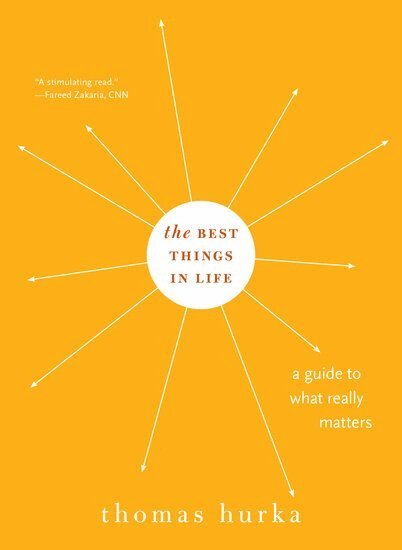
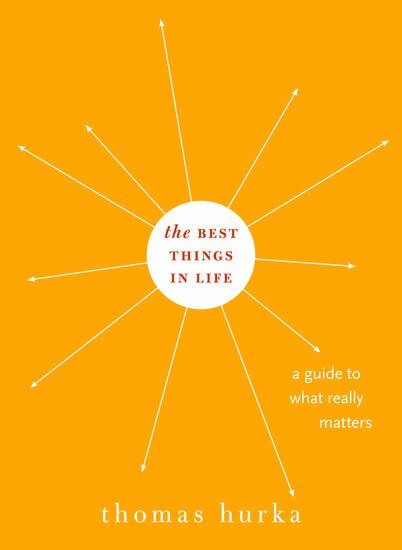
For centuries, philosophers, theologians, moralists, and ordinary people have asked: How should we live? What makes for a good life? In The Best Things in Life, distinguished philosopher Thomas Hurka takes a fresh look at these perennial questions as they arise for us now in the 21st century. Should we value family over career? How do we balance self-interest and serving others? What activities bring us the most joy? While religion, literature, popular psychology, and everyday wisdom all grapple with these questions, philosophy more than anything else uses the tools of reason to make important distinctions, cut away irrelevancies, and distill these issues down to their essentials. Hurka argues that if we are to live a good life, one thing we need to know is which activities and experiences will most likely lead us to happiness and which will keep us from it, while also reminding us that happiness isn't the only thing that makes life good. Hurka explores many topics: four types of good feeling (and the limits of good feeling); how we can improve our baseline level of happiness (making more money, it turns out, isn't the answer); which kinds of knowledge are most worth having; the importance of achieving worthwhile goals; the value of love and friendship; and much more. Unlike many philosophers, he stresses that there isn't just one good in life but many: pleasure, as Epicurus argued, is indeed one, but knowledge, as Socrates contended, is another, as is achievement. And while the great philosophers can help us understand what matters most in life, Hurka shows that we must ultimately decide for ourselves. This delightfully accessible book offers timely guidance on answering the most important question any of us will ever ask: How do we live a good life?
321 kr
Skickas inom 5-8 vardagar
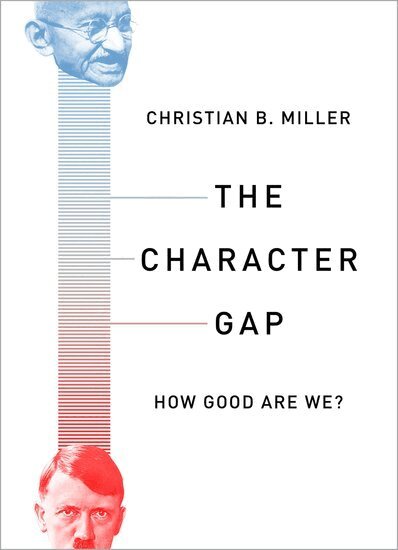
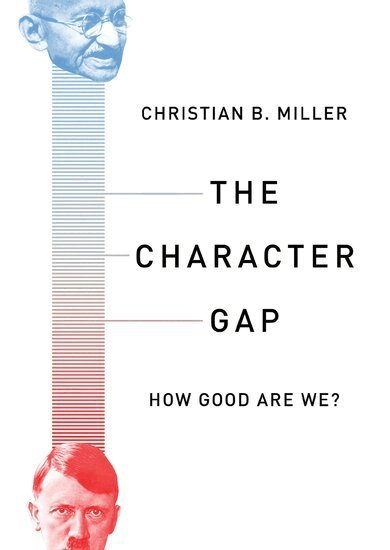
We like to think of ourselves, our friends, and our families as pretty decent people. We may not be saints, but we are basically good, fairly honest, relatively kind, and mostly trustworthy. One of the central themes of The Character Gap is that we are badly mistaken in thinking this way. In recent years, hundreds of psychological studies have been done which tell a rather different story. We have serious character flaws that prevent us from being good people, many of which we do not even recognize in ourselves. Does this mean that instead we are wretched people, vicious, cruel or hateful? Christian Miller does not argue that this is necessarily the case either. Instead, the more we put our characters to the test, the more we see that we are a mixed bag. On the one hand, most of us as bystanders will do nothing as someone cries out for help. Even worse, under pressure from authority figures we might kill innocent people. Yet it is also true that there will be many times when we selflessly come to the aid of a complete stranger, or don't lie, steal, or cheat even if we could get away with it. As we embark on this journey of putting our characters to the test, some of the main questions will include:What is good character?Why should we bother working to develop a good character?What does the research in psychology suggest about how good (or bad) our characters really are?What secular strategies for improving our characters show a lot of promise?What religious, and specifically Christian, strategies for improving our characters show a lot of promise?In The Character Gap Miller shows not only how mixed our characters tend to be, but also how we can try to bridge the gap between who we are and the virtuous people we should strive to become.
321 kr
Skickas inom 7-10 vardagar
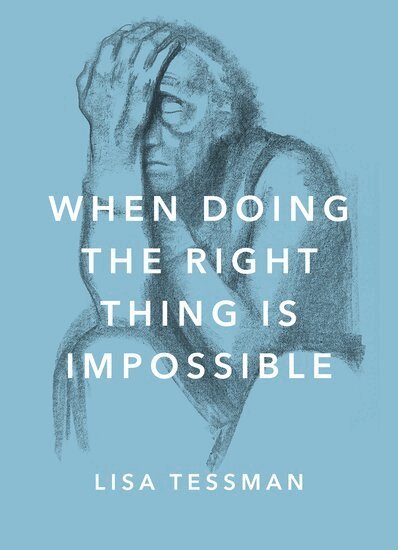
Suppose that in an emergency evacuation of a hospital after a flood, not all of the patients can make it out alive. You are the doctor faced with the choice between abandoning these patients to die alone and in pain, or injecting them with a lethal dose of drugs, without consent, so that they die peacefully. Perhaps no one will be able to blame you whatever you decide, but, whichever action you choose, you will remain burdened by guilt. What happens, in cases like this, when, no matter what you do, you are destined for moral failure? What happens when there is no available means of doing the right thing? Human life is filled with such impossible moral decisions. These choices and case studies that demonstrate them form the focus of Lisa Tessman's arresting and provocative work. Many philosophers believe that there are simply no situations in which what you morally ought to do is something that you can't do, because they think that you can't be required to do something unless it's actually in your power to do it. Despite this, real life presents us daily with situations in which we feel that we have failed morally even when no right action would have been possible. Lisa Tessman boldly argues that sometimes we feel this way because we have encountered an 'impossible moral requirement.' Drawing on philosophy, empirical psychology, and evolutionary theory, When Doing the Right Thing Is Impossible explores how and why human beings have constructed moral requirements to be binding even when they are impossible to fulfill.
247 kr
Skickas inom 5-8 vardagar
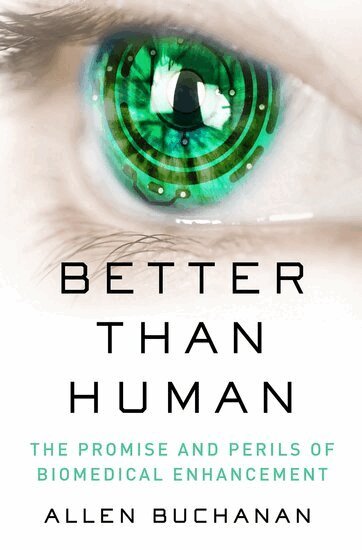
In Better than Human?, noted bioethicist Allen Buchanan grapples with the ethical dilemmas of the medical revolution now upon us. Biomedical enhancements, he writes, can make us smarter, have better memories, be stronger, quicker, have more stamina, live much longer, be more resistant to disease and to the frailties of aging, and enjoy richer emotional lives. They can even improve our character, or at least strengthen our powers of self-control. In spite of the benefits that biomedical enhancements may bring, many people instinctively reject them. Some worry that we will lose something important-our appreciation for what we have or what makes human beings distinctively valuable. To think clearly about enhancement, Buchanan argues, we have to acknowledge that nature is a mixed bag and that our species has many "design flaws". We should be open to the possibility of becoming better than human, while never underestimating the risk that our attempts to improve may backfire.
239 kr
Skickas inom 5-8 vardagar
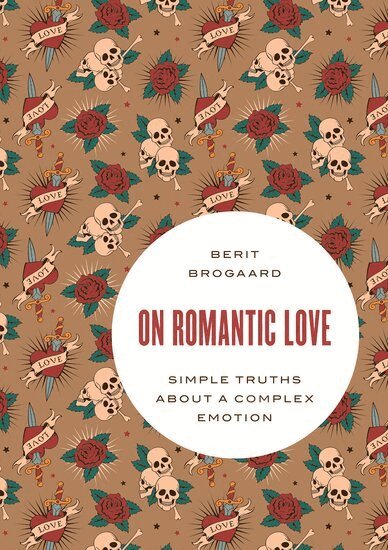
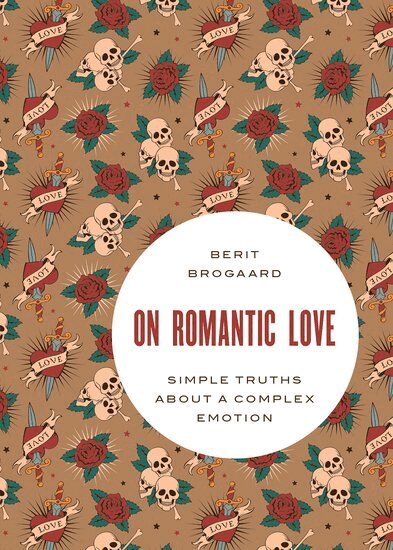
Romantic love presents some of life's most challenging questions. Can we choose who to love? Is romantic love rational? Can we love more than one person at a time? And can we make ourselves fall out of love? In On Romantic Love, Berit Brogaard attempts to get to the bottom of love's many contradictions. This short book, informed by both historical and cutting edge philosophy, psychology, and neuroscience, combines a new theory of romantic love with entertaining anecdotes from real life and accessible explanations of the neuroscience underlying our wildest passions.Against the grain, Brogaard argues that love is an emotion; that it can be, at turns, both rational and irrational; and that it can be manifested in degrees. We can love one person more than another and we can love a person a little or a lot or not at all. And love isn't even always something we consciously feel. However, love -- like other emotions, both conscious and not -- is subject to rational control, and falling in or out of it can be a deliberate choice. This engaging and innovative look at a universal topic, featuring original line drawings by illustrator Gareth Southwell, illuminates the processes behind heartbreak, obsession, jealousy, attachment, and more.
216 kr
Skickas inom 5-8 vardagar
For centuries, philosophers, theologians, moralists, and ordinary people have asked: How should we live? What makes for a good life? In The Best Things in Life, distinguished philosopher Thomas Hurka takes a fresh look at these perennial questions as they arise for us now in the 21st century. Should we value family over career? How do we balance self-interest and serving others? What activities bring us the most joy? While religion, literature, popular psychology, and everyday wisdom all grapple with these questions, philosophy more than anything else uses the tools of reason to make important distinctions, cut away irrelevancies, and distill these issues down to their essentials. Hurka argues that if we are to live a good life, one thing we need to know is which activities and experiences will most likely lead us to happiness and which will keep us from it, while also reminding us that happiness isn't the only thing that makes life good. Hurka explores many topics: four types of good feeling (and the limits of good feeling); how we can improve our baseline level of happiness (making more money, it turns out, isn't the answer); which kinds of knowledge are most worth having; the importance of achieving worthwhile goals; the value of love and friendship; and much more. Unlike many philosophers, he stresses that there isn't just one good in life but many: pleasure, as Epicurus argued, is indeed one, but knowledge, as Socrates contended, is another, as is achievement. And while the great philosophers can help us understand what matters most in life, Hurka shows that we must ultimately decide for ourselves. This delightfully accessible book offers timely guidance on answering the most important question any of us will ever ask: How do we live a good life?
590 kr
Skickas inom 7-10 vardagar
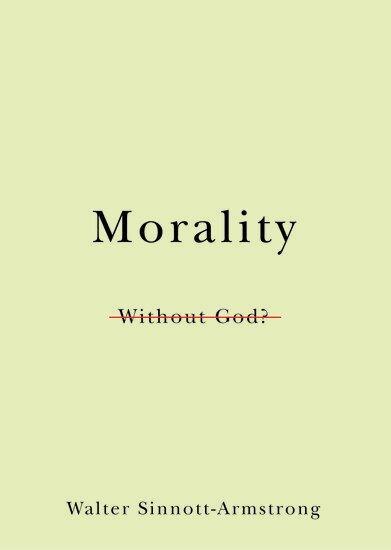
Some argue that atheism must be false, since without God, no values are possible, and thus "everything is permitted." Walter Sinnott-Armstrong argues that God is not only not essential to morality, but that our moral behavior should be utterly independent of religion. He attacks several core ideas: that atheists are inherently immoral people; that any society will sink into chaos if it is becomes too secular; that without morality, we have no reason to be moral; that absolute moral standards require the existence of God; and that without religion, we simply couldn't know what is wrong and what is right. Sinnott-Armstrong brings to bear convincing examples and data, as well as a lucid, elegant, and easy to understand writing style. This book should fit well with the debates raging over issues like evolution and intelligent design, atheism, and religion and public life as an example of a pithy, tightly-constructed argument on an issue of great social importance.
170 kr
Skickas inom 5-8 vardagar
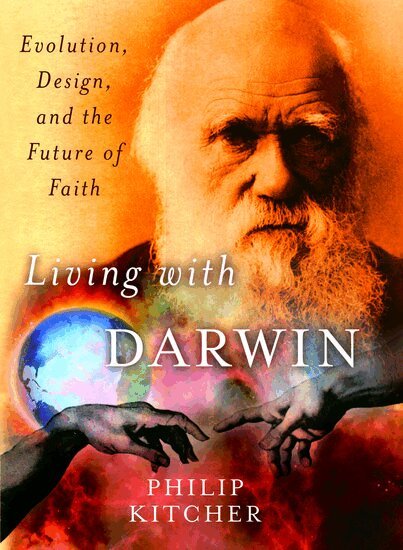
Charles Darwin has been at the center of white-hot public debate for more than a century. In Living With Darwin, Philip Kitcher stokes the flames swirling around Darwin's theory, sifting through the scientific evidence for evolution, Creation Science, and Intelligent Design, and revealing why evolution has been the object of such vehement attack. Kitcher first provides valuable perspective on the present controversy, describing the many puzzles that blocked evolution's acceptance in the early years, and explaining how scientific research eventually found the answers to these conundrums. Interestingly, Kitcher shows that many of these early questions have been resurrected in recent years by proponents of Intelligent Design. In fact, Darwin himself considered the issue of intelligent design, and amassed a mountain of evidence that effectively refuted the idea. Kitcher argues that the problem with Intelligent Design isn't that it's "not science," as many critics say, but that it's "dead science," raising questions long resolved by scientists. But Kitcher points out that it is also important to recognize the cost of Darwin's success--the price of "life with Darwin." Darwinism has a profound effect on our understanding of our place in the universe, on our religious beliefs and aspirations. It is in truth the focal point of a larger clash between religious faith and modern science. Unless we can resolve this larger issue, the war over evolution will go on.
386 kr
Skickas inom 3-6 vardagar
We like to think of ourselves, our friends, and our families as decent people. We may not be saints, but we are still honest, relatively kind, and mostly trustworthy. Miller argues here that we are badly mistaken in thinking this. Hundreds of recent studies in psychology tell a different story: that we all have serious character flaws that prevent us from being as good as we think we are - and that we do not even recognize that these flaws exist. But neither are most of us cruel or dishonest. Instead, Miller argues, we are a mixed bag. On the one hand, most of us in a group of bystanders will do nothing as someone cries out for help in an emergency. Yet it is also true that there will be many times when we will selflessly come to the aid of a complete stranger - and resist the urge to lie, cheat, or steal even if we could get away with it. Much depends on cues in our social environment. Miller uses this recent psychological literature to explain what the notion of "character" really means today, and how we can use this new understanding to develop a character better in sync with the kind of people we want to be.
340 kr
Skickas inom 7-10 vardagar
Romantic love presents some of life's most challenging questions. Can we choose who to love? Is romantic love rational? Can we love more than one person at a time? And can we make ourselves fall out of love? In On Romantic Love, Berit Brogaard attempts to get to the bottom of love's many contradictions. This short book, informed by both historical and cutting edge philosophy, psychology, and neuroscience, combines a new theory of romantic love with entertaining anecdotes from real life and accessible explanations of the neuroscience underlying our wildest passions. Against the grain, Brogaard argues that love is an emotion; that it can be, at turns, both rational and irrational; and that it can be manifested in degrees. We can love one person more than another and we can love a person a little or a lot or not at all. And love isn't even always something we consciously feel. However, love -- like other emotions, both conscious and not -- is subject to rational control, and falling in or out of it can be a deliberate choice. This engaging and innovative look at a universal topic, featuring original line drawings by illustrator Gareth Southwell, illuminates the processes behind heartbreak, obsession, jealousy, attachment, and more.
239 kr
Skickas inom 5-8 vardagar
Some argue that atheism must be false, since without God, no values are possible, and thus "everything is permitted." Walter Sinnott-Armstrong argues that God is not only not essential to morality, but that our moral behaviour should be utterly independent of religion. He attacks several core ideas: that atheists are inherently immoral people; that any society will sink into chaos if it is becomes too secular; that without morality, we have no reason to be moral; that absolute moral standards require the existence of God; and that without religion, we simply couldn't know what is wrong and what is right.Sinnott-Armstrong brings to bear convincing examples and data, as well as a lucid, elegant, and easy to understand writing style. This book should fit well with the debates raging over issues like evolution and intelligent design, atheism, and religion and public life as an example of a pithy, tightly-constructed argument on an issue of great social importance."In his call for sincere dialogue with theists, Sinnott-Armstrong provides a welcome relief from the apoplectic excesses of Richard Dawkins and Christopher Hitchens, while also addressing objections to homosexuality and evolution frequently raised by evangelical Christians." --Publishers Weekly "[I]t is accessible and lively, my hope is that it will be widely read, especially by theists."--Peter Lamal, The Humanist "... the clarity of this text successfully defuses many erroneous claims about religion and morality, both popular and academic; this volume certainly deserves a wide audience in this increasingly secular and skeptical world." -Choice"Morality Without God? is an engaging, pithy book arguing against the necessity of God and religion for a robust morality. Walter Sinnott-Armstrong has distinguished himself as a leading philosopher in his work on metaethics and moral psychology, as well as books on moral and epistemological skepticism, and in Morality Without God? he commendably succeeds in writing a philosophically respectable introduction to the problems facing religious morality suitable for virtually any audience." --Philosophia Christi
484 kr
Skickas inom 7-10 vardagar
For the last twenty years, John Corvino has traversed the US responding to moral and religious arguments against same-sex relationships. In this timely book, he shares that experience - addressing the standard objections to homosexuality and offering insight into the culture wars more generally. Is homosexuality unnatural? Does the Bible condemn it? Are people born gay (and should it matter either way)? Corvino approaches such questions with precision, sensitivity, and good humor. In the process, he makes a fresh case for moral engagement, forcefully rejecting the idea that morality is a 'private matter'. This book appears at a time when same-sex marriage is being hotly debated across the U.S. Many people object to such marriage on the grounds that same-sex relationships are immoral, or at least, that they do not deserve the same social recognition as heterosexual relationships. Unfortunately, the traditional rhetoric of gay-rights advocates - which emphasizes privacy and tolerance - fails to meet this objection. Legally speaking, when it comes to marriage, 'tolerance' might be enough, Corvino concedes, but socially speaking, marriage requires more. Marriage is more than just a relationship between two individuals, recognized by the state. It is also a relationship between those individuals and a larger community. The fight for same-sex marriage, ultimately, is a fight for full inclusion in the moral fabric. What is needed is a positive case for moral approval - which is what Corvino unabashedly offers here. Corvino blends a philosopher's precision with a light touch that is full of humanity and wit. This volume captures the voice of one of the most rational participants in a national debate noted for generating more heat than light.