Poetics of Orality and Literacy - Böcker
Visar alla böcker i serien . Handla med fri frakt och snabb leverans.
4 produkter
4 produkter
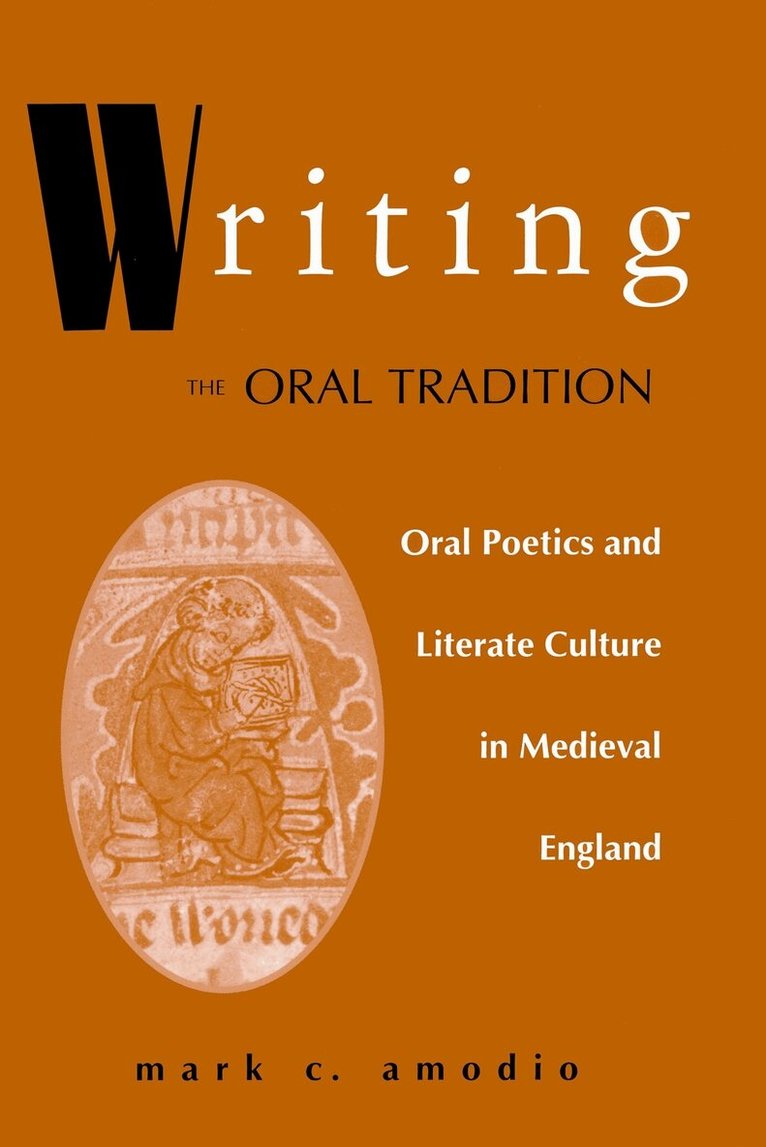
Writing the Oral Tradition
Oral Poetics and Literate Culture in Medieval England
Häftad, Engelska, 2004
331 kr
Skickas inom 10-15 vardagar
Mark Amodio's book focuses on the influence of the oral tradition on written vernacular verse produced in England from the fifth to the fifteenth century. His primary aim is to explore how a living tradition articulated only through the public, performance voices of pre-literate singers came to find expression through the pens of private, literate authors. Amodio argues that the expressive economy of oral poetics survives in written texts because, throughout the Middle Ages, literacy and orality were interdependent, not competing, cultural forces.After delving into the background of the medieval oral-literate matrix, Writing the Oral Tradition develops a model of non-performative oral poetics that is a central, perhaps defining, component of Old English vernacular verse. Following the Norman Conquest, oral poetics lost its central position and became one of many ways to articulate poetry. Contrary to many scholars, Amodio argues that oral poetics did not disappear but survived well into the post-Conquest period. It influenced the composition of Middle English verse texts produced from the twelfth to the fourteenth century because it offered poets an affectively powerful and economical way to articulate traditional meanings. Indeed, fragments of oral poetics are discoverable in contemporary prose, poetics, and film as they continue to faithfully emit their traditional meanings.Writing the Oral Tradition will appeal to specialists and students interested in medieval literature, medieval cultural studies, and oral theory.
423 kr
Skickas inom 10-15 vardagar
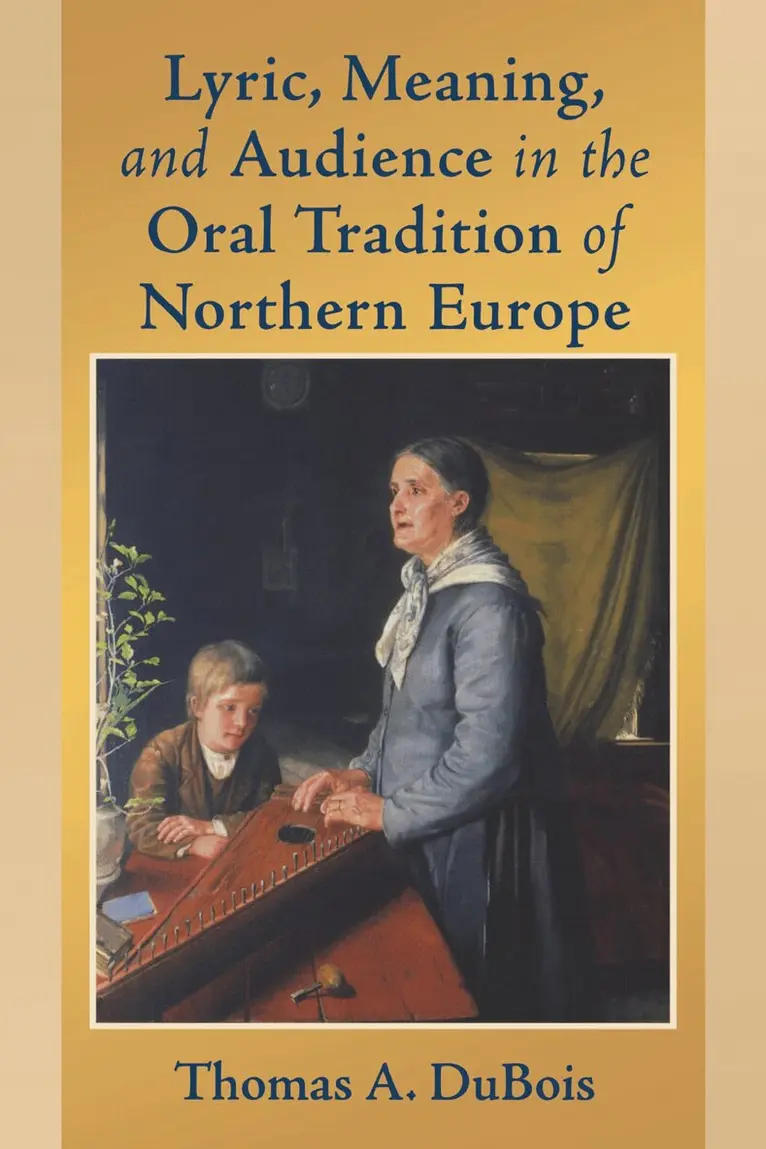
Focusing on particular characters, situations, or emotions—usually with little or no explicit plot—lyric song poses interpretive challenges to the listening audience. Without an overt plot, how does one understand what a song is about? Are there rules or norms for how to interpret them? Do these rules remain the same from culture to culture, or do they vary?By looking at the ways in which cultures in Northern Europe interpret lyric songs, Thomas A. DuBois illuminates both commonalities of interpretive practice and unique features of their musical traditions. DuBois draws on sets of lyric songs from England, Wales, Scotland, Ireland, Norway, Sweden, and Finland to explore the question of meaning in folklore, especially the role of traditional audiences in appraising and understanding nonnarrative songs.DuBois's examples range from the medieval and early modern periods to the late twentieth century. His nuanced study explicates folk practices of interpretation—a "native hermeneutics" existing alongside folk songs in North European oral tradition. He examines lyric songs—particularly formal laments—embedded with prose or poetic narratives; the ritual use of lyric as charms and laments in premodern Europe; the development of personalized meanings within hymns and devotional prayers of the high Middle Ages; Shakespeare's lyric songs and their demands on the audience; and the ways in which professional lyric singers encourage certain interpretations of their songs. The only study to examine a range of northern European lyric traditions as a unified group, Lyric, Meaning, and Audience in the Oral Tradition of Northern Europe will be of interest to scholars in medieval studies, literary studies, and folklore.
546 kr
Skickas inom 10-15 vardagar
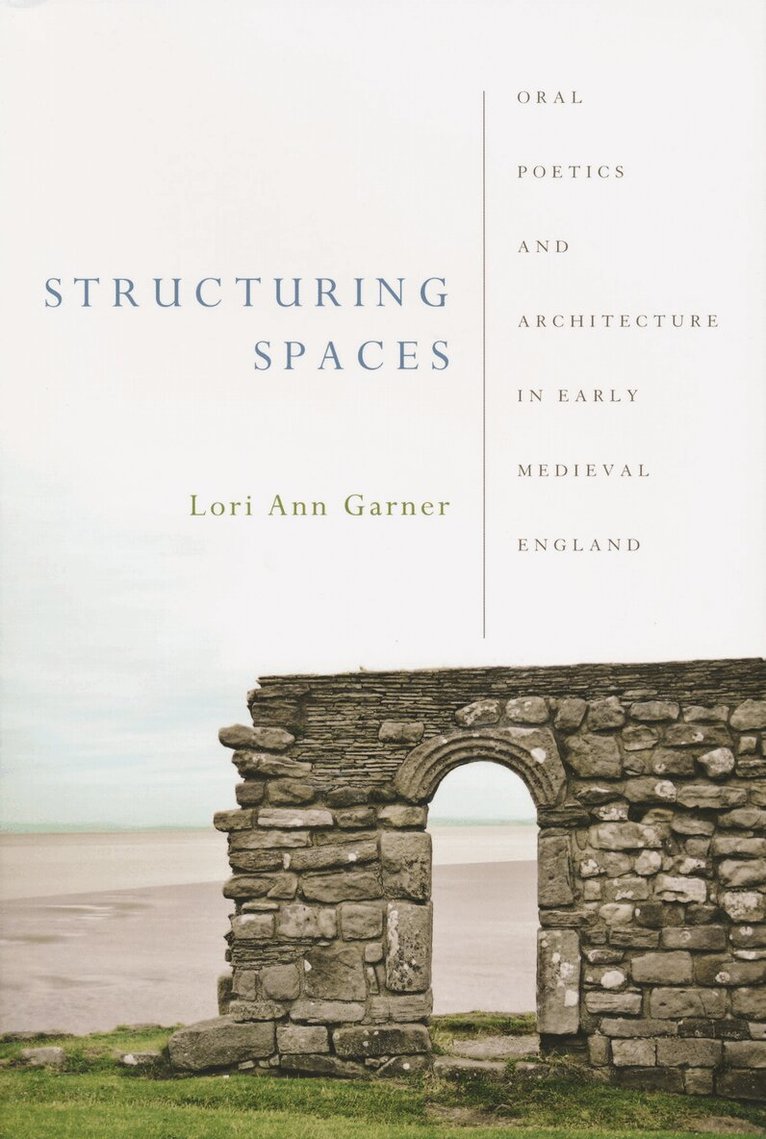
In Structuring Spaces: Oral Poetics and Architecture in Early Medieval England, Lori Ann Garner illuminates the idiomatic and traditional meanings invested in depictions of architecture within the vernacular verse of early medieval England, portrayals that consistently demonstrate a shared aesthetic between literary texts and physical buildings. Through systematic exploration of the period's verbal and material culture as complementary art forms, Garner argues that in Anglo-Saxon England the arts of poetry and building emerged from the same cultural matrix. Not only did Anglo-Saxon builders and poets draw demonstrably from many of the same traditionally encoded motifs and images, but so rhetorically powerful was the period's architectural poetics that its expressive force continued in literature and architecture produced long after the Norman Conquest. Far from conceiving this inherited tradition as monolithic in nature, Structuring Spaces foregrounds the complex interface of orality and literacy as a nexus of varied and multivalent cultural traditions that influenced the production of texts and buildings alike. After establishing a model of architectural poetics based on oral theory and vernacular architecture, Garner explores fictionalized buildings in such works as Beowulf and the Ruin, architectural representation in Old English adaptations of Greek and Latin works, uses of architectural metaphor, and themes of buildings in Anglo-Saxon maxims, riddles, elegies, hagiographies, and charms. Her book draws on scholarship from art history, archaeology, anthropology, and architecture, as well as the great wealth of studies addressing the literature itself.
1 853 kr
Skickas inom 10-15 vardagar
In Structuring Spaces: Oral Poetics and Architecture in Early Medieval England, Lori Ann Garner illuminates the idiomatic and traditional meanings invested in depictions of architecture within the vernacular verse of early medieval England, portrayals that consistently demonstrate a shared aesthetic between literary texts and physical buildings. Through systematic exploration of the period's verbal and material culture as complementary art forms, Garner argues that in Anglo-Saxon England the arts of poetry and building emerged from the same cultural matrix. Not only did Anglo-Saxon builders and poets draw demonstrably from many of the same traditionally encoded motifs and images, but so rhetorically powerful was the period's architectural poetics that its expressive force continued in literature and architecture produced long after the Norman Conquest. Far from conceiving this inherited tradition as monolithic in nature, Structuring Spaces foregrounds the complex interface of orality and literacy as a nexus of varied and multivalent cultural traditions that influenced the production of texts and buildings alike. After establishing a model of architectural poetics based on oral theory and vernacular architecture, Garner explores fictionalized buildings in such works as Beowulf and the Ruin, architectural representation in Old English adaptations of Greek and Latin works, uses of architectural metaphor, and themes of buildings in Anglo-Saxon maxims, riddles, elegies, hagiographies, and charms. Her book draws on scholarship from art history, archaeology, anthropology, and architecture, as well as the great wealth of studies addressing the literature itself.