Policy to Practice – serie
Visar alla böcker i serien Policy to Practice. Handla med fri frakt och snabb leverans.
10 produkter
10 produkter
Del 1 - Policy to Practice
For the Public Good
Women, Health, and Equity in Rural India
Häftad, Engelska, 2020
518 kr
Skickas inom 5-8 vardagar
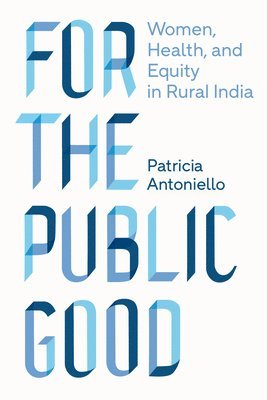
For the Public Good: Women, Equity and Health in Rural India details the role of the Comprehensive Rural Health Project (CRHP), a groundbreaking, internationally recognized primary health care model that uses local solutions to solve intractable global health problems. Emphasizing equity and community participation, this grassroots approach recruits local women to be educated as village-based health workers. In turn, women village health workers collaborate to overcome the dominant double prejudices in local villages-caste and gender inequality. In one generation, village health workers have progressed from child brides and sequestered wives to knowledgeable health practitioners, valued teachers, and community leaders. Through collective efforts, CRHP has reduced infant and maternal mortality, eliminated some endemic health problems, and advanced economic well-being in villages with women's cooperative lending groups.For the Public Good describes how the recognition and elimination of embedded inequalities, in this case caste discrimination, gender subordination, and class injustice, promotes health and well-being and collaboratively establishes the public good.
Del 1 - Policy to Practice
For the Public Good
Women, Health, and Equity in Rural India
Inbunden, Engelska, 2020
1 451 kr
Skickas inom 5-8 vardagar
For the Public Good: Women, Equity and Health in Rural India details the role of the Comprehensive Rural Health Project (CRHP), a groundbreaking, internationally recognized primary health care model that uses local solutions to solve intractable global health problems. Emphasizing equity and community participation, this grassroots approach recruits local women to be educated as village-based health workers. In turn, women village health workers collaborate to overcome the dominant double prejudices in local villages-caste and gender inequality. In one generation, village health workers have progressed from child brides and sequestered wives to knowledgeable health practitioners, valued teachers, and community leaders. Through collective efforts, CRHP has reduced infant and maternal mortality, eliminated some endemic health problems, and advanced economic well-being in villages with women's cooperative lending groups.For the Public Good describes how the recognition and elimination of embedded inequalities, in this case caste discrimination, gender subordination, and class injustice, promotes health and well-being and collaboratively establishes the public good.
426 kr
Kommande
In Acts of Resistance, Katharina Rynkiewich explores the fight to save the utility of antibiotic medicines amid global antimicrobial resistance. This engaging ethnography follows bacteria, patients, and practitioners as they weave in and out of North American medical institutions. Through an examination of the social dynamics and ethical challenges of everyday antibiotic use, the author expands on the limitations of good intentions in current antibiotic stewardship policy. Her ethnographic account shows the lived experience of multiple central figures as she shifts setting and tone, ultimately deepening our understanding of the global antimicrobial resistance crisis as emergency.The global scale of impact related to antimicrobial resistance has made the responsibilization of industry and institution difficult to navigate. Contributing to this web of irresponsibility is the wide region spread of multidrug-resistant organisms. With bacteria making their homes within institutions and in the community, tracing the origins of an infection can be an insurmountable challenge. Rynkiewich takes up the epidemiologic concept of “regional epidemiologies” to demonstrate how “microbial highways” coexist along human highways.
Acts of Resistance
Antibiotic Use and Prescribing Culture in the United States
Inbunden, Engelska, 2026
1 204 kr
Kommande
In Acts of Resistance, Katharina Rynkiewich explores the fight to save the utility of antibiotic medicines amid global antimicrobial resistance. This engaging ethnography follows bacteria, patients, and practitioners as they weave in and out of North American medical institutions. Through an examination of the social dynamics and ethical challenges of everyday antibiotic use, the author expands on the limitations of good intentions in current antibiotic stewardship policy. Her ethnographic account shows the lived experience of multiple central figures as she shifts setting and tone, ultimately deepening our understanding of the global antimicrobial resistance crisis as emergency.The global scale of impact related to antimicrobial resistance has made the responsibilization of industry and institution difficult to navigate. Contributing to this web of irresponsibility is the wide region spread of multidrug-resistant organisms. With bacteria making their homes within institutions and in the community, tracing the origins of an infection can be an insurmountable challenge. Rynkiewich takes up the epidemiologic concept of “regional epidemiologies” to demonstrate how “microbial highways” coexist along human highways.
609 kr
Skickas inom 3-6 vardagar
2021 Honorable Mention for the Association for Feminist Anthropology’s Rosaldo Book PrizeMaternal health outcomes are a key focus of global health initiatives. In Delivering Health, author Lydia Z. Dixon uncovers the ways such outcomes have been shaped by broader historical, political, and social factors in Mexico, through the perspectives of those who are at the front lines fighting for change: midwives. Midwives have long been marginalized in Mexico as remnants of the country's precolonial past, yet Dixon shows how they are now strategically positioning themselves as agents of modernity and development. Midwifery education programs have popped up across Mexico, each with their own critique of the health care system and vision for how midwifery can help. Delivering Health ethnographically examines three such schools with very different educational approaches and professional goals. From San Miguel de Allende to Oaxaca to MichoacÁn and points between, Dixon takes us into the classrooms, clinics, and conferences where questions of what it means to provide good reproductive health care are being taught, challenged, and implemented. Through interviews, observational data, and even student artwork, we are shown how underlying inequality manifests in poor care for many Mexican women. The midwives in this book argue that they can improve care while also addressing this inequality. Ultimately, Delivering Health asks us to consider the possibility that marginalized actors like midwives may hold the solution to widespread concerns in health.
Del 2 - Policy to Practice
Delivering Health
Midwifery and Development in Mexico
Inbunden, Engelska, 2020
1 451 kr
Skickas inom 5-8 vardagar
2021 Honorable Mention for the Association for Feminist Anthropology’s Rosaldo Book PrizeMaternal health outcomes are a key focus of global health initiatives. In Delivering Health, author Lydia Z. Dixon uncovers the ways such outcomes have been shaped by broader historical, political, and social factors in Mexico, through the perspectives of those who are at the front lines fighting for change: midwives.Midwives have long been marginalized in Mexico as remnants of the country's precolonial past, yet Dixon shows how they are now strategically positioning themselves as agents of modernity and development. Midwifery education programs have popped up across Mexico, each with their own critique of the health care system and vision for how midwifery can help. Delivering Health ethnographically examines three such schools with very different educational approaches and professional goals. From San Miguel de Allende to Oaxaca to MichoacÁn and points between, Dixon takes us into the classrooms, clinics, and conferences where questions of what it means to provide good reproductive health care are being taught, challenged, and implemented. Through interviews, observational data, and even student artwork, we are shown how underlying inequality manifests in poor care for many Mexican women. The midwives in this book argue that they can improve care while also addressing this inequality. Ultimately, Delivering Health asks us to consider the possibility that marginalized actors like midwives may hold the solution to widespread concerns in health.
Unmaking Russia’s Abortion Culture
Family Planning and the Struggle for a Liberal Biopolitics
Häftad, Engelska, 2024
572 kr
Skickas inom 5-8 vardagar
As the predominant form of birth control in Soviet society, abortion reflected key paradoxes of state socialism: women held formal equality but lacked basic needs such as contraceptives. With market reforms, Russians enjoyed new access to Western contraceptives and new pressures to postpone childbearing until economically self-sufficient. But habits of family planning did not emerge automatically—they required extensive physician retraining, public education, and cultural transformation. In Unmaking Russia’s Abortion Culture,Rivkin-Fish examines the creative strategies of Russians who promoted family planning in place of routine abortion. Rather than emphasizing individual rights, they explained family planning’s benefits to the nation—its potential to strengthen families and prevent the secondary sterility that resulted when women underwent repeat, poor quality abortions. Still, fierce debates about abortion and contraceptives erupted as declining fertility was framed as threatening Russia’s demographic sovereignty.Although Russian family planners embraced a culturally meaningful liberalism that would rationalize public policy and re-enchant relations, nationalist opponents cast family planning as suspicious for its association with the individualistic, "child-free" West. This book tells the story of how Russian family planners developed culturally salient frameworks to promote the acceptability of contraceptives and help end routine abortion. It also documents how nationalist campaigns for higher fertility worked to de-fund family planning and ultimately dismantle its institutions. By tracing these processes, Unmaking Russia’s Abortion Culture demonstrates the central importance of reproductive politics in the struggle for liberalizing social change that preceded Russia’s 2022 descent into war, repression, and global marginalization.
Unmaking Russia’s Abortion Culture
Family Planning and the Struggle for a Liberal Biopolitics
Inbunden, Engelska, 2024
1 757 kr
Skickas inom 5-8 vardagar
As the predominant form of birth control in Soviet society, abortion reflected key paradoxes of state socialism: women held formal equality but lacked basic needs such as contraceptives. With market reforms, Russians enjoyed new access to Western contraceptives and new pressures to postpone childbearing until economically self-sufficient. But habits of family planning did not emerge automatically—they required extensive physician retraining, public education, and cultural transformation. In Unmaking Russia’s Abortion Culture,Rivkin-Fish examines the creative strategies of Russians who promoted family planning in place of routine abortion. Rather than emphasizing individual rights, they explained family planning’s benefits to the nation—its potential to strengthen families and prevent the secondary sterility that resulted when women underwent repeat, poor quality abortions. Still, fierce debates about abortion and contraceptives erupted as declining fertility was framed as threatening Russia’s demographic sovereignty.Although Russian family planners embraced a culturally meaningful liberalism that would rationalize public policy and re-enchant relations, nationalist opponents cast family planning as suspicious for its association with the individualistic, "child-free" West. This book tells the story of how Russian family planners developed culturally salient frameworks to promote the acceptability of contraceptives and help end routine abortion. It also documents how nationalist campaigns for higher fertility worked to de-fund family planning and ultimately dismantle its institutions. By tracing these processes, Unmaking Russia’s Abortion Culture demonstrates the central importance of reproductive politics in the struggle for liberalizing social change that preceded Russia’s 2022 descent into war, repression, and global marginalization.
283 kr
Skickas inom 7-10 vardagar
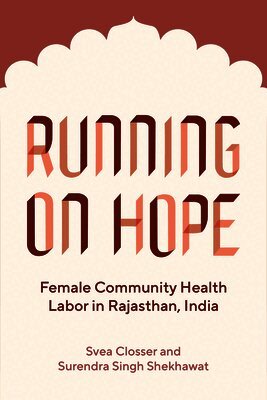
Throughout India, Accredited Social Health Activists (ASHAs) visit households in their communities to deliver essential health services and link community members with key health benefits. Like many other female Community Health Workers across the world, ASHAs are often portrayed as virtuous, passive volunteers, selflessly providing services to their neighbors.The reality is more complicated and much more interesting. Drawing on ethnographic work in Rajasthan, Running on Hope follows ASHAs through striking personal transformations. From their positions as rural daughters‑in‑law—a particularly low‑power position in Rajasthan—ASHAs have, over years of work, gained unprecedented autonomy for young rural women. They have also gained a deep understanding of what many argue is the exploitation involved in their low‑ranking position in the health system. ASHAs often earn less than $100 per month for extensive work, well below the legal minimum wage.To counter this, many ASHAs have joined unions—an endeavor that has ultimately proven disappointing: union leaders’ desires for political advancement are often at odds with ASHAs’ own needs. However, ASHAs do not have connections, money, or social power to organize effectively on their own, without a political patron. In Running on Hope, authors Svea Closser and Surendra Singh Shekhawat interview women who work as ASHAs to learn about their organizing goals, their roles in their community as conduits to health education and resources, and their hopes for a better future.
1 409 kr
Skickas inom 5-8 vardagar
Throughout India, Accredited Social Health Activists (ASHAs) visit households in their communities to deliver essential health services and link community members with key health benefits. Like many other female Community Health Workers across the world, ASHAs are often portrayed as virtuous, passive volunteers, selflessly providing services to their neighbors.The reality is more complicated and much more interesting. Drawing on ethnographic work in Rajasthan, Running on Hope follows ASHAs through striking personal transformations. From their positions as rural daughters‑in‑law—a particularly low‑power position in Rajasthan—ASHAs have, over years of work, gained unprecedented autonomy for young rural women. They have also gained a deep understanding of what many argue is the exploitation involved in their low‑ranking position in the health system. ASHAs often earn less than $100 per month for extensive work, well below the legal minimum wage.To counter this, many ASHAs have joined unions—an endeavor that has ultimately proven disappointing: union leaders’ desires for political advancement are often at odds with ASHAs’ own needs. However, ASHAs do not have connections, money, or social power to organize effectively on their own, without a political patron. In Running on Hope, authors Svea Closser and Surendra Singh Shekhawat interview women who work as ASHAs to learn about their organizing goals, their roles in their community as conduits to health education and resources, and their hopes for a better future.