Politics and Popular Culture – serie
Visar alla böcker i serien Politics and Popular Culture. Handla med fri frakt och snabb leverans.
3 produkter
3 produkter
389 kr
Skickas inom 7-10 vardagar
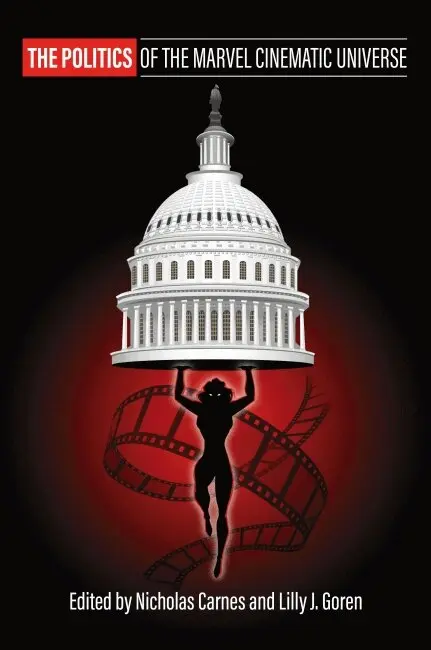
The Marvel Cinematic Universe (MCU) is the most expansive and widely viewed fictional narrative in the history of cinema. In 2009, Disney purchased Marvel Entertainment for $4 billion, including its subsidiary film production company, Marvel Studios. Since then, the MCU—the collection of multimedia Marvel Studios products that share a single fictional storyline—has grown from two feature films to thirty interconnected movies, nine streaming Disney+ series, a half dozen short films, and more than thirty print titles. By 2022, eight of the twenty-five highest grossing films of all time are MCU movies.The MCU is a deeply political universe. Intentionally or not, the MCU sends fans scores of messages about a wide range of subjects related to government, public policy, and society. Some are overt, like the contentious debate about government and accountability at the heart of Captain America: Civil War. More often, however, the politics of the MCU are subtle, like the changing role of women from supporting characters (like Black Widow in Iron Man 2) to leading heroes (like Black Widow in Black Widow). The MCU is not only a product of contemporary politics, but many of its stories seem to be direct responses to the problems of the day. Racial injustice, environmental catastrophe, and political misinformation are not just contemporary social ills; they are also key thematic elements of recent MCU blockbusters.In The Politics of the Marvel Cinematic Universe, more than twenty-five leading scholars examine these complex themes. Part one explores how political issues are depicted in the origin stories; part two examines how the MCU depicts classic political themes like government and power; and part three explores questions of diversity and representation in the MCU. The volume’s various chapters examine a wide range of topics: Black Panther and the “racial contract,” Captain America and the political philosophy of James Madison, Dr. Strange and colonial imperialism, S.H.I.E.L.D. and civil-military relations, Spider-Man and environmentalism, and Captain Marvel and second-wave feminism.The Politics of the Marvel Cinematic Universe is the first book to look expansively at politics in the MCU and ask the question, “What lessons are this entertainment juggernaut teaching audiences about politics, society, power, gender, and inequality?”
1999
The Year Low Culture Conquered America and Kickstarted Our Bizarre Times
Inbunden, Engelska, 2025
355 kr
Skickas inom 10-15 vardagar
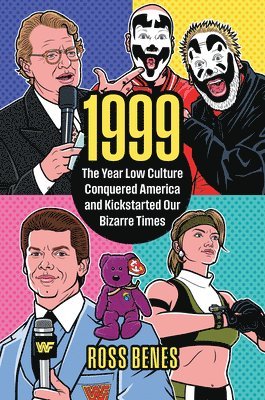
From pro wrestling and Pokémon to Vince McMahon and Jerry Springer, this look at the low culture of the late '90s reveals its profound impact and how it continues to affect our culture and society today.The year 1999 was a high-water mark for popular culture. According to one measure, it was the “best movie year ever.” But as journalist Ross Benes shows, the end of the ’90s was also a banner year for low culture. This was the heyday of Jerry Springer, Jenna Jameson, and Vince McMahon, among many others. Low culture had come into its own and was poised for world domination. The reverberations of this takeover continue to shape American society.During its New Year’s Eve countdown, MTV entered 1999 with Limp Bizkit covering Prince’s famous anthem to the new year. The highlights of the lowlights continued when WCW and WWE drew 35 million American viewers each week with sex appeal and stories about insurrections. Insane Clown Posse emerged from the underground with a Woodstock set and platinum records about magic and murder. Later that year, Dance Dance Revolution debuted in North America and Grand Theft Auto emerged as a major video game franchise. Beanie Babies and Pokémon so thoroughly seized the wallets and imagination of collectors that they created speculative investment bubbles that anticipated the faddish obsession over nonfungible tokens (NFTs). The trashy talk show Jerry Springer became daytime TV’s most-watched program and grew so mainstream that Austin Powers, Sabrina the Teenage Witch, The Wayans Bros., The Simpsons, and The X-Files incorporated Springer into their own plots during the late ’90s. Donald Trump even explored a potential presidential nomination with the Reform Party in 1999 and wanted his running mate to be Oprah Winfrey, whose own talk show would make Dr. Oz a household name. Among Springer’s many guests were porn stars who, at the end of the millennium, were pursuing sex records in a bid for stardom as the pornography industry exploded, aided by sex scandals, new technology, and the drug Viagra, which marked its first full year on the US market in 1999.According to Benes, there are many lessons to learn from the year that low culture conquered the world. Talk shows and reality TV foreshadowed the way political movements grab power by capturing our attention. Pro wrestling mastered the art of “kayfabe”—the agreement to treat something as real and genuine when it is not—before it spread throughout American society, as political contests, corporate public relations campaigns, and nonprofit fundraising schemes have become their own wrestling matches that require a suspension of disbelief. Beanie Babies and Pokémon demonstrate capitalism’s resiliency as well as its vulnerabilities. Legal and technological victories obtained by early internet pornographers show how the things people are ashamed of have the ability to influence the world. Insane Clown Posse’s creation of loyal Juggalos illustrates the way religious and political leaders are able to generate faithful followers by selling themselves as persecuted outsiders. And the controversy over video game violence reveals how every generation finds new scapegoats.1999 is not just a nostalgic look at the past. It is also a window into our contentious present.
310 kr
Skickas inom 7-10 vardagar
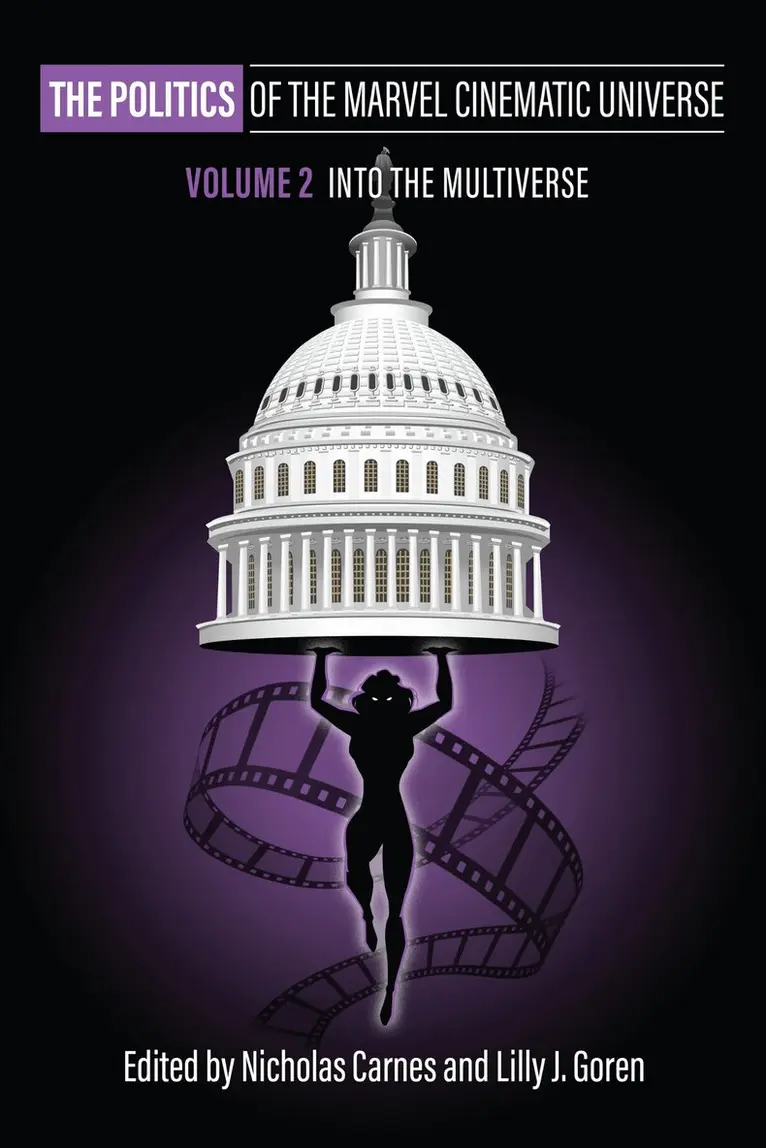
A new volume of essays exploring the on-screen politics and real-world implications of the Marvel Cinematic Universe’s expansion into the multiverse.As the Marvel Cinematic Universe (MCU) moved on from the Thanos storyline, it became more political than ever—both on screen and off.Following up on their first volume about the politics of the MCU, editors Nicholas Carnes and Lilly J. Goren are back with a new volume of essays exploring the political worlds within and outside of the MCU, authored by leading experts on politics, philosophy, and popular culture. This second volume tackles the sprawling narratives in the MCU’s Phase 4, the movies, TV shows, and related content released in 2021 and 2022. During Phase 4, Marvel Studios released films at an unprecedented pace: seven in just two years, including titles like Black Widow, Shang-Chi and the Legend of the Ten Rings, The Eternals, Spider-Man: No Way Home, and Black Panther: Wakanda Forever. Phase 4 also marked the start of the MCU’s move into streaming television, with shows like WandaVision, The Falcon and the Winter Soldier, Loki, Hawkeye, She-Hulk, and Moon Knight. With a fifty-hour combined runtime, Phase 4 included more new MCU content than Phases 1 through 3 (2008 through 2020) combined.The chapters in this volume are organized in three parts that each explore a different aspect of the politics of Phase 4. In Part One, the authors examine “on-screen politics,” looking at the political messages (some subtle, some more explicit) in stories about Thor, the Eternals, She-Hulk, Spider-Man, Loki, and Captain America. Part Two explores the “off-screen” politics of the MCU’s fans, examining topics like political participation, partisanship, and whether MCU fans are more cynical about real-world politics. In Part Three, we face the perennial issues around representation—especially gender, race, and sexuality—that have long dominated popular and academic commentary on superhero fiction.Like The Politics of the Marvel Cinematic Universe, Volume 1: The Infinity Saga, this is another indispensable guide to understanding how the MCU—a fundamental aspect of American pop culture—has a profound and complex relationship with American political life.