Post-Communist Cultural Studies - Böcker
Visar alla böcker i serien Post-Communist Cultural Studies. Handla med fri frakt och snabb leverans.
10 produkter
10 produkter
Gender Politics in the Western Balkans
Women and Society in Yugoslavia and the Yugoslav Successor States
Häftad, Engelska, 1998
427 kr
Skickas inom 7-10 vardagar
Gender Politics in the Western Balkans traces the development of women's consciousness in the lands of the South Slavs from the early years of the twentieth century, on the eve of the creation of the Kingdom of Serbs, Croats, and Slovenes, to the situation during and after the Serbian Insurrectionary War of 1991–95. The book embraces historical chapters, contemporary political analyses, and cultural studies (focusing on literature and religion).Socialist Yugoslavia undertook a relatively unusual experiment during the forty-six years of its existence (1945–91)—to eliminate the sources of social, economic, and gender inequality while laying the foundation for a society in which women and men could enjoy complete equality in politics, in education and careers, and in family life. Although the aspiration was shared with other communist countries, Yugoslavia gave its experiment a unique twist by linking its program with institutional changes to be realized through self-management organs and a complicated delegate system. The socialist system represented an improvement where gender equality was concerned over the pre-existing system associated with the interwar Kingdom of Yugoslavia, but it did not fulfill its promises.Recognizing the need for a book that surveys the experience of South Slav women during the twentieth century, Sabrina Ramet commissioned essays from leading scholars in East European/Yugoslav studies and women’s studies for this volume. The resulting collection is arranged in rough chronological order, covering primarily Slovenia, Croatia, Serbia, and Bosnia from before World War II until present day. Topics covered include the structures of traditional society, gender relations in the interwar period, anti-Fascist organizations, the socialist experience, and issues connected to post-socialist politics and the war, making this the most comprehensive and up-to-date book on the subject.Contributors are Andrei Simić, Thomas A. Emmert, Vlasta Jalušič, Barbara Jancar-Webster, Tatjana Pavlović, Žarana Papić, Julie Mertus, Obrad Kesić, Regan Ralph, Dorothy Thomas, Gordana Crnković, Mart Bax, Branka Magaš, and Sabrina Ramet.
478 kr
Skickas inom 7-10 vardagar
With the collapse of Communism in Central and Eastern Europe between 1989 and 1991, right-wing extremist parties have emerged and claimed a prominence that they have not enjoyed since the early 1940s. The Radical Right in Central and Eastern Europe Since 1989 examines the activity of these groups in the region stretching from Germany to Russia. Few, if any, comparable books offer readers an overview of how the radical right is faring in Germany, Poland, Hungary, Slovakia, Slovenia, Croatia, Serbia, Romania, Bulgaria, Ukraine, and Russia. Among the countries reviewed, only Slovakia has right-wing extremists taking their seats as members of the ruling coalition. This volume shows that radical right activities can have pernicious effects even if right-wing extremists do not themselves succeed in obtaining seats in government. As the cases of Germany and Russia show, right-wing extremist parties may be capable of distorting the political agenda and forcing the government to take up issues that it might otherwise have ignored or treated differently. The Croatian and Serbian cases show that right-wing extremist parties may figure as part of a broader political milieu when their ideas are already accepted by the political mainstream.This volume is designed to give students, scholars, journalists, and other interested readers a useful introduction to the prospects of the far right in these post-communist countries. The contributors are John D. Bell, Frank Cibulka, Ivan Grdešić, Roger Griffin, Stephen Hanson, Laszlo Karsai, Julie Mostov, David Ost, Ognjen Pribićević, Sabrinia P. Ramet, Rudolf M. Rizman, Michael Shafir, Roman Solchanyk, and Christopher Williams.
436 kr
Skickas inom 7-10 vardagar
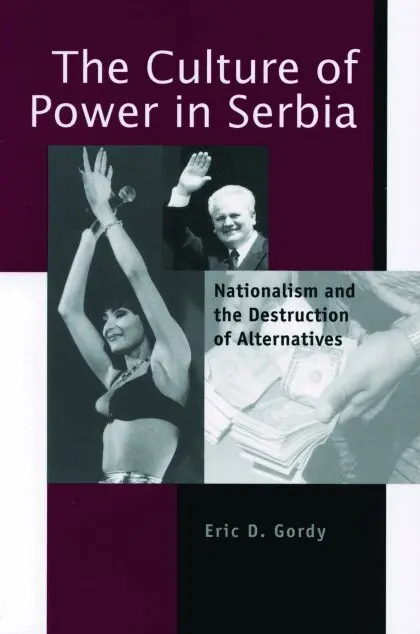
How does the regime of Slobodan Milošević and his Socialist Party of Serbia (SPS) remain in power? Since legitimizing its power in 1990, the SPS has never received a majority of votes in an election. Furthermore, it has been defeated in three military conflicts, produced more than 500,000 refugees, presided over the most extreme hyperinflation in modern times, and failed in its original defining promise to see "all Serbs in one state." In The Culture of Power in Serbia, Eric Gordy explores how the Milošević government prolongs its tenure despite failures and setbacks that would have brought down most other regimes. Gordy finds the answer in everyday life. The Milošević regime has largely succeeded in making alternatives to its rule unavailable. By controlling key aspects of daily life, including politics, media, and popular music, it has undermined opposition by closing off alternative voices. The result is an atmosphere in which people feel they have lost control over their private life and cultural environment.Nevertheless, Gordy finds reason to be optimistic about the long-term prospects for Serbia. The regime's forays into popular music have largely failed, and it has had only partial success in controlling the media, suggesting that the present strategy will not work forever. In Gordy's judgment, the Milošević regime has a limited future.The Culture of Power in Serbia provides fresh perspective for readers interested in contemporary Eastern Europe, in the strategies and tactics of authoritarian regimes, in the sociology of everyday life, and in the political potential of culture.
557 kr
Skickas inom 7-10 vardagar
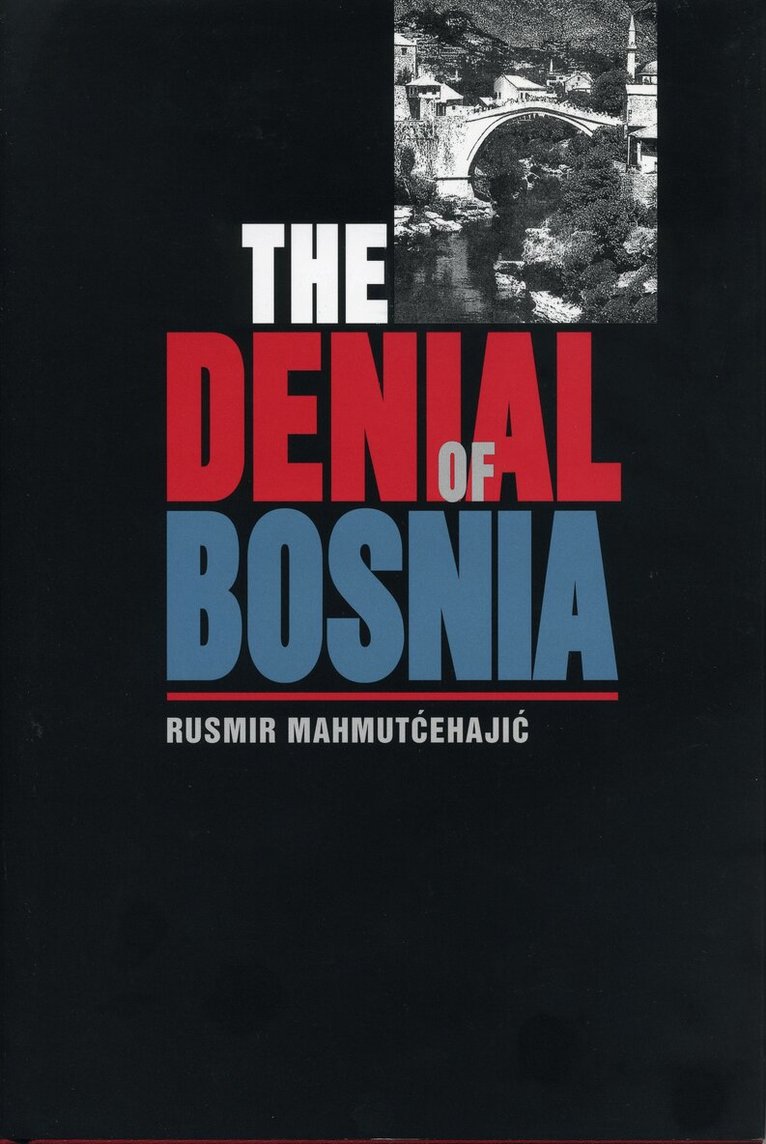
In 1997, Rusmir Mahmutćehajić, one of Bosnia’s leading public intellectuals, was scheduled to lecture on Bosnia at Stanford University but was unexpectedly denied an entry visa by American authorities. This book, first published in Bosnia in 1998, is an expanded version of that lecture. It is an indictment of the partition of Bosnia, formalized in 1995 by the Dayton Accord. It is also a plea for Bosnia’s communities to reject ethnic segregation and restore mutual trust. For the first time, English-speaking readers can hear this important voice of dissent from within Bosnia-Herzegovina.Mahmutćehajić (pronounced “ma-moot-che-HI-itch”) argues for the history and reality of a Bosnia-Herzegovina based upon a model of “unity in diversity.” He shows that ethnic and religious cultures have coexisted in Bosnia for centuries. Partitioning of Bosnia, therefore, should have been unthinkable except that a multi-ethnic, multi-faith Bosnia stood squarely in the way of Croatian and Serbian leaders determined to enact their own nationalist programs. The decisive moment came when the international community accepted the Serb-Croat argument that ancient ethnic hatreds were endemic to Bosnia. At that point, ethnic segregation became not only acceptable but desirable. With the complicity of Western powers, Serbs and Croats proceeded to carve out ethnically cleansed states. Mahmutćehajić examines the reasons why Western liberal democracies have regarded with sympathy the struggles of Serbia and Croatia for national recognition, while viewing Bosnia’s multicultural society with suspicion. As one of Bosnia's former political leaders in the early peace talks, he describes with authority how the parties were often physically aligned during formal talks, with Bosniak negotiators on one side of the table and everybody else—Serb, Croat, and international representatives—on the other. In the end, justice was subverted and the final solution justified on the basis of an intractable “conflict of civilizations."Mahmutćehajić confronts the religious dimension of the Bosnian dilemma with refreshing honesty. As a Bosniak committed to interreligious dialogue, he calls for more than simple toleration among Serbs, Croats, and Bosnians. He remembers that Judaism, Christianity, and Islam all share the same deity, and it is this common transcendent perspective that should open the door to the acceptance and celebration of religious diversity. Only in this way will Bosnia reclaim its unique civilization.The Denial of Bosnia has dire implications for the future of a Europe searching for a viable post–Cold War order. Will Europe accept ethnic segregation as a solution to the contradictions of ethnic diversity or find a way to protect and build upon this diversity? Bosnia, though currently divided and shaken to its foundations, could become a model for European progress. The greatest danger is for Bosnia to be declared just another ethnoreligious entity, in this case a “Muslim State” ghettoized inside of Europe. If protected and allowed to develop, however, Bosnia too could find a place in the new European order.
492 kr
Skickas inom 7-10 vardagar
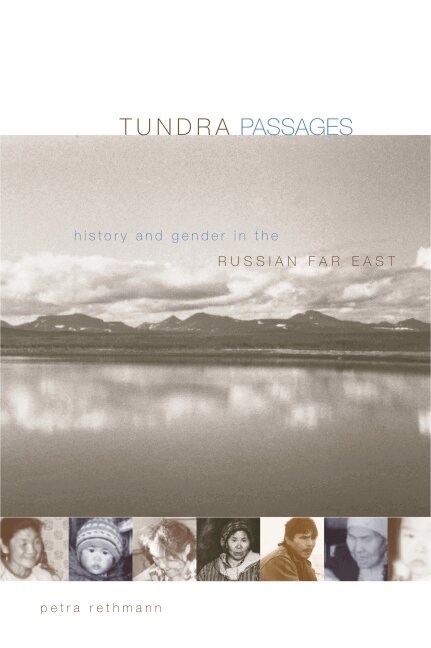
Koriak have been described as a nomadic people, migrating with the reindeer through rugged terrain. Their autonomy and mobility are salient cultural features that ethnographers and state administrators have found equally fascinating and menacing. Tundra Passages describes how this indigenous people in the Russian Far East have experienced, interpreted, and struggled with the changing conditions of life on the periphery of post-Soviet Russia. Rethmann portrays the lives of Koriak women in the locales of Tymlat and Ossora in northern Kamchatka, within a wider framework of sexuality, state power, and marginalization, which she sees as central to the Koriak experience of everyday life. Using gender as a lens through which to examine wider issues of history, disempowerment, and marginalization, she explores the interpretations and strategies employed by Koriak women and men to ameliorate the austere effects of political and socioeconomic disorder. Rethmann’s innovative work combines historical and ethnographic descriptions of Koriak life, narration, and practices of gender and history.With the demise of the Soviet Union, scholars have begun an active discussion of the political processes that affect marginalized and indigenous peoples in Russia. This work contributes to this discussion by revealing the tensions and potentially contradictory strategies of indigenous people within a world shaken by change, uncertainty, and disorder.
589 kr
Skickas inom 5-8 vardagar
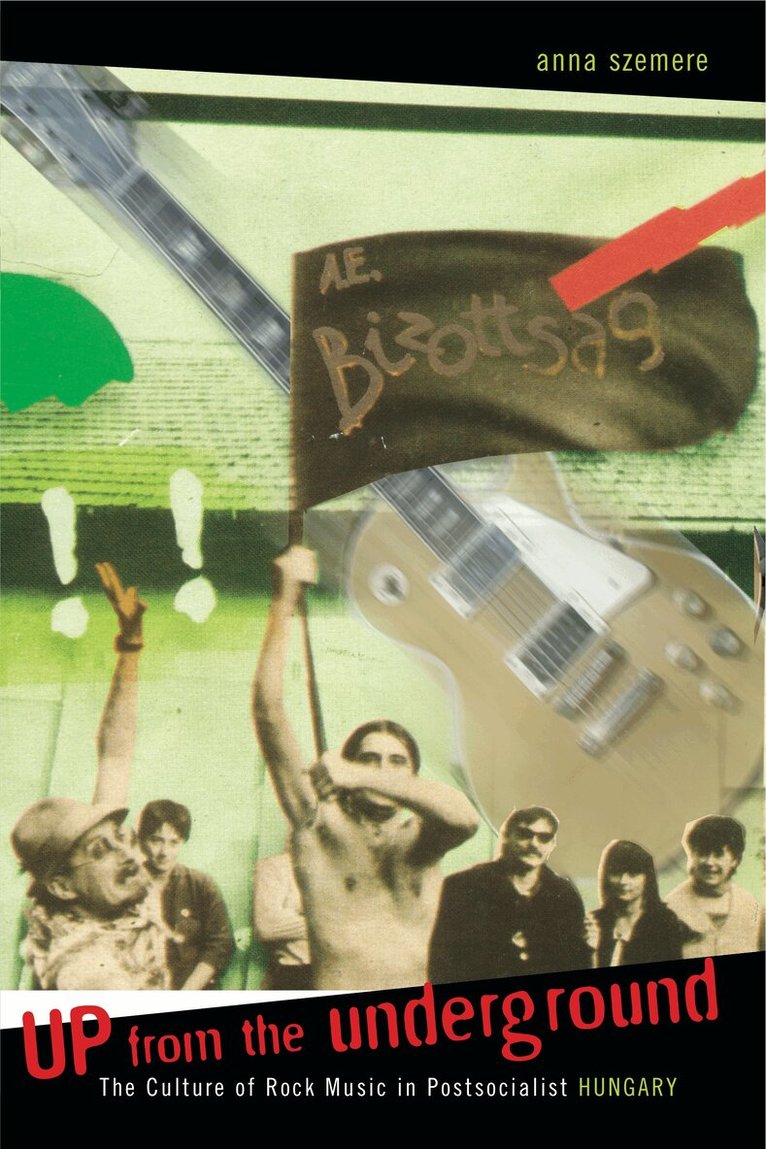
What happens to a community of oppositional artists when the purpose and meaning of their opposition are undermined by social transformation? Such was the dilemma facing many underground artists in Eastern Europe following the collapse of state socialism. In Up from the Underground, Anna Szemere looks at the underground based on rock music in Hungary, showing how it anticipated, precipitated, and responded to a period of fundamental change. Szemere's work focuses on a community of rock musicians that became popular with Hungary's urban youth culture in the early 1980s—groups with names such as the Committee, Control Group, and the Galloping Coroners. Szemere reveals the activities, discourse, and group life of musicians against the background of shifting institutional contexts. By the mid-1990s the change of regime had altered the cultural dynamics of Hungarian society, leading to a complete realignment of the underground music world. Szemere uses the opportunity presented by these developments to challenge one-dimensional representations of popular culture and transition in the region. She also addresses more general questions about the nature and uses of expressive culture, autonomy, social change, and social reproduction. Up from the Underground is an important addition to the scholarship on the cultural dimension of the most profound societal change in Europe since World War II. It also enriches the increasingly global field of cultural sociology and cultural studies by rethinking its central assumptions and theories in the light of Eastern Europe's unique historical and social experience.
665 kr
Skickas inom 7-10 vardagar
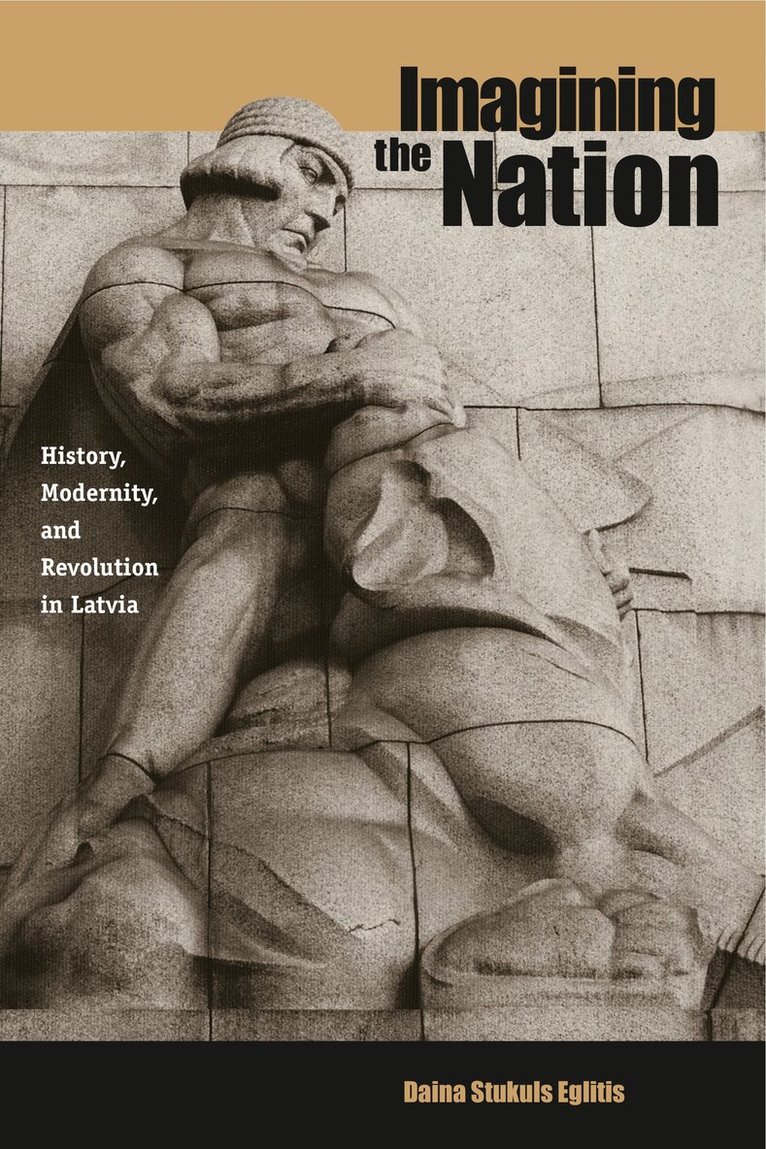
Every epoch produces its own notions of social change, and the post-Communist societies of Eastern Europe are no exception. Imagining the Nation explores the fate of contemporary Latvia, a small country with a big story that is relevant for anyone wishing to better understand the nature of post-Communist transitions. As Latvia and other former Soviet-bloc countries seek to rebuild and transform their societies, what is the central dynamic at work? In Imagining the Nation, Daina Stukuls Eglitis finds that in virtually all aspects of life the guiding sentiment among Latvians has been a desire for normality in the wake of the "deformations" that marked the half-century of Soviet rule. In seeking to return to normality, many people look to the West for models; others look back in time to the period of Latvian independence from 1918 to 1940 before the years of Soviet domination. Ultimately, the changes in Latvia and other Eastern European countries are closely tied to a vital reimagining of the past, as the logic of progress long associated with "revolution" is amalgamated with nostalgia for what is gone. The radiant utopias of revolution give way to widely shared aspirations for a return to the normal in politics, place names, private property, and even gender relations. Eglitis draws upon published and unpublished documents, campaign posters, maps, and monuments, as well as interviews with Latvians from all walks of life. The resulting picture of life in contemporary Latvia offers fresh perspective on a dilemma facing millions throughout the post-Communist world.
374 kr
Skickas inom 7-10 vardagar
Every epoch produces its own notions of social change, and the post-Communist societies of Eastern Europe are no exception. Imagining the Nation explores the fate of contemporary Latvia, a small country with a big story that is relevant for anyone wishing to better understand the nature of post-Communist transitions. As Latvia and other former Soviet-bloc countries seek to rebuild and transform their societies, what is the central dynamic at work? In Imagining the Nation, Daina Stukuls Eglitis finds that in virtually all aspects of life the guiding sentiment among Latvians has been a desire for normality in the wake of the "deformations" that marked the half-century of Soviet rule. In seeking to return to normality, many people look to the West for models; others look back in time to the period of Latvian independence from 1918 to 1940 before the years of Soviet domination. Ultimately, the changes in Latvia and other Eastern European countries are closely tied to a vital reimagining of the past, as the logic of progress long associated with "revolution" is amalgamated with nostalgia for what is gone. The radiant utopias of revolution give way to widely shared aspirations for a return to the normal in politics, place names, private property, and even gender relations. Eglitis draws upon published and unpublished documents, campaign posters, maps, and monuments, as well as interviews with Latvians from all walks of life. The resulting picture of life in contemporary Latvia offers fresh perspective on a dilemma facing millions throughout the post-Communist world.
449 kr
Skickas inom 7-10 vardagar
Ukraine is the largest new state to appear on the map of Europe this century. With a population of more than 50 million people and a territory larger than France, the new Ukrainian state faces many challenges, not least of which is to forge a national identity after years of Soviet rule. Burden of Dreams examines daily life in Soviet and post-Soviet Ukraine, showing why Ukrainian nationalism and its program of "Ukrainianization" have appealed to the largest Russian diaspora and to millions of Russified Ukrainians. Focusing on schools, festivals, commemorative ceremonies, and monuments, Catherine Wanner shows how Soviet-created narratives have been recast to reflect a post-Soviet Ukrainocentric perspective. In the process, we see how new histories are understood and acted upon. This reveals regional cleavages and the resilience of cultural differences produced by the Soviet regime. For some people, the system they criticized yesterday is the one they long for today. The struggle to remember or to forget is particularly intense in post-Soviet societies. Burden of Dreams is especially valuable for showing us the monumental task facing a Ukrainian state that is seeking to craft cultural solidarity after years of Soviet rule.
488 kr
Skickas inom 5-8 vardagar
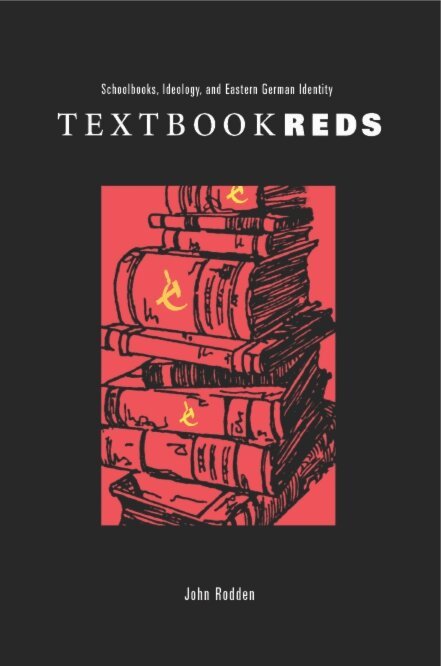
If one wants to know what children in communist East Europe were told to think about their nation and their leaders, their class enemy, and their so-called Soviet friends, no better source exists than textbooks. In textbooks the dogmas of communism were communicated in their most simplified form and manufactured in the millions for mass consumption. In Textbook Reds, John Rodden shows how the now-defunct German Democratic Republic (GDR) shaped generations of East German youth and how the imprint of Marxist-Leninist ideology remains today on the hearts and minds of millions of eastern Germans, more than fifteen years after the fall of the Berlin Wall. Drawing on a rich and varied collection of materials—a total of more than two hundred textbooks, teaching guides, school songbooks, educators’ professional journals, and school examinations—Rodden spotlights the “textbook mentality” that permeated East German society. In the GDR’s campaign to win the minds of men, any critiques of the Party were equated with disloyalty and the bourgeois sins of individualism, negativism, and cosmopolitanism. Citizens who broke free of such indoctrination still bore marks of its influence, even long after leaving school—and long after the GDR’s dissolution in 1990.The second part of the book offers a glimpse of post-communism today. Through interviews with dozens of teachers and students from contemporary eastern Germany, we see that East German faculty and students constitute perhaps the largest, most articulate, most traumatized segment of the population affected by events since 1989. Not just a study in comparative education, Textbook Reds is also a work in the sociology of education, literary sociology, and literary history. Rodden shows that the deepest roots of GDR society were indeed located in the institution that molded the youth of its citizens, and that the most searching questions about East German identity and the repression of its political past are in fact to be found there.