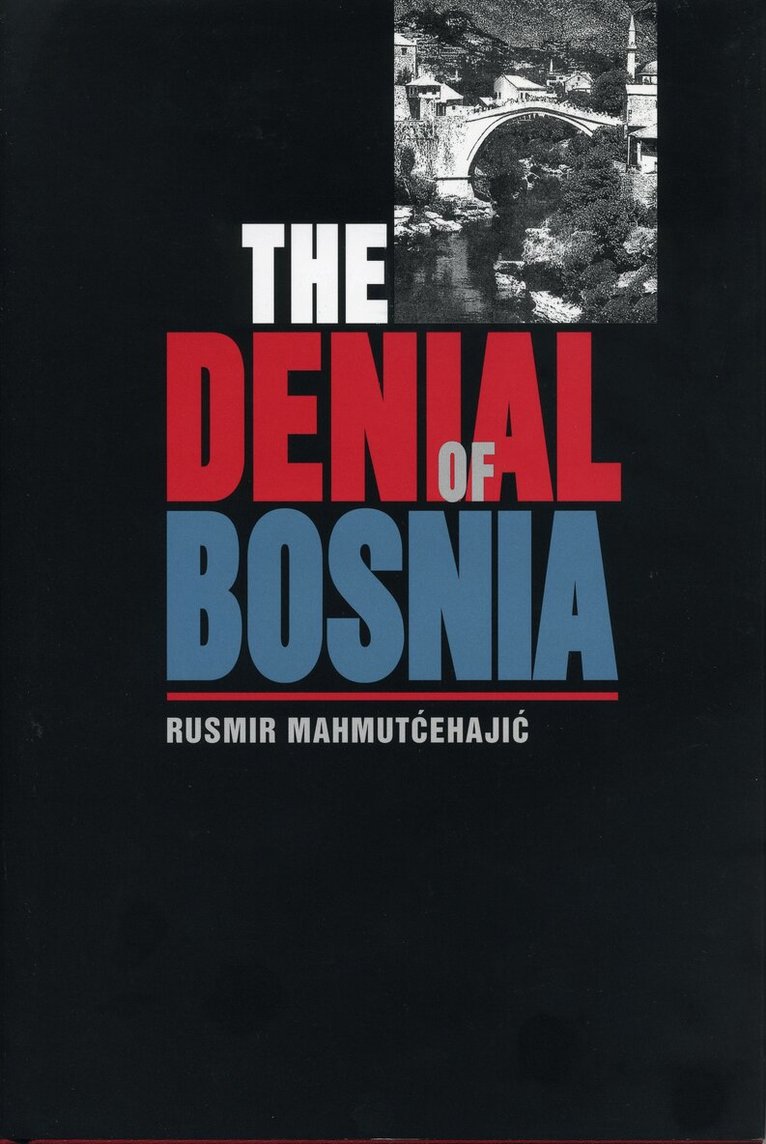
Inbunden, Engelska, 2000
Denial of Bosnia
608 kr
Beställningsvara. Skickas inom 5-8 vardagar. Fri frakt över 249 kr.
Beskrivning
In 1997, Rusmir Mahmutćehajić, one of Bosnia’s leading public intellectuals, was scheduled to lecture on Bosnia at Stanford University but was unexpectedly denied an entry visa by American authorities. This book, first published in Bosnia in 1998, is an expanded version of that lecture. It is an indictment of the partition of Bosnia, formalized in 1995 by the Dayton Accord. It is also a plea for Bosnia’s communities to reject ethnic segregation and restore mutual trust. For the first time, English-speaking readers can hear this important voice of dissent from within Bosnia-Herzegovina.Mahmutćehajić (pronounced “ma-moot-che-HI-itch”) argues for the history and reality of a Bosnia-Herzegovina based upon a model of “unity in diversity.” He shows that ethnic and religious cultures have coexisted in Bosnia for centuries. Partitioning of Bosnia, therefore, should have been unthinkable except that a multi-ethnic, multi-faith Bosnia stood squarely in the way of Croatian and Serbian leaders determined to enact their own nationalist programs. The decisive moment came when the international community accepted the Serb-Croat argument that ancient ethnic hatreds were endemic to Bosnia. At that point, ethnic segregation became not only acceptable but desirable. With the complicity of Western powers, Serbs and Croats proceeded to carve out ethnically cleansed states. Mahmutćehajić examines the reasons why Western liberal democracies have regarded with sympathy the struggles of Serbia and Croatia for national recognition, while viewing Bosnia’s multicultural society with suspicion. As one of Bosnia's former political leaders in the early peace talks, he describes with authority how the parties were often physically aligned during formal talks, with Bosniak negotiators on one side of the table and everybody else—Serb, Croat, and international representatives—on the other. In the end, justice was subverted and the final solution justified on the basis of an intractable “conflict of civilizations."Mahmutćehajić confronts the religious dimension of the Bosnian dilemma with refreshing honesty. As a Bosniak committed to interreligious dialogue, he calls for more than simple toleration among Serbs, Croats, and Bosnians. He remembers that Judaism, Christianity, and Islam all share the same deity, and it is this common transcendent perspective that should open the door to the acceptance and celebration of religious diversity. Only in this way will Bosnia reclaim its unique civilization.The Denial of Bosnia has dire implications for the future of a Europe searching for a viable post–Cold War order. Will Europe accept ethnic segregation as a solution to the contradictions of ethnic diversity or find a way to protect and build upon this diversity? Bosnia, though currently divided and shaken to its foundations, could become a model for European progress. The greatest danger is for Bosnia to be declared just another ethnoreligious entity, in this case a “Muslim State” ghettoized inside of Europe. If protected and allowed to develop, however, Bosnia too could find a place in the new European order.
Produktinformation
- Utgivningsdatum: 2000-07-17
- Mått: 152 x 229 x 15 mm
- Vikt: 907 g
- Format: Inbunden
- Språk: Engelska
- Serie: Post-Communist Cultural Studies
- Antal sidor: 176
- Förlag: Pennsylvania State University Press
- ISBN: 9780271020303
Utforska kategorier
Betyg & recensioner
0 recensioner
Inga recensioner tillgängliga.