Prehistoric Archeology and Ecology series – Serie
Visar alla böcker i serien Prehistoric Archeology and Ecology series. Handla med fri frakt och snabb leverans.
7 produkter
7 produkter
333 kr
Skickas inom 7-10 vardagar
One of the first interdisciplinary discussions of taphonomy (the study of how fossil assemblages are formed) and paleoecology (the reconstruction of ancient ecosystems), this volume helped establish these relatively new disciplines. It was originally published as part of the influential Prehistoric Archeology and Ecology series. "Taphonomy is plainly here to stay, and this book makes a first class introduction to its range and appeal."—Anthony Smith, Interdisciplinary Science Reviews
Current Paleoethnobotany
Analytical Methods and Cultural Interpretations of Archaeological Plant Remains
Häftad, Engelska, 1989
268 kr
Skickas inom 7-10 vardagar
Paleoethnobotany offers powerful tools for reconstructing past cultures by examining the interaction of human populations with the plant world. Plant remains from archaeological sites can provide information for a number of disciplines: archaeologists may use such remains to examine how plants were used, how agriculture changed over time, or how plant offerings in burials signaled social status; ecologists and botanists may use them to study morphological changes in plants due to domestication. Combining case studies and theoretical discussions, Current Paleoethnobotany presents the first full discussion of the major stages and problems of paleoethnobotanical research, from designing and testing equipment, such as flotation machines, to quantification and interpretation. The volume explores a wide range of issues concerning collection techniques, analytical procedures, and interpretive models that will provide accurate information about past human societies from plant remains. The contributors offer data on specific regions as well as more general background information on the basic techniques of paleoethnobotany for the nonspecialist. Throughout, they explicitly examine the assumptions underlying paleoethnobotanical methods and the ways in which those assumptions affect anthropological and ecological research questions. Based on a symposium presented at the 1985 meeting of the Society for American Archaeology, Current Paleoethnobotany moves beyond a technique-oriented view of paleoethnobotany to successfully integrate current thinking about both procedures and research goals. The contributors demonstrate the potential value of the field of paleoethnobotany and open the way for further discussion and improvement.
309 kr
Skickas inom 7-10 vardagar
A major problem confronting archeologists is how to determine the function of ancient stone tools. In this important work, Lawrence H. Keeley reports on his own highly successful course of research into the uses of British Paleolithic flint implements. His principal method of investigation, known as "microwear analysis," was the microscopic examination of traces of use left on flint implements in the form of polishes, striations, and breakage patterns. The most important discovery arising from Keeley's research was that, at magnifications of 100x to 400x, there was a high correlation between the detailed appearance of microwear polishes formed on tool edges and the general category of material worked by that edge. For example, different and distinctive types of microwear polish were formed during use on wood, bone, hide, meat, and soft plant material. These correlations between microwear polish and worked material were independent of the method of use (cutting, sawing, scraping, and so on). In combining evidence of polish type with other traces of use, Keeley was able to make precise reconstructions of tool functions. This book includes the results of a "blind test" of Keeley's functional interpretations which revealed remarkable agreement between the actual and inferred use of the tools tested. Keeley applied his method of microwear analysis to artifacts from three excavation sites in Britain—Clacton-on-the-sea, Swanscombe, and Hoxne. His research suggests new hypotheses concerning such Paleolithic problems as inter-assemblage variability, the function of Acheulean hand axes, sidescrapers, and chopper-cores and points the way to future research in Stone Age studies.
309 kr
Skickas inom 7-10 vardagar
In growing numbers, archeologists are specializing in the analysis of excavated animal bones as clues to the environment and behavior of ancient peoples. This pathbreaking work provides a detailed discussion of the outstanding issues and methods of bone studies that will interest zooarcheologists as well as paleontologists who focus on reconstructing ecologies from bones. Because large samples of bones from archeological sites require tedious and time-consuming analysis, the authors also offer a set of computer programs that will greatly simplify the bone specialist's job. After setting forth the interpretive framework that governs their use of numbers in faunal analysis, Richard G. Klein and Kathryn Cruz-Uribe survey various measures of taxonomic abundance, review methods for estimating the sex and age composition of a fossil species sample, and then give examples to show how these measures and sex/age profiles can provide useful information about the past. In the second part of their book, the authors present the computer programs used to calculate and analyze each numerical measure or count discussed in the earlier chapters. These elegant and original programs, written in BASIC, can easily be used by anyone with a microcomputer or with access to large mainframe computers.
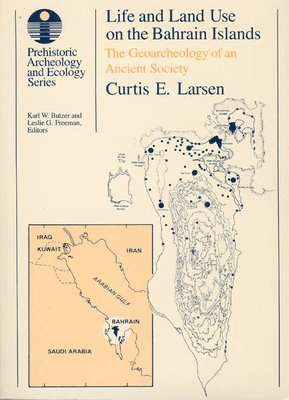
Life and Land Use on the Bahrain Islands
The Geoarchaeology of an Ancient Society
Häftad, Engelska, 1984
268 kr
Skickas inom 7-10 vardagar
According to archeological and historical records, the Bahrain Islands of the Arabian Gulf were the home of a flourishing civilization four thousant years ago. Then, as now, these islands served as an important locus of maritime trade, but they were also characterized as a land of copious artesian springs and fertile fields. Modern Bahrain, in contrast, is beset by environmental and demographic problems: the depletion of the artesian water supply, abandonment of rural agricultural lands, and rapid population growth. In this exemplary interdisciplinary study, Curtis E. Larsen combines archeological, geological, historical, and anthropological methods to reconstruct the paleoenvironmental and socioeconomic context that links Bahrain's present to its past.
284 kr
Skickas inom 7-10 vardagar
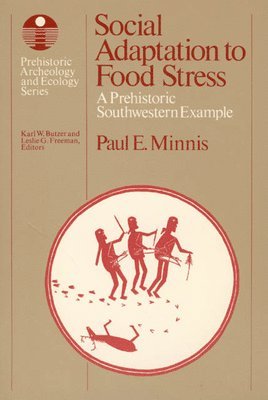
Combining anthropology, archeology, and evolutionary theory, Paul E. Minnis develops a model of how tribal societies deal with severe food shortages. While focusing on the prehistory of the Rio Mimbres region of New Mexico, he provides comparative data from the Fringe Enga of New Guinea, the Tikopia of Tikopia Island, and the Gwembe Tonga of South Africa. Minnis proposes that, faced with the threat of food shortages, nonstratified societies survive by employing a series of responses that are increasingly effective but also are increasingly costly and demand increasingly larger cooperative efforts. The model Minnis develops allows him to infer, from evidence of such factors as population size, resource productivity, and climate change, the occurrence of food crises in the past. Using the Classic Mimbres society as a test case, he summarizes the regional archeological sequence and analyzes the effects of environmental fluctuations on economic and social organization. He concludes that the responses of the Mimbres people to their burgeoning population were inadequate to prevent the collapse of the society in the late twelfth century. In its illumination of the general issue of responses to food shortages, Social Adaptation to Food Stress will interest not only archeologists but also those concerned with current food shortages in the Third World. Cultural ecologists and human geographers will be able to derive a wealth of ideas, methods, and data from Minnis's work.
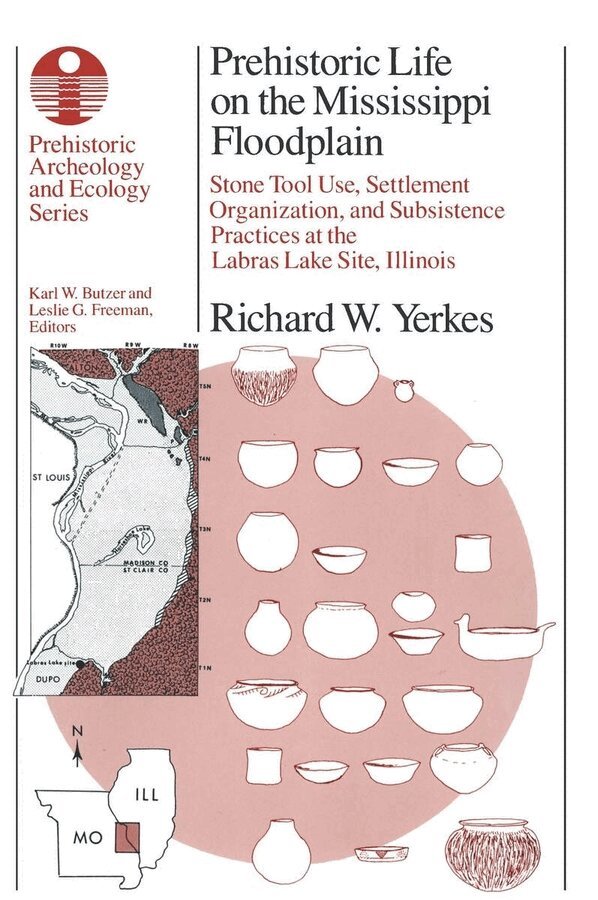
Prehistoric Life on the Mississippi Floodplain
Stone Tool Use, Settlement Organization, and Subsistence Practices at the Labras Lake Site, Illinois
Häftad, Engelska, 1986
333 kr
Skickas inom 7-10 vardagar
At the confluence of the Illinois, the Missouri, and the Mississippi Rivers lies the "American Bottom," a broad floodplain that prehistoric peoples inhabited for millennia. Precisely how did they live? What were their ties to the natural world around them? In this study, based upon some six years of intensive archeological and geological research at Labras Lake in St. Clair County, Illinois, Richard W. Yerkes interprets a wealth of important new data in a stimulating and original fashion. With a fine-tuned control of the data, Yerkes challenges prevailing theories based on simple classifications of stone tools according to shape or on simple models of diffuse and focal economies. He views environment as a dynamic factor in economic and cultural life, rather than as merely a backdrop to it. Using incident light microscopy, he examines wear patterns on stone tools to determine what activities were performed during each period the site was inhabited—the Late Archaic, the Late Woodland, and the Mississippian. As he documents environmental change at Labras Lake, he analyzes plant and animal remains in context to explore diet and seasonal patterns of subsistence and settlement. The result is a more accurate and detailed picture than ever before what prehistoric life on the Mississippi floodplain was like. Yerkes shows how to assess the duration and size of occupations and how to determine where and when true permanent settlements arose. What others call "sedentary encampments" he reveals as sequences of small residental occupations for a narrow range of activities during shorter, seasonal periods. His contribution to the study of the development of sedentism is potentially far-reaching and will interest many North American anthropologists and archeologists.