Publications of the Department of Art and Archaeology, Princeton University – serie
Visar alla böcker i serien Publications of the Department of Art and Archaeology, Princeton University. Handla med fri frakt och snabb leverans.
9 produkter
9 produkter
Insights and Interpretations
Studies in Celebration of the Eighty-fifth Anniversary of the Index of Christian Art
Inbunden, Engelska, 2002
609 kr
Skickas inom 5-8 vardagar
Established in 1917, the Index of Christian Art, located at Princeton University, is now the largest archive of medieval art in existence and the most specialized resource for the iconographer. Throughout its eighty-five years, it has justly been recognized as one of the most learned institutions for the study of the art and culture of the medieval world. The essays in this book, all by staff or scholars of the archive, highlight some of the current research in the archive and the scholarship for which it has been widely renowned. The studies cover art from the Late Antique period to the end of the fifteenth century and include most of the media represented in the archive, from manuscripts to sculpture to glass. From reinterpreting previous scholarship to making new insights into the medieval mind, they explore such themes as Jephtha's Daughter; Mary Magdalene; Saints Blaise, Paul, Joseph, and Elisabeth of Hungary; and topics including women in the Bibles moralisees, Late German sermons, the iconographic program at Bourges Cathedral, Franciscan devotional art, and a late medieval Islamic manuscript.This volume presents some of the most exciting and interdisciplinary approaches to the study of these subjects, from the home of medieval iconography in Princeton. The contributors are Adelaide Bennett, Lois Drewer, Ivan Great, Judith Golden, Gerald Guest, Margaret Jennings, Margaret Lindsey, Mika Natif, Lynn Ransom, Pamela Sheingorn, and A. E. Wright.
590 kr
Skickas inom 5-8 vardagar
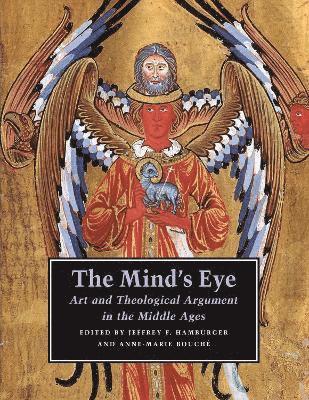
The Mind's Eye focuses on the relationships among art, theology, exegesis, and literature--issues long central to the study of medieval art, yet ripe for reconsideration. Essays by leading scholars from many fields examine the illustration of theological commentaries, the use of images to expound or disseminate doctrine, the role of images within theological discourse, the development of doctrine in response to images, and the place of vision and the visual in theological thought. At issue are the ways in which theologians responded to the images that we call art and in which images entered into dialogue with theological discourse. In what ways could medieval art be construed as argumentative in structure as well as in function? Are any of the modes of representation in medieval art analogous to those found in texts? In what ways did images function as vehicles, not merely vessels, of meaning and signification? To what extent can exegesis and other genres of theological discourse shed light on the form, as well as the content and function, of medieval images?These are only some of the challenging questions posed by this unprecedented and interdisciplinary collection, which provides a historical framework within which to reconsider the relationship between seeing and thinking, perception and the imagination in the Middle Ages.
Greek Manuscripts at Princeton, Sixth to Nineteenth Century
A Descriptive Catalogue
Inbunden, Engelska, 2010
2 009 kr
Skickas inom 5-8 vardagar
This is the first comprehensive scholarly publication of the rich holdings of Greek manuscripts and miniatures in Princeton, New Jersey, housed in the Firestone Library and the art museum of Princeton University, in the Scheide Library, and in Princeton Theological Seminary. This important material represents both a broad range of time--from the early Byzantine period through the mid-nineteenth century--and a broad range of content, from Byzantine copies of classical texts to Gospel books, Lectionaries and patristic homilies, hymns and texts of the liturgy, medical books, and Holy Land pilgrimage guides. Among the manuscripts are some spectacularly illustrated works, key monuments in the history of Byzantine illumination: an eleventh-century codex of John Klimax's Heavenly Ladder with vivid and unusual depictions of monastic life; evangelist portraits from a number of artistic periods and centers; extraordinary pages of pure ornament; and fine examples of post-Byzantine liturgical illustration of the sixteenth and seventeenth centuries.Among the most significant texts are a sixth-century palimpsest with Greek hymns in an extremely early form of musical notation, and a thirteenth-century copy of Aristotle's Organon, heavily annotated by the renowned Byzantine scholar and teacher John Chortasmenos (ca. 1370-1430). The collection also includes a fascinating eighteenth-century genealogical chronicle--a 45-foot-long roll with 562 illustrations of biblical events and personalities from the Creation to the Ascension of Christ, a work that was probably produced in the area of present-day Romania. This collection offers insight into many aspects of the artistic and intellectual life--theological, monastic, scholarly, ecclesiastical--of the Byzantine and post-Byzantine world. It also contributes to the history of Greek philology and the development of the Greek book over more than a millennium, from the earliest centuries of manuscript production down to the period when, long after the appearance of printing, liturgical texts continued to be copied by hand and lavishly illuminated.The catalogue provides codicological and art-historical analysis of all 64 manuscripts and leaves, along with detailed information on their content, provenance, and bindings; extensive bibliographies; and ample plates, almost all of them in color.
611 kr
Skickas inom 5-8 vardagar
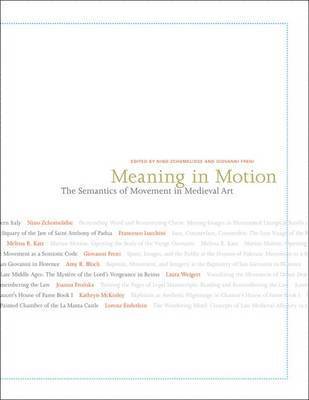
Taking a new approach to medieval art, Meaning in Motion reveals the profound importance of movement in the physical, emotional, and intellectual experience of art and architecture in the Middle Ages. Focusing on the physical movement of objects and viewers, as well as movements of the mind, this richly illustrated collection of interdisciplinary essays explores a wide range of rituals, performances, works of art, and texts in which movement is crucial to meaning. These include liturgical and devotional practices, but also pilgrimage, reading techniques, and the use of art and allegory in late medieval courtly society. The contributors consider movement not only as a physical action but also as an active intellectual process involving the reception of images, one that creates layers of meaning through the multidimensional experience of objects and spaces, both real and imaginary.This novel approach to medieval art, building on the concept of agency and the understanding of ritual as a performative act, is influenced by two anthropological perspectives: Victor Turner's "processual" analysis of rites of passage and Alfred Gell's conception of the interactive relationship between art and the viewer as a process. The essays in this volume engage in an interdisciplinary discussion of the significance of movement for the making and perception of medieval art.
1 835 kr
Skickas inom 5-8 vardagar
Excavation of the ancient city of Morgantina in southeastern Sicily since 1955 has recovered an extraordinary quantity and variety of pottery, both locally made and imported. This volume presents the fine-ware pottery dating between the second half of the fourth century BCE, when Morgantina was a thriving inland center closely tied to the Hellenistic east through Syracuse, and the first half of the first century CE, when Morgantina had been reduced to a dwindling Roman provincial town that would soon be abandoned. Bearing gloss and often paint or relief, these fine ceramics were mostly tableware, and together they provide a well-defined picture of the evolving material culture of an important urban site over several centuries. And since virtually all these vessels come from dated deposits, this volume provides wide-ranging contributions to the chronology of Hellenistic and early Roman pottery. An introductory chapter sketches out a comprehensive history of the city, discusses the many well-dated archaeological deposits that contained the excavated pottery, and defines the major fabrics of the ceramics found at the site.The bulk of the volume consists of a scholarly presentation of more than 1,500 pottery vessels, analyzing their shapes, fabrics, chronology, decoration, and techniques of fabrication. This rich ceramic material includes significant bodies of Republican black-gloss and red-gloss vases, Sicilian polychrome ware, and Eastern Sigillata A, as well as early Italian terra sigillata, with numerous examples imported from Arezzo and other Italian centers, along with regional versions from Campania and elsewhere on Sicily. The relief ware includes important groups of third-century BCE medallion cups and hemispherical moldmade cups of the second and first centuries BCE. Morgantina was also an active center of pottery production, and the debris from several workshops has been recovered, enabling Shelley Stone to reconstruct the working techniques and materials of the local craftsmen, the range of ceramics they produced, and how their products were influenced by pottery imported to the site from elsewhere on Sicily, the Italian mainland, and even more distant centers.The volume also presents new information about the sources of the clay used by the Morgantina potters, as revealed by X-ray fluorescence analysis of selected vases.
Medieval and Renaissance Manuscripts in the Princeton University Library (Two-Volume Set)
Inbunden, Engelska, 2013
2 428 kr
Tillfälligt slut
This two-volume catalogue is the first comprehensive scholarly description of the Western medieval and Renaissance manuscripts in the Princeton University Library, one of the finest collections in America. The rich holdings comprise more than 420 manuscripts in the Robert Garrett, Grenville Kane, Robert Taylor, Cotsen Library, and Princeton collections; manuscripts bound with incunables in the Rare Books Division; hundreds of single leaves and cuttings; and about 5,000 original documents in six other collections. The catalogue offers full textual, paleographic, codicological, art-historical, and iconographical descriptions; detailed provenance notes; and full bibliographies. About a third are illuminated manuscripts, which are selectively illustrated in the catalogue's 128 color plates, which contain nearly 400 images. Princeton's manuscripts range in date from the Carolingian era to the Italian Renaissance, with particular strength in late medieval holdings. They come chiefly from England, France, Italy, Germany and the deutscher Sprachraum, the Low Countries, and the Iberian Peninsula.There are more than thirty manuscripts in Middle English, and a nearly equal number in French (including Anglo-Norman), with smaller numbers in Italian, Spanish, Portuguese, German, Dutch or Flemish, Hebrew, and Icelandic. Among the highlights of the collection are Hrabanus Maurus's Commentary on Matthew (Fulda, ca. 840-60); William of Waddington's Manuel des peches (1280s); a Chretien de Troyes miscellany (France, ca. 1295); the Tollemache Chaucer (ca. 1420-60); an illustrated copy of Kyrillos's Fables in German (1425-30); a Suetonius with sumptuous full-page miniatures (Milan, 1433); a richly illustrated copy of Giovanni Marcanova's Antiquitates (Bologna, ca. 1473); the Hours of Marguerite de Rohan, countess of Angouleme (ca. 1480); and the Sanvito Virgil (Padua, ca. 1507). Some twenty years in the making, this catalogue identifies virtually all the manuscripts' texts on an encyclopedic range of subjects. Classical Latin authors, medieval scholastic texts, scripture, liturgy, and devotional books are most prominent, but history, law, music, medicine, astronomy, magic, and especially vernacular literature are also represented.Medieval and Renaissance Manuscripts in the Princeton University Library has a fully integrated approach that gives equal emphasis to text and image and their historical context, offering insights into countless aspects of intellectual and artistic life.
661 kr
Skickas inom 5-8 vardagar
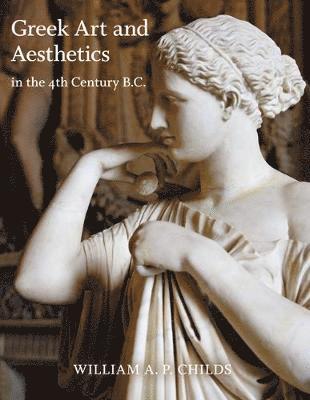
Greek Art and Aesthetics in the Fourth Century B.C. analyzes the broad character of art produced during this period, providing in-depth analysis of and commentary on many of its most notable examples of sculpture and painting. Taking into consideration developments in style and subject matter, and elucidating political, religious, and intellectual context, William A. P. Childs argues that Greek art in this era was a natural outgrowth of the high classical period and focused on developing the rudiments of individual expression that became the hallmark of the classical in the fifth century. As Childs shows, in many respects the art of this period corresponds with the philosophical inquiry by Plato and his contemporaries into the nature of art and speaks to the contemporaneous sense of insecurity and renewed religious devotion. Delving into formal and iconographic developments in sculpture and painting, Childs examines how the sensitive, expressive quality of these works seamlessly links the classical and Hellenistic periods, with no appreciable rupture in the continuous exploration of the human condition.Another overarching theme concerns the nature of "style as a concept of expression," an issue that becomes more important given the increasingly multiple styles and functions of fourth-century Greek art. Childs also shows how the color and form of works suggested the unseen and revealed the profound character of individuals and the physical world.
Morgantina Studies, Volume III
Fornaci e Officine da Vasaio Tardo-ellenistiche. (In Italian) (Late Hellenistic Potters' Kilns and Workshops)
Häftad, Engelska, 2014
836 kr
Skickas inom 3-6 vardagar
The kilns at Morgantina, site of the well-known excavations in central Sicily, are an outstanding example of multiple potters' workshops in use during the late Hellenistic period. In fully documenting these ten kilns, excavated between 1955 and 1963, Ninina Cuomo di Caprio offers both a representative cross-section of the physical setting of ceramic production in this ancient Greek city and evidence for its daily industrial activity. She includes detailed plans and section drawings of each kiln and formulates hypotheses on its operation in light of modern thermodynamics. The text, which is in Italian, is preceded by an English-language summary. Cuomo di Caprio's archaeological study of the kiln structures and their ceramic products is supplemented by such diagnostic tools as thermoluminescence analysis, neutron activation analysis, X-ray diffraction, and optical examination by polarizing microscope.Opening an entirely new window into the everyday working practices of the Morgantina potters, this study demonstrates that they operated at a very sophisticated level: selecting and purifying specific clays, and adding certain materials to manipulate their working and firing characteristics. Originally published in 1992. The Princeton Legacy Library uses the latest print-on-demand technology to again make available previously out-of-print books from the distinguished backlist of Princeton University Press. These editions preserve the original texts of these important books while presenting them in durable paperback and hardcover editions. The goal of the Princeton Legacy Library is to vastly increase access to the rich scholarly heritage found in the thousands of books published by Princeton University Press since its founding in 1905.
2 871 kr
Skickas inom 3-6 vardagar
Excavations conducted at Morgantina by Princeton University and the University of Illinois have revealed substantial Iron Age remains beneath the Greek town on the Cittadella hilltop. In this volume Robert Leighton presents a full study of this extensive protohistoric settlement in Sicily. The broad scope of evidence, particularly the survival of long houses and tombs with much of their structures and contents preserved, permits an unusually thorough examination of indigenous cultural traditions prior to the foundation of the Greek town in the Archaic period. An illustrated catalogue of the finds presents more than 700 artifacts from the site, most of which are previously unpublished. The author discusses all the excavated protohistoric areas in detail, and presents a full range of maps, plans, excavation photographs, reconstruction drawings, and radiocarbon dates. The diverse body of finds includes a wide variety of pottery forms as well as tools and ornaments of both metal and stone that document local crafts, metallurgy, and numerous aspects of daily life.In studying these objects, Leighton draws on parallels with material from the Italian peninsula and considers the evidence of the historical sources, revealing links between Sicily and Italy in the protohistoric period. Originally published in 1993. The Princeton Legacy Library uses the latest print-on-demand technology to again make available previously out-of-print books from the distinguished backlist of Princeton University Press. These editions preserve the original texts of these important books while presenting them in durable paperback and hardcover editions. The goal of the Princeton Legacy Library is to vastly increase access to the rich scholarly heritage found in the thousands of books published by Princeton University Press since its founding in 1905.