Proceedings of SW Symposium - Böcker
Visar alla böcker i serien Proceedings of SW Symposium. Handla med fri frakt och snabb leverans.
8 produkter
8 produkter
Archaeology of Regional Interaction
Religion, Warfare, and Exchange across the American Southwest and Beyond
Häftad, Engelska, 2008
441 kr
Tillfälligt slut
910 kr
Tillfälligt slut
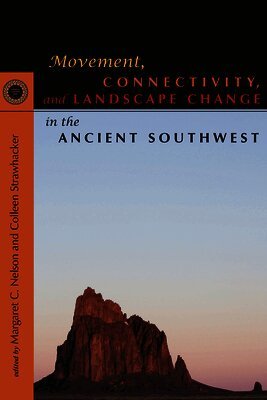
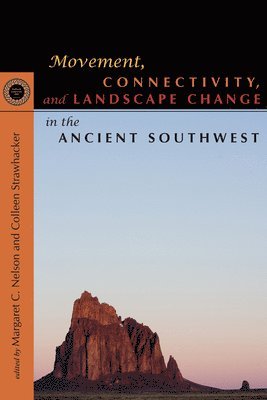
A collection of the papers presented at the Twentieth Anniversary Southwest Symposium, Movement, Connectivity, and Landscape Change in the Ancient Southwest looks back at the issues raised in the first symposium in 1988 and tackles three contemporary domains in archaeology: landscape use and ecological change, movement and ethnogenesis, and connectivity among social groups through time and space. Across these sections the authors address the relevance of archaeology in the modern world; new approaches and concerns about collaboration across disciplines, communities, and subgroups; and the importance of multiple perspectives.Particular attention is paid to the various ways that archaeology can and should contribute to contemporary social and environmental issues. Contributors come together to provide a synthetic volume on current research and possibilities for future explorations. Moving forward, they argue that archaeologists must continue to include researchers from across political and disciplinary boundaries and enhance collaboration with Native American groups.This book will be of interest to professional and academic archaeologists, as well as students working in the field of the American Southwest.
786 kr
Tillfälligt slut
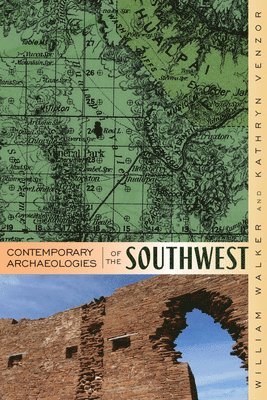
Organized by the theme of place and place-making in the Southwest, Contemporary Archaeologies of the Southwest emphasizes the method and theory for the study of radical changes in religion, settlement patterns, and material culture associated with population migration, colonialism, and climate change during the last 1,000 years.Chapters address place-making in Chaco Canyon, recent trends in landscape archaeology, the formation of identities, landscape boundaries, and the movement associated with these aspects of place-making. They address how interaction of peoples with objects brings landscapes to life. Representing a diverse cross section of Southwestern archaeologists, the authors of this volume push the boundaries of archaeological method and theory, building a strong foundation for future Southwest studies.This book will be of interest to professional and academic archaeologists, as well as students working in the American Southwest.
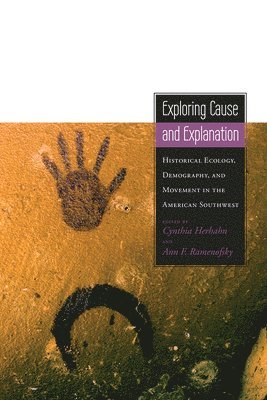
Exploring Cause and Explanation
Historical Ecology, Demography, and Movement in the American Southwest
Inbunden, Engelska, 2016
786 kr
Tillfälligt slut
This 13th biennial volume of the Southwest Symposium highlights three distinct archaeological themes—historical ecology, demography, and movement—tied together through the consideration of the knowledge tools of cause and explanation. These tools focus discussion on how and why questions, facilitate assessing past and current knowledge of the Pueblo Southwest, and provide unexpected bridges across the three themes. For instance, people are ultimately the source of the movement of artifacts, but that statement is inadequate for explaining how artifact movement occurred or even why, at a regional scale, different kinds of movement are implicated at different times. Answering such questions can easily incorporate questions about changes in climate or in population density or size. Each thematic section is introduced by an established author who sets the framework for the chapters that follow. Some contributors adopt regional perspectives in which both classical regions (the central San Juan or lower Chama basins) and peripheral zones (the Alamosa basin or the upper San Juan) are represented. Chapters are also broad temporally, ranging from the Younger Dryas Climatic interval (the Clovis-Folsom transition) to the Protohistoric Pueblo world and the eighteenth-century ethnogenesis of a unique Hispanic identity in northern New Mexico. Others consider methodological issues, including the burden of chronic health afflictions at the level of the community and advances in estimating absolute population size. Whether emphasizing time, space, or methodology, the authors address the processes, steps, and interactions that affect current understanding of change or stability of cultural traditions. Exploring Cause and Explanation considers themes of perennial interest but demonstrates that archaeological knowledge in the Southwest continues to expand in directions that could not have been predicted fifty years ago.Contributors: Kirk C. Anderson, Jesse A. M. Ballenger, Jeffery Clark, J. Andrew Darling, B. Sunday Eiselt, Mark D. Elson, Mostafa Fayek, Jeffrey R. Ferguson, Severin Fowles, Cynthia Herhahn, Vance T. Holliday, Sharon Hull, Deborah L. Huntley, Emily Lena Jones, Kathryn Kamp, Jeremy Kulisheck, Karl W. Laumbach, Toni S. Laumbach, Stephen H. Lekson, Virginia T. McLemore, Frances Joan Mathien, Michael H. Ort, Scott G. Ortman, Mary Ownby, Mary M. Prasciunas, Ann F. Ramenofsky, Erik Simpson, Ann L. W. Stodder, Ronald H. Towner
1 143 kr
Tillfälligt slut
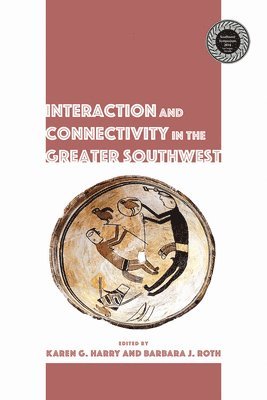
This volume of proceedings from the fourteenth biennial Southwest Symposium explores different kinds of social interaction that occurred prehistorically across the Southwest. The authors use diverse and innovative approaches and a variety of different data sets to examine the economic, social, and ideological implications of the different forms of interaction, presenting new ways to examine how social interaction and connectivity influenced cultural developments in the Southwest. The book observes social interactions’ role in the diffusion of ideas and material culture; the way different social units, especially households, interacted within and between communities; and the importance of interaction and interconnectivity in understanding the archaeology of the Southwest’s northern periphery. Chapters demonstrate a movement away from strictly economic-driven models of social connectivity and interaction and illustrate that members of social groups lived in dynamic situations that did not always have clear-cut and unwavering boundaries. Social connectivity and interaction were often fluid, changing over time. Interaction and Connectivity in the Greater Southwest is an impressive collection of established and up-and-coming Southwestern archaeologists collaborating to strengthen the theoretical underpinnings of the discipline. It will be of interest to professional and academic archaeologists, as well as researchers with interests in diffusion, identity, cultural transmission, borders, large-scale interaction, or social organization. Contributors:Richard V. N. Ahlstrom, James R. Allison, Jean H. Ballagh, Catherine M. Cameron, Richard Ciolek-Torello, John G. Douglass, Suzanne L. Eckert, Hayward H. Franklin, Patricia A. Gilman, Dennis A. Gilpin, William M. Graves, Kelley A. Hays-Gilpin, Lindsay D. Johansson, Eric Eugene Klucas, Phillip O. Leckman, Myles R. Miller, Barbara J. Mills, Matthew A. Peeples, David A. Phillips Jr., Katie Richards, Heidi Roberts, Thomas R. Rocek, Tammy Stone, Richard K. Talbot, Marc Thompson, David T. Unruh, John A. Ware, Kristina C. Wyckoff
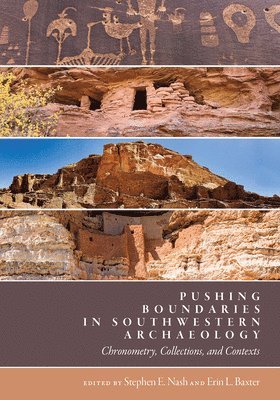
Pushing Boundaries in Southwestern Archaeology
Chronometry, Collections, and Contexts
Inbunden, Engelska, 2023
868 kr
Tillfälligt slut
Pushing Boundaries in Southwestern Archaeology draws together the proceedings from the sixteenth biennial Southwest Symposium. In exploring the conference theme, contributors consider topics ranging from the resuscitation of archaeomagnetic dating to the issue of Athapaskan origins, from collections-based studies of social identity, foodways, and obsidian trade to the origins of a rock art tradition and the challenges of a deeply buried archaeological record. The first of the volume’s four sections examines the status, history, and prospects of Bears Ears National Monument, the broader regulatory and political boundaries that complicate the nature and integrity of the archaeological record, and the cultural contexts and legal stakes of archaeological inquiry. The second section focuses on chronological “big data” in the context of pre-Columbian history and the potential and limits of what can be empirically derived from chronometric analysis of the past. The chapters in the third section advocate for advancing collections-based research, focusing on the vast and often untapped research potential of archives, previously excavated museum collections, and legacy data. The final section examines the permeable boundaries involved in Plains-Pueblo interactions, obvious in the archaeological record but long in need of analysis, interpretation, and explanation. Contributors: James R. Allison, Erin Baxter, Benjamin A. Bellorado, Katelyn J. Bishop, Eric Blinman, J. Royce Cox, J. Andrew Darling, Kaitlyn E. Davis, William H. Doelle, B. Sunday Eiselt, Leigh Anne Ellison, Josh Ewing, Samantha G. Fladd, Gary M. Feinman, Jeffrey R. Ferguson, Severin Fowles, Willie Grayeyes, Matthew Guebard, Saul L. Hedquist, Greg Hodgins, Lucas Hoedl, John W. Ives, Nicholas Kessler, Terry Knight, Michael W. Lindeman, Hannah V. Mattson, Myles R. Miller, Lindsay Montgomery, Stephen E. Nash, Sarah Oas, Jill Onken, Scott G. Ortman, Danielle J. Riebe, John Ruple, Will G. Russell, Octavius Seowtewa, Deni J. Seymour, James M. Vint, Adam S. Watson
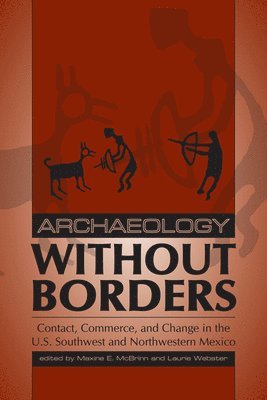
Archaeology without Borders
Contact, Commerce, and Change in the U.S. Southwest and Northwestern Mexico
Häftad, Engelska, 2023
605 kr
Skickas inom 5-8 vardagar
Archaeology without Borders presents new research by leading U.S. and Mexican scholars and explores the impacts on archaeology of the border between the United States and Mexico. Including data previously not readily available to English-speaking readers, the twenty-four essays discuss early agricultural adaptations in the region and groundbreaking archaeological research on social identity and cultural landscapes, as well as economic and social interactions within the area now encompassed by northern Mexico and the U.S. Southwest.Contributors examining early agriculture offer models for understanding the transition to agriculture, explore relationships between the spread of agriculture and Uto-Aztecan migrations, and present data from Arizona, New Mexico, and Chihuahua. Contributors focusing on social identity discuss migration, enculturation, social boundaries, and ethnic identities. They draw on case studies that include diverse artifact classes - rock art, lithics, architecture, murals, ceramics, cordage, sandals, baskets, faunal remains, and oral histories. Mexican scholars present data from Chihuahua, Durango, Zacatecas, Michoacan, Coahuila, and Nuevo Leon. They address topics including Spanish-indigenous conflicts, archaeological history, cultural landscapes, and interactions among Mesoamerica, northern Mexico, and the U.S. Southwest.Laurie D. Webster is a visiting scholar in the Department of Anthropology at the University of Arizona. Maxine E. McBrinn is a postdoctoral research scientist at the Field Museum in Chicago. Proceedings of the 2004 Southwest Symposium. Contributors include Karen R. Adams, M. Nicolás Caretta, Patricia Carot, John Carpenter, Jeffery Clark, Linda S. Cordell, William E. Doolittle, Suzanne L. Eckert, Gayle J. Fritz, Eduardo Gamboa Carrera, Leticia González Arratia, Arturo Guevara Sánchez, Robert J. Hard, Kelly Hays-Gilpin, Marie-Areti Hers, Amber L. Johnson, Steven A. LeBlanc, Patrick Lyons, Jonathan B. Mabry, A. C. MacWilliams, Federico Mancera, Maxine E. McBrinn, Francisco Mendiola Galván, William L. Merrill, Martha Monzón Flores, Scott G. Ortman, John R. Roney, Guadalupe Sanchez de Carpenter, Moisés Valadez Moreno, Bradley J. Vierra, Laurie D. Webster, and Phil C. Weigand.
590 kr
Skickas inom 5-8 vardagar