Professional Perspectives On Deafness: Evidence and Applications - Böcker
Visar alla böcker i serien Professional Perspectives On Deafness: Evidence and Applications. Handla med fri frakt och snabb leverans.
9 produkter
9 produkter
598 kr
Skickas inom 5-8 vardagar
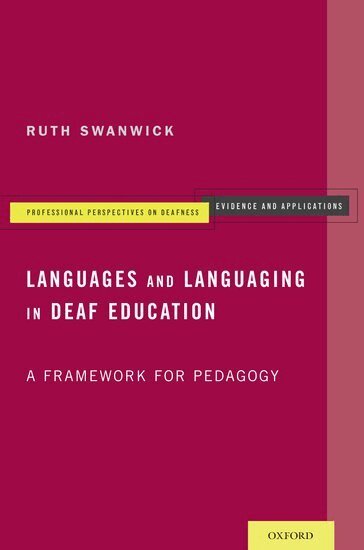
Languages and Languaging in Deaf Education offers a profound vision for deaf education and studies, as author Ruth Swanwick offers bold contributions towards a new pedagogical framework. With a primary focus on the language and learning experiences of deaf children, this book creates a crucial dialogue between the field of deaf education and studies and the wider field of language education and research.Swanwick's fresh perspective on languages and languaging in deaf education brings new understandings of children's language repertoire, and further extends the meaning and application of dynamic plurilingual pedagogies. Ruth Swanwick addresses two major questions essential to the field: How do we understand and describe deaf children's language use and experience in terms of current concepts of language plurality and diversity? And, how does knowledge of, and a different perspective on, deaf children's language diversity and pluralism inform pedagogy? In this latest addition to the Professional Perspectives on Deafness series, Swanwick presents a new framework to imagine the classroom, synthesizing multilingual language practices, translanguaging, research, and practice.
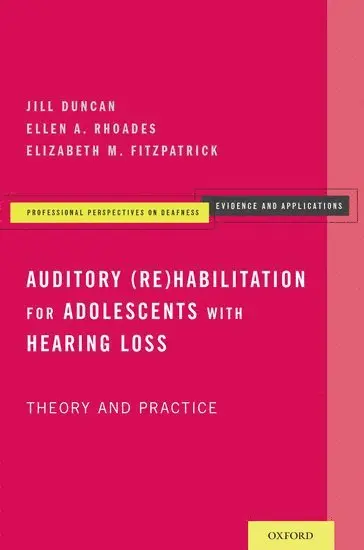
Auditory (Re)Habilitation for Adolescents with Hearing Loss
Theory and Practice
Häftad, Engelska, 2014
1 081 kr
Skickas inom 5-8 vardagar
There is a growing realization that many adolescents with hearing loss require special attention. Despite the benefits of early diagnosis, early amplification, and early intervention, some adolescents with hearing loss do not achieve age-equivalent developmental milestones. The purpose of this book is to assist auditory (re)habilitation practitioners in mitigating the negative effects of hearing loss on communicative, socio-emotional, and academic performance of adolescents who rely on auditory-based spoken language to communicate. It is essential that adolescents whose parents chose auditory-based spoken language receive systematic, consistent, well-planned, appropriate auditory (re)habilitation.In Auditory (Re)Habilitation for Adolescents with Hearing Loss, Jill Duncan, Ellen A. Rhoades, and Elizabeth Fitzpatrick provide practitioners with key milestones considered fundamental to understanding adolescents with hearing loss as well as a pedagogical foundation and general intervention strategies for both planning and direct face-to-face (re)habilitation with adolescents. The authors summarize important issues related to the spoken language development of adolescents, focus on aspects of communication that are functionally relevant to adolescents with hearing loss, and provide strategies for facilitating auditory-based spoken communication skills. They conclude with a discussion of factors influencing auditory (re)habilitation, both in service delivery and outcomes, and provide the application of theory to practice through a demonstration of case studies.
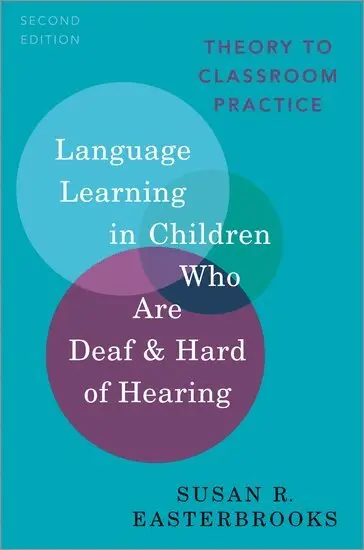
Language Learning in Children Who Are Deaf and Hard of Hearing
Theory to Classroom Practice
Häftad, Engelska, 2021
955 kr
Skickas inom 5-8 vardagar
This volume is the long-awaited revision of the only textbook on primary language instruction written with classroom teachers of deaf and hard-of-hearing children (TODs) in mind. It builds on the work of the previous edition, describing the experiences of four real TODs and demonstrates practical application of the concepts discussed. Up-to-date chapters on theory of language learning, assessment, and evidence-based practice supplement specific examples of real cases in the field. Avoiding promotion of one teaching philosophy over another, this volume demonstrates the commonalities across classroom language instruction approaches for DHH children and helps guide teachers to enhance learning outcomes.
515 kr
Skickas inom 7-10 vardagar
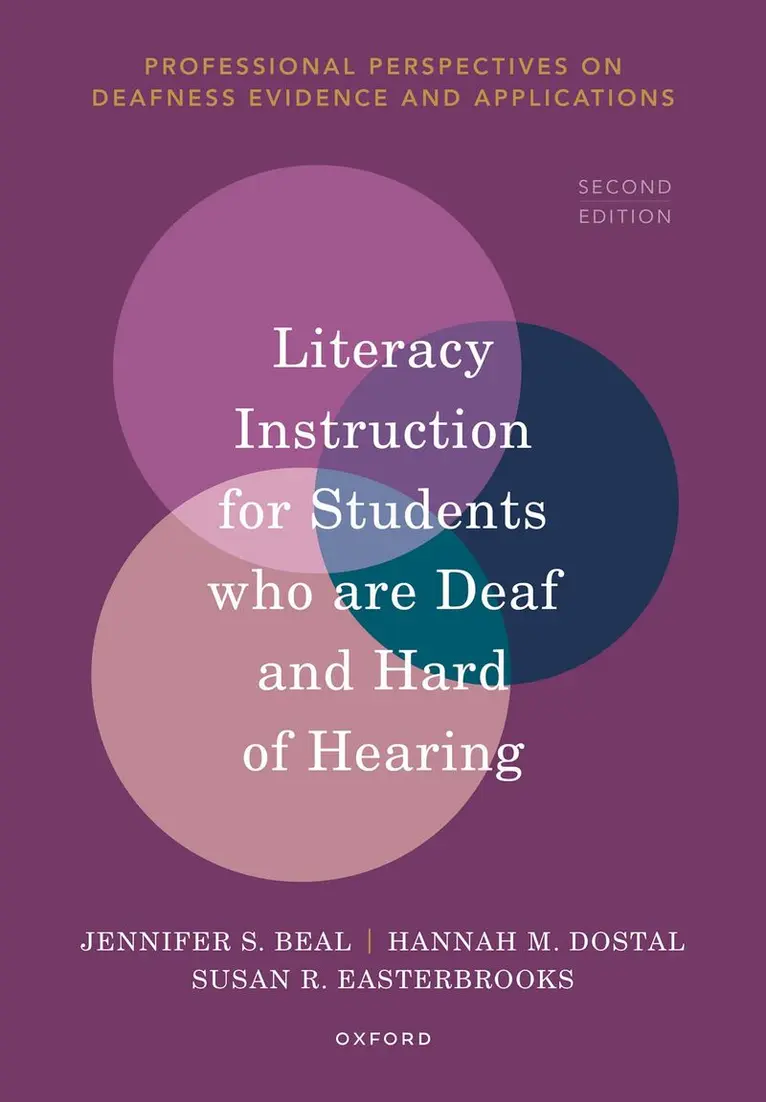
Most students who are deaf or hard of hearing (DHH) struggle with acquiring literacy skills, some as a direct result of their hearing loss, some because they are receiving insufficient modifications to access the general education curriculum, and some because they have additional learning challenges necessitating significant program modifications. This second edition of Literacy Instruction for Students who are Deaf and Hard of Hearing updates previous findings and describes current, evidence-based practices in teaching literacy to DHH learners. Beal, Dostal, and Easterbrooks provide educators and parents with a process for determining which literacy and language assessments are appropriate for individual DHH learners and whether an instructional practice is supported by evidence or causal factors. They describe the literacy process with an overview of related learning theories, language and literacy assessments, and evidence-based instructional strategies across the National Reading Panel's five areas of literacy instruction: phonemic awareness, phonics, vocabulary, fluency, and comprehension.The volume includes evidence-based writing strategies and case vignettes that highlight application of assessments and instructional strategies within each of these literacy areas. Crucially, it reviews the remaining challenges related to literacy instruction for DHH learners. Educators and parents who provide literacy instruction to DHH learners will benefit from the breadth and depth of literacy content provided in this concise literacy textbook.
609 kr
Skickas inom 5-8 vardagar
Most students who are deaf or hard of hearing (DHH) struggle with acquiring literacy skills, some as a direct result of their hearing loss, some because they are receiving insufficient modifications to access the general education curriculum, and some because they have additional learning challenges necessitating significant program modifications. Additionally, instructional practices for DHH students tend to be directed toward two sub-populations of DHH students: those with useable access to sound and those without.Literacy Instruction for Students who are Deaf and Hard of Hearing describes current, evidence-based practices in teaching literacy for DHH students and provides practitioners and parents with a process for determining whether a practice is or is not "evidence-based." Easterbrooks and Beals-Alvarez describe the importance of the assessment process in providing on-going progress monitoring to document students' literacy growth as a primary means to direct the course of instruction. They address the five key areas of instruction identified by the National Reading Panel: phonemic awareness, phonics, fluency, vocabulary, and comprehension.In this concise guidebook, the authors present the role of assessment in the literacy process, an overview of evidence-based practices, and in the absence of such information, those practices supported by causal factors across the National Reading Panel's five areas of literacy. They also review the evidence base related to writing instruction, present case studies that reflect the diversity within the DHH population, and review the challenges yet to be addressed in deaf education.
688 kr
Skickas inom 5-8 vardagar
The assessment and treatment of mental health concerns for Deaf individuals has been largely ignored and/or misunderstood by many mental health professionals. In Mental Health and Deafness, Margaret du Feu and Cathy Chovaz seek to rectify this by outlining current issues surrounding mental health and deafness. The book provides valuable information to professionals interested in expanding their knowledge of mental health and deafness, and the authors share their extensive clinical experience with the reader through a variety of case studies. The authors primarily focus on individuals who were born deaf or deafened early in life, but also describe the mental health aspects of acquired deafness and individuals with both deafness and blindness. Mental Health and Deafness begins by describing the historical and social context of deafness, and follows the life journey of a Deaf individual, focusing on parental reactions, language acquisition, and mental health disorders of children, adolescents, adults and the elderly. Chapters cover relevant issues regarding assessment, treatment, and forensic and legal issues. The book concludes with an overview of service development.
Nurturing Language and Learning
Development of Deaf and Hard-of-Hearing Infants and Toddlers
Häftad, Engelska, 2016
1 370 kr
Skickas inom 3-6 vardagar
Regardless of a child's hearing abilities, increasing parents' knowledge about their baby or toddler's expected development and their confidence in their parenting abilities supports positive early interactions and developmental progress. Fortunately, as early hearing screening has become widespread, more information is available about development of deaf and hard-of-hearing infants and ways to best support their developing learning and language abilities. This book combines a review of up-to-date research with theory and first-hand observations to provide a framework for parents and professionals as they promote developmental achievements of infants and toddlers with limited hearing. In what ways is development of deaf and hard-of-hearing babies and toddlers like that of those with typical hearing? What specific challenges are likely to be faced by child and parent - and when are they most likely to occur? What modifications in parenting and caregiver interactive behaviors can help avoid or overcome these challenges? A strong, supportive foundation for optimal learning throughout life grows from early, positive, and responsive interactive experiences. This book provides information and guidelines for professionals and parents helping deaf and hard-of-hearing infants and toddlers build that foundation.
683 kr
Skickas inom 5-8 vardagar
Social Competence of Deaf and Hard-of-Hearing Children addresses the development, assessment, and promotion of social competence in children who are deaf or hard-of-hearing (DHH). Most children readily develop social competence through the mutually dependent development of social skills and social relationships. Why then write a book on the social competence of DHH children? Hearing loss, with its resulting communication challenges, has the potential to impede the development of social skills and restrict social relationships. In this volume, Shirin D. Antia and Kathryn H. Kreimeyer highlight multiple strategies that teachers, families, and community members can utilize to promote the social competence of DHH children.The authors approach this topic by first describing the development and expression of social competence in infants, as well as in preschool- and school-age hearing and DHH children. Socially competent children display a flexible repertoire of social behaviors that are appropriately utilized in varying social situations and which further children's social goals. Since social competence develops initially through interactions between infants and their caretakers, a primary consideration for children with hearing loss is that the infant and caretaker share a common communication approach to facilitate early interaction. As infants become preschool age, opportunities for interactions with other children increase and social interactions revolve around play. The development of interactive and of pretend play requires children to communicate with one another to assume roles, share fantasies, and solve social conflicts. DHH children must develop communication skills to participate in interactive play, and hearing children may need guidance to successfully engage with DHH peers. For school-age children, the importance of peer acceptance increases; DHH children need supportive situations both within and outside of school to interact with peers, develop friendships, and refine the social behaviors that promote peer acceptance. The authors present a variety of practical ways to assess the social competence of DHH children. They emphasize the role of assessment in identifying social strengths and needs to establish a basis for any necessary intervention. They then present ways to promote social competence, with a separate focus on strategies appropriate for young DHH children and for school-age DHH children. For both age groups, the authors address the role of families, professionals, schools, and communities in helping children develop the skills needed to become socially competent individuals. This book will be a valuable resource for the parents and families of DHH children, for the general and special educators who teach these children, and for the researchers who describe development and evaluate the effectiveness of strategies to promote the social competence of DHH children.
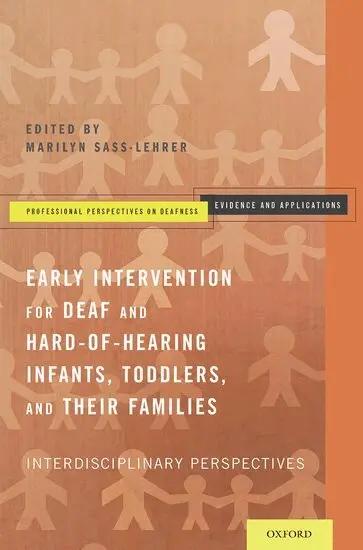
Early Intervention for Deaf and Hard-of-Hearing Infants, Toddlers, and Their Families
Interdisciplinary Perspectives
Häftad, Engelska, 2015
868 kr
Skickas inom 5-8 vardagar
A "must-have" for every professional studying or working with the families of deaf and hard-of-hearing infants and toddlers, Dr. Marilyn Sass-Lehrer provides readers with the evidence-based knowledge needed to implement interdisciplinary and collaborative early interventional programming for professionals and students.Featuring a collaborative team of expert contributors across a variety of backgrounds and disciplines - including educators, audiologists, speech-language pathologists, and health care providers - Early Intervention for Deaf and Hard-of-Hearing Infants, Toddlers, and Their Families presents students and specialists with the fundamental knowledge they need to effectively design and deliver care to this population.