Progress in Gene Expression – serie
Visar alla böcker i serien Progress in Gene Expression. Handla med fri frakt och snabb leverans.
7 produkter
7 produkter
876 kr
Skickas inom 10-15 vardagar
This text presents the topic of endocrinology viewed from the perspective of molecular biology.
550 kr
Skickas inom 10-15 vardagar
Intracellular Receptors: New Instruments for a Symphony of Signals In the late eighteenth century, it was proposed on theoretical grounds that each of the body's organs, beginning with the brain, must be "a factory and laboratory of a specific humor which it returns to the blood", and that these circulating signals "are indispensable for the life of the whole" (Bordeu 1775). During the nineteenth cen- tury, some remarkable physiological experiments revealed the actions of humoral factors that affected the for and function of multiple tissues, organs and organ sys- tems within the body (Berthold 1849); much later, the chemical and molecular na- ture of some of those factors was determined. Against this deep historical backdrop of the founding studies of intercellular signaling, molecular biology sprang into existence a mere forty years ago, rooted in the revelation of regulable gene expression in bacteria.But contemporaneous with those classical analyses of transcriptional regulation of the lactose operon, the mod- em era of signal transduction was inaugurated by the identification of cAMP as a second messenger --- an intracellular mediator of hormonal activation of glycogen catabolism (Sutherland and RaIl 1960). Later in that same decade, it emerged that cAMP is a critical signal not only in metazoans, but even in bacteria, where it serves an analogous function as a critical switch that activates expression of genes re- quired for catabolism of complex carbon sources, including those of the lactose operon.
527 kr
Skickas inom 10-15 vardagar
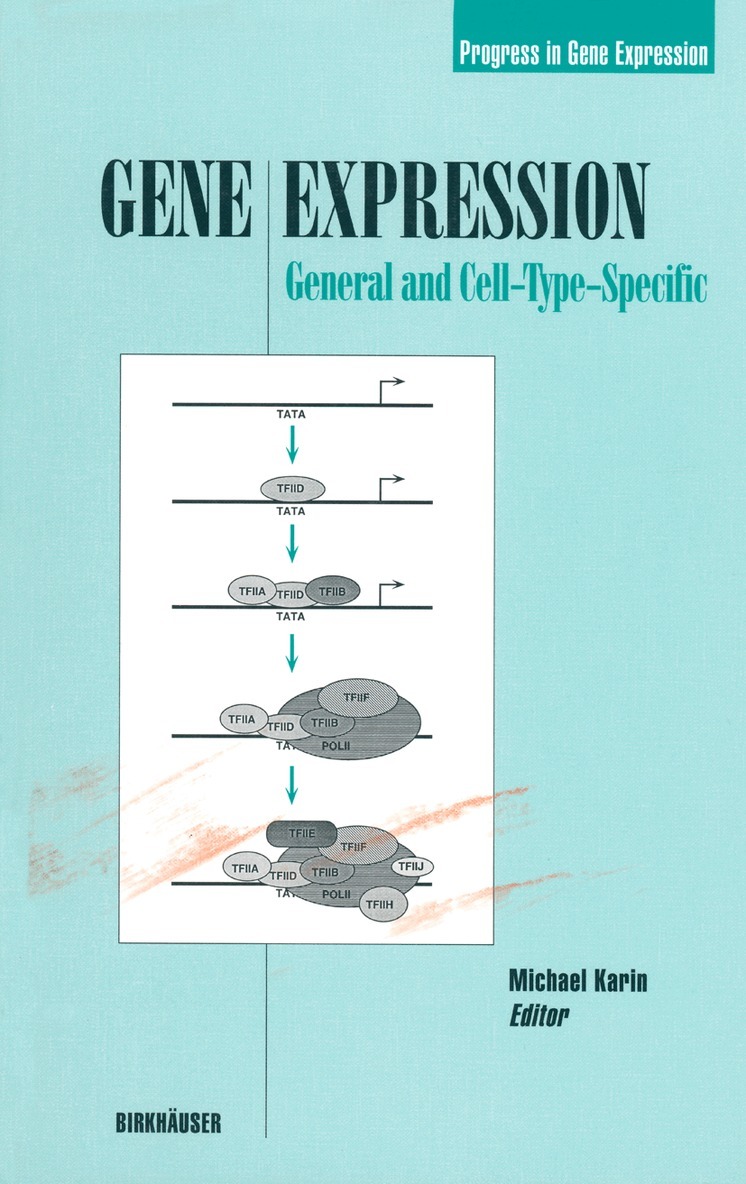
This book is the first volume in a new series Progress in Gene Expres sion. The control of gene expression is a central-most topic in molecular biology as it deals with the utilization and regulation of gene informa tion. As we see huge efforts mounting all over the developed world to understand the structure and organization of several complex eukaryotic genomes in the form of Gene Projects and Genome Centers, we have to remember that without understanding the basic mechanisms that gov ern the use of genetic information, much of this effort will not be very productive. Fortunately, however, research during the past seven years on the mechanisms that control gene expression in eukaryotes has been extremely successful in generating a wealth of information on the basic strategies of transcriptional control. (Although regulation of gene ex pression is exerted at many different levels, much of the emphasis in this series will be on transcriptional control. A future volume, however, will deal with other levels of regulation). The progress in understanding the control of eukaryotic transcription can only be appreciated by realizing that seven years ago we did not know the primary structure of a single sequence specific transcriptional activator, and those whose primary structures were available (e. g. , homeo domain proteins) were not yet recognized to function in this capacity.
550 kr
Skickas inom 10-15 vardagar
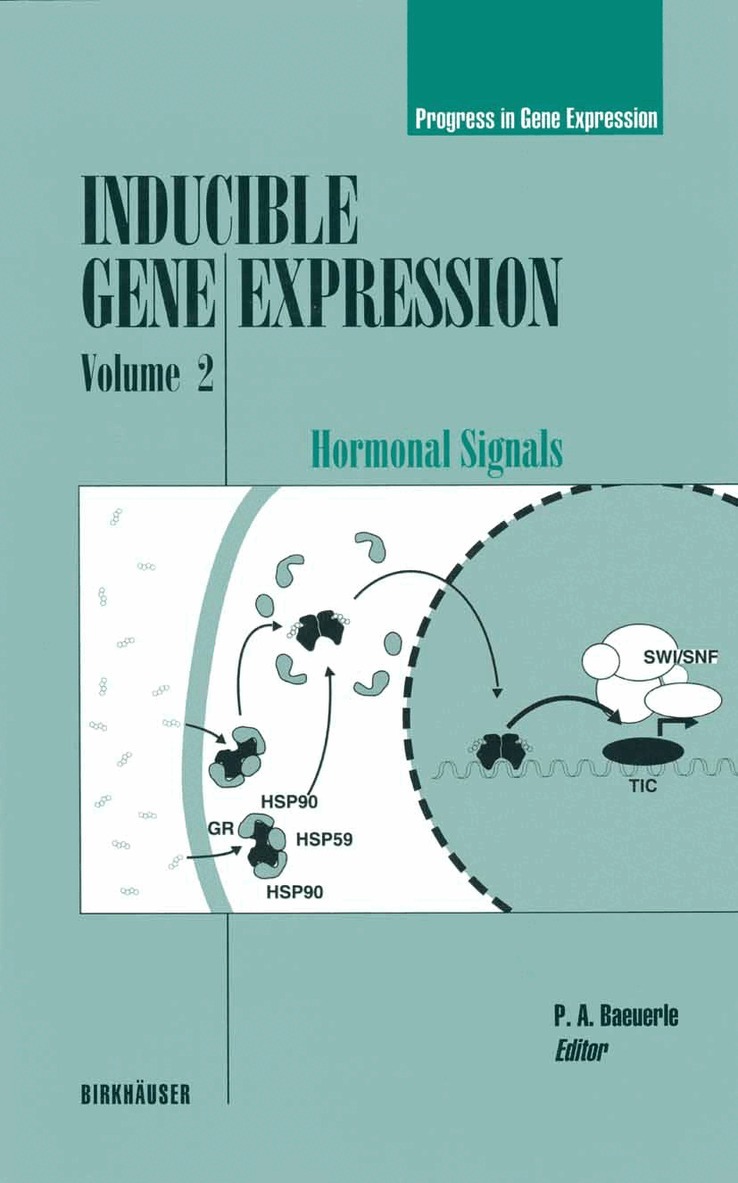
Cells have evolved multiple strategies to adapt the composItIon and quality of their protein equipment to needs imposed by changing conditions within the organism. Extracellular stimuli that inform cells about such needs are hormones, cytokines and neurotransmitters, which bind to specific cell surface receptors. Inside the cell, secondary signals are then produced which, ultimately, initiate the expression of proteins giving novel functional properties to the stimulated cells. This process can be controlled at a transcriptional, posttranscriptional, translational or posttranslational level. Extensive research over the past fifteen years has shown that transcriptional regulation is probably the most impor- tant strategy used to control the production of new proteins in response to hormonal signals. At the level of gene transcription, the initiation of mRNA synthesis is most frequently used to govern gene expression. The key elements controlling transcription initiation in eukaryotes are acti- vator proteins (transactivators) that bind in a sequence-specific manner to short DNA sequences in the proximity of genes.The activator binding sites are elements oflarger control units, called promoters and enhancers, which bind many distinct proteins that may synergize or negatively cooperative with the activators. The de novo binding of an activator to DNA or, if already bound to DNA, its functional activation is what ultimately turns on a high-level expression of genes. In this second volume of Inducible Gene Expression, leading scientists in the field review eight eukaryotic transactivators that allow cells to respond to hormonal stimuli by the expression of new proteins.
876 kr
Skickas inom 10-15 vardagar
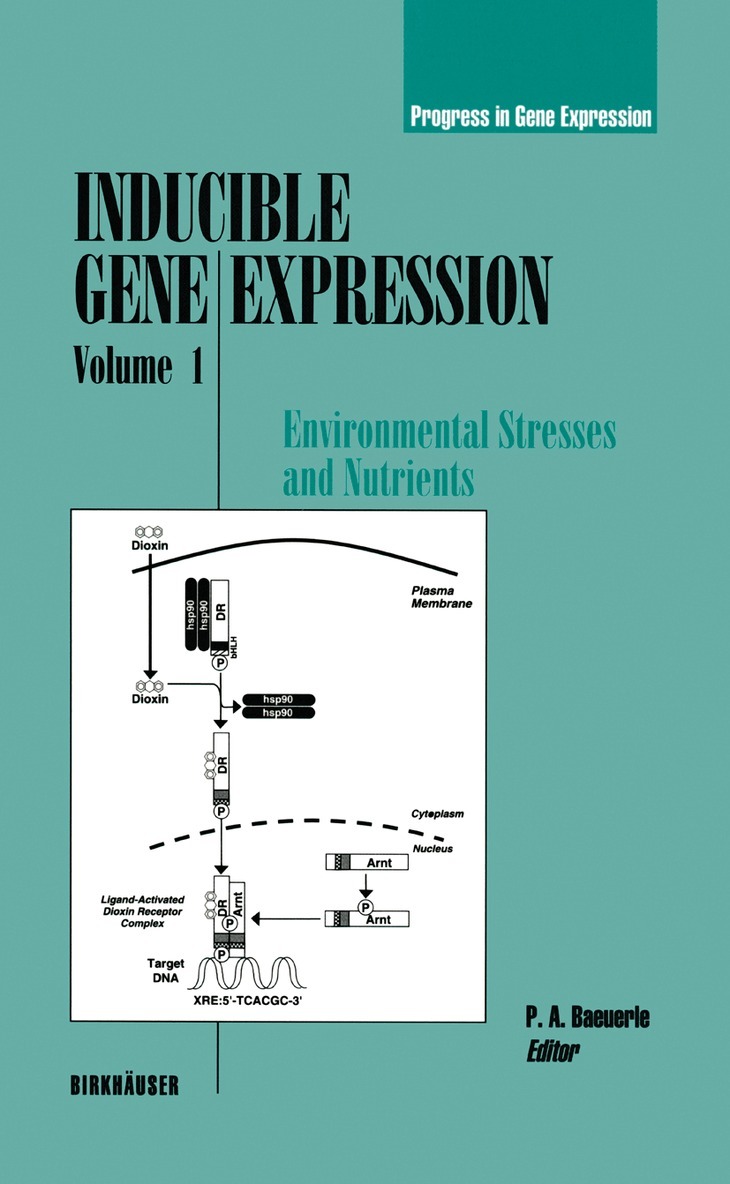
Cells have evolved multiple strategies to adapt the composition and quality of their protein equipment to needs imposed by changes in intra- and extracellular conditions. The appearance of pro teins transmit ting novel functional properties to cells can be controlled at a transcrip tional, posttranscriptional, translational or posttranslational level. Extensive research over the past 15 years has shown that transcriptional regulation is used as the predominant strategy to control the production of new proteins in response to extracellular stimuli. At the level of gene transcription, the initiation ofmRNA synthesis is used most frequently to govern gene expression. The key elements controlling transcription initiation in eukaryotes are activator proteins (transactivators) that bind in a sequence-specific manner to short DNA sequences in the of genes. The activator binding sites are elements of larger proximity control units, ca lied promoters and enhancers, which bind many distinct proteins. These may synergize or negatively cooperate with the activators. The do novo binding of an activator to DNA or, if already bound to DNA, its functional activation is what ultimately turns on a high-level expression of genes. The activity of transactivators is controlled by signalling pathways and, in some cases, transactivators actively partici pate in signal transduction by moving from the cytoplasm into the nuc1eus. In this first volume of Inducible Gene Expression, leading scientists in the field review six eukaryotic transactivators that allow cells to respond to various extracellular stimuli by the expression of new proteins.
550 kr
Skickas inom 10-15 vardagar
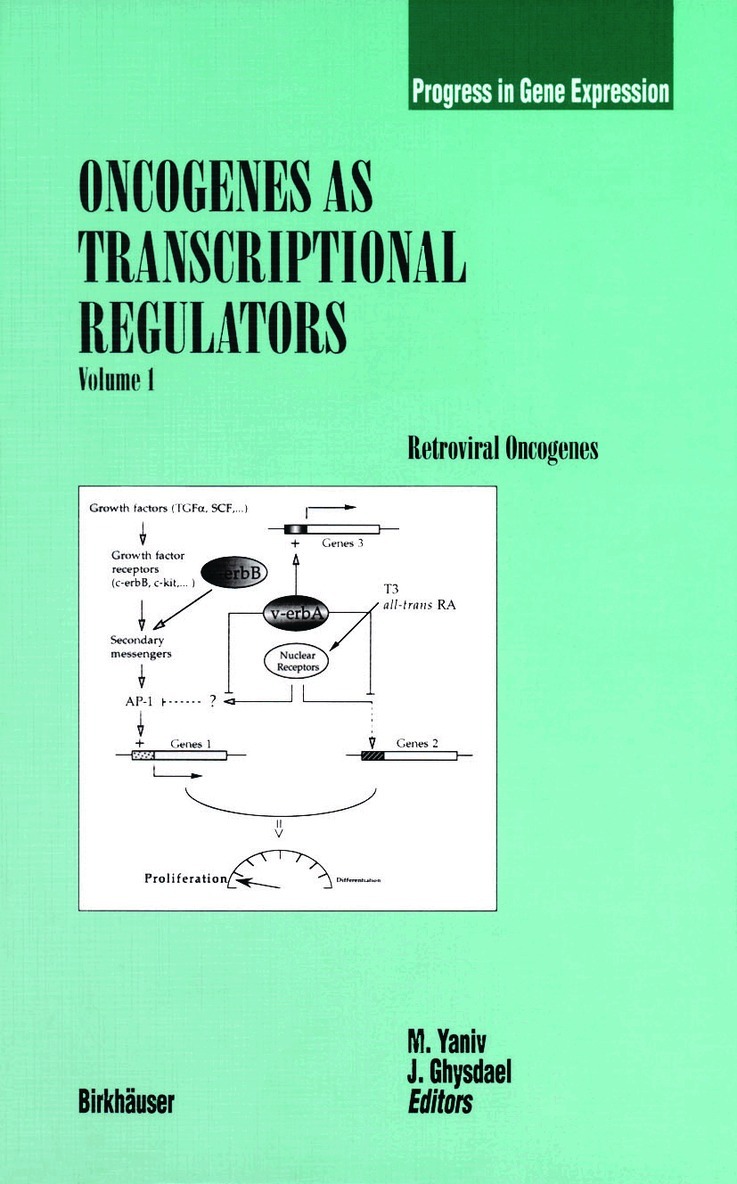
The intensive study of molecular events leading to cellular transformation in tissue culture or in intact organisms culminated in the identification of 100 or more genes that can be defined as oncogenes or tumor suppressor genes. Functionally, these genes can be divided into several classes, each involved in a different step in transmission of signals from the exterior of the cell to the nucleus. The first oncogenes to be biochemically character ized included membrane receptors for growth factors, growth factors themselves, protein kinases or small GTP binding proteins involved in signal transduction. Later, the development of techniques to study pro teins-DNA interaction in eucaryotes and the isolation and characterization of many promoter and enhancer sequences revealed that a number of the classical retroviral oncogenes were indeed transcription factors. In paral lel, the rapid progress in the identification and cloning of chromosomal translocations in human and animal malignancies and the increased reper toire of known transcription factors families revealed that many other transcription factors can playa critical role in cancer. A more recent devel opment concerns tumor suppressor genes. The realization that human tumors are frequently associated with a loss of function of one or several genes is also one of the landmarks of cancer research in the last 15 years. Again, as we will see below, some of these genes encode transcription factors. It is becoming increasingly difficult to cover in a single monograph all oncogenes and tumor suppressor genes.
Oncogenes as Transcriptional Regulators
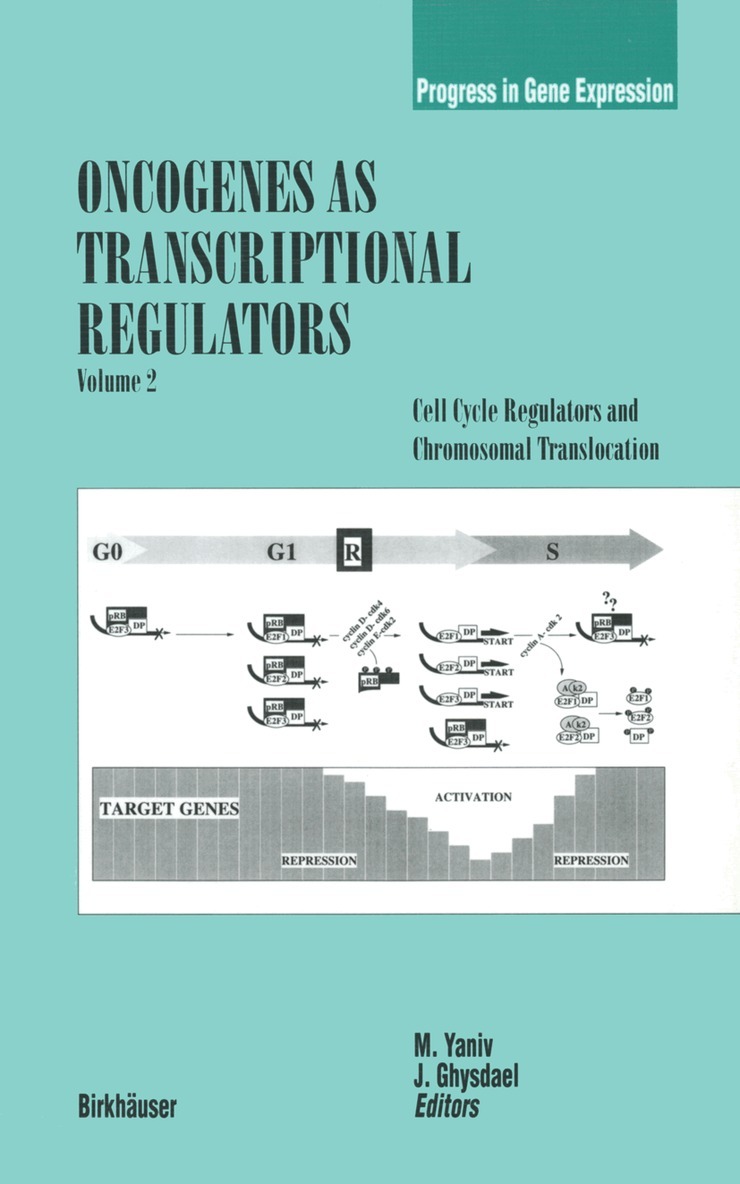
Cell Cycle Regulators and Chromosomal Translocation
Häftad, Engelska, 2012
550 kr
Skickas inom 10-15 vardagar
The intensive study of molecular events leading to cellular transformation in tissue culture or in intact organisms culminated in the identification of 100 or more genes that can be defined as oncogenes or tumor suppressor genes. Functionally, these genes can be divided into several classes, each involved in a different step in transmission of signals from the exterior of the cell to the nucleus. The first oncogenes to be biochemically character ized included membrane receptors for growth factors, growth factors themselves, protein kinases or small GTP binding proteins involved in signal transduction. Later, the development of techniques to study pro teins-DNA interaction in eucaryotes and the isolation and characterization of many promoter and enhancer sequences revealed that a number of the classical retroviral oncogenes were indeed transcription factors. In paral lel, the rapid progress in the identification and cloning of chromosomal translocations in human and animal malignancies and the increased reper toire of known transcription factors families revealed that many other transcription factors can playa critical role in cancer. A more recent devel opment concerns tumor suppressor genes. The realization that human tumors are frequently associated with a loss of function of one or several genes is also one of the landmarks of cancer research in the last 15 years. Again, as we will see below, some of these genes encode transcription factors. It is becoming increasingly difficult to cover in a single monograph all oncogenes and tumor suppressor genes.