Psychotherapy Matters - Böcker
Visar alla böcker i serien Psychotherapy Matters. Handla med fri frakt och snabb leverans.
6 produkter
6 produkter
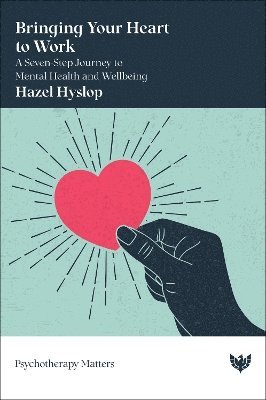
Bringing Your Heart to Work
A Seven-Step Journey to Mental Health and Wellbeing
Häftad, Engelska, 2025
270 kr
Skickas inom 5-8 vardagar
After 25 years in the mental health sector, Hazel Hyslop found herself feeling lost and depleted. Yet within that difficult chapter, she uncovered a deeper truth: many of her colleagues and clients – particularly successful women – were also disconnected from their true passions and overwhelmed by the relentless demands of their careers. Recognising the familiar patterns of stress, identity loss, and burnout, Hazel developed practical strategies to guide her clients, and herself, back to balance and fulfilment.Drawing from decades of professional experience and her own personal journey through burnout, Hazel introduces a transformative seven-step method designed to spark lasting change. The challenging path you take will awaken your passions and empower you to move forward with renewed energy, authenticity, and confidence.At a time when so many are weighed down by overwork, overwhelm, and overthinking, Bringing Your Heart to Work offers a powerful, proven framework to reclaiming your clarity, purpose, and wellbeing.
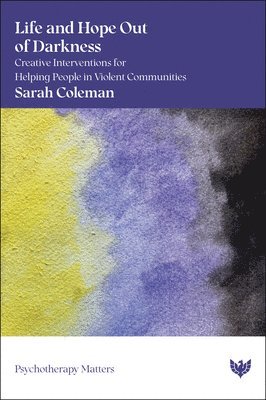
Life and Hope Out of Darkness
Creative Interventions for Helping People in Violent Communities
Häftad, Engelska, 2025
270 kr
Skickas inom 5-8 vardagar
Can a young British woman from across the seas impact a group of African women living in a poverty-stricken community likened to a war zone? How can she help them deal with trauma when they constantly live in trauma? Life And Hope Out Of Darkness: Creative Interventions for Helping People in Violent Communities reveals the story of Sarah Coleman and the women she worked with, using art, drama, puppetry, dance, mindfulness, and breathwork to shine a ray of light and hope into the lives of women stuck in a whirlwind of violence and poverty.Sarah takes the reader on a journey using the voices and stories of three women (each created from an amalgamation of people she worked with) to depict what life is like living in such difficult circumstances. She emphasises the importance of creating a safe space for effective therapeutic work to happen and how to achieve this in a violent community. Sarah also explores how to navigate differences, including the necessity of acknowledging white power and privilege. She describes how to help people create good support structures in their lives and how to seek support from each other. In a community where isolation is a means of survival, her book opens up the possibility to connect: to play with each other, to reach into each other’s lives and build a way of creating a healthy community, to learn to forgive past hurts and to receive forgiveness, to embrace new potential, and to reach out and search for role models for guidance. It also delves into the importance of psychoeducation to raise awareness of what is happening in the body, with exercises in breathing, dancing and movement. Sarah highlights the importance of shaking out the body to dispel trapped trauma and calm the nervous system down.Working in violent communities takes its toll. Sarah gives testimony of the impact on her life and the importance of self-care. The book ends by affirming it is possible to live with hope despite difficult circumstances. Each chapter ends with thoughts for reflection that benefit us all, making us look at the ways in which we live and how we can all work to make things better.This uplifting book is recommended reading for all therapists and trainees involved in working with groups or the repercussions of trauma, and for individuals looking to bring hope and inspiration into their lives.
278 kr
Kommande
How do you react when someone starts talking about God? What do you do when you feel you can’t agree with a client’s beliefs? What is your relationship to uncertainty and the unexplainable? If talking about a client’s faith can lead to better outcomes, why can it be so difficult?In this compassionate, engaging, and deeply human book, Kate Graham draws on her extensive experience as a psychotherapist and Quaker to explore these and other dilemmas. Three characters: Mystery, Reason, and Hope guide us through the book, tussling over their differences and frustrations with each other as they search for understanding.Kate draws on her own experience and interviews with other therapists and people of faith. She shares her experiences through largely fictional client stories, brought to life with humour and honesty. We join her in her vulnerability as she navigates complex relationships, illustrating both ideas for good practice and her learning from mistakes. Relationships and connection run through the book: with the natural world, with ourselves, with clients, and with the “wider than human”. She celebrates the mystery of psychotherapeutic work, the unexplainable alongside practical ideas that can be integrated into practice straight away.Psychotherapy, like faith, involves exploring inner worlds and facing wildness, uncertainty, and not-knowing. There is more common ground here than our initial training may have revealed. There is practical guidance about the where, when, and how you might ask questions and cope with the answers. Reflection questions at the end of each chapter help the reader develop skills and insight and point to further reading.At a deeper level the reader is challenged to explore their own beliefs and what this can mean for their work in the therapy room and outside. This helps you to consider how you connect your inner world to the outer world, how you might act for love and trust in an increasingly fearful world, and the support you need to do this. Mystery, Hope and Reason: Faith in the Therapy Room is a book that will engage, uplift, and inspire you.
286 kr
Kommande
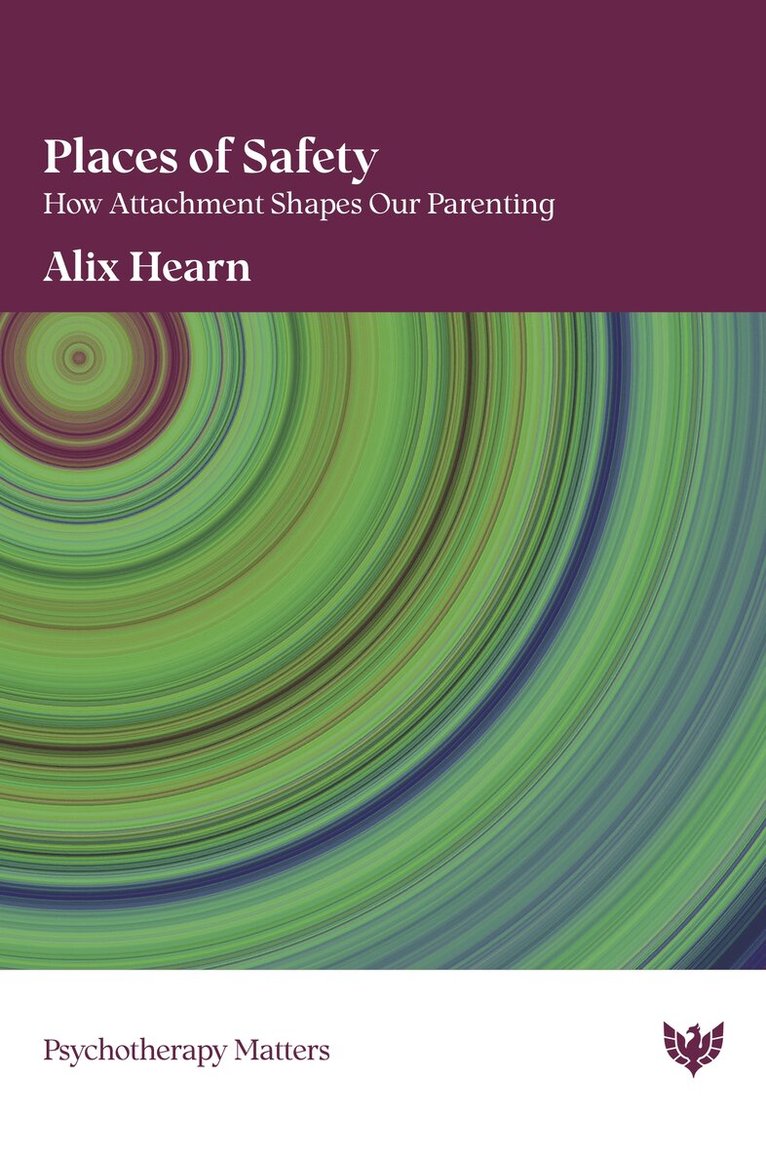
We all have the need to have loving and supportive relationships with others, as a partner, a friend, or a relative. We try our best to show our love and support to those we care about, but it is not always easy. Sometimes, even with our best intentions, relationships can be fraught with tension, communication difficulties, or conflict. Sometimes, we realise that we seem to repeat relationship patterns, despite our best efforts not to.It is long established that the way we came into the world and how we were nourished and resourced by those around us matters. It will influence the way we attach ourselves to others. We are born into systems of human relationships and patterns of behaviour alongside our own unique qualities and ways of being. New relationships can be challenging and can potentially bring painful feelings into our awareness.As a child and adolescent psychotherapist, Alix Hearn believes that the more we can learn about how we were parented by our own parents or carers, and our earliest influences, the more we can learn about how to parent and to care for others and ourselves. If we can understand the roots of our behaviours and ways of relating, we have choice on how we react.Using a wider, systemic lens, Hearn explores how attachment shapes and informs our parenting, including ideas from the latest in attachment theory, neuroscience, child development, and eco-systemic thinking. The western, behavioural-medical model tends to focus on pathology and symptom management within mental health, rather than looking under the surface and considering other, environmental influences. In child mental health and work with children and young people, there is a tendency to view the child as ‘problematic’ and in need of ‘treatment.’ Hearn highlights the need to consider the myriad influences on our lives, from pre-birth to epigenetics to the impact of earlier losses, and the importance of holding these all in mind when working with children and their families.The book is aimed at anyone working with children and young people – particularly child mental health professionals, psychotherapists and counsellors – psychotherapy and counselling trainees and students, those interested in psychology and sociology, and for caregivers who are interested in discovering more about this area. It is a vital resource to help support children and young people along their journey to grow and flourish.
270 kr
Tillfälligt slut
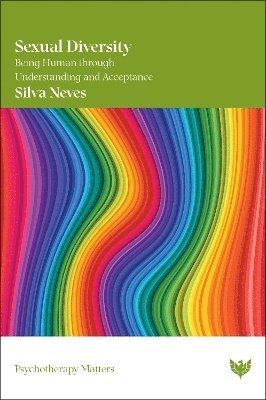
Sexual Diversity: Being Human through Understanding and Acceptance is an in-depth exploration of the vast diversity of sexual and erotic orientations, including heterosexual, lesbian, gay, bisexual, and queer identities, as well as erotic diversity from vanilla to kink and everything in between. The book looks at the heteronormative ‘norms’ prescribed by society and how these may be problematic for all populations, including heterosexual people. As part of diversity, the book offers a frame of thinking based on intersectionality. The work is a reference point to sexual and erotic diversities, written in plain English and in a conversational style. It attempts to offer a definition of the different identity terms that can be confusing, while acknowledging that language is fluid and changeable. This helps us to be more aware of the language we use and how we can stay as adaptable and fluid as eroticism can be. The content embraces inclusivity and helps us to learn to accept differences and to be more knowledgeable in the wide range of ways to live. It enables us to challenge our pre-conceived ideas and assumptions regarding sexuality and eroticism, and to continue learning and staying curious about diverse communities, cultures, and subcultures in the sexuality and erotic arenas. The concepts discussed are brought to life with stories from the consulting room and the world outside.This is a gem of a book that not only teaches us so much but also offers us opportunities for self-reflection. It is an absolute must-read for practising psychotherapists, counsellors, and psychoanalysts, as well as other professionals in the social care environment and every human interested in learning more about the wide variety of sexuality and eroticism in the world.
286 kr
Skickas
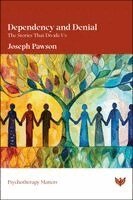
A denial of dependency is fundamental to crises not only in our most intimate relationships, but also within society at large. We are inextricably woven into the fabric of all things and depend entirely on what is outside of ourselves to survive. Whilst our union with the world and need for each other can feel nurturing and joyful, it also reawakens frightening feelings of dependency and powerlessness from the very earliest moments of our lives. To manage these disturbing feelings, we learn to ignore and deny them. Denial, however, demands a price. It sells us the stories we want to hear and, in exchange, asks that we hand over the parts of ourselves that are in need the most.In an exploration of interdependence, identity, and culture, psychotherapist Joseph Pawson examines the consequences of what happens when feelings of dependency are exiled from our awareness and excluded from cultural narratives. He illustrates how, as a result of this negation, we find ourselves behaving in ways in which we have little understanding or control. In our relationships, outbursts of anger, addiction, jealousy, and commitment issues all signal the presence of hidden feelings of vulnerability that exert their control from outside of our awareness. Pawson explores how the denial of our need for each other contributes to racism, inequality, misogyny, and the destruction of our environment. Using stories from the therapy room and drawing on ideas from developmental, Jungian, and Buddhist psychologies, Pawson vividly captures the journey of reconnecting with our banished dependency. This process can heal more than our own interpersonal difficulties. In venturing into the dark places that our need for each other takes us, we can rediscover a profound interconnectedness. In learning to bear these most difficult feelings, we may just develop the courage to lift the veil of denial that shields us from being able to relate compassionately to the greatest sufferings of our times.