Documentary Arts and Culture, Published in Association with the Center for Documentary Studies at Duke University – serie
Visar alla böcker i serien Documentary Arts and Culture, Published in Association with the Center for Documentary Studies at Duke University. Handla med fri frakt och snabb leverans.
12 produkter
12 produkter
442 kr
Skickas inom 7-10 vardagar
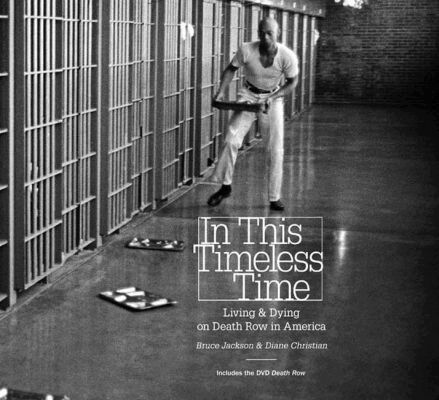
In this stark and powerful book, Bruce Jackson and Diane Christian explore life on Death Row in Texas and in other states, as well as the convoluted and arbitrary judicial processes that populate all Death Rows. They document the capriciousness of capital punishment and capture the day-to-day experiences of Death Row inmates in the official ""nonperiod"" between sentencing and execution.In the first section, ""Pictures,"" ninety-two photographs taken during their fieldwork for the book and documentary film Death Row illustrate life on cell block J in Ellis Unit of the Texas Department of Corrections. The second section, ""Words,"" further reveals the world of Death Row prisoners and offers an unflinching commentary on the judicial system and the fates of the men they met on the Row. The third section, ""Working,"" addresses profound moral and ethical issues the authors have encountered throughout their careers documenting the Row.Included in this enhanced ebook edition is Jackson and Christian's 1979 documentary film, Death Row.
368 kr
Skickas inom 10-15 vardagar
This new revised and expanded edition of Reality Radio celebrates today's best audio documentary work by bringing together some of the most influential and innovative practitioners from the United States, Canada, the United Kingdom, and Australia. With a new foreword and five new essays, this book takes stock of the transformations in radio documentary since the publication of the first edition: the ascendance of the podcast; greater cultural, racial, and topical variety; and the changing economics of radio itself. In twenty-four essays total, documentary artists tell--and demonstrate, through stories and transcripts--how they make radio the way they do, and why. Whether the contributors to the volume call themselves journalists, storytellers, or even audio artists--and although their essays are just as diverse in content and approach--all use sound to tell true stories, artfully.Contributors include Jad Abumrad, Daniel Alarcon, Jay Allison, damali ayo, John Biewen, Emily Botein, Chris Brookes, Scott Carrier, Katie Davis, Sherre DeLys, Ira Glass, Alan Hall, Dave Isay, Natalie Kestecher, Starlee Kine, The Kitchen Sisters, Sarah Koenig and Julie Snyder, Maria Martin, Karen Michel, Joe Richman, Dmae Roberts, Stephen Smith, Alix Spiegel, Sandy Tolan, and Glynn Washington.
1 095 kr
Skickas inom 10-15 vardagar
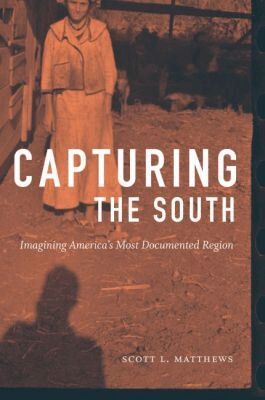
In his expansive history of documentary work in the South during the twentieth-century, Scott L. Matthews examines the motivations and methodologies of several pivotal documentarians, including sociologist Howard Odum, photographers Jack Delano and Danny Lyon, and music ethnographer John Cohen. Their work salvaged and celebrated folk cultures threatened by modernization or strived to reveal and reform problems linked to region's racial caste system and exploitative agricultural economy. Images of alluring primitivism and troubling pathology often blurred together, neutralizing the aims of documentary work carried out in the name of reform during the Progressive era, New Deal, and Civil Rights Movement. Black and white southerners in turn often resisted documentarians' attempts to turn their private lives into public symbols. The accumulation of these influential and, occasionally, controversial, documentary images created an enduring, complex, and sometimes self-defeating mythology about the South that persists into the twenty-first century.
379 kr
Skickas inom 10-15 vardagar
In his expansive history of documentary work in the South during the twentieth-century, Scott L. Matthews examines the motivations and methodologies of several pivotal documentarians, including sociologist Howard Odum, photographers Jack Delano and Danny Lyon, and music ethnographer John Cohen. Their work salvaged and celebrated folk cultures threatened by modernization or strived to reveal and reform problems linked to region's racial caste system and exploitative agricultural economy. Images of alluring primitivism and troubling pathology often blurred together, neutralizing the aims of documentary work carried out in the name of reform during the Progressive era, New Deal, and Civil Rights Movement. Black and white southerners in turn often resisted documentarians' attempts to turn their private lives into public symbols. The accumulation of these influential and, occasionally, controversial, documentary images created an enduring, complex, and sometimes self-defeating mythology about the South that persists into the twenty-first century.
414 kr
Skickas inom 7-10 vardagar
Between 2009 and 2013, as the nation contemplated the historic election of Barack Obama and endured the effects of the Great Recession, Matthew Frye Jacobson set out with a camera to explore and document what was discernible to the ""historian's eye"" during this tumultuous period. Having collected several thousand images, Jacobson began to reflect on their raw, informal immediacy alongside the recognition that they comprised an archive of a moment with unquestionable historical significance. This book presents 100 images alongside Jacobson's recollections of their moments of creation and his understanding of how they link past, present, and future. The images reveal diverse expressions of civic engagement that are emblematic of the aspirations, expectations, promises, and failures of this period in American history. Myriad closed businesses and abandoned storefronts stand as public monuments to widespread distress; omnipresent, expectant Obama iconography articulates a wish for new national narratives; flamboyant street theater and wry signage bespeak a common impulse to talk back to power. Framed by an introductory essay, these images reflect the sober grace of a time that seems perilous, but in which ""hope"" has not ceased to hold meaning.
447 kr
Skickas inom 10-15 vardagar
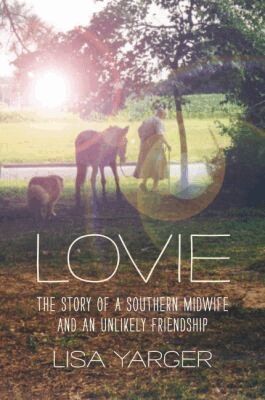
From 1950 until 2001, Lovie Beard Shelton practiced midwifery in eastern North Carolina homes, delivering some 4,000 babies to black, white, Mennonite, and hippie women; to those too poor to afford a hospital birth; and to a few rich enough to have any kind of delivery they pleased. Her life, which was about giving life, was conspicuously marked by loss, including the untimely death of her husband and the murder of her son.Lovie is a provocative chronicle of Shelton's life and work, which spanned enormous changes in midwifery and in the ways women give birth. In this artful exploration of documentary fieldwork, Lisa Yarger confronts the choices involved in producing an authentic portrait of a woman who is at once loner and self-styled folk hero. Fully embracing the difficulties of telling a true story, Yarger is able to get at the story of telling the story. As Lovie describes her calling, we meet a woman who sees herself working in partnership with God and who must wrestle with the question of what happens when a woman who has devoted her life to service, to doing God's work, ages out of usefulness. When I'm no longer a midwife, who am I? Facing retirement and a host of health issues, Lovie attempts to fit together the jagged pieces of her life as she prepares for one final home birth.
414 kr
Skickas inom 7-10 vardagar
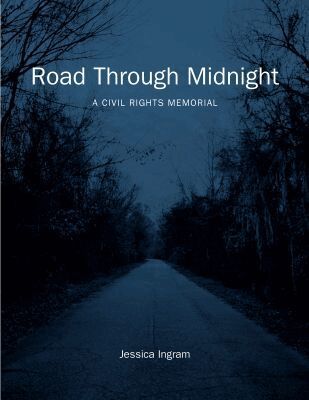
At first glance, Jessica Ingram's landscape photographs could have been made nearly anywhere in the American South: a fenced-in backyard, a dirt road lined by overgrowth, a field grooved with muddy tire prints. These seemingly ordinary places, however, were the sites of pivotal events during the civil rights era, though often there is not a plaque with dates and names to mark their importance. Many of these places are where the bodies of African Americans-activists, mill workers, store owners, sharecroppers, children and teenagers-were murdered or found, victims of racist violence. These images are interspersed with oral histories from victims' families and investigative journalists, as well as pages from newspapers and FBI files and other ephemera.With Road Through Midnight, the result of nearly a decade of research and fieldwork, Ingram unlocks powerful and complex histories to reframe these commonplace landscapes as sites of both remembrance and resistance and transform the way we regard both what has happened and what's happening now-as the fight for civil rights goes on and memorialization has become the literal subject of contested cultural and societal ground.
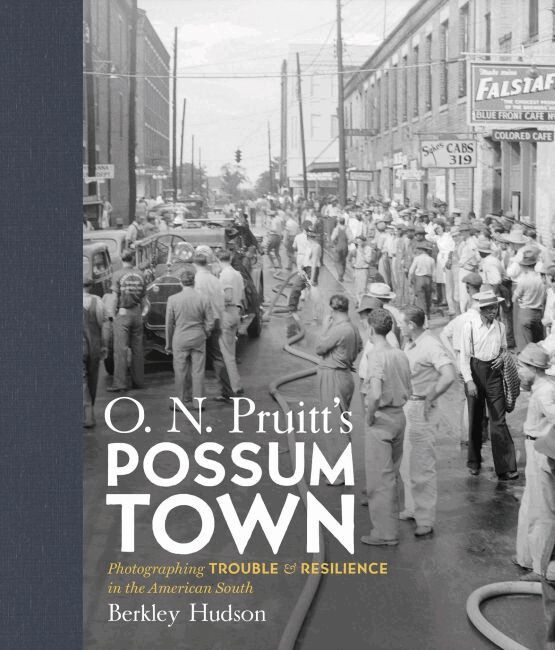
O. N. Pruitt's Possum Town
Photographing Trouble and Resilience in the American South
Inbunden, Engelska, 2022
550 kr
Skickas inom 7-10 vardagar
Photographer O. N. Pruitt (1891–1967) was for some forty years the de facto documentarian of Lowndes County, Mississippi, and its county seat, Columbus--known to locals as "Possum Town." His body of work recalls many FSA photographers, but Pruitt was not an outsider with an agenda; he was a community member with intimate knowledge of the town and its residents. He photographed his fellow White citizens and Black ones as well, in circumstances ranging from the mundane to the horrific: family picnics, parades, river baptisms, carnivals, fires, funerals, two of Mississippi's last public and legal executions by hanging, and most grimly, a lynching. From formal portraits to candid images of events in the moment, Pruitt's documentary of a specific yet representative southern town offers viewers today an invitation to meditate on the vexing interrelations of photography, community, race, and historical memory. Columbus native Berkley Hudson was photographed by Pruitt, and for more than three decades he has considered and curated Pruitt's expansive archive, both as a scholar of media and visual journalism and as a community member. This stunning book presents Pruitt's photography as never before, combining more than 150 images with a biographical introduction and Hudson's short essays and reflective captions on subjects such as religion and racial violence, small-town work-life and entertainment, and the idea of visual legacy as linked to historical memory.
1 121 kr
Skickas inom 10-15 vardagar
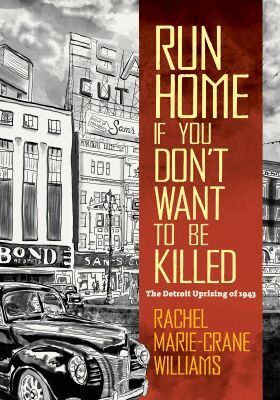
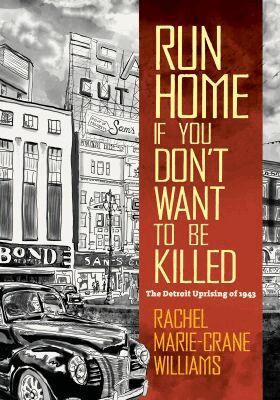
In the heat of June in 1943, a wave of destructive and deadly civil unrest took place in the streets of Detroit. The city was under the pressures of both wartime industrial production and the nascent civil rights movement, setting the stage for massive turmoil and racial violence. Thirty-four people were killed, most of whom were Black, and over half of these were killed by police. Two thousand people were arrested, and over seven hundred sustained injuries requiring treatment at local hospitals. Property damage was estimated to be nearly $2 million. With Run Home If You Don't Want to Be Killed, Rachel Marie-Crane Williams delivers a graphic retelling of the racism and tension leading up to the violence of those summer days. By incorporating firsthand accounts collected by the NAACP and telling them through a combination of hand-drawn images, historical dialogue, and narration, Williams makes the history and impact of these events immediate, and in showing us what happened, she reminds us that many issues of the time-police brutality, state-sponsored oppression, economic disparity, white supremac-plague our country to this day.
256 kr
Skickas inom 11-20 vardagar
In the heat of June in 1943, a wave of destructive and deadly civil unrest took place in the streets of Detroit. The city was under the pressures of both wartime industrial production and the nascent civil rights movement, setting the stage for massive turmoil and racial violence. Thirty-four people were killed, most of whom were Black, and over half of these were killed by police. Two thousand people were arrested, and over seven hundred sustained injuries requiring treatment at local hospitals. Property damage was estimated to be nearly $2 million. With Run Home If You Don't Want to Be Killed, Rachel Marie-Crane Williams delivers a graphic retelling of the racism and tension leading up to the violence of those summer days. By incorporating firsthand accounts collected by the NAACP and telling them through a combination of hand-drawn images, historical dialogue, and narration, Williams makes the history and impact of these events immediate, and in showing us what happened, she reminds us that many issues of the time-police brutality, state-sponsored oppression, economic disparity, white supremacy-plague our country to this day.
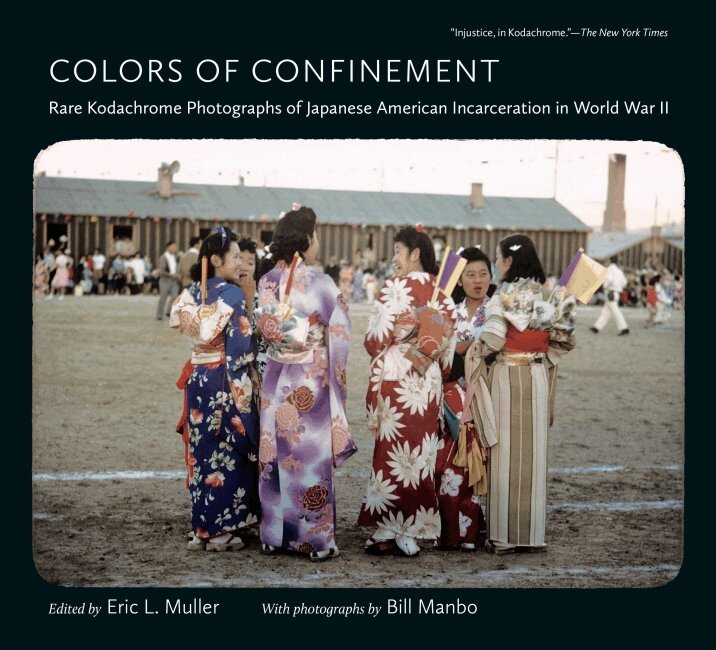
Colors of Confinement
Rare Kodachrome Photographs of Japanese American Incarceration in World War II
Häftad, Engelska, 2021
374 kr
Skickas inom 7-10 vardagar
In 1942, Bill Manbo (1908-1992) and his family were forced from their Hollywood home into the Japanese American internment camp at Heart Mountain in Wyoming. While there, Manbo documented both the bleakness and beauty of his surroundings, using Kodachrome film, a technology then just seven years old, to capture community celebrations and to record his family's struggle to maintain a normal life under the harsh conditions of racial imprisonment. Colors of Confinement showcases sixty-five stunning images from this extremely rare collection of color photographs, presented along with three interpretive essays by leading scholars and a reflective, personal essay by a former Heart Mountain internee.The subjects of these haunting photos are the routine fare of an amateur photographer: parades, cultural events, people at play, Manbo's son. But the images are set against the backdrop of the barbed-wire enclosure surrounding the Heart Mountain Relocation Center and the dramatic expanse of Wyoming sky and landscape. The accompanying essays illuminate these scenes as they trace a tumultuous history unfolding just beyond the camera's lens, giving readers insight into Japanese American cultural life and the stark realities of life in the camps.Also contributing to the book are:Jasmine Alinder is associate professor of history at the University of Wisconsin-Milwaukee, where she coordinates the program in public history. In 2009 she published Moving Images: Photography and the Japanese American Incarceration (University of Illinois Press). She has also published articles and essays on photography and incarceration, including one on the work of contemporary photographer Patrick Nagatani in the newly released catalog Desire for Magic: Patrick Nagatani--Works, 1976-2006 (University of New Mexico Art Museum, 2009). She is currently working on a book on photography and the law.Lon Kurashige is associate professor of history and American studies and ethnicity at the University of Southern California. His scholarship focuses on racial ideologies, politics of identity, emigration and immigration, historiography, cultural enactments, and social reproduction, particularly as they pertain to Asians in the United States. His exploration of Japanese American assimilation and cultural retention, Japanese American Celebration and Conflict: A History of Ethnic Identity and Festival, 1934-1990 (University of California Press, 2002), won the History Book Award from the Association for Asian American Studies in 2004. He has published essays and reviews on the incarceration of Japanese Americans and has coedited with Alice Yang Murray an anthology of documents and essays, Major Problems in Asian American History (Cengage, 2003).Bacon Sakatani was born to immigrant Japanese parents in El Monte, California, twenty miles east of Los Angeles, in 1929. From the first through the fifth grade, he attended a segregated school for Hispanics and Japanese. Shortly after Pearl Harbor, his family was confined at Pomona Assembly Center and then later transferred to the Heart Mountain Relocation Center in Wyoming. When the war ended in 1945, his family relocated to Idaho and then returned to California. He graduated from Mount San Antonio Community College. Soon after the Korean War began, he served with the U.S. Army Engineers in Korea. He held a variety of jobs but learned computer programming and retired from that career in 1992. He has been active in Heart Mountain camp activities and with the Japanese American Korean War Veterans.
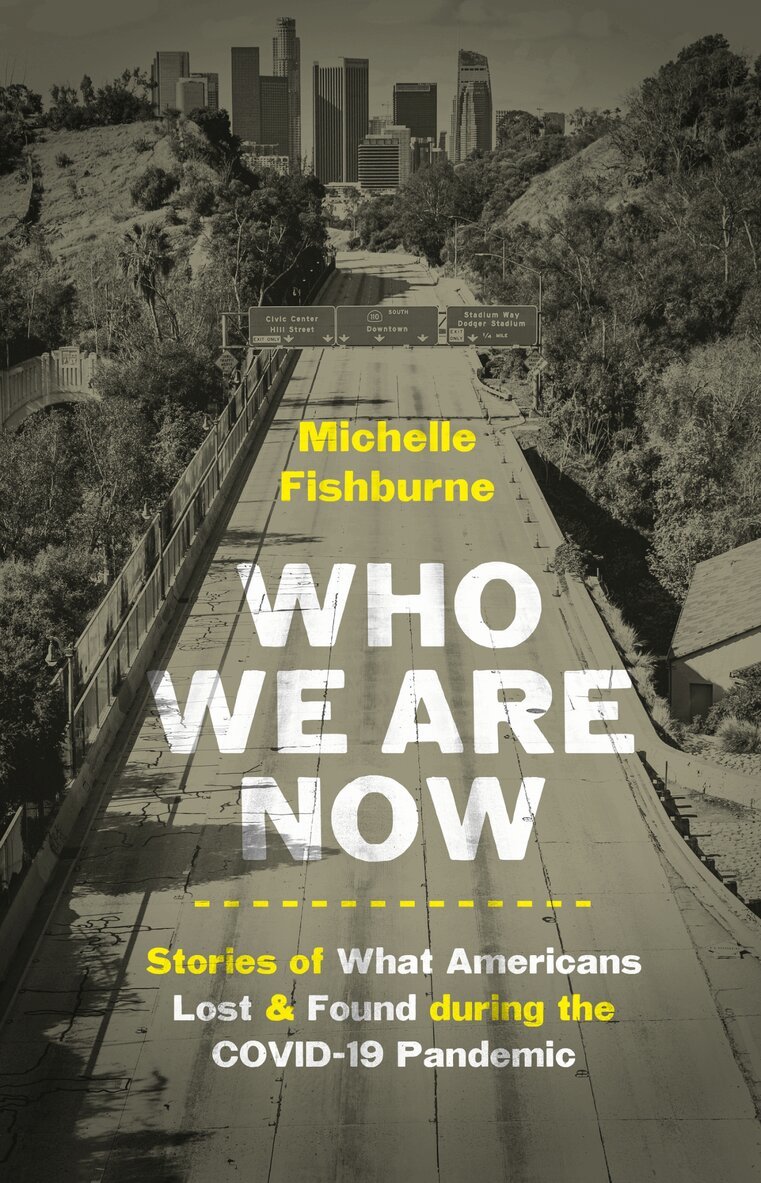
Who We Are Now
Stories of What Americans Lost and Found During the COVID-19 Pandemic
Inbunden, Engelska, 2023
311 kr
Skickas inom 7-10 vardagar
Michelle Fishburne did the unthinkable during the early days of the COVID-19 pandemic: she motor-homed 12,000 miles all over the United States and sat down with hundreds of people face to face. People shared what their lives were like, what made them struggle, and what surprised them. The personal histories in this book show a diversity of American lives, from the young college student who finds unexpected fame on TikTok to a special-education teacher sharing the challenges of remote learning. Everyone's story is different. Some, like Fishburne, lost their jobs. Others lost family, friends, and even their own health and well-being. And yet among the difficulties, many found something that had eluded them before the pandemic. These testimonies offer a glimpse into what people across America lost and found during the pandemic's critical first year. Fishburne lets us hear people's stories as if we were there, in real time, at the beginning of COVID-19, when employment was uncertain, schools were online, and American life more unpredictable than ever before.