SUNY series, Religion and American Public Life – serie
Visar alla böcker i serien SUNY series, Religion and American Public Life. Handla med fri frakt och snabb leverans.
8 produkter
8 produkter
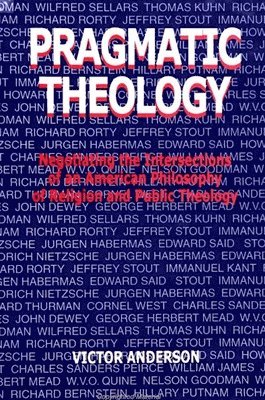
Pragmatic Theology
Negotiating the Intersections of an American Philosophy of Religion and Public Theology
Häftad, Engelska, 1998
376 kr
Tillfälligt slut
Argues that while contemporary American philosophies and philosophers of religion are proclaiming the end of theology, a neopragmatism has arrived to fill the void in meaning and moral fulfillment to which theology once supplied answers.Pragmatic Theology argues for a vision of religious life that is derived from the tradition of American pragmatism (James, Dewey, Royce); empirical theology (Chicago School, D.C. Macintosh, H. Richard Niebuhr); and American philosophy of religion (Stone, Frankenberry, Corrington). The author argues that there is a divine reality in human experience that when encountered gives meaning and value to a person's need for cultural fulfillment and to his or her religious need for self-transcendence. The book commends the openness of nature, the world, and human experience to creative transformation and growth. It supports the increase of human capacities to create morally livable and fulfilling communities, the enhancement of the free play of interpretation, and a social order where democratic utopian expectations are envisioned and actualized.
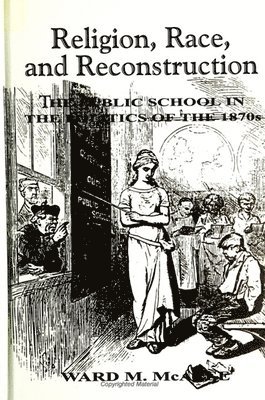
Religion, Race, and Reconstruction
The Public School in the Politics of the 1870s
Inbunden, Engelska, 1998
1 057 kr
Tillfälligt slut
Simultaneously resurrects a lost dimension of a most important segment of American history and illuminates America's present and future by showing the role religious issues played in Reconstruction during the 1870s.Religion, Race, and Reconstruction simultaneously resurrects a lost dimension of a most important segment of American history and illuminates America's present and future by showing the role religious issues played in Reconstruction during the 1870s.
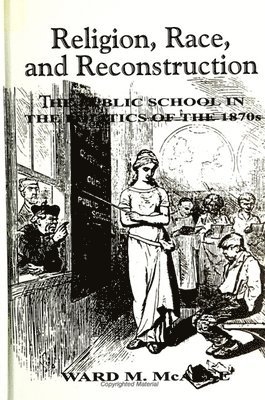
Religion, Race, and Reconstruction
The Public School in the Politics of the 1870s
Häftad, Engelska, 1998
402 kr
Tillfälligt slut
Simultaneously resurrects a lost dimension of a most important segment of American history and illuminates America's present and future by showing the role religious issues played in Reconstruction during the 1870s.Religion, Race, and Reconstruction simultaneously resurrects a lost dimension of a most important segment of American history and illuminates America's present and future by showing the role religious issues played in Reconstruction during the 1870s.
402 kr
Tillfälligt slut
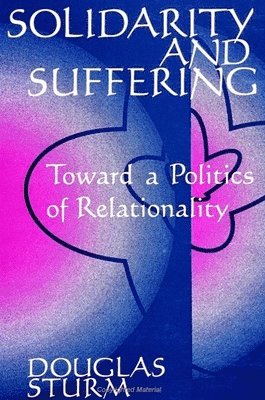
Developing a concept of justice as solidarity, this work addresses a range of urgent social issues—from the meaning of human rights and the character of corporate governance to the resolution of social conflict and the moral status of the environment.This book delineates a vision that moves beyond a politics of divisiveness toward a new way of constructing lives together throughout the world. Sturm's "politics of relationality" is an alternative to classical liberalism and cultural conservatism. It calls for mutual respect and creative dialogue, promoting a principle of justice as solidarity. Sturm develops a radically reconstructive approach to a wide range of social issues: human rights, affirmative action, property, corporations, religious pluralism, social conflict, and the environment. Solidarity and Suffering: Toward a Politics of Relationality is infused with a spirituality of compassion, suggesting that, in their core meanings, justice and love coalesce.
1 057 kr
Tillfälligt slut
Discusses the relationship between the secularization of American society and Supreme Court decisions regarding the separation of church and state and offers a judicial alternative.Over the Wall enters the extensive, and often heated, contemporary debates over both religion and politics and the desired relationship between church and state. Author Frank Guliuzza links the process of "secularization" with the Supreme Court's penchant for "separation," and argues that should policymakers desire to do something about the former, they need to reevaluate the latter.The book supplements the argument that, increasingly, there is evidence to demonstrate that religious people are not taken seriously in the marketplace of political ideas. That does not mean that religious people, particularly evangelical Christians, are not participating actively in politics. On the contrary, while religious believers are becoming ever more active in politics and political debate, they are taken less and less seriously. Guliuzza claims that this reaction to religious-based political expression is evidence of a concerted effort, though one that comes from multiple perspectives, to produce not simply a secular nation, but, rather, a secular society.Guliuzza describes the linkage between those who want to secularize and privatize public space with those who insist that the Constitution's establishment clause requires "separation"-separation of church from state, and separation of religion from that which is not religion. He argues that if one is serious about ending secularization, inasmuch as it impacts upon religious-based political participation, then one must look for a different approach to the establishment clause than that offered by the Supreme Court in Everson v Board of Education (1947) and Lemon v Kurtzman (1971). He considers the alternative approaches proffered in the literature and by those on the Court, and selects one: "authentic neutrality." Guliuzza asserts that by modifying the Court's approach to the establishment clause, there will be a substantial reduction in the negative consequences of secularization and separation.
489 kr
Tillfälligt slut
Discusses the relationship between the secularization of American society and Supreme Court decisions regarding the separation of church and state and offers a judicial alternative.Over the Wall enters the extensive, and often heated, contemporary debates over both religion and politics and the desired relationship between church and state. Author Frank Guliuzza links the process of "secularization" with the Supreme Court's penchant for "separation," and argues that should policymakers desire to do something about the former, they need to reevaluate the latter.The book supplements the argument that, increasingly, there is evidence to demonstrate that religious people are not taken seriously in the marketplace of political ideas. That does not mean that religious people, particularly evangelical Christians, are not participating actively in politics. On the contrary, while religious believers are becoming ever more active in politics and political debate, they are taken less and less seriously. Guliuzza claims that this reaction to religious-based political expression is evidence of a concerted effort, though one that comes from multiple perspectives, to produce not simply a secular nation, but, rather, a secular society.Guliuzza describes the linkage between those who want to secularize and privatize public space with those who insist that the Constitution's establishment clause requires "separation"-separation of church from state, and separation of religion from that which is not religion. He argues that if one is serious about ending secularization, inasmuch as it impacts upon religious-based political participation, then one must look for a different approach to the establishment clause than that offered by the Supreme Court in Everson v Board of Education (1947) and Lemon v Kurtzman (1971). He considers the alternative approaches proffered in the literature and by those on the Court, and selects one: "authentic neutrality." Guliuzza asserts that by modifying the Court's approach to the establishment clause, there will be a substantial reduction in the negative consequences of secularization and separation.
Rediscovering America's Sacred Ground
Public Religion and Pursuit of the Good in a Pluralistic America
Häftad, Engelska, 2003
342 kr
Tillfälligt slut
Sees a way out of the contentious debates over the role of religion in American public life by looking back to the ideas of John Locke and the nation's Founders.Returning to the ideas of John Locke and the Founders themselves, Barbara A. McGraw examines the debate about the role of religion in American public life and unravels the confounded rhetoric on all sides. She reveals that no group has been standing on proper ground and that all sides have misused terminology (religion/secular), dichotomies (public/private), and concepts (separation of church and state) in ways that have little relevance to the original intentions of the Founders. She rediscovers a theology underlying the founding documents of the nation that is neither anyone's particular religion nor one requiring religion. Instead, it justifies freedom of conscience for all and provides a two-tiered public forum-a civic public forum and a conscientious public forum-for the debate itself and the actions that debate inspires. America's Sacred Ground-this theology and its public forum-determines the meaning of freedom and the ways in which Americans can pursue "the good": good government, good communities, good families, good relations between individuals, and good individuals from a plurality of perspectives. By exploring our past, McGraw answers the critical question, Who are we as a people and what do we stand for?
1 057 kr
Tillfälligt slut
Argues for American national narratives in Christian theology that respect the separation of church and state and a diverse, multifaith society.This book furthers the development of American public theology by arguing for the importance of narrative to a theological interpretation of the nation's social and political life. In contrast to both sectarian theologies that oppose a diverse public life and liberal theologies that have lost their distinctiveness, narrative public theology seeks an engaged yet critical role consistent with the separation of church and state and respectful of the multireligious character of the United States. Mary Doak argues for a public theology that focuses on the narrative imagination through which we envision our current circumstances and our hopes for the future. This theology sees both our national stories and our religious ones as resources that can contribute to a public and pluralistic conversation about the direction of society. Doak highlights arguments from Paul Ricoeur, Johann Baptist Metz, William Dean, Stanley Hauerwas, Franklin Gamwell, and Ronald Thiemann that can both contribute to and challenge a narrative public theology. She also proposes a model of public theology using narratives from Abraham Lincoln, Virgil Elizondo, and Delores Williams.