Religion and Democracy - Böcker
Visar alla böcker i serien Religion and Democracy. Handla med fri frakt och snabb leverans.
4 produkter
4 produkter
966 kr
Skickas inom 5-8 vardagar
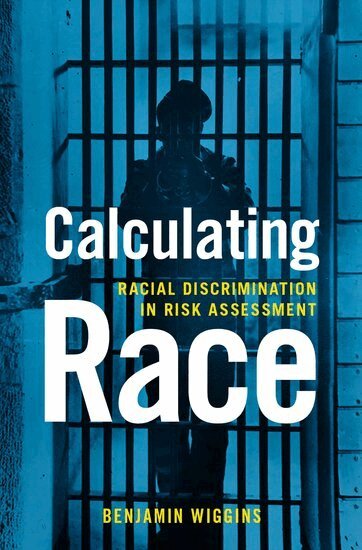
In Calculating Race, Benjamin Wiggins analyzes the historical relationship between statistical risk assessment and race in the United States. He illustrates how, through a reliance on the variable of race, actuarial science transformed the nature of racism and helped usher racial disparities in wealth, incarceration, and housing from the nineteenth century into the twentieth. Wiggins begins by tracing how the life insurance industry utilized race in its calculations at the end of the nineteenth century, focusing particularly on Prudential and its aggressive battles with state regulators to discriminate against clients and adjust rates on the basis of race. He then turns his focus to the collection of racial statistics in the Illinois state penitentiary system in the late nineteenth century and the state's subsequent development of predictive sentencing and parole formulas in the 1920s that weighed race as a key factor. Next, he investigates the role of race in the state-sponsored mortgage insurance program of the Federal Housing Administration between the start of the New Deal and the beginning of the Cold War and its prolonged effects on mortgage lending. Wiggins concludes with an analysis of the use of race in the statistical risk assessments across financial institutions and government programs during the post-civil rights movement era, and how that practice has been transformed in the twenty-first century through "proxy" variables which stand in for the now taboo category of race. Offering readers a new perspective on the historical importance of actuarial science in structural racism, Calculating Race is a particularly timely contribution as Big Data and algorithmic decision making increasingly pervade our lives.
1 146 kr
Skickas inom 7-10 vardagar
The book intricately examines secularity in India, presenting it as a complex tapestry of social struggles which introduces assumptions not shared by traditional Hindu culture. These cross-pressures influence both societal and legal realms, affecting how secularism is implemented. The work suggests that these pressures originate from the doctrines that shape India's social fabric and culture. It investigates whether secularism inherently assumes specific theological or cultural doctrines, thus affecting its cultural manifestation. By focusing on the intersection of religious freedom with human rights and legislation, concerning the contentious issue of religious conversions, the book delves into these complexities. The Ghent school attempts to address these tensions by advocating for a Hindu interpretation of religious freedom. However, acknowledging the truth claims of all religious beliefs offers a better approach to mediating between the constitution and Hindu tradition. Additionally, it highlights how Christian converts have developed adaptive mechanisms that blend their faith with traditional Hindu culture. This synthesis of beliefs and practices, or hybrid lifestyles, may provide a potential path forward, reflecting a response to the experienced cross-pressures.
1 620 kr
Skickas inom 7-10 vardagar
This book explores Tamil Buddhism in modern India, focusing on its emergence as a response to caste-based oppression during the late nineteenth and early twentieth centuries. Central to this movement was Pandit Iyothee Thass (1845–1914), a pioneering intellectual who reinterpreted India’s Buddhist past to challenge brahminical dominance. Thass reasoned that it was because many Indians followed Buddhist cultural and material traditions in ancient times, they were oppressed as untouchables and lower castes by self-privileging-caste groups, such as brahmins. Thus, Thass challenged brahminism/casteism in India by reconstructing and mobilizing a reading public about the casteless Buddhist history of Indians who were prone to caste oppression. His writings, petitions, and archives reveal the castelessness of Tamil Buddhists and their commitment for a radical political transformation in modern India. Key aspects of the Tamil Buddhist movement include public mobilization for caste-free societies, self-representation of oppressed communities, economic redistribution through affirmative action, and a feminist critique of caste and patriarchy. Through interdisciplinary methods from Critical Caste Studies, this monograph uncovers the intellectual history of Tamil Buddhism and its radical call for vernacular emancipation. It highlights how Indigenous, Tamil/Indian communities used Buddhist foundations to resist caste and envision a modern, casteless future.
766 kr
Skickas inom 5-8 vardagar
Until two decades ago, the social sciences adhered to the secularisation thesis that stressed the gradual obliteration of religion in the public domain. Recent events show the re-emergence of religions world-wide that has led scholars in challenging the narrative of the modern state and its progress from the religious to the secular domains. The changing place of religion in contemporary politics challenges older notions and concepts of the secular and secularisation process. Yet many initiatives and scholarly works have failed to assess the rise of religion in the context of democratic processes. This volume sets out to fill this scholarly lacuna by offering a conceptual, historical and empirical examination of some of these developments. In trying to map this terrain and spell out the close links between religion, secularism and democracy, this volume examines the developments and challenges of secularism in select countries of Southeast Asia. The fundamental tenets of liberal democracies - rule of law, popular sovereignty, constitutionalism - undergo several configurations in the context of religious pluralism. The aim is to reframe the basic issues of religion and secularisation in a way that their complex reality will be visible in different contexts where the frequency of conflicts related to religion have sharply increased although they may reflect other cultural, political, and socio-economic phenomena.