Religion in the South - Böcker
Visar alla böcker i serien Religion in the South. Handla med fri frakt och snabb leverans.
11 produkter
11 produkter
428 kr
Skickas inom 3-6 vardagar
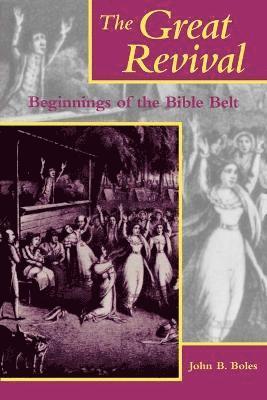
Drawing upon the religious writings of southern evangelicals, John Boles asserts that the extraordinary crowds and miraculous transformations that distinguished the South's First Great Awakening were not simply instances of emotional excess but the expression of widespread and complex attitudes toward God. Converted southerners were starkly individualistic, interested more in gaining personal salvation in a hopelessly evil world than in improving society. As Boles shows in this landmark study, the effect of the Revival was to throw over the region a conservative cast that remains dominant in contemporary southern thought and life.
Can Somebody Shout Amen!
Inside the Tents and Tabernacles of American Revivalists
Häftad, Engelska, 1996
592 kr
Skickas inom 3-6 vardagar
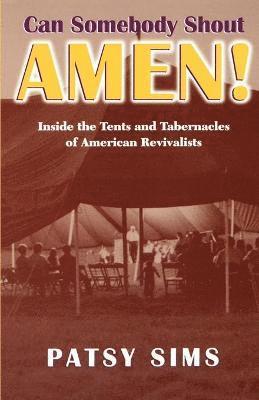
" Award-winning journalist Patsy Sims journeyed through the back roads of the South, along the sawdust trail, to take part in the lives of seven American revivalists, their families, crew members, and followers. She attended services conducted by Pentecostal evangelists, with audiences ranging from almost fifty to five thousand. Before, after, and in between she conducted hundred of interviews. What she discovered is a fascinating world dominated by colorful, compelling, unorthodox men who sprang out of a tradition that dates back almost two hundred years. With descriptive, evocative prose, Sims allows readers to vicariously experience old-time religion: a revivalist attempting to raise his son from the dead, a week with an east Tennessee congregation of snakehandlers, the opening-night jitters of a beginning evangelist, and the loneliness of the road for the veterans. Sims's rendering of what goes on in the tents and tabernacles of America allows the people and events to speak for themselves.
567 kr
Skickas inom 3-6 vardagar
Between the Civil War and the turn of the last century, Southern Baptists gained prominence in the religious life of the South. As their power increased, they became defenders of the racial, political, social, and economic status quo. By the beginning of this century, however, a feisty tradition of dissent began to appear in Southern Baptist life as criticism of the center increased from both the left and the right. The popular belief in a doctrine of "once saved, always saved" led progressive Baptists to claim that moderates, once saved, did not address the serious social and political problems that faced many in the South. These Baptist dissenters claimed that they could not be "at ease in Zion."Led by the radical Walter Nathan Johnson in the 1920s and 1930s, progressive Baptists produced civil rights advocates, labor organizers, women's rights advocates, and proponents of disarmament and abolition of capital punishment. They challenged some of the most fundamental aspects of southern society and of Baptist ecclesiastical structure and practice. For their efforts and beliefs, many of these men and women suffered as they lost jobs, experienced physical danger and injury, and endured character assassination.In A Genealogy of Dissent, David Stricklin traces the history of these progressive Baptists and their descendants throughout the twentieth century and shows how they created an active culture of protest within a highly traditional society.
Serving Two Masters
Moravian Brethren in Germany and North Carolina, 1727-1801
Inbunden, Engelska, 2000
428 kr
Skickas inom 3-6 vardagar
The eighteenth century was a time of significant change in the perception of marriage and family relations, the emphasis of reason over revelation, and the spread of political consciousness. The Unity of the Brethren, known in America as Moravians, experienced the resulting tensions firsthand as they organized their protective religious settlements in Germany. A group of the Brethren who later settled in Salem, North Carolina, experienced the stresses of cultural and generational conflict when its younger members came to think of themselves as Americans.The Moravians who first immigrated to America actively maintained their connections to those who remained in Europe and gave them the authority for deciding religious, social, and governmental issues. But, as the children born in Salem became acclimated to more freedoms, particularly in the wake of the American Revolution, a series of disputes intensified the problems of transatlantic governance. While the group's leadership usually associated Enlightenment principles with rebellion and religious skepticism, the younger Brethren were drawn to its message of individual autonomy and creative expression. Elisabeth Sommer traces the impact of this generational and cultural change among Moravians on both sides of the Atlantic and examines the resulting debate over the definition of freedom and faith.
528 kr
Skickas inom 3-6 vardagar
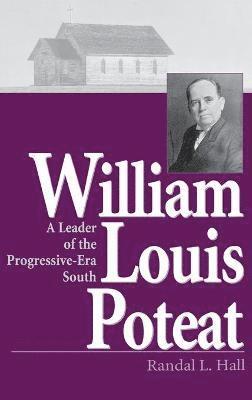
William Louis Poteat (1856-1938), the son of a conservative Baptist slaveholder, became one of the most outspoken southern liberals during his lifetime. He was a rarity in the South for openly teaching evolution beginning in the 1880s, and during his tenure as president of Wake Forest College (1905-1927) his advocacy of social Christianity stood in stark contrast to the zeal for practical training that swept through the New South's state universities.Exceptionally frank in his support of evolution, Poteat believed it represented God at work in nature. Despite repeated attacks in the early 1920s, Poteat stood his ground on this issue while a number of other professors at southern colleges were dismissed for teaching evolution. One of the few Baptists who stressed the social duties of Christians, Poteat led numerous campaigns during the Progressive era for reform on such issues as public education, child labor, race relations, and care of the mentally ill. His convictions were grounded in a respect for high culture and learning, a belief in the need for leadership, and a deep-seated faith in God.Poteat also embodied the struggle with the intellectual compromises that tortured contemporary social critics in the South. Though he took a liberal position on numerous issues, he was a staunch advocate for prohibition and became a strong supporter of eugenics, a position he adopted after following his beliefs in a natural hierarchy and absolute moral order to their ultimate conclusion.Randal Hall's revisionist biography presents a nuanced portrait of Poteat, shedding new light on southern intellectual life, religious development, higher education, and politics in the region during his lifetime.
636 kr
Skickas inom 3-6 vardagar
Southern Baptists had long considered themselves a missionary people, but when, after World War II, they embarked on a dramatic expansion of missionary efforts, they confronted headlong the problem of racism. Believing that racism hindered their evangelical efforts, the Convention's full-time missionaries and mission board leaders attacked racism as unchristian, thus finding themselves at odds with the pervasive racist and segregationist ideologies that dominated the South. This progressive view of race stressed the biblical unity of humanity, encompassing all races and transcending specific ethnic divisions. In All According to God's Plan, Alan Scot Willis explores these beliefs and the chasm they created within the Convention. He shows how, in the post-World War II era, the most respected members of the Southern Baptists Convention publicly challenged the most dearly held ideologies of the white South.
592 kr
Skickas inom 3-6 vardagar
Colorful and outrageous, influential yet despicable, J. Frank Norris was a preacher, newspaper publisher, political activist, and all-around subject of controversy. One of the most despised men in traditional Southern Baptist circles, he was also the man most responsible for bringing hard-edged fundamentalism to the South. Barry Hankins traces Norris, the "Texas Cyclone," from his boyhood in small-town Texas to his death in 1952. Despite scandals, Norris was a man of considerable public influence who traveled the owrkd, corresponded with congressmen, and attended president's Hoover's inaguration at Hoover's invitation. Through his preaching career he battled anyone and everyone he saw as part of the leftist conspiracy to foist liberalism and immorality on America. This account reveals a remarkable man who helped shape the current American religious landscape.
497 kr
Skickas inom 3-6 vardagar
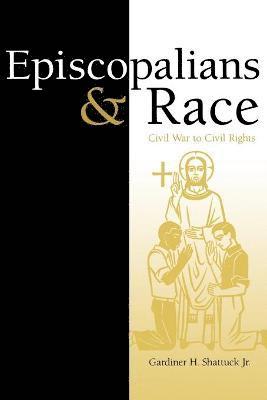
Meeting at an African American college in North Carolina in 1959, a group of black and white Episcopalians organized the Episcopal Society for Cultural and Racial Unity and pledged to oppose all distinctions based on race, ethnicity, and social class. They adopted a motto derived from Psalm 133: ""Behold, how good and joyful a thing it is, for brethren to dwell together in unity!"" Though the spiritual intentions of these individuals were positive, the reality of the association between blacks and whites in the church was much more complicated. Episcopalians and Race examines the often ambivalent relationship between black communities and the predominantly white leadership of the Episcopal Church since the Civil War. Paying special attention to the 1950s and 60s, Gardiner Shattuck analyzes the impact of the civil rights movement on church life, especially in southern states. He discusses the Church's lofty goals--exemplified by the Episcopal Society for Cultural and Racial Unity--and ignoble practices and attitudes, such as the failure to recognize the role of black clergy and laity within the denomination. The efforts of mainline Protestant denominations were critically important in the struggle for civil rights, and Episcopalians expended a great deal of time and resources in engaging in the quest for racial equality and strengthening the missionary outreach to African Americans in the South. Shattuck offers an insider's history of Episcopalians' efforts, both successful and unsuccessful, to come to terms with race and racism since the Civil War.
When Slavery Was Called Freedom
Evangelicalism, Proslavery, and the Causes of the Civil War
Häftad, Engelska, 2004
440 kr
Skickas inom 3-6 vardagar
When Slavery Was Called Freedom uncovers the cultural and ideological bonds linking the combatants in the Civil War era and boldly reinterprets the intellectual foundations of secession. John Patrick Daly dissects the evangelical defense of slavery at the heart of the nineteenth century's sectional crisis. He brings a new understanding to the role of religion in the Old South and the ways in which religion was used in the Confederacy.Southern evangelicals argued that their unique region was destined for greatness, and their rhetoric gave expression and a degree of coherence to the grassroots assumptions of the South. The North and South shared assumptions about freedom, prosperity, and morality. For a hundred years after the Civil War, politicians and historians emphasized the South's alleged departures from national ideals. Recent studies have concluded, however, that the South was firmly rooted in mainstream moral, intellectual, and socio-economic developments and sought to compete with the North in a contemporary spirit. Daly argues that antislavery and proslavery emerged from the same evangelical roots; both Northerners and Southerners interpreted the Bible and Christian moral dictates in light of individualism and free market economics. When the abolitionist's moral critique of slavery arose after 1830, Southern evangelicals answered the charges with the strident self-assurance of recent converts. They went on to articulate how slavery fit into the "genius of the American system" and how slavery was only right as part of that system.
528 kr
Skickas inom 3-6 vardagar
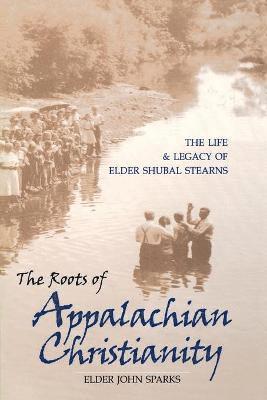
Appalachia's distinctive brand of Christianity has always been something of a puzzle to mainline American congregations. Often treated as pagan and unchurched, native Appalachian sects are labeled as ultraconservative, primitive, and fatalistic, and the actions of minority sub-groups such as "snake handlers" are associated with all worshippers in the region. Yet these churches that many regard as being outside the mainstream are living examples of America's own religious heritage.The emotional and experience-based religion that still thrives in Appalachia is very much at the heart of American worship. The lack of a recognizable "father figure" like Martin Luther, John Calvin, and John Knox compounds the mystery of Appalachia's religious origins. Ordained minister John Sparks determined that such a person must have existed, and his search turned up a man less literate, urbane, and well-known than Luther, Calvin, and Knox -- but no less charismatic and influential.Shubal Stearns, a New England Baptist minister, led a group of sixteen Baptists -- now dubbed "The Old Brethren" by Old School Baptists churches in Appalachia -- from New England to North Carolina in the mid-eighteenth century. His musical "barking" preaching is still popular, and the association of churches that he established gave birth to many of the disparate denominations prospering in the region today. A man lacking in the scholarship of his peers but endowed with the eccentricities that would make their mark on Appalachian faith, Stearns has long been an object of shame among most Baptist historians.In The Roots of Appalachian Christianity, Sparks depicts an important religious figure in a new light. Poring over pages of out-of-print and little-used histories, Sparks discovered the complexity of Stearns's character and his impact on Appalachian Christianity. The result is a history not just of this leader but of the roots of a religious movement.
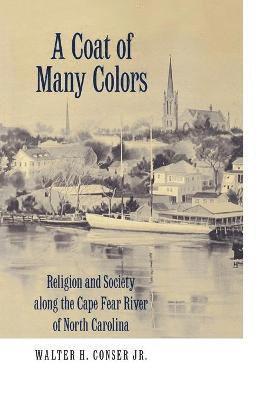
Coat of Many Colors
Religion and Society along the Cape Fear River of North Carolina
Häftad, Engelska, 2009
497 kr
Skickas inom 3-6 vardagar
While religious diversity is often considered a relatively recent phenomenon in America, the Cape Fear region of North Carolina has been a diverse community since the area was first settled. The Cape Fear River and the port city of Wilmington were more urban than the rest of the state; thus the region provided people with opportunities seldom found in other parts of North Carolina. These opportunities drew residents from many ethnic backgrounds, and the residents brought their religious traditions with them. In A Coat of Many Colors, Walter H. Conser Jr. explores how religious and racial diversity in the Cape Fear region have functioned as a microcosm for the South and examines the ways in which religion can affect such diverse aspects of life as architecture and race relations.