Religions and Peace Studies – serie
Visar alla böcker i serien Religions and Peace Studies. Handla med fri frakt och snabb leverans.
6 produkter
6 produkter
Be Like Adam's Son
Theorising, Writing and Practising Peace in the Arab Region
Inbunden, Engelska, 2024
1 353 kr
Skickas inom 5-8 vardagar
The twelve chapters collected in the volume criticise, analyse, and discuss the issue of peace in Arab literature, philosophical and theological thought, and both institutional and grassroots practices of intercultural and interreligious mediation. The volume consists of three parts. Part 1 explores the contribution of prominent Islamic intellectuals to the interpretation of jihad and the elaboration of a Quranic theory of nonviolence. Part 2 deals with the Arab literary production, with a focus on Iraq and Morocco. The four chapters on Iraq consider the themes of pluralism and peaceful coexistence in light of the continued condition of war, highlighting the complexity of the Iraqi literary field between domestic and diasporic. The two chapters dealing with Morocco focus on the literature stemming from the reconciliation process that has taken place in the country since the beginning of the new Millennium, shedding light on how institutional processes of internal pacification have also affected its literary field. Part 3 considers the practices of mediation and includes four chapters dealing with conflict-avoidant strategies in Egyptian literature, interreligious and intercultural dialogue in premodern time, and mediation practices carried out by religious institutions and grassroots organizations in Palestine and Jordan.
444 kr
Skickas
The twelve chapters collected in the volume criticise, analyse, and discuss the issue of peace in Arab literature, philosophical and theological thought, and both institutional and grassroots practices of intercultural and interreligious mediation. The volume consists of three parts. Part 1 explores the contribution of prominent Islamic intellectuals to the interpretation of jihad and the elaboration of a Quranic theory of nonviolence. Part 2 deals with the Arab literary production, with a focus on Iraq and Morocco. The four chapters on Iraq consider the themes of pluralism and peaceful coexistence in light of the continued condition of war, highlighting the complexity of the Iraqi literary field between domestic and diasporic. The two chapters dealing with Morocco focus on the literature stemming from the reconciliation process that has taken place in the country since the beginning of the new Millennium, shedding light on how institutional processes of internal pacification have also affected its literary field. Part 3 considers the practices of mediation and includes four chapters dealing with conflict-avoidant strategies in Egyptian literature, interreligious and intercultural dialogue in premodern time, and mediation practices carried out by religious institutions and grassroots organizations in Palestine and Jordan.
Narratives of Peace in Religious Discourses
Perspectives from Europe and the Mediterranean in the Early Modern Era
Inbunden, Engelska, 2024
1 177 kr
Skickas inom 5-8 vardagar
In the Modern Age, the encounter and conflict between competing religious identities produced a renewed emphasis on the concept of peace, which was invested with religious, political and ideological connotations that still need to be investigated. This volume explores the role of religious discourse in the construction of the concept of peace from the Renaissance to the Enlightenment, analyzing the narratives which in Europe gave extrahuman value to peace, with a focus on the processes of idealization of peace and the relationship with the concept of toleration. The volume investigates crucial authors such as Nicholas of Cusa, Luis Vives, Pico della Mirandola, Erasmus of Rotterdam, Thomas More, Pierre Bayle, Benjamin Constant, who reflected on the problem of tolerance as an attempt to shape the relationship between confessions as a peaceful coexistence beyond doctrinal differences. The essays explore the extent to which religious conflicts within Christianity triggered a rhetoric of peace and tolerance/toleration, for instance in the case of the French Wars of Religion and the Revolt of the Netherlands. The rhetoric and imaginary field of peace in its religious connotations are then explored and analyzed in their apocalyptic (for Benivieni or Savonarola) or humanistic connotations (from Petrarca to Pico). The essays combine history, philosophy, history of religions and anthropology, with approaches that go from the historical-critical analysis of documents, to archive research, to comparative history to the analysis of the world of objects, that, following the "material turn", allows an alternative view on the narratives of confrontation and peace that presided over the intrareligious exchange.
Narratives of Peace in Religious Discourses
Perspectives from Europe and the Mediterranean in the Early Modern Era
Häftad, Engelska, 2024
386 kr
Skickas
In the Modern Age, the encounter and conflict between competing religious identities produced a renewed emphasis on the concept of peace, which was invested with religious, political and ideological connotations that still need to be investigated. This volume explores the role of religious discourse in the construction of the concept of peace from the Renaissance to the Enlightenment, analyzing the narratives which in Europe gave extrahuman value to peace, with a focus on the processes of idealization of peace and the relationship with the concept of toleration. The volume investigates crucial authors such as Nicholas of Cusa, Luis Vives, Pico della Mirandola, Erasmus of Rotterdam, Thomas More, Pierre Bayle, Benjamin Constant, who reflected on the problem of tolerance as an attempt to shape the relationship between confessions as a peaceful coexistence beyond doctrinal differences. The essays explore the extent to which religious conflicts within Christianity triggered a rhetoric of peace and tolerance/toleration, for instance in the case of the French Wars of Religion and the Revolt of the Netherlands. The rhetoric and imaginary field of peace in its religious connotations are then explored and analyzed in their apocalyptic (for Benivieni or Savonarola) or humanistic connotations (from Petrarca to Pico). The essays combine history, philosophy, history of religions and anthropology, with approaches that go from the historical-critical analysis of documents, to archive research, to comparative history to the analysis of the world of objects, that, following the "material turn", allows an alternative view on the narratives of confrontation and peace that presided over the intrareligious exchange.
1 177 kr
Skickas inom 5-8 vardagar
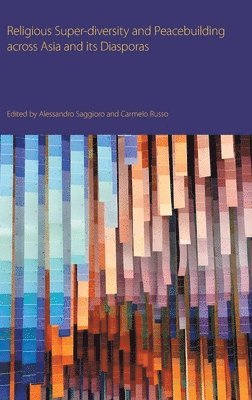
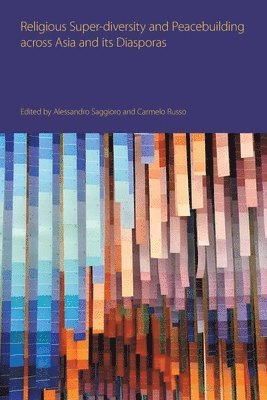
The book explores two central themes: superdiversity, particularly within religious contexts, and the practice of peacebuilding. Contributors examine how these themes intersect, combining theoretical discussions with real-world case studies. The introduction lays out the book's conceptual framework and structure, featuring an opening chapter by Dionigi Albera and Maria Chiara Giorda, followed by eight chapters divided into two sections: one focusing on religious superdiversity in Asia and its implications for peacebuilding, and the other exploring case studies of the Asian diaspora in Italy, using Rome as a focal point.Steven Vertovec's seminal 2007 article introduced the concept of superdiversity, highlighting its transformative implications for immigration. Despite initial acclaim, superdiversity has faced criticism from scholars questioning its novelty and practical utility. Critiques include its ambiguous nature, challenges in quantifying complexity, and discrepancies in global migration patterns. However, the term has expanded across disciplinary boundaries and geographical contexts. Religion, once peripheral to discussions of superdiversity, has gained prominence and religious pluralism has become a key aspect of many researches offering insights into contemporary society's complexity. Throughout history, cultural relations have been marked by collisions and reshaping, accelerated by global migration and interconnectedness. Pluralism, while enriching society, may also engender conflicts, highlighting the need for comprehensive understanding and promotion of sustainable citizenship. This entails embracing diversity, fostering inclusion, and promoting mutual respect and equal participation for all members of society.The book takes a deep dive into the intricate relationship between superdiversity and peacebuilding, recognizing the complex interplay between these two phenomena. It employs empirical analyses spanning diverse geographical areas such as Syria, Indonesia, Nepal, Vietnam, and Asian diasporas in Italy. Through the lens of various religious contexts including Islam, Buddhism, Hinduism, Catholic Christianity, as well as "Traditional" and "Indigenous" religions, the authors explore how historical and anthropological narratives shape conflicts and their non violent transformation.In sum, the book offers a thorough examination of superdiversity, peacebuilding, and dialogue, providing valuable insights into the multifaceted nature of contemporary society and the complexities involved in fostering peace amidst diversity.
372 kr
Skickas
The book explores two central themes: superdiversity, particularly within religious contexts, and the practice of peacebuilding. Contributors examine how these themes intersect, combining theoretical discussions with real-world case studies. The introduction lays out the book's conceptual framework and structure, featuring an opening chapter by Dionigi Albera and Maria Chiara Giorda, followed by eight chapters divided into two sections: one focusing on religious superdiversity in Asia and its implications for peacebuilding, and the other exploring case studies of the Asian diaspora in Italy, using Rome as a focal point.Steven Vertovec's seminal 2007 article introduced the concept of superdiversity, highlighting its transformative implications for immigration. Despite initial acclaim, superdiversity has faced criticism from scholars questioning its novelty and practical utility. Critiques include its ambiguous nature, challenges in quantifying complexity, and discrepancies in global migration patterns. However, the term has expanded across disciplinary boundaries and geographical contexts. Religion, once peripheral to discussions of superdiversity, has gained prominence and religious pluralism has become a key aspect of many researches offering insights into contemporary society's complexity. Throughout history, cultural relations have been marked by collisions and reshaping, accelerated by global migration and interconnectedness. Pluralism, while enriching society, may also engender conflicts, highlighting the need for comprehensive understanding and promotion of sustainable citizenship. This entails embracing diversity, fostering inclusion, and promoting mutual respect and equal participation for all members of society.The book takes a deep dive into the intricate relationship between superdiversity and peacebuilding, recognizing the complex interplay between these two phenomena. It employs empirical analyses spanning diverse geographical areas such as Syria, Indonesia, Nepal, Vietnam, and Asian diasporas in Italy. Through the lens of various religious contexts including Islam, Buddhism, Hinduism, Catholic Christianity, as well as "Traditional" and "Indigenous" religions, the authors explore how historical and anthropological narratives shape conflicts and their non violent transformation.In sum, the book offers a thorough examination of superdiversity, peacebuilding, and dialogue, providing valuable insights into the multifaceted nature of contemporary society and the complexities involved in fostering peace amidst diversity.